Total nonfarm payroll employment increased by 162,000 in August, and the unemployment rate was unchanged at 4.1 percent, the U.S. Bureau of Labor Statistics reported today. Employment increased in food services and drinking places and in local government education. The information industry lost jobs.
The truism is that if something sounds too good to be true, it probably isn’t.
How much skepticism should we then apply towards the August jobs numbers from the BLS? Given their track record for massive downward revisions, quite a bit. 162,000 jobs is definitely in the “sounds too good to be true.”
Yet when we look into the details behind the headline figure, the data holds up. 162,000 jobs is a tremendous surge in jobs, and well above what the ADP report indicated would be the headline number, but the internals of the ESS are consistent with major job growth.
The Employment Situation Summary sounds to good to be true…but does the data show that it isn’t?
Every article I publish takes time, care, and independence. A paid subscription fuels that work and shields it from outside pressure. If you’re able, join me today.
More Lou Costello Labor Math?
As long-time readers are aware, when the Bureau of Labor Statistics puts out numbers that just don’t add up, I have taken to calling that “Lou Costello Labor Math”, in homage to the vaudevillian’s classic sketch were “Thirteen goes into twenty-eight seven times.” That bit of absurdity is often the only way to make sense of the data dumpster fire the BLS frequently puts out on jobs.
On the surface, the August jobs report practically screams Lou Costello Labor Math. That was certainly my initial take when the report was first released. The August ADP report was a clunker, and ADP is theoretically measuring the same data; there would be some variance but not that much variance, surely.
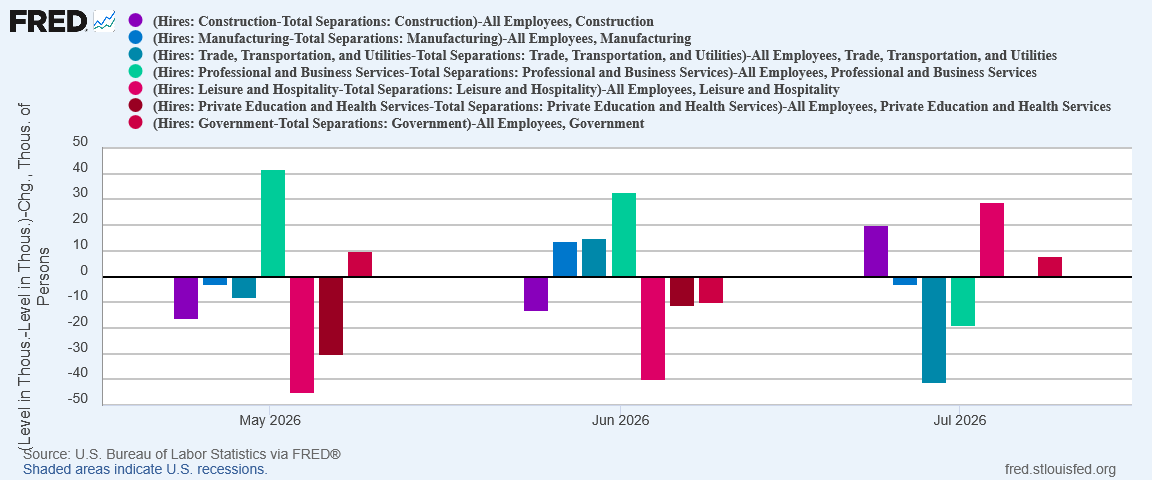
Additionally, the July Job Openings and Labor Turnover Summary report did not provide any indication of a sudden surge in employment for August. Quite the opposite, the composition of the JOLTS data suggested August might see considerable downward revisions—the result of overstated estimates, the hallmark of Lou Costello Labor Math.
The JOLTS data also suggests we may have significant revisions in the upcoming August Employment Situation Summary. A sizable portion of job sectors have shown less job growth in last three months’ JOLTS reports than in the corresponding Employment Situation Summary.
Where job sector growth is overstated in one month, we can expect corrections and downgrades over the next few months.
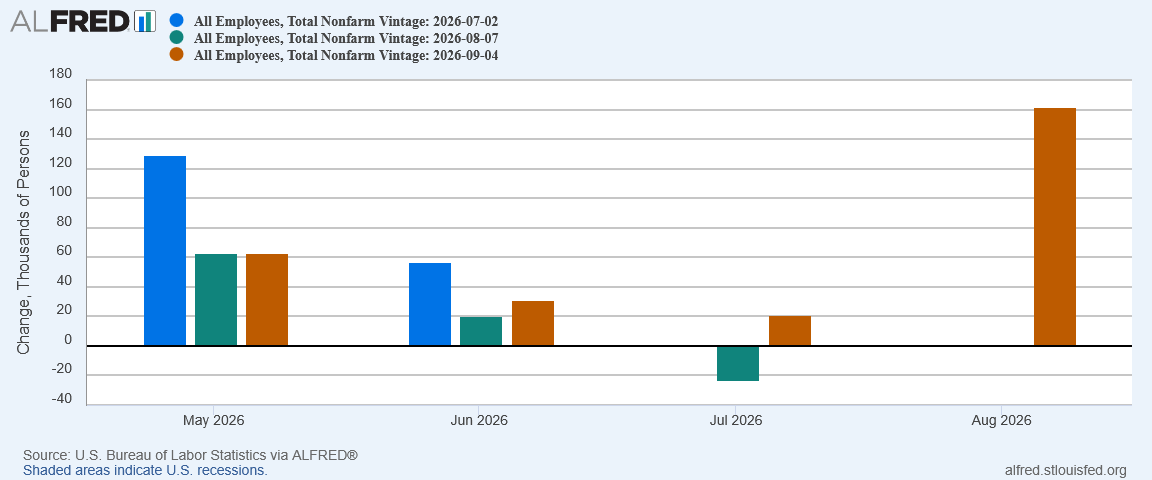
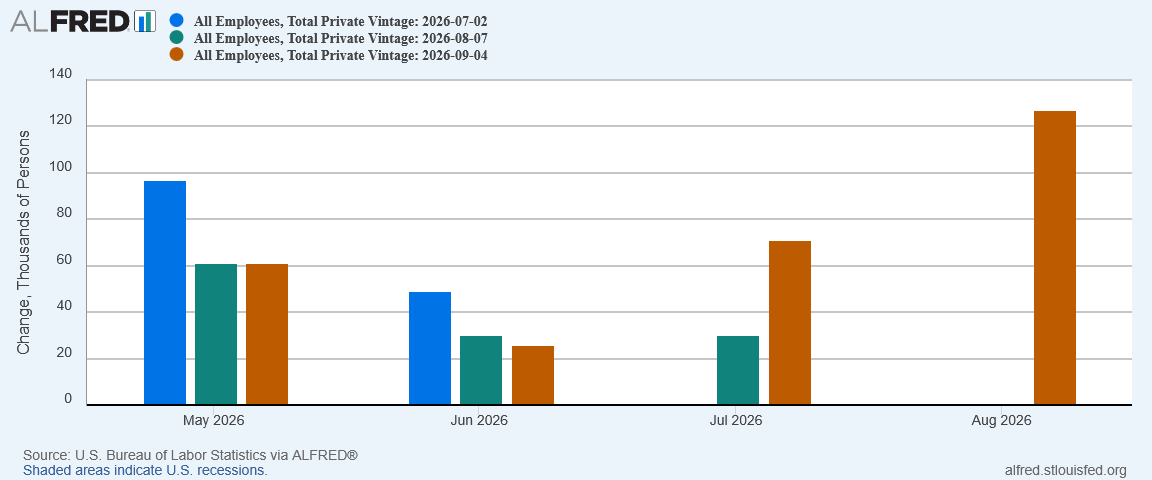
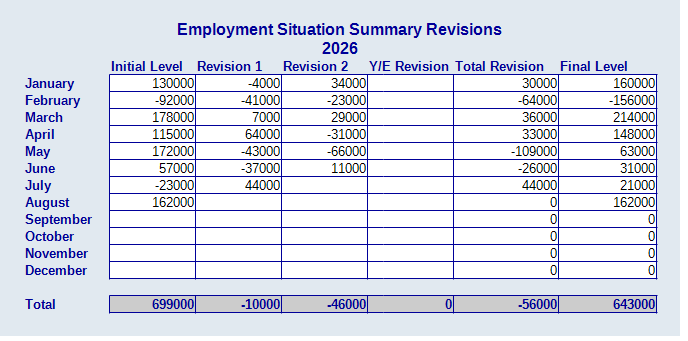
The change in total nonfarm payroll employment for June was revised up by 11,000, from +20,000 to +31,000, and the change for July was revised up by 44,000, from -23,000 to +21,000. With these revisions, employment in June and July combined is 55,000 higher than previously reported.
These were not the revisions the July JOLTS report indicated we could expect for August. With the August revisions, the total adjustments to non-farm job growth stand at -56,000 on the year.
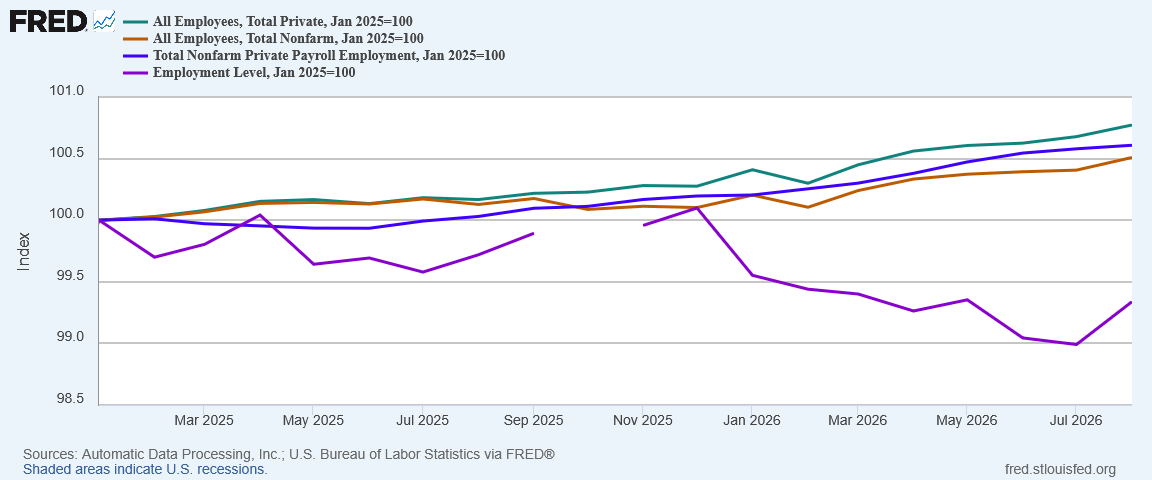
One quick survey tool when reviewing the data is to compare the indexed trends among the ADP report, the Employment Situation Summary’s All Employees data from the Current Employment Statistics survey, and the Employment Level from the Current Population Survey.
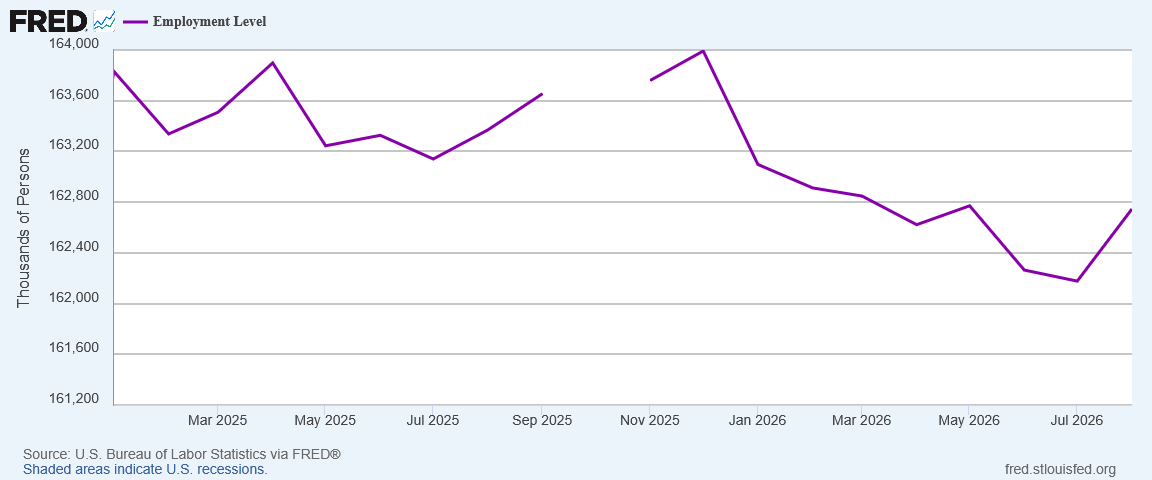
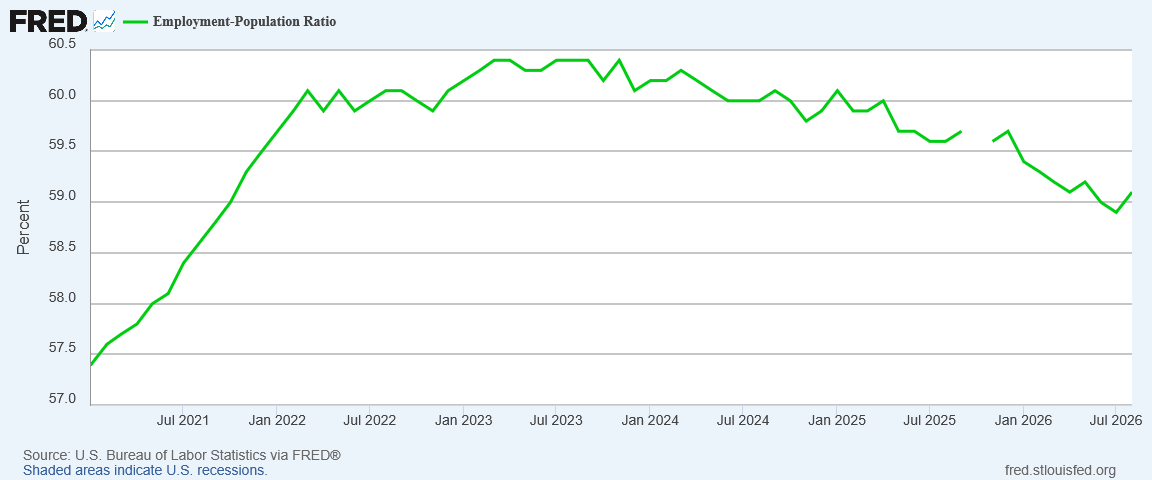
The August Employment Level moved decisively upward. The payroll increase of 162,000 jobs is contextualized by an Employment Level increase of 569,000 workers. The two BLS surveys within the ESS agree on this much: August saw significant increase in employment.
Are we seeing Lou Costello Labor Math run amok? The constant caveat is always “maybe”. When the data sets are given a final revision at year-end we could conceivable see significant downward revisions across the entire year.
However, within the data that we have, the usual indicators of bad data are not evident. America may not have seen 162,000 jobs created in August, but there appears to have been significant job growth well above Wall Street estimates.
Media Did Not Question The Numbers, But Wall Street Hated Them
Unsurprisingly, corporate media did not flinch when the ESS published their surprise figures. CNBC took the data in stride, blithely accepting once again what the BLS put out.
“Net, net, the labor market is alive and well and generating thousands of new jobs to help keep economic growth squarely in the plus column,” said Chris Rupkey, chief economist at Fwdbonds.
The report was consistent with what Federal Reserve officials have called a stable labor market, and likely turns the central bank’s focus to next week’s reports on consumer and producer prices as the final determinant heading into the interest rate decision in less than two weeks.
CNN and the Associated Press were similarly passive in accepting the high jobs print, with AP highlighting Wall Street’s negative reaction to the numbers.
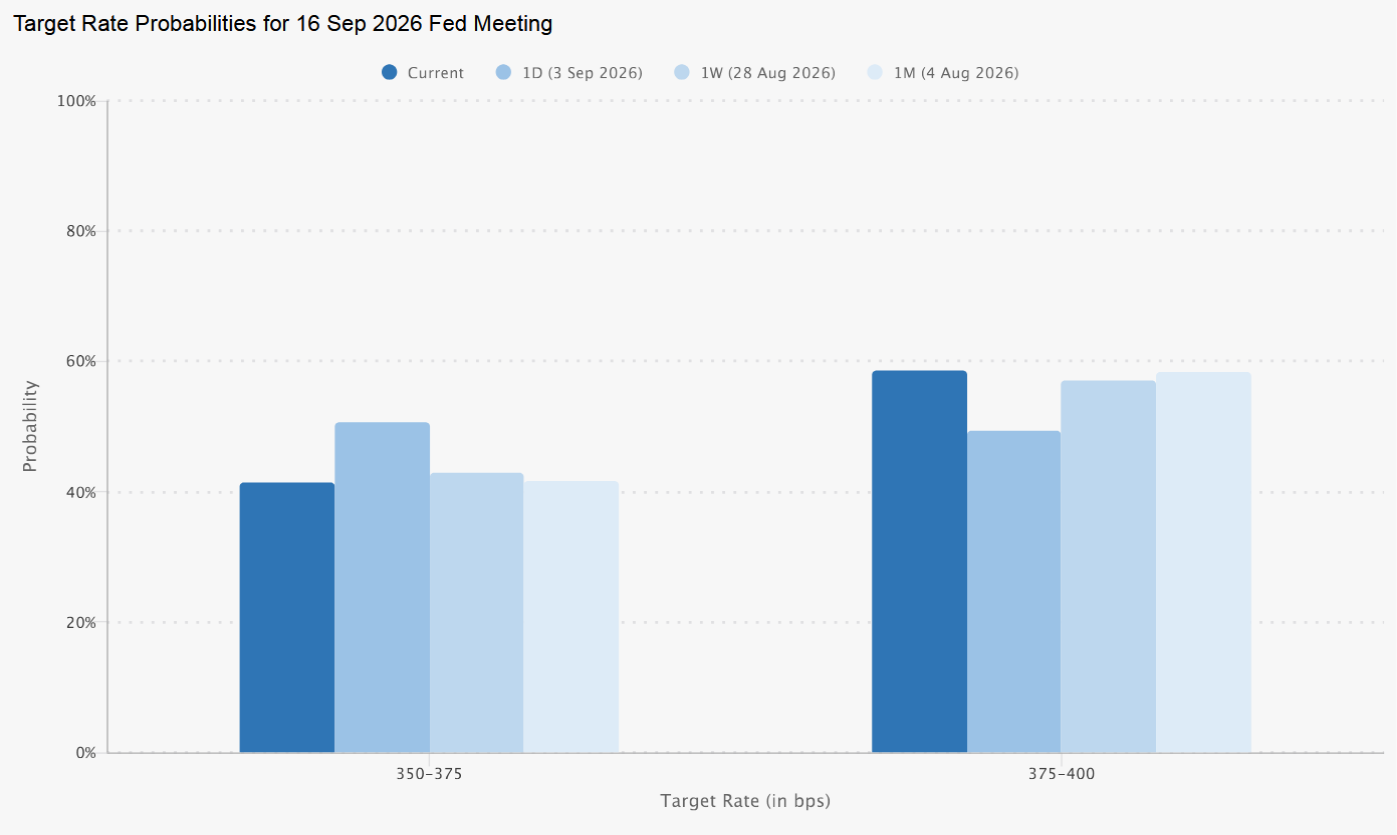
The surprise increase in hiring could give the Federal Reserve leeway to raise its benchmark short-term interest rate to fight inflation when central bank policymakers meet later this month.
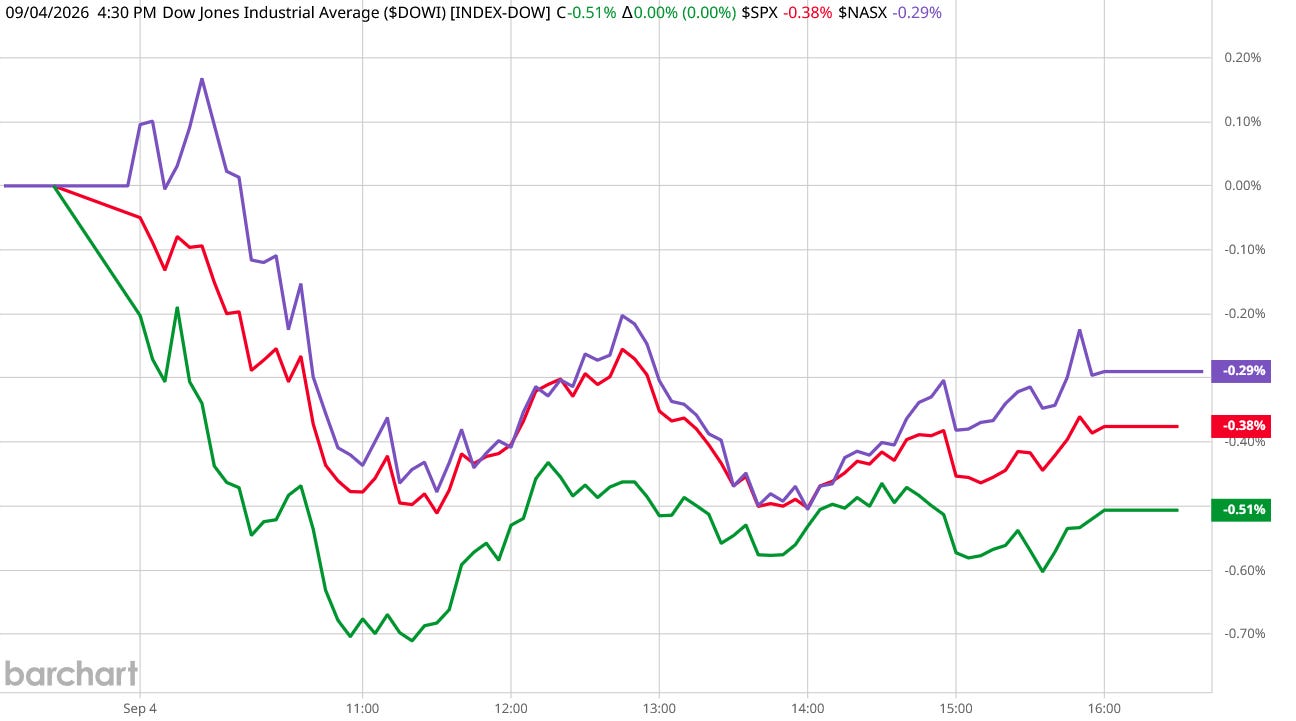
The S&P 500 fell 0.5% in morning trading. The Dow Jones Industrial Average was down 378 points, or 0.7%, as of 11:08 a.m. Eastern time. The Nasdaq composite fell 0.4%.
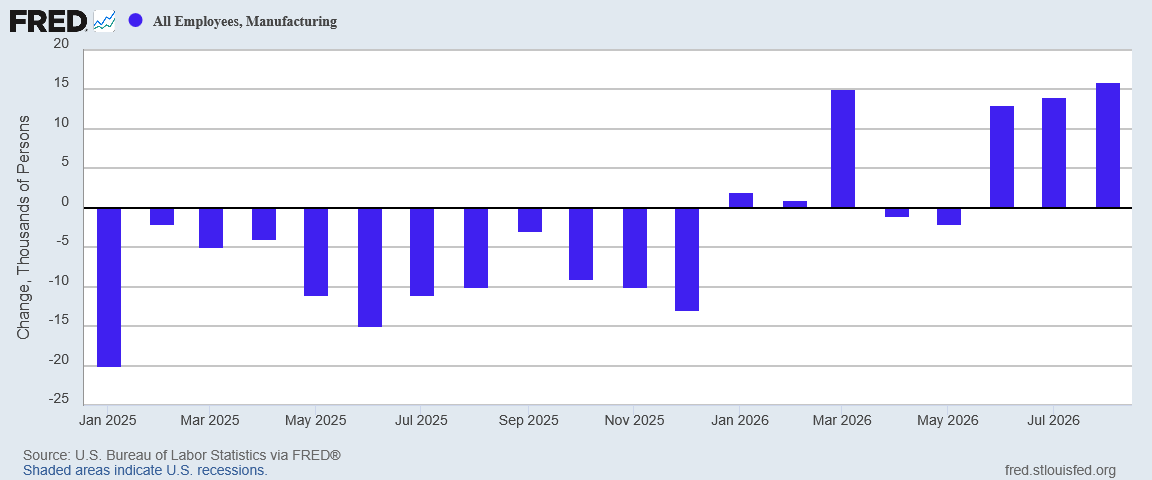
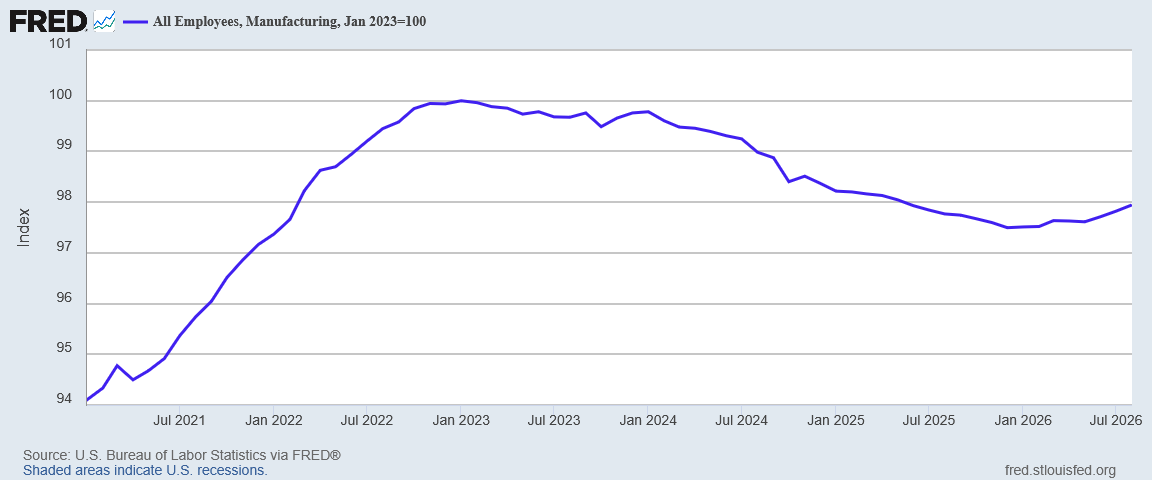
America added 162,000 jobs in August — triple economists’ expectations. The private sector has now created over one million jobs under President Trump, whose reindustrialization agenda continues to drive manufacturing and factory construction job growth. America is in the middle of a historic investment boom, and the August jobs report is the latest data point showing how Americans are benefitting from the Trump administration’s pro-growth policies. The best is yet to come with even more job, wage, and economic growth in store for everyday Americans.
The impact of the jobs print on the Fed’s upcoming interest rate decision was conveniently (but perhaps understandably) overlooked by the White House.
We are seeing the same “good news is bad news” response from Wall Street that was quite common during Jay Powell’s Fed Chairmanship. If Kevin Warsh intended to establish a new dynamic between the Federal Reserve and Wall Street, he hasn’t—one more failure to mark the ignoble start to his term.
How Good Is The Data?
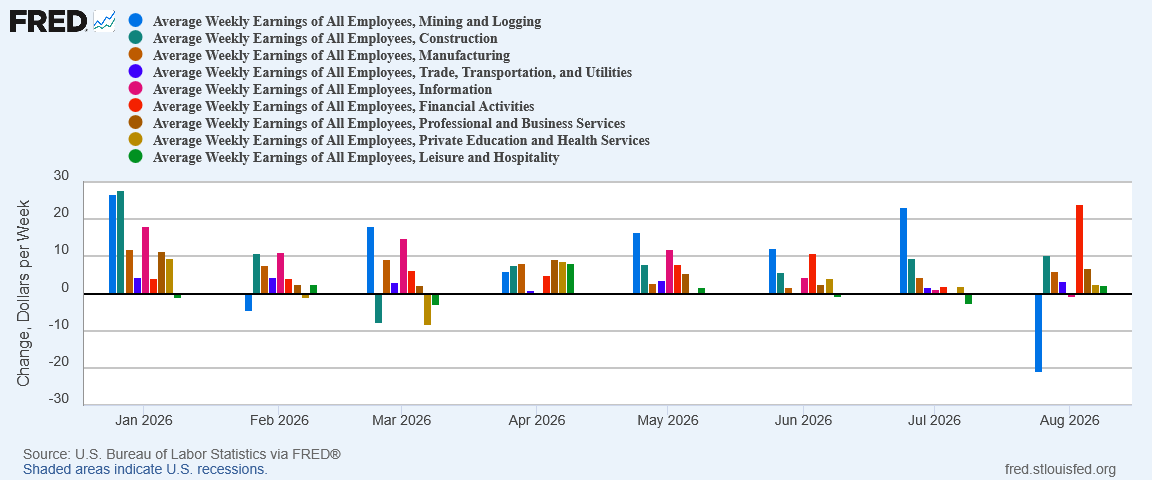
Drilling into the report’s internals, the results are the same: the data is positive.
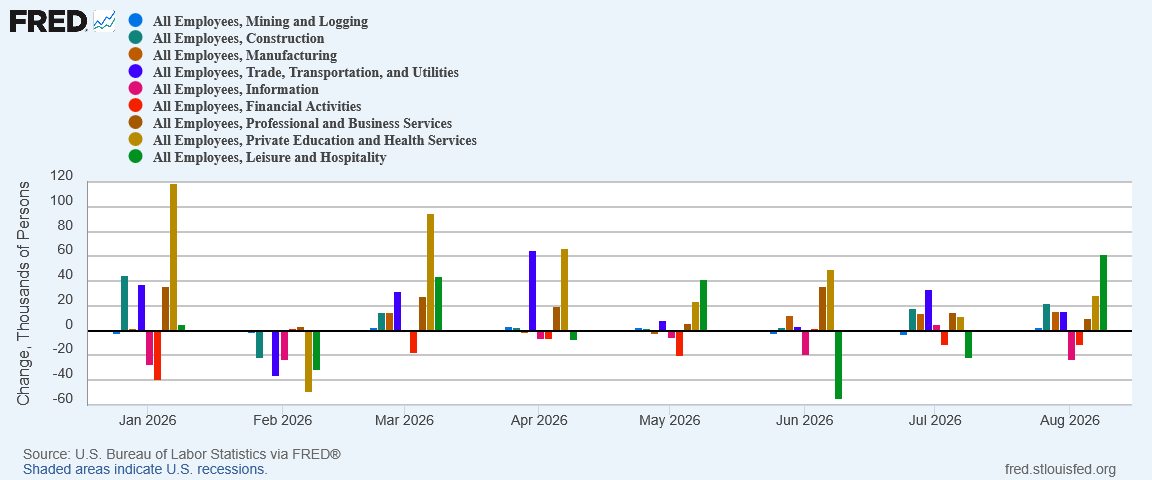
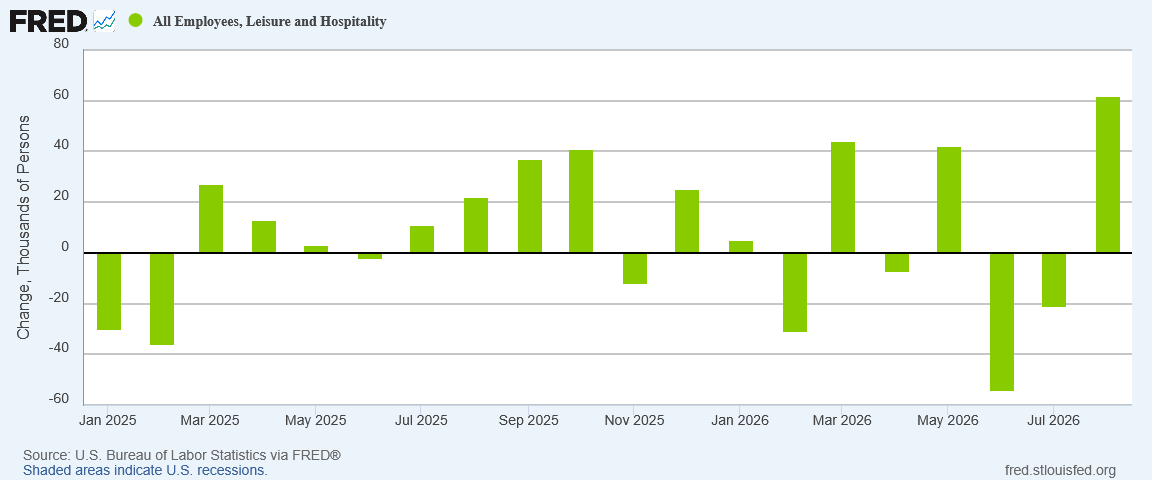
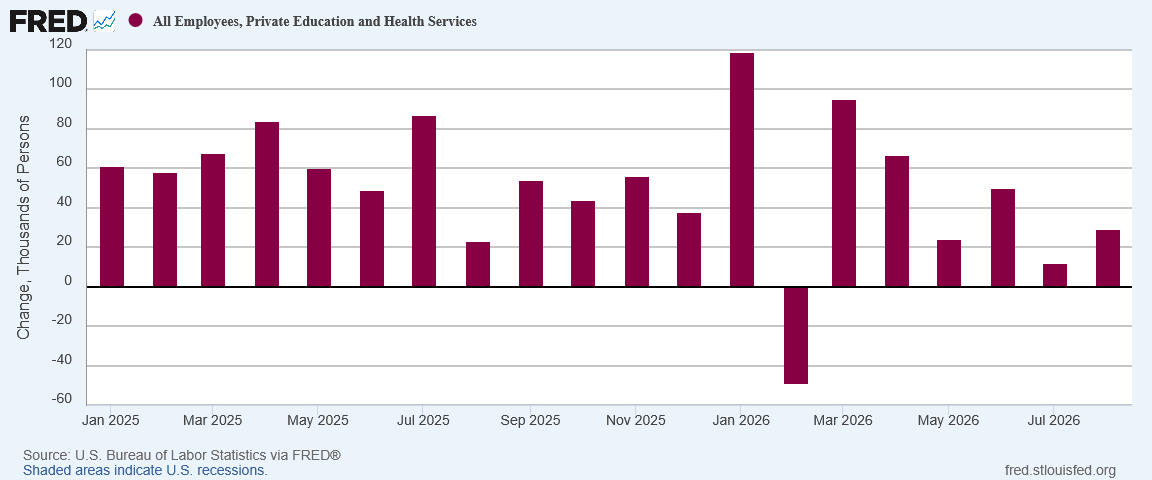
Mining, TTU, Professional Services all showed job gains
While not a complete across the board increase in jobs, with all but two sectors reporting positive job growth the August ESS is a relatively balanced jobs print.
Unemployment Declined
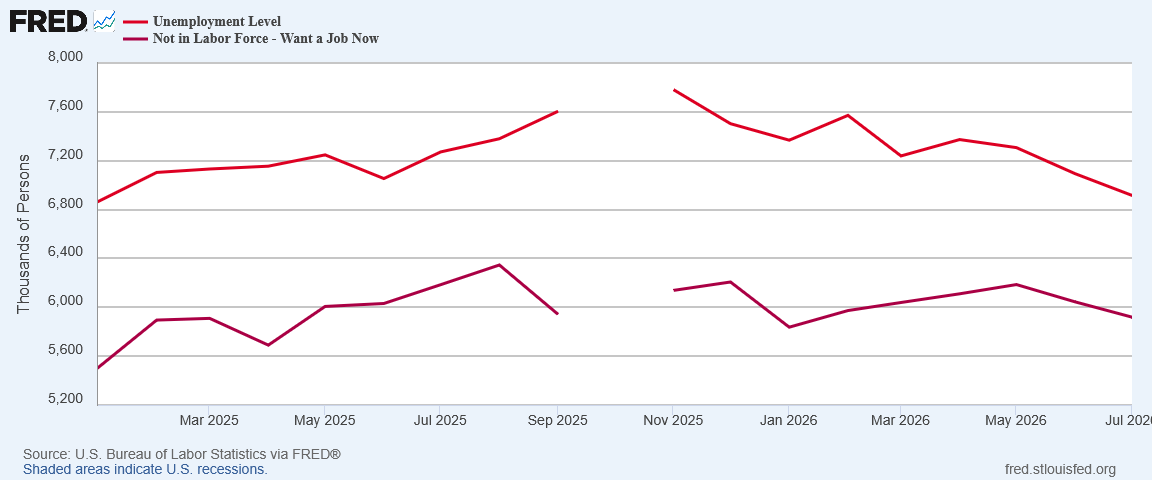
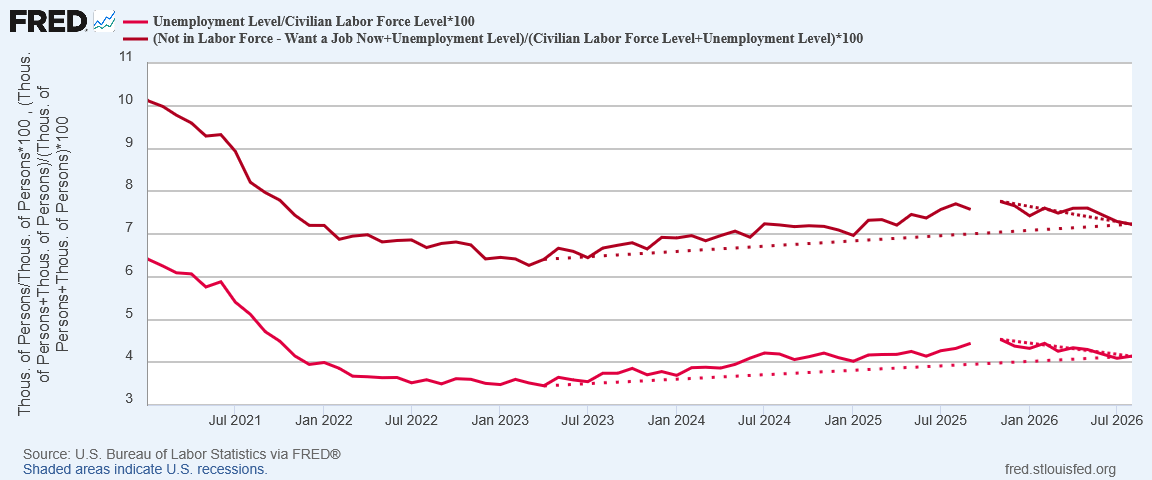
Perhaps even more encouraging than the job growth numbers is the decline in unemployment, both at the official level and at the “real” level (with those not in the labor force but who want a job now included).
The real unemployment rate declined marginally, to 7.2%. The official rate remained steady at 4.1%
In both official and real terms, joblessness has been trending down since the beginning of the year, marking a true trend reversal from the rising jobless numbers we have seen since 2023.
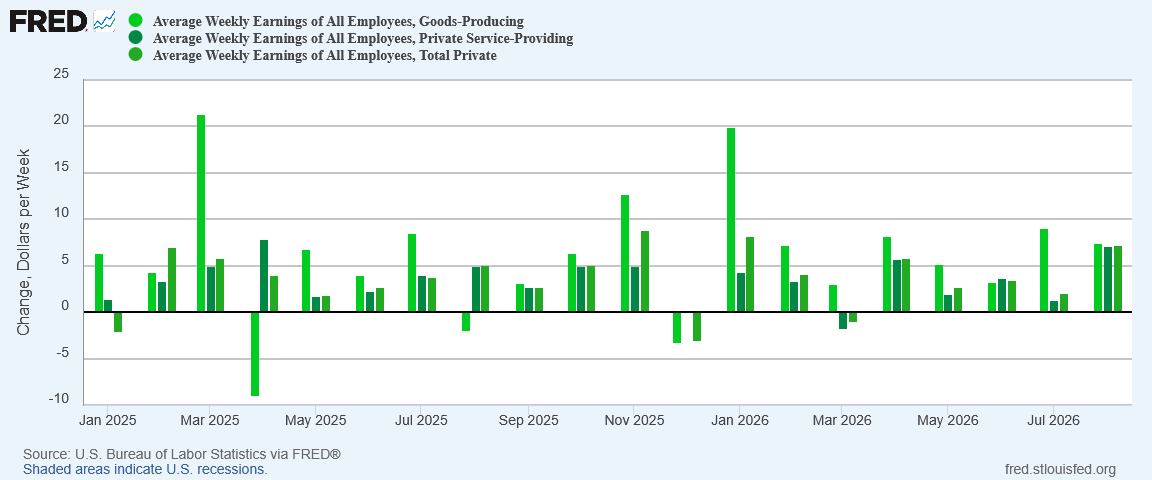
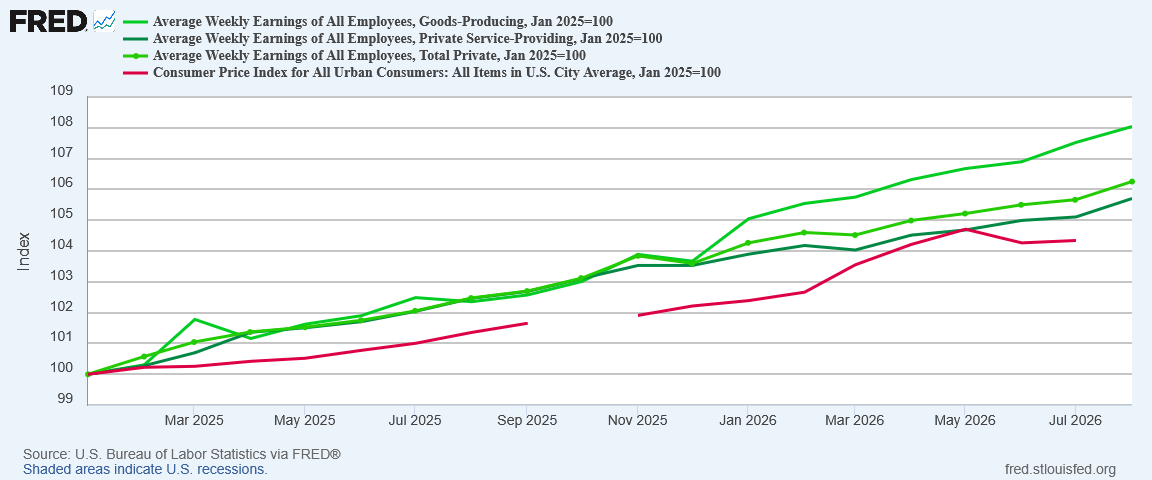
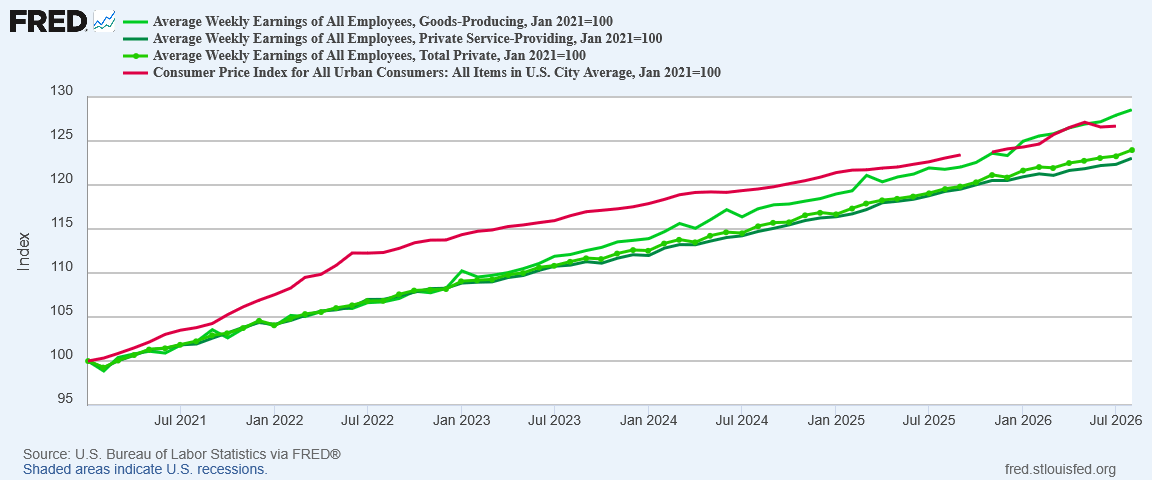
This chart alone should be reason enough for the FOMC to leave interest rates alone. Inflation is not a problem when wage growth exceeds it—if prices go up 10% while wages go up 20% real wages are still up 10%. Since President Trump took office, wages are beating inflation. If inflation rises significantly and threatens to overtake wages, as nearly happened between February and May, a rationale begins to emerge for higher interest rates. With that not happening, there simply is no reason to tinker with the federal funds rate at this time.
Goods producing wages have already recovered for the most part (even with the price shocks from the war with Iran), and Service Providing jobs are getting closer.
An interest rate hike now would threaten future wage growth.
Do Other Data Sets Confirm The ESS?
The major challenge in accepting the August Employment Situation Summary at face value is that it is so much at odds with the ADP National Employment Report—the two reports vary by some 90,000 jobs.
The July JOLTS report also did not give any signals that a major employment surge was in the offing. We will have to wait for the August JOLTS report to see if we get confirmation of the BLS data.
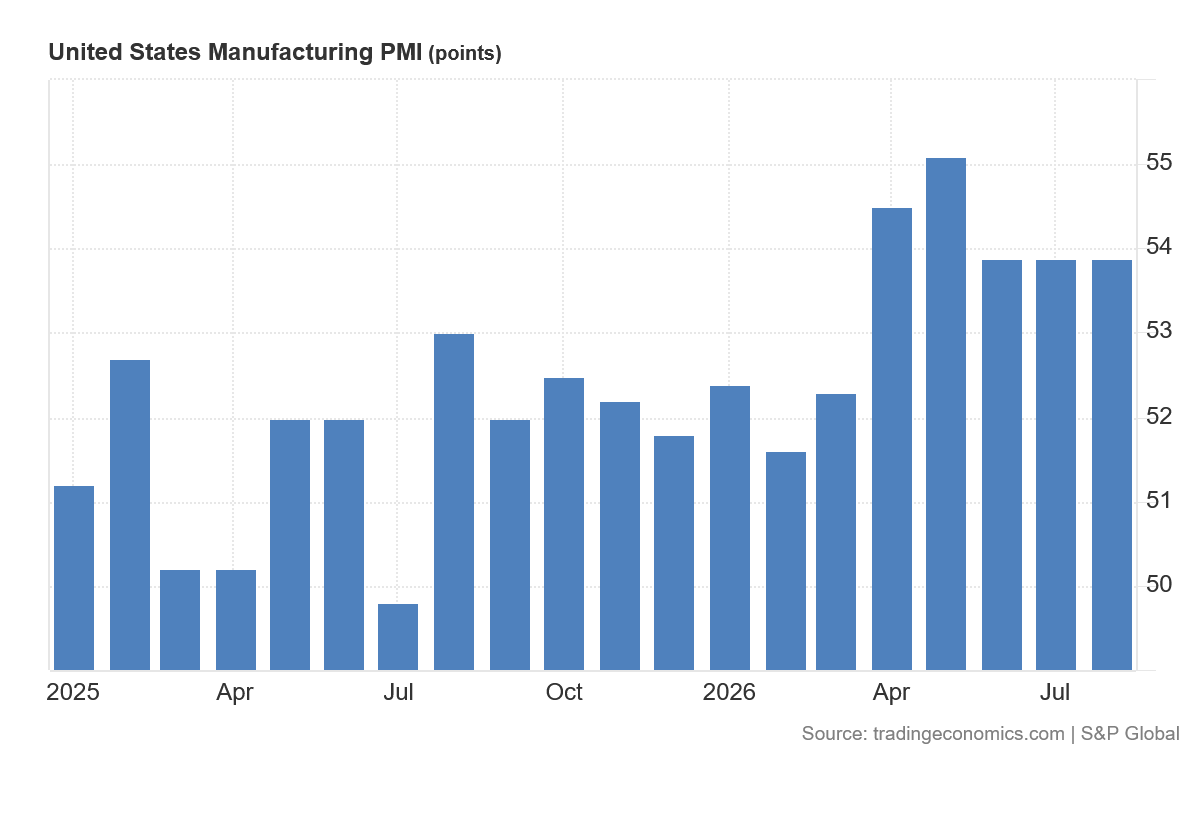
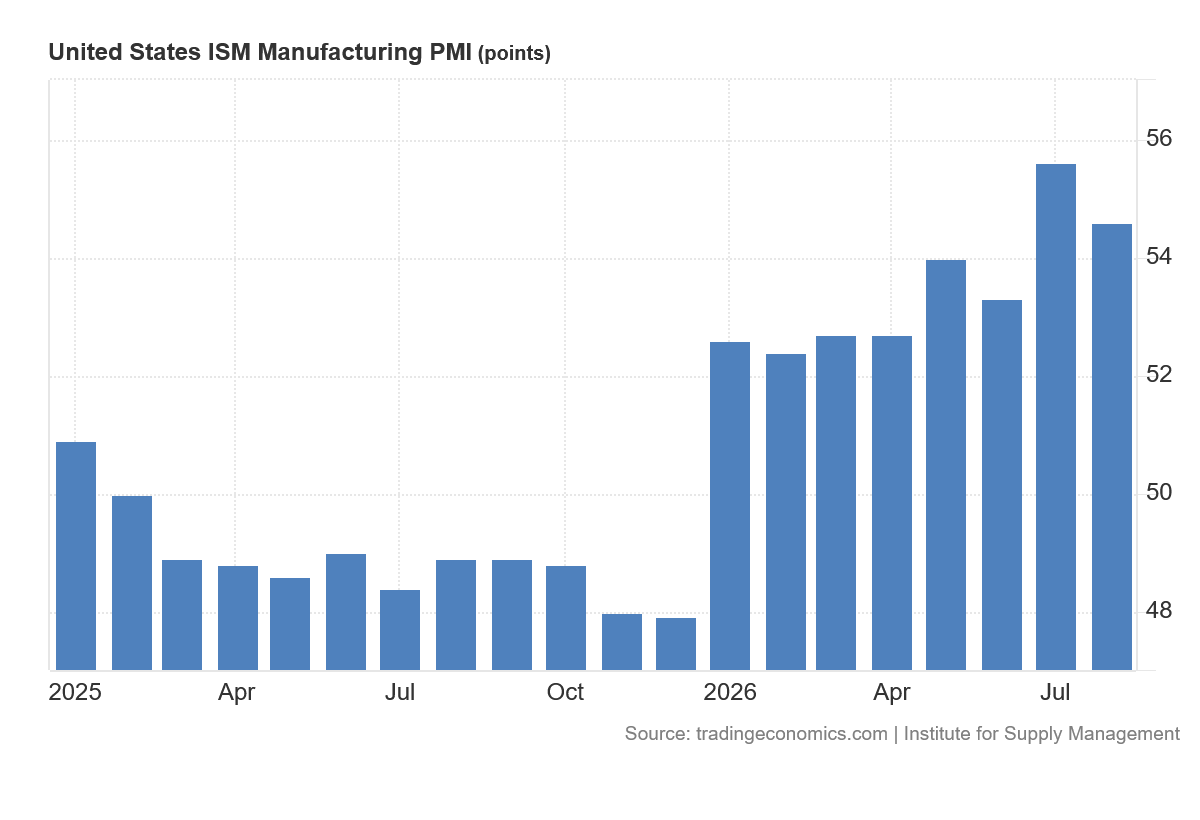
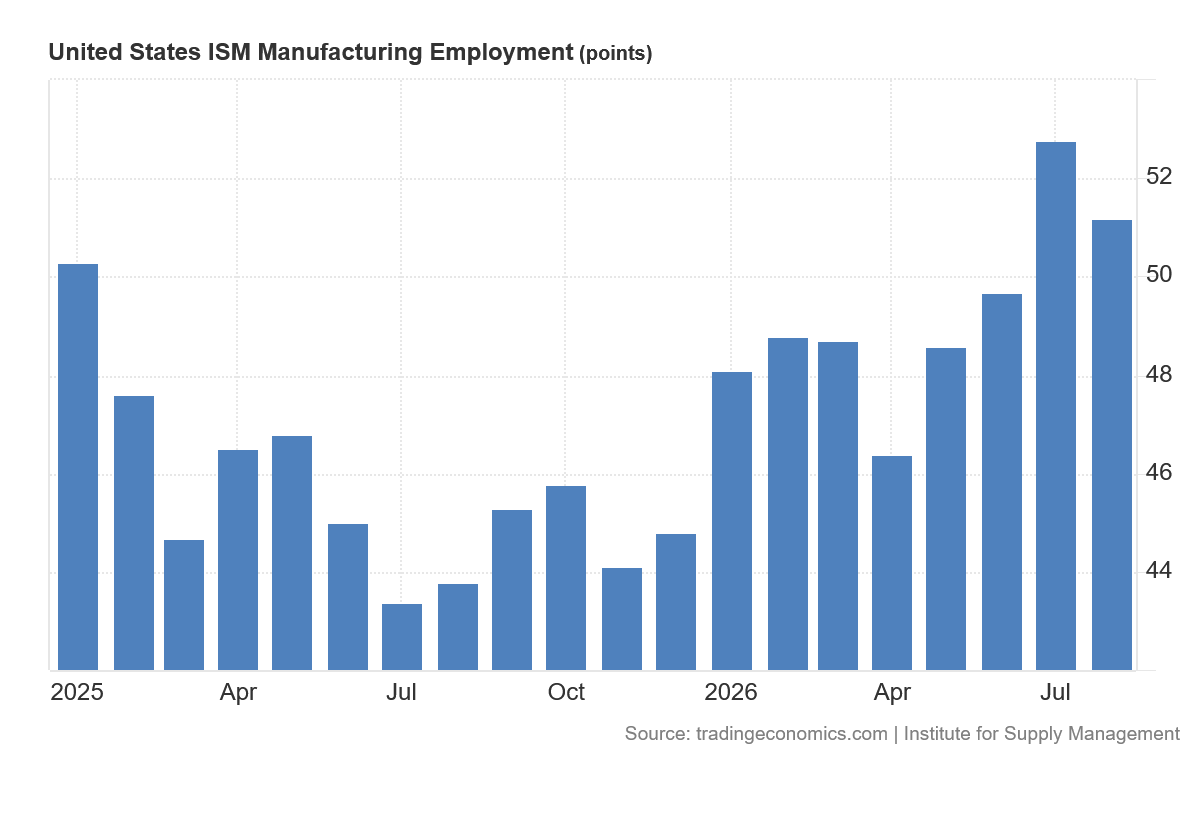
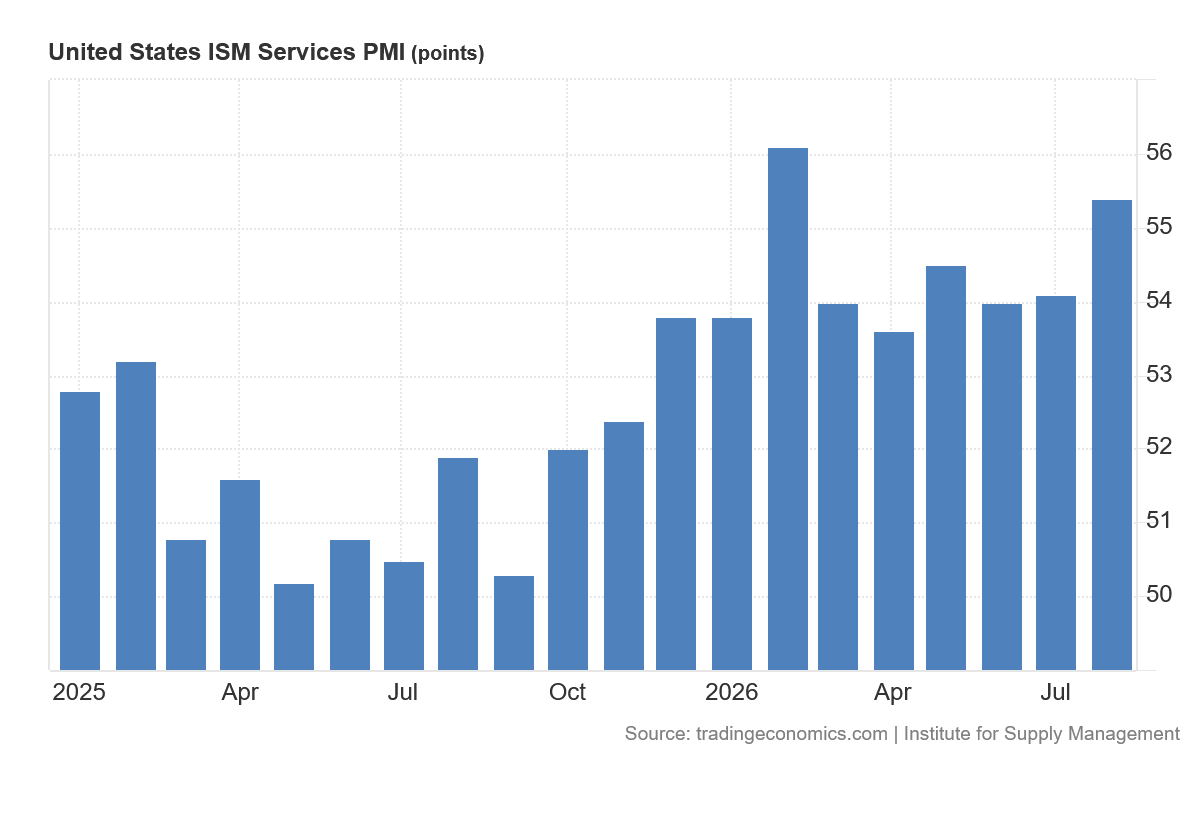
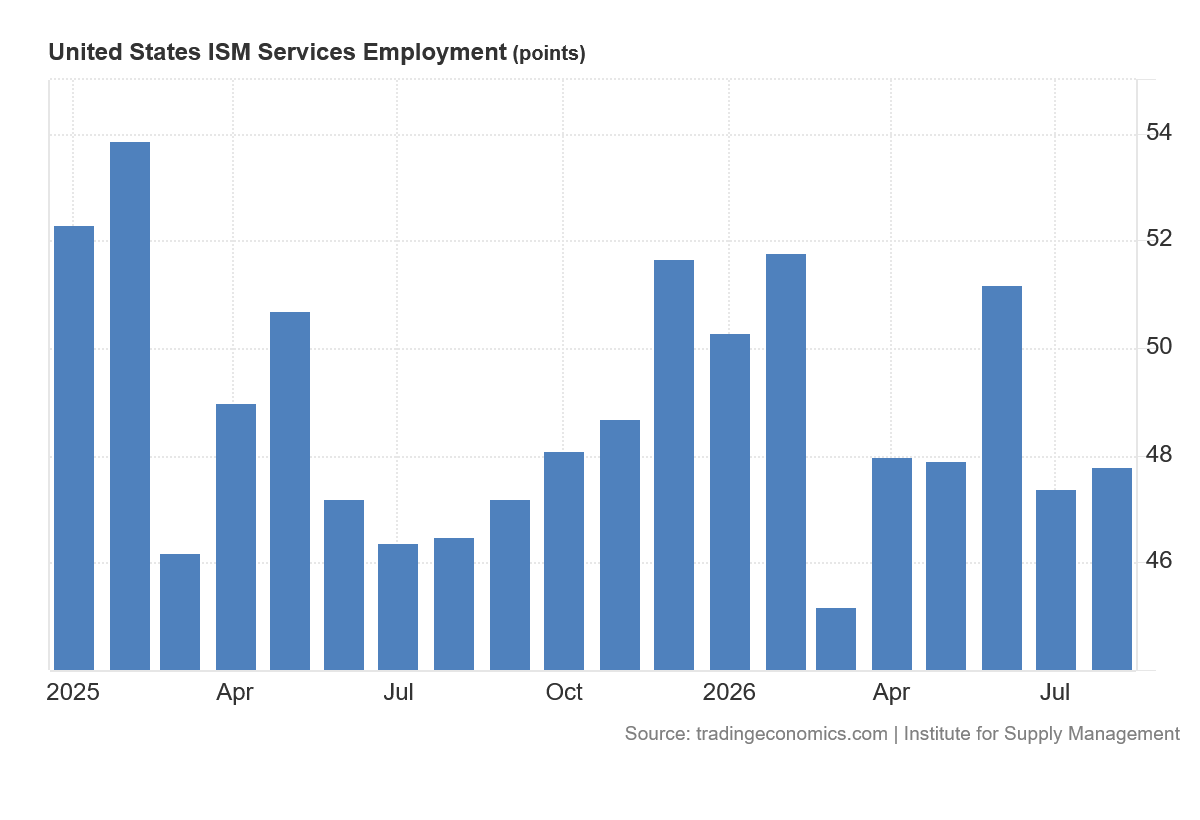
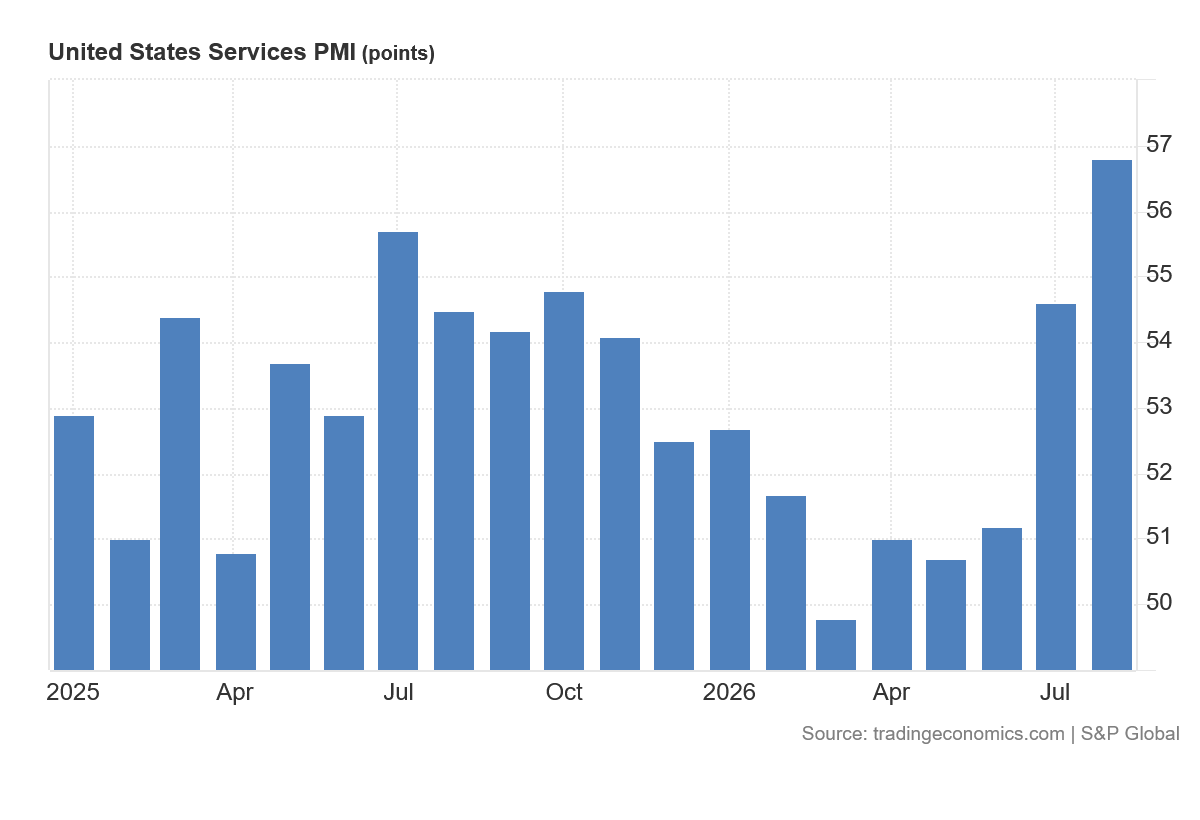
As we noted with the ADP jobs data, the PMI data sets paint a relatively rosy picture of the employment situation for the US economy.
While the ISM Manufacturing Employment index has been slow to move into expansion, it finally did so in July, and remained in expansion for August at 51.2.
The ISM Services PMI released last Thursday showed the expansion widening to 55.4
The PMI data was notable for being a contrarian signal for the ADP report. Aside from the Services Employment metric, both the ISM and S&P Global PMI metrics are confirming signals for the Employment Situation Summary.
By all accounts, there was genuine and significant job growth in the US in August. For whatever reason, ADP appears to have missed most of it.
Definitely Not A Job Recession
At a minimum, the August Employment Situation Summary pushes back at least for the current month fears of a return to job recession in this country. Unless between September and October we see downward private sector job revisions totaling 100,000, we are looking at a good job report.
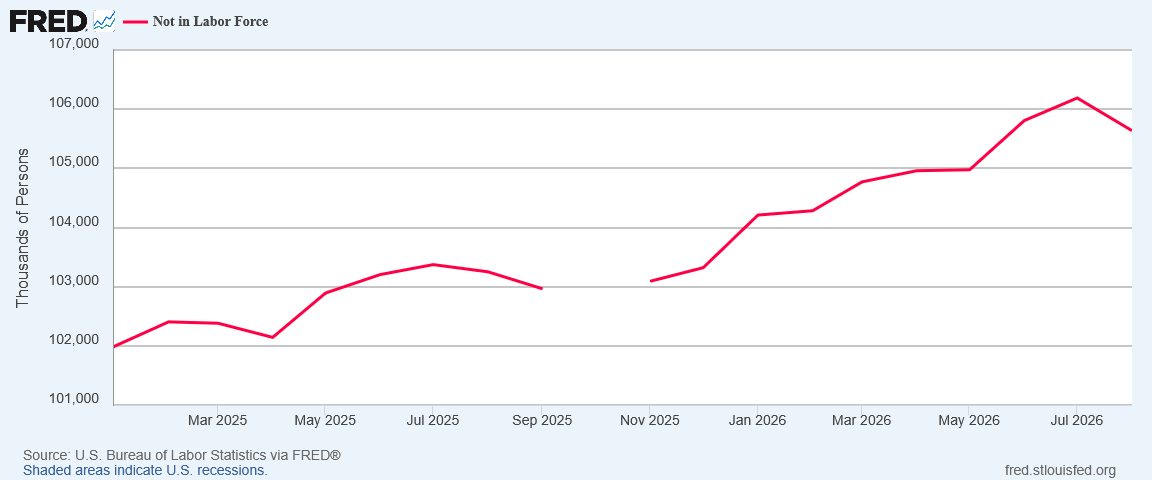
There was job growth. There was reduction in both the real unemployment level and the real unemployment rate. There was a significant reduction among those persons not in the labor force at all.
There was wage growth.
Within the report itself, there is no denying that the Employment Situation Summary shows US labor markets “firing on all cylinders”.
While the ADP report calls into question the Employment Situation Summary, the PMI metrics largely confirm the report.
Wall Street certainly believes the report, and believes the Fed will act on the August jobs report by raising interest rates.
While we always have to pay attention to the job revisions that come out with each report, as the BLS has been quite notorious in the past for magically walking back stellar job growth numbers, unless there is a dramatic reduction in September or October, the August ESS report is telling us that US job markets are not in the shaky condition the JOLTS report has been showing for the past couple of months.
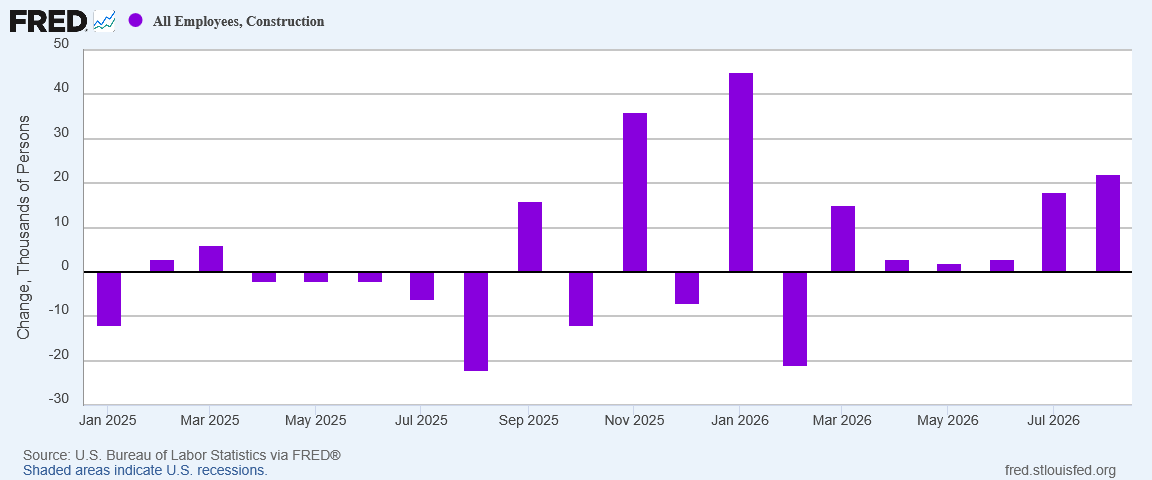
Is some of the labor increase seasonal in nature? That is a possibility, especially for the 62,000 Leisure jobs, as many positions have a seasonal aspect to them.
What should we make of the data if the August JOLTS report does not show similar increases in Net Hiring? On the surface, this strongly suggests a problem with the data, for if there were 162,000 new jobs in August, we should expect to see net hiring of 162,000. When the March and April jobs reports were printing red-hot job growth, we were seeing similar figures from the JOLTS reports as well.
The August JOLTS data is due out on September 29th. Then we will know how realistic the August ESS data is.
In a couple of weeks, we will have the Capacity Utilization and Industrial Production figures for August from the Federal Reserve. If we see indications there of significant industrial expansion, that will give further credibility to the jobs data. If there is a drop in industrial production, we will have reason to question the jobs data.
While all jobs data must be taken with a grain of salt, at present the August Employment Situation Summary cannot be easily dismissed as a dumpster fire of Lou Costello Labor Math. We have only a single report refuting the data and numerous other indicators confirming it.
The US economy very likely did see significant job growth in August. While the Fed will likely misuse that result to raise the federal funds rate, for today we have good news within American labor markets.
Every article I publish takes time, care, and independence. A paid subscription fuels that work and shields it from outside pressure. If you’re able, join me today.
Some surprising data, and we know we can count on Peter to unravel the mysteries as more data comes in. For now, there is data that can realistically be turned into votes for Trump’s agenda, and that’s what we need!
Something that the data doesn’t directly address is what is actually being said about the state of America. If more jobs are being created in health care, does that mean that Americans are becoming sicker and more disabled? If more jobs are being created in drinking places - I.e. bars - does that mean people have more disposable income to go out and have a good time, or does it mean that more people have given up on ever having a worthwhile life, and have decided to just stay drunk? I’d love to see reliable data on this, but I imagine it’s mostly spun figures to support narratives.
You are wonderful to be such an objective, fact-based source of information, Peter. Thank you!






Some surprising data, and we know we can count on Peter to unravel the mysteries as more data comes in. For now, there is data that can realistically be turned into votes for Trump’s agenda, and that’s what we need!
Something that the data doesn’t directly address is what is actually being said about the state of America. If more jobs are being created in health care, does that mean that Americans are becoming sicker and more disabled? If more jobs are being created in drinking places - I.e. bars - does that mean people have more disposable income to go out and have a good time, or does it mean that more people have given up on ever having a worthwhile life, and have decided to just stay drunk? I’d love to see reliable data on this, but I imagine it’s mostly spun figures to support narratives.
You are wonderful to be such an objective, fact-based source of information, Peter. Thank you!
Nice to hear some good news even if it is uncertain.