


When the ADP National Employment Report for August was released, there were only two words to describe it: it sucked.
When the ADP National Employment Report for September was released the other day, we got to use two other words to describe it: great news. ADP’s Chief Economist Nela Richardson summed the report up succinctly.

“It’s a strong report. After a three-month slowdown, job creation rebounded and pay growth remained solid.”

It was a strong report—strong enough to surpass Wall Street expectations by some 20,000 jobs.

The ADP jobs report gains added heft through other data which provide good confirmation that the numbers are at least broadly correct.
ADP is reporting that there were 90,000 more jobs at the end of September than at the beginning. Going from 38,000 jobs in August, that is a remarkable turnaround
The jobs recovery will last a little while longer!
Unemployment Claims Confirm The Data
A quirk of timing makes this week a distinctly crowded week in terms of official economic data. In addition to the August Personal Income and Outlays report coming out on Wednesday alongside the ADP jobs report, the BLS’ Employment Situation Summary prints today, and yesterday saw the weekly unemployment numbers released.
With September only just ended, the weekly unemployment data provides a clear confirmation that the ADP numbers are not wrong.
In the week ending September 26, the advance figure for seasonally adjusted initial claims was 197,000, a decrease of 1,000 from the previous week’s revised level. The previous week’s level was revised up by 1,000 from 197,000 to 198,000. The 4-week moving average was 200,000, a decrease of 2,500 from the previous week’s revised average. The previous week’s average was revised up by 250 from 202,250 to 202,500.
The advance seasonally adjusted insured unemployment rate was 1.1 percent for the week ending September 19, unchanged from the previous week’s unrevised rate. The advance number for seasonally adjusted insured unemployment during the week ending September 19 was 1,701,000, a decrease of 11,000 from the previous week’s revised level. The previous week’s level was revised down by 7,000 from 1,719,000 to 1,712,000. The 4-week moving average was 1,723,750, a decrease of 18,500 from the previous week’s revised average. The previous week’s average was revised down by 1,750 from 1,744,000 to 1,742,250.
At 197,000, the initial claims data declined for the fourth consecutive week even after revisions.
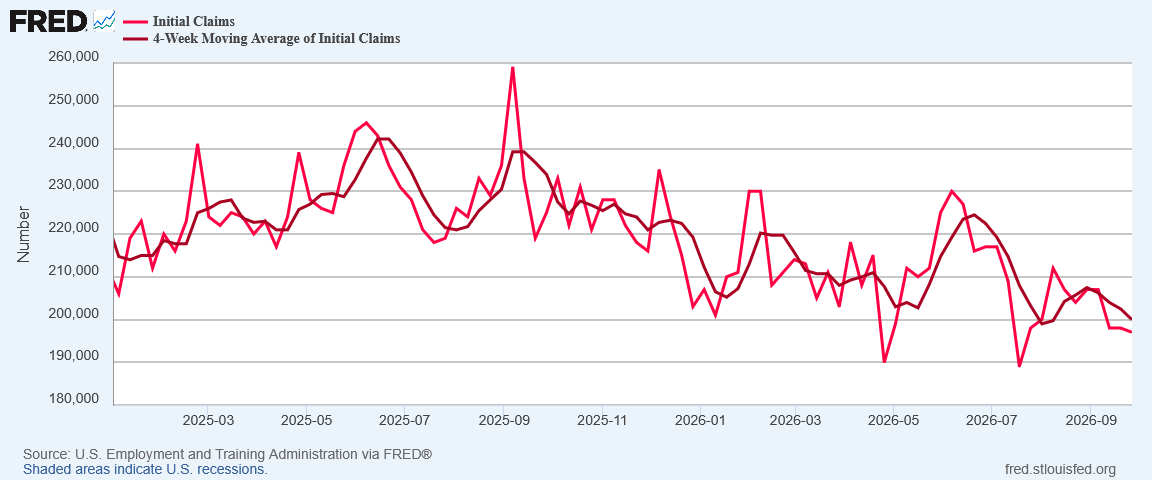
Far more significant, however, is the longer term decline in initial unemployment claims stretching back to June of 2025. Since last summer, initial claims have dropped by over 40,000. The jobs recovery which began earlier this year arguably has been gathering momentum since that time.
The 11,000 drop in continuing claims is also the continuation of a long-term trend, although one beginning slightly more recently, in November of last year.
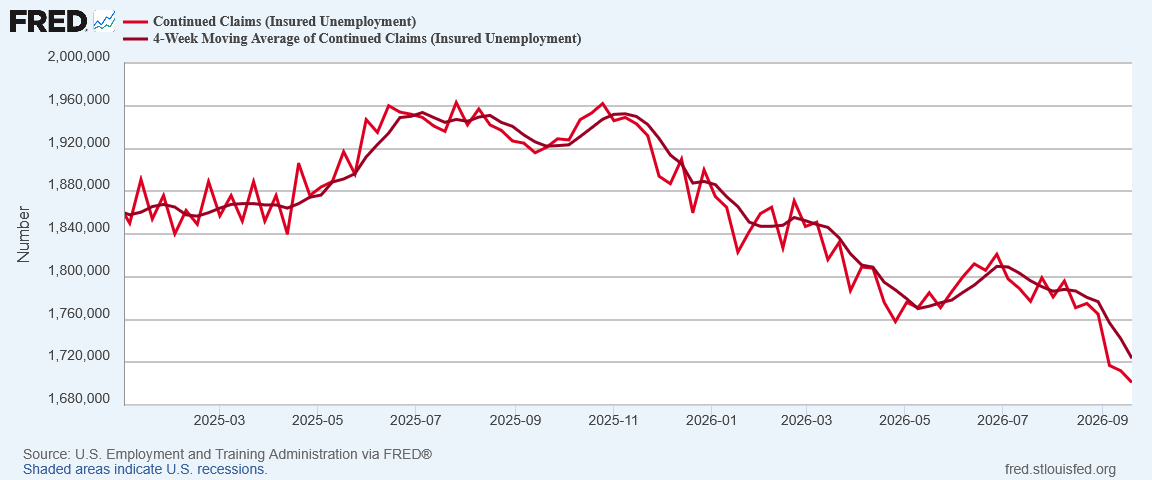
In the Trump economy, fewer people are becoming unemployed, and fewer people are remaining unemployed for very long. A jobs recovery requires more than that—a jobs recovery requires sustained substantial job growth—but people not being put out of work is a very important first step in having a sustained jobs recovery.
ADP Report Shows Broad Hiring Across Most Sectors
With only three sectors showing job loss for September, the ADP report shows job growth in September that is not only substantial in size but is broadly based as well. Job growth that is spread across multiple sectors is a stronger signal of economic health than job growth that is concentrated in only a single sector.
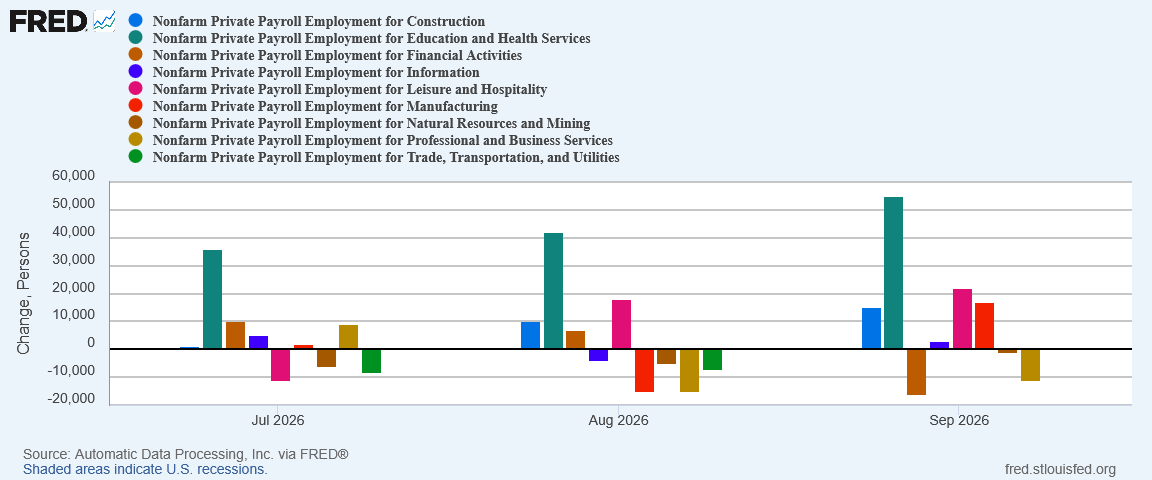
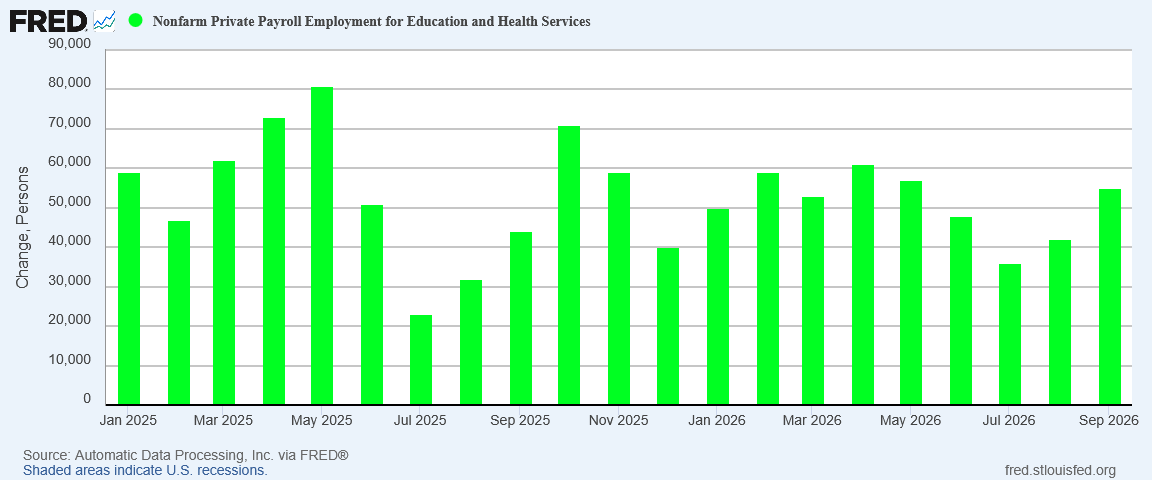
As has so often been the case, Healthcare had the biggest gains at 55,000 jobs.
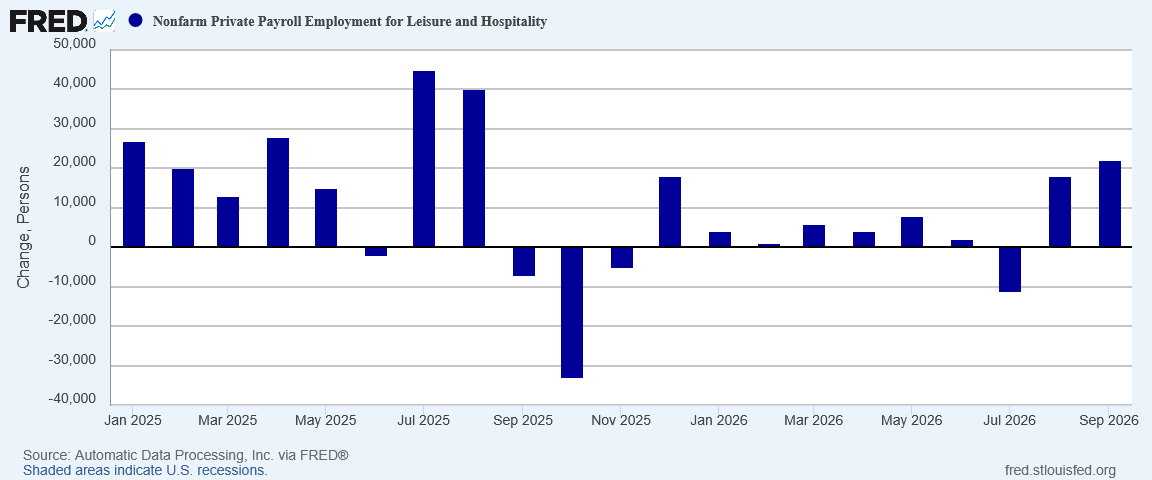
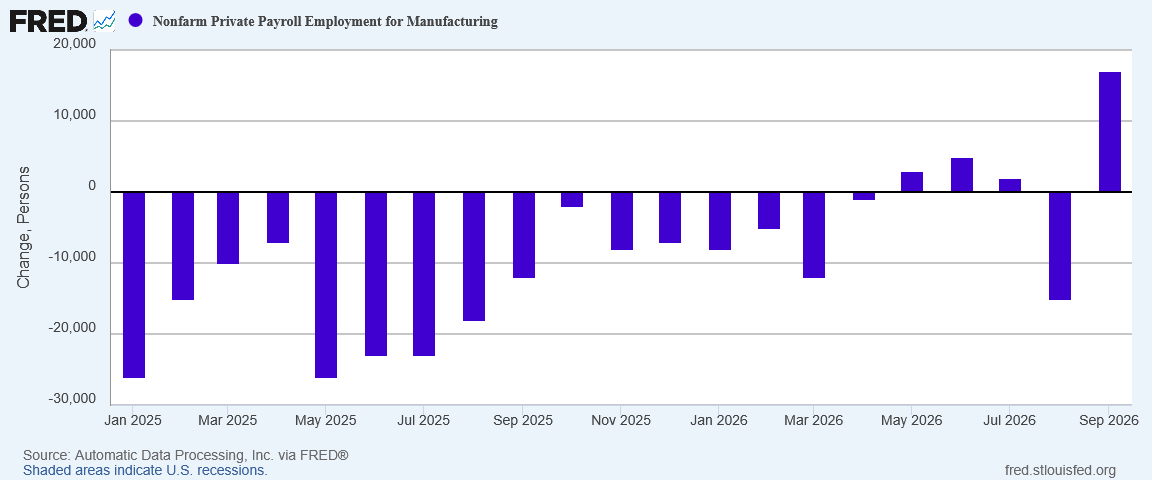
Leisure came in a strong second at 22,000 jobs, and Manufacturing was right behind that at 17,000 jobs.
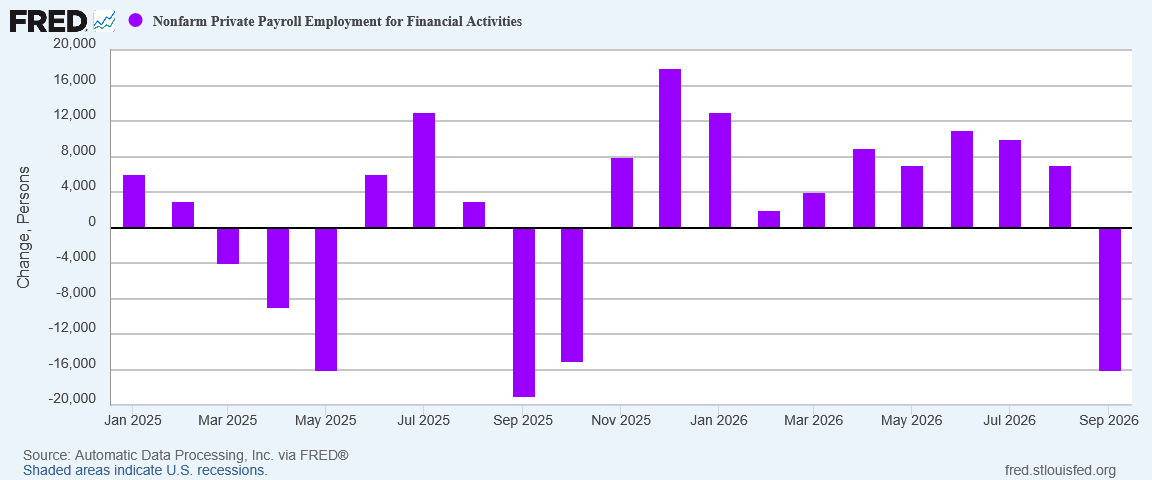
The surprise jobs loser for the month was Finance, shedding 16,000 jobs in a surprising reversal from a strong summer of job growth.
Information eked out a small reversal to the upside, producing 4,000 jobs. Mining and Professional Services, which have been languishing for some time, continued to suffer job loss in September. Trade, Transportation, and Utilities, which has shown job loss for the past two ADP reports, managed to break even.


The cumulative impact across all sectors was the strong headline number.
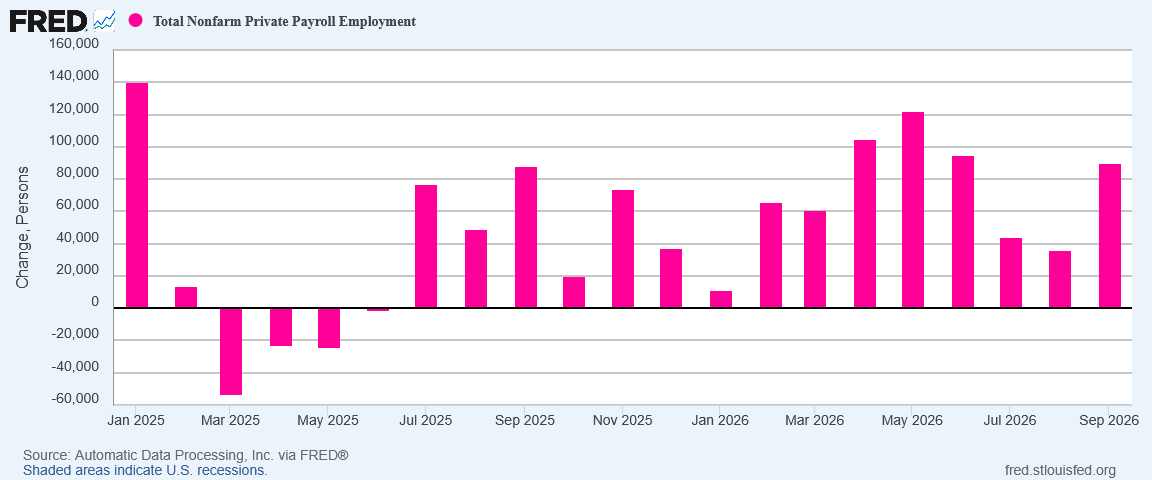
This was healthy job growth in September, and a clear continuation of the jobs recovery. That is welcome clarity after the poor job reports from July and August.
PMIs Still Agree
As I mentioned when discussing the August JOLTS report, the Purchasing Manager Index data from the Institute for Supply Management provides clear confirmation signals that the job growth we are seeing is real.
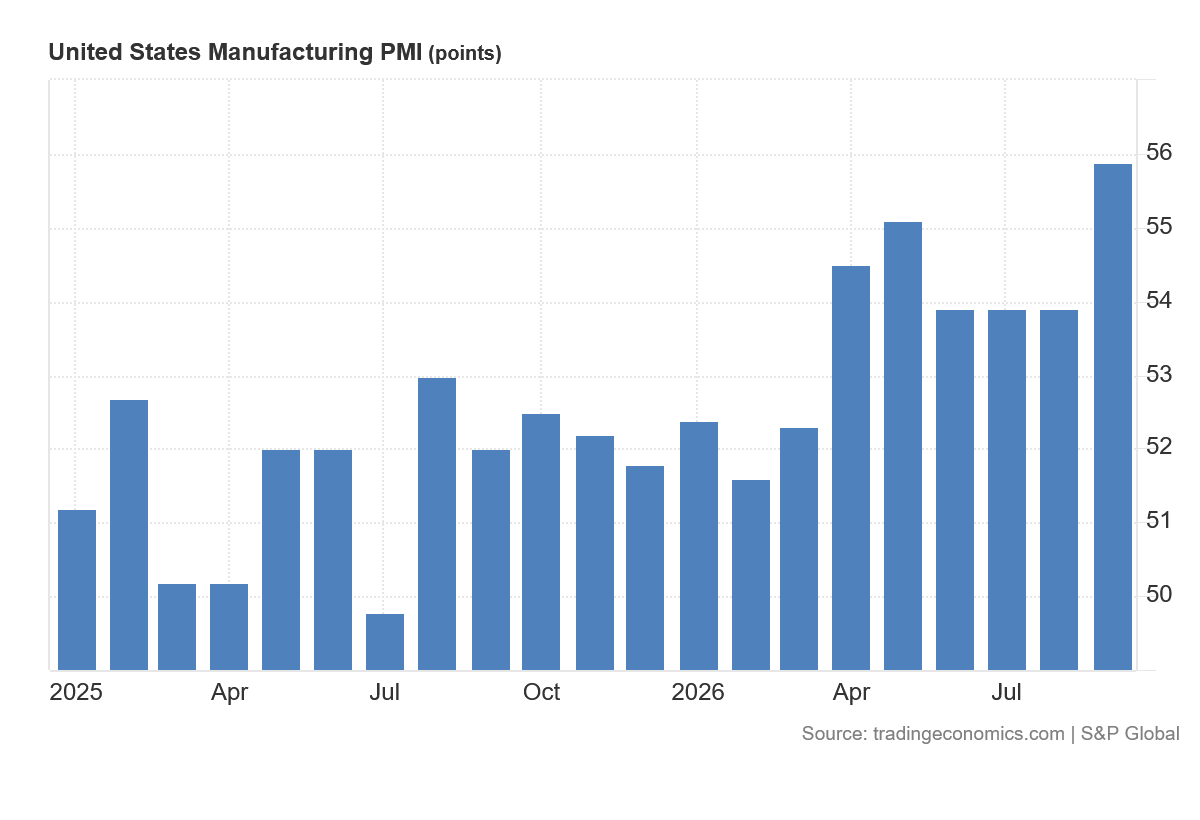
To that set of positive signals we can add the PMI data from S&P Global. While S&P Global has shown Manufacturing to be solidly in expansion territory for virtually the whole of the second Trump Administration, in September that metric surged yet again, to 55.9.
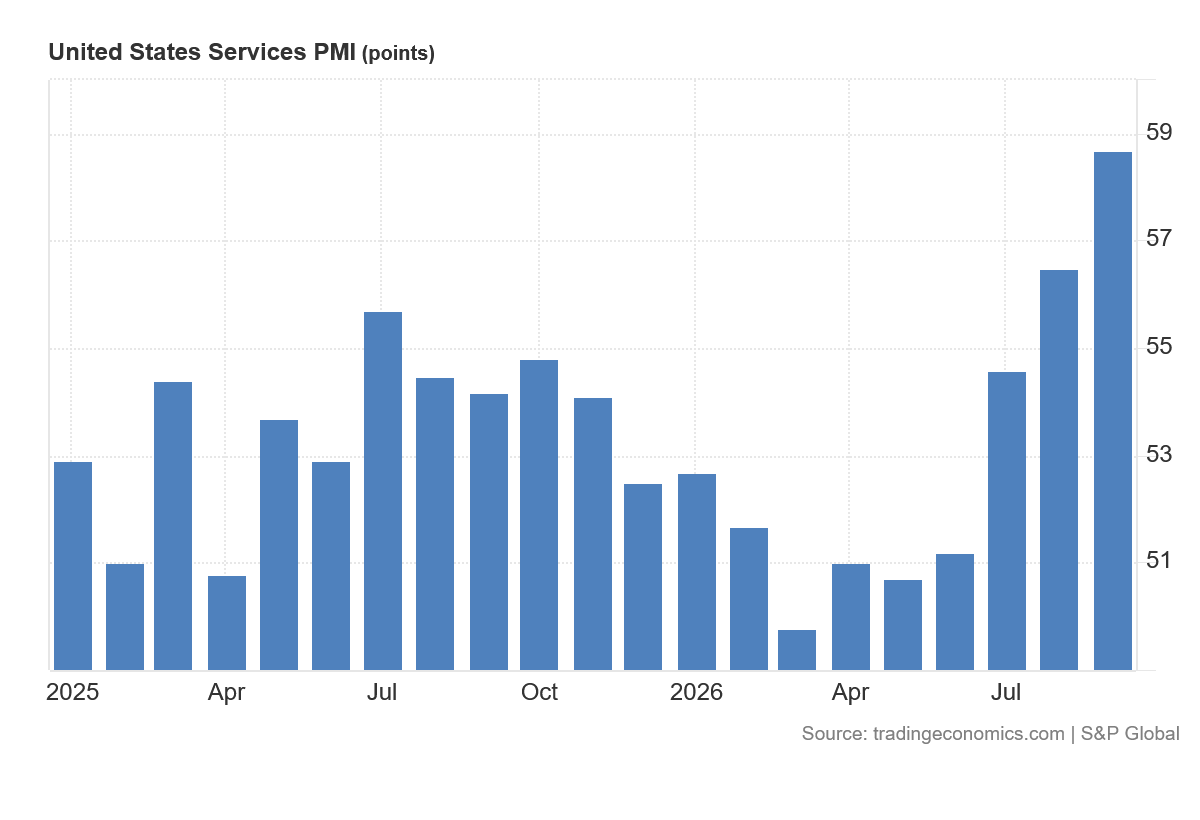
Services showed a similar burst of new expansion, rising to 58.7.
Ironically, the Composite S&P Global PMI shows an economy that has been gaining additional strength and momentum ever since the start of Operation Epic Fury and the war with Iran.
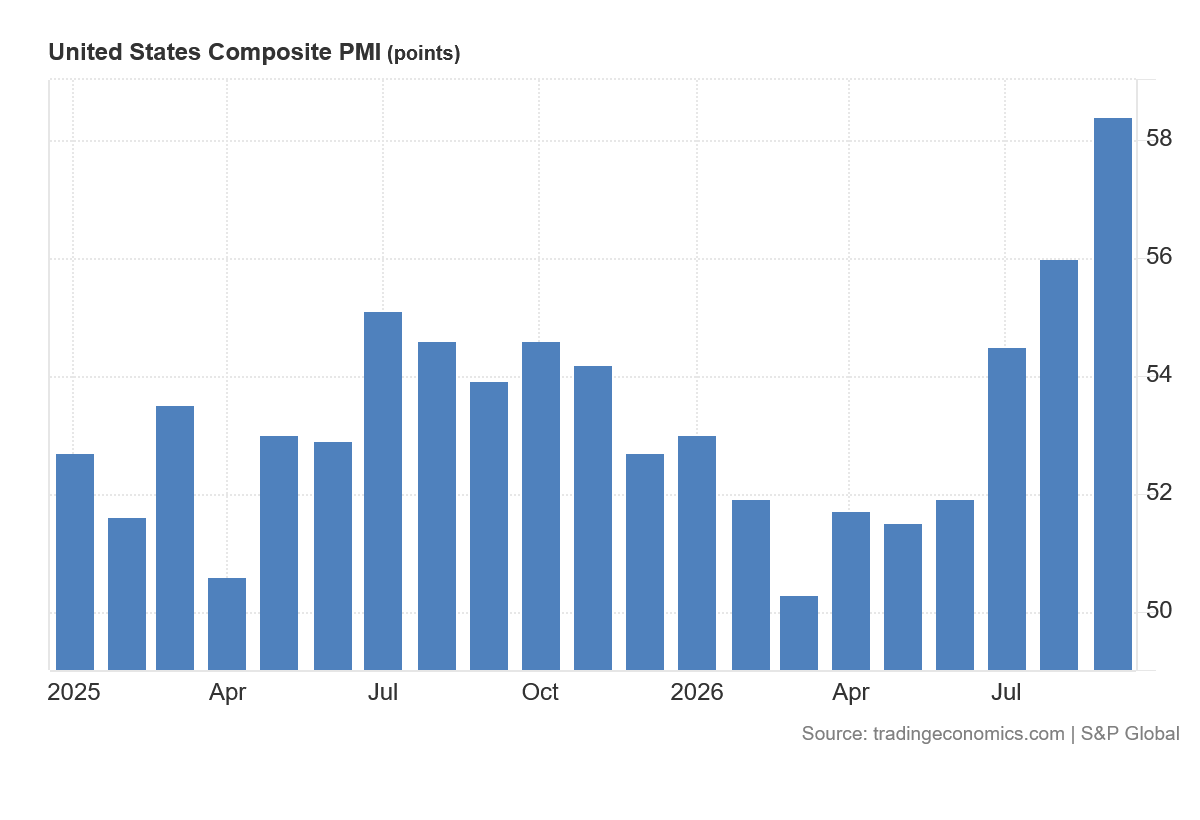
Has the war been “good for business”? Wars quite frequently stimulate a nation’s economy, at least at first, as the government presses large amounts of resources into action to further war aims. Over time, as resources are pulled away from private sector consumption, inflation can set in, and wartime resource needs can distort an economy from what it would be during peacetime.
We also have been witnessing the economic destructiveness of war in Putin’s war in Ukraine for both Russia and for Europe. We should not pretend the war with Iran is incapable of inflicting similar attritional damage on the US economy should it continue for a long enough period of time.
At present, however, such risks are future potentials for the United States.
ADP Jobs Report Answers JOLTS Question: This Is Lasting
The JOLTS report wrapped up the employment picture for August largely presenting a single question: would the jobs recovery last?
The September ADP jobs report is giving us a preliminary positive answer to that question: the jobs recovery is lasting, for now.
All of the external data sets which confirm the job growth in the August JOLTS are fresh enough to confirm the September ADP jobs report as well. Given those external numbers and the strong JOLTS job growth figures, we should not be surprised that ADP had a strong jobs print for September. A number of signals pointed to exactly that outcome.
To those signals we can add the growing expansion being depicted in the S&P Global PMI data, as well as the Department of Labor’s weekly unemployment claims. These are two more data sets providing yet further confirmation that the ADP jobs numbers are real. These are also two more data sets which signal the September Employment Situation Summary will also be a strong report.
Small wonder Wall Street is projecting the September ESS will show 90,000 jobs.

We know the jobs recovery will not continue indefinitely. Eventually we will see another significant slowdown in job creation. Even without the bumbling nuisance of Kevin “Completely Wrong” Warsh choosing to risk the jobs recovery for the sake of the Fed’s “Holy Grail” inflation target, there will come a point where this jobs recovery, like all economic expansion cycles, will peak and then start to reverse.
The recent surge in global bond yields may very well be what derails this jobs recovery. Rising yields mean falling bond prices, but falling bond prices means a rising cost of capital. Borrowing costs are rising for businesses everywhere, including here in the US. If the yields rise far enough and stay elevated for long enough businesses both large and small will be constrained to cancel or at least delay the sort of investments needed to propel ongoing job growth.
The risks which could upend and halt this jobs recovery are quite real, and should not be ignored. However, future risk is not present calamity. Forces unfolding in the global economy may yet disrupt job creation here in the United States, but so far that has not happened.
We cannot say with certainty that October will be a strong month for jobs. ADP is already saying with certainty that September is a strong month for jobs.
The jobs recovery is going to last at least a little while longer.
I know you’ve been concerned about a jobs recession for a long time, Peter, so if the new data reassures you (for now), today’s numbers are indeed great news. And great numbers are just what Republicans need mere weeks before the midterms!
In the sectors that saw jobs decline, such as Information and Profession Services, is there any explanation for it? Are analysts blaming AI, or some worrisome erosion in the economy?