


Yesterday was not a victory for the notion of transparency in government.
For three hours, Anthony Fauci, former head of the National Institute of Allergy and Infectious Diseases (NIAID) and a chief architect of the COVID Pandemic Panic, sat in front of Rand Paul’s Senate Committee on Homeland Security and Governmental Affairs and refused to say anything other than that he was invoking his Fifth Amendment rights against self-incrimination.
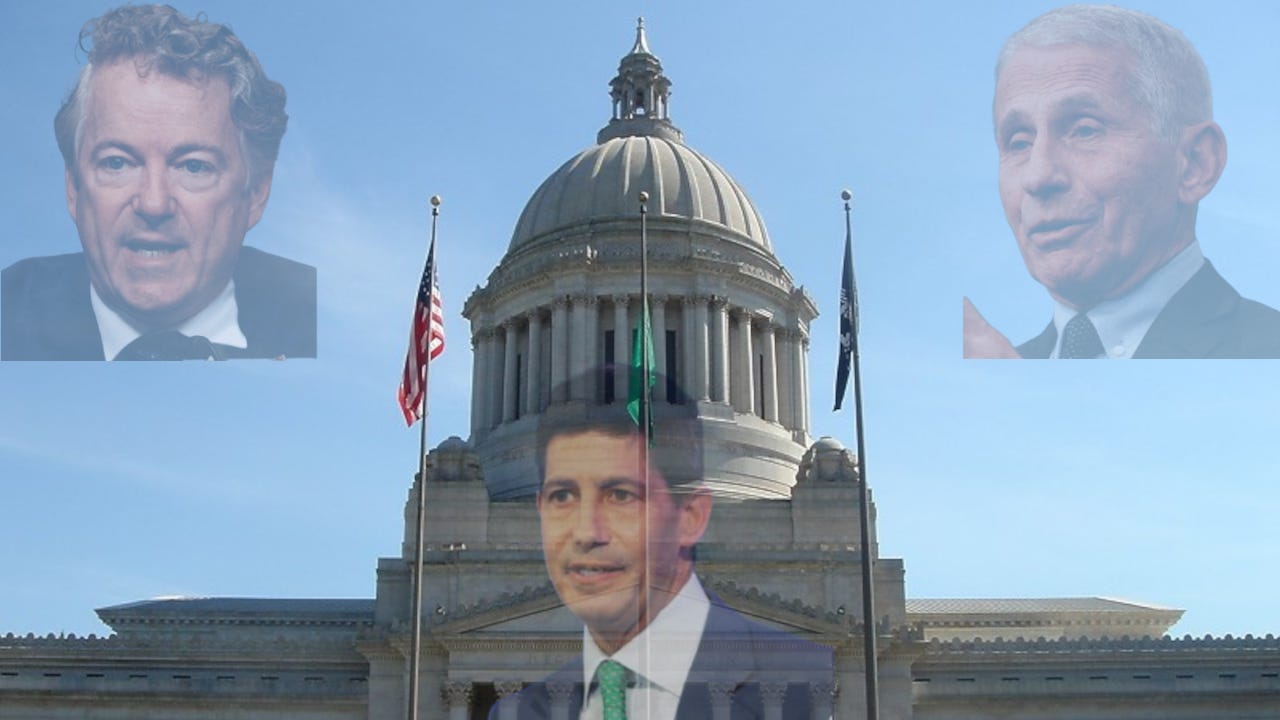
On the advice of counsel, I respectfully decline to answer based upon my rights under the Fifth Amendment of the Constitution.
Quite literally, for three hours, that was his response to every question. This despite having a full pardon from President Joe Biden for anything he might have done as NIAID Director.
With much less fanfare but no less significance, Federal Reserve Chairman Kevin Warsh gave his own presentment of obfuscation, giving a forty-five minute press briefing in the wake of the July meeting of the Federal Open Market Committee and managing to avoid explaining at all why the FOMC chose to stand pat on the federal funds rate for the seventh month in a row.
Anyone hoping for fresh insights into the debacle that was the COVID Pandemic Panic, or how the Federal Reserve intends to force consumer price inflation back to the Holy Grail level of 2 percent year on year came away today disappointed.
Between Fauci’s Senate testimony and Warsh’s press conference, a ginormous amount of words were spoken. Between Fauci’s Senate testimony and Warsh’s press conference, not a damn thing was said.
Pardon? What Pardon? I Plead The Fifth
I’m rather glad I gave my observations about Anthony Fauci reacting to the release of his diary entries rather than waiting for yesterday’s Senate hearing. At least with the diary entries there was material inviting commentary.
What commentary can one have over someone invoking his Fifth Amendment rights against self-incrimination?
What was notable about Fauci’s testimony is that he invoked right away, at the conclusion of his opening remarks.
Mr. Chairman. Member Peters. Members of the committee, I served at the NIH for over 54 years, 38 of those as director of the National Institute of Allergy and Infectious Diseases. Over that period, I proved that I believe in and respect the value of legitimate congressional oversight. In fact, I testified before and or briefed Senate and House committees Well over 200 times over those 38 years. During and after the COVID pandemic, I have appeared multiple times for hearings in the Senate and the House, usually under oath and sat for several days long transcribed sworn interviews, answering questions about the very issues that are now the subject of this hearing.
However, given Senator Paul’s obvious obsession with calling for my prosecution, his repeated slanderous comments about me, and recently his publicly releasing my unredacted personal diary aimed at embarrassing and intimidating me, the only conclusion I can reach is that the sole reason he is calling me before this committee is to get me to say something, anything that could vindicate his repeated public pledges that I end up in his words, quote, behind bars, unquote.
Any reasonable person who has followed his unhinged obsession with me would readily come to the same conclusion. Therefore, although it pains me to do so because of the respect I have for the legislative branch of government and my decades-long record of cooperating with Congress, under the advice of my attorneys, I will invoke my right under the Fifth Amendment of the Constitution to refrain from answering your questions. Thank you.
The irony, of course, is that it is impossible for Anthony Fauci to incriminate himself with respect to the COVID Pandemic Panic. As one of his last acts before leaving office, President Joe Biden, via the infamous autopen, signed a blanket pardon covering everything Fauci might have done for the decade prior.
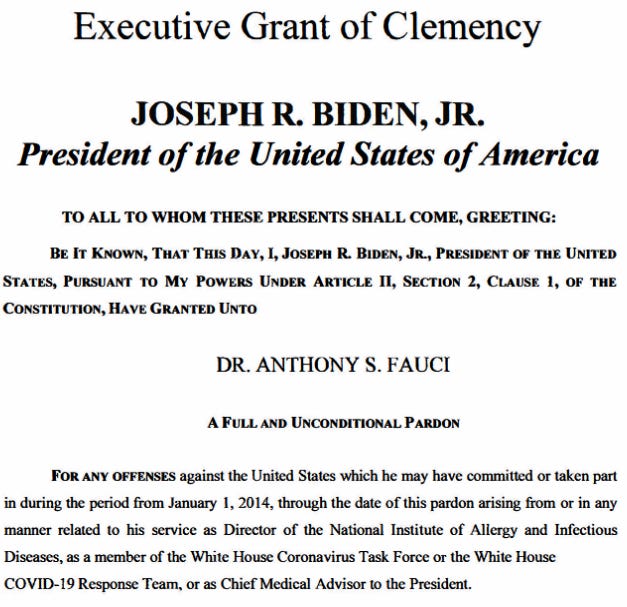
The presence of the pardon not only made Fauci’s invocation of the Fifth Amendment bizarre, it arguably made it criminal. For 130 years, the Supreme Court has held that a person who is immune from prosecution1, who cannot therefore incriminate himself, has no Fifth Amendment right against self-incrimination.
Fauci’s persistence in pleading the Fifth was completely boundless, extending even to refusing to answer the most basic questions, such as whether a red folder was in front of him.
Yes, that really happened.
With Fauci refusing to provide any answers at all, the hearing quickly devolved into the typical Washington Clown World theatrics, with Senators in both parties posturing and angling for catchy sound bites. By the end of the hearing some three hours later, absolutely nothing new had been learned. No new information was revealed. Three hours of words, and not a damn thing got said.
Forward Guidance? Try “No Guidance”
Kevin Warsh’s FOMC press briefing was shorter and without the histrionics which are de rigueur for any Congressional action. However, it was as noncommunicative as Fauci’s non-testimony when it came to clarifying Federal Reserve policy on interest rates and consumer price inflation. Not only did Kevin Warsh make good on his commitment to offer no forward guidance at the press briefing, he did his level best to provide no guidance at all.
With the very first question, Warsh chose to bob and weave rather than answer directly even a simple question about what he sensed Wall Street was telling him about where interest rates needed to go next.
Reporter: Thank you for taking our questions, Mr. Chairman. You’ve had a couple months now or nine weeks or whatever number it is to see the markets behave in the absence of forward guidance. I’m wondering if you could tell me what message are you getting from the markets as to where policy ought to be right now?
Kevin Warsh: Yeah, so I think officially it’s eight weeks and four days, but I’m not counting. The message from markets is the message from markets. What I’ve really been trying to do, Steve, as I think you appreciate, your colleagues appreciate, is getting an unfiltered message from markets, getting a direct message, letting buyers and sellers meet at prices for treasuries, for the foreign exchange value of the dollar, and then trying to judge for ourselves, what does that mean about our remit? How are we doing on inflation? How are we doing on employment? We’re trying not to interfere with that market signal. That’s part of the reason why we’ve been somewhat spare in our words when we pulled back from forward guidance. So they’re reacting to events, I would say, much more directly over the 42 days since we last met. This is a good thing.
As I mentioned in the prepared remarks, we’ve seen a material tightening, not just in nominal rates, but in real rates, too. And we’re observing it. We’re trying to stay out of that because, you know, many of you might be interested in our reaction function. We’re interested in the reaction of financial markets.
As for what message Kevin Warsh is hearing from Wall Street? Good luck finding it in that answer, because it isn’t there—a fact the reporter noticed and called Warsh out on that omission.
Reporter: I get that, Mr. Chairman. And I guess the follow-up question is, if the markets are talking to you, what do you hear them saying? And if it’s real rates or higher, it would suggest that that’s where the funds rate ought to go.
Kevin Warsh: I’m sorry, it’s your question. So, interpreting markets is an imperfect business. We central bankers like market pros can think these things are overdetermined, but let me offer some speculation.
First, as we said in the FOMC statement that you got at 2 o’clock, the economy output It’s solid. CapEx and productivity are strong. Labor markets solid, steady. The bond market, the treasury market, it seems to be saying that as well. If I were to try to break down, disaggregate the treasury market signals, I wouldn’t be able to do it perfectly. But the bond market’s saying many of those same things, and that’s why we’re seeing a tightening both in nominals and in reals. Even while at some level we haven’t done much in 42 days, the markets have done quite a bit.
Note that Kevin Warsh said as little in his second answer as in his first.
That was the theme throughout the press briefing. When asked what role July’s cooler than expected CPI print played in yesterday’s FOMC rate decision, Warsh went into an extended ramble about avoiding data dependence and the Fed’s task force on avoiding data dependence.
I’d like to believe that the committee shares my views, which is the historic problem with data dependence is the data and the dependence. We are not relying on any one individual piece of data as cover or as an excuse or as validation.
What I care about and what I think the committee cares about is trends on the data. I’m sure we got some encouraging inflation data. I think at the meeting 42 days ago I said something like 63 months of inflation above target. I didn’t say 64, though the final calculation might be a close one. So we’ll be watching inflation data over the period ahead.
But I also don’t want you to leave the misimpression that we’re sort of breathlessly waiting that.
I’ve called for a task force to revisit both the private and public data we use to make our decision making. That task force is out doing their work. I’ll be checking back in with them the next couple of weeks.
But I wouldn’t say we overly relied on any one piece of data, including that data, which surprised some a couple of weeks ago.
Note what Kevin Warsh did not say: he did not say anything about trends in inflation—the very thing he claims as the center of his focus.
The press conference only went downhill from there.
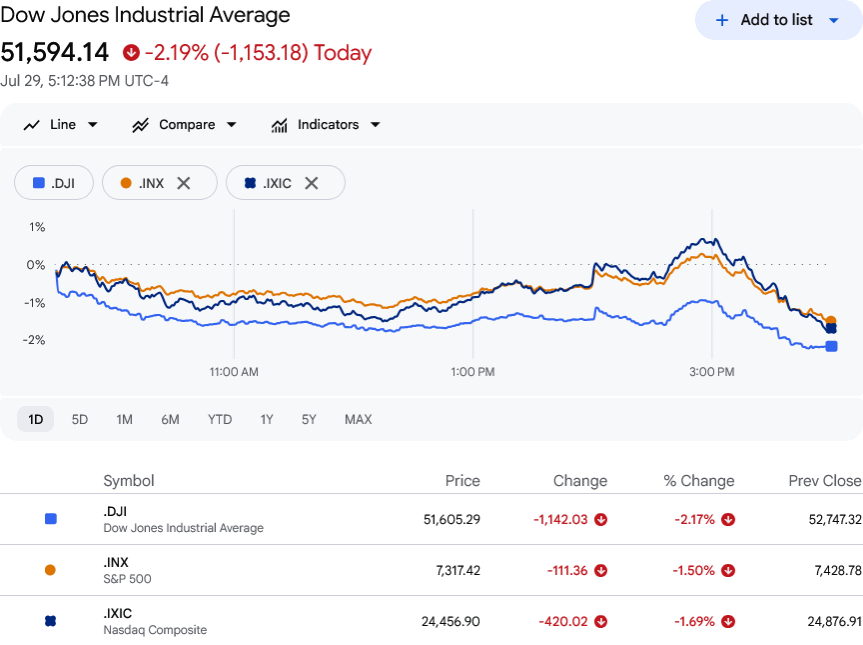
Unsurprisingly, Wall Street was not pleased. Even though they had projected the FOMC would stand pat on the federal funds rate, after hearing Warsh’s non-answers, stocks dropped precipitously.
Treasuries were similarly nonplussed by Warsh’s non-answers. After holding steady through much of the day, yields began rising as Warsh began speaking.
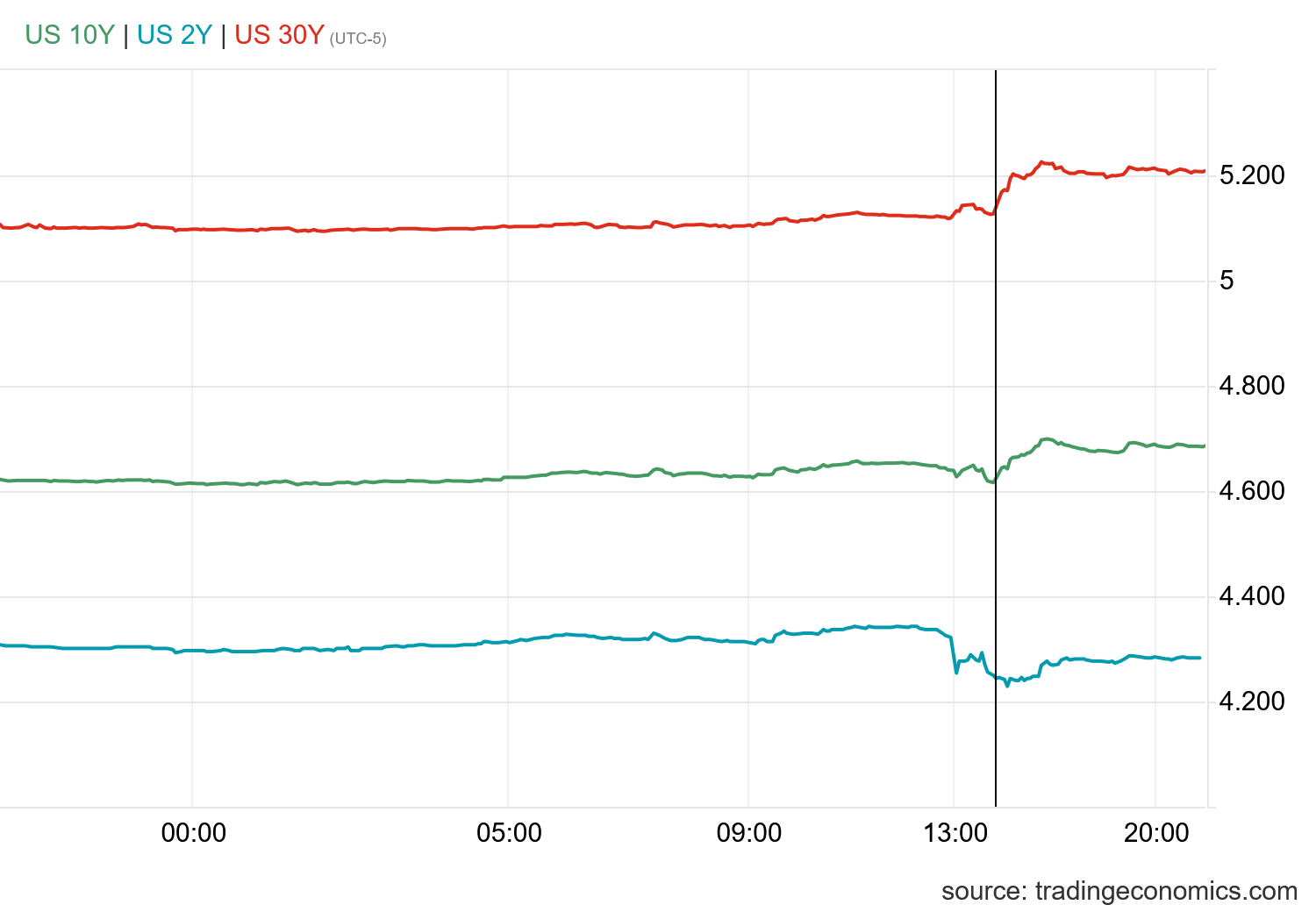
Only the two-year treasuries responded well to the Warsh press briefing.
A Day Of Non-Communication
On the surface, lumping Fauci’s pleading the Fifth before the Senate with Kevin Warsh announcing the FOMC interest rate decision might seem an odd combination. Certainly we would find little in common between hearings on the COVID Pandemic Panic and a press briefing on interest rates. However, with both happening on the same day, they both stand as ironic bookends of a day of deliberate, willful, non-communications.
Perversely, Kevin Warsh went into his press briefing with the same mindset Anthony Fauci had in his Senate appearance: say as little as possible, and preferably nothing. Both Kevin Warsh and Anthony Fauci clearly succeeded, much to the chagrin of everyone around both men, including the media.
Ironically, the fact that Warsh and Fauci set out to say nothing and succeeded is the most newsworthy aspect of both stories. Kevin Warsh said plainly in his first FOMC presser that he wanted Wall Street to look beyond the Fed for signals about how financial markets should regard interest rates. Anthony Fauci said plainly in his opening statement he would give no further information to Senator Rand Paul and the Committee on Homeland Security and Governmental Affairs.
Wall Street got no further signal from Kevin Warsh. Rand Paul got no further information from Anthony Fauci.
Yet Wall Street was able to process that lack of signal, recognize the uncertainty endemic in Warsh’s approach to the Fed Chairmanship, and repriced both equities and Treasuries accordingly. The lack of signal proved to not be the same as a lack of information.
Rand Paul, through repeated questions, all of which Fauci declined to answer, articulated in full view of the American public all the details already known about Fauci’s misconduct as NIAID Director, including his illicit dealings with EcoHealth and Chinese virology labs in Wuhan. Fauci pleaded the Fifth and so left all statements against him uncontested—an ironic proof of the legal maxim “qui tacet consentire videtur” (“he who is silent is taken to agree”).
Both Wall Street and the Senate Republicans, given the respective silences of Kevin Warsh and Anthony Fauci, were left to ponder a relevant question: “What aren’t they saying?”
What was Kevin Warsh not saying about inflation, or the state of the economy? Will oil supply shocks derail a growing economy? Is inflation about to sink back to the Holy Grail level of 2% without any further Fed intervention?
Why was Fauci not denying the accusations levied against him? He called Rand Paul’s public statements against him “slanderous”, yet when presented with the opportunity to defend himself against those same public statements, Fauci chose silence—and presumably consent. Was Fauci acquiescing to the truth of what Rand Paul has been saying? Was denial no longer a plausible option for Anthony Fauci?
Both Kevin Warsh and Anthony Fauci, in their respective domains, had the perfect platform to broadcast their views across the mediaverse. Both Kevin Warsh and Anthony Fauci had not just a bully pulpit, but a bully megaphone to go with it. Both Kevin Warsh and Anthony Fauci chose to use neither the bully pulpit nor the bully megaphone.
At both the FOMC presser and Anthony Fauci’s Senate hearing, a ginormous number of words were spoken on all sides. Despite all those words, the most significant statement by both Kevin Warsh and Anthony Fauci was not a damn thing.
Irony abounds.
Brown v. Walker, 161 U.S. 591 (1896)
Yesterday certainly was disappointing. But I maintain that reality still wins, every time, in the long run and in the big picture.
Fauci called Senator Rand Paul’s accusations “slanderous”, but, of course, he will not be stupid enough to file suit for slander. He would have to prove the accusations false, and he could not do so. Peter, are you aware of any legal maneuver by which Senator Paul could sue (or whatever) Fauci for defaming (or whatever) HIM? I’d sure love to see the good Senator turn the tables on that weasel Fauci!
I asked my husband if he had seen/read anything about Fauci, he said "I know he's getting grilled, he's another on Trump's list". I asked if he had seen/heard/read anything about Fauci's diary - he had no clue what I was talking about. He scrolls Reddit and the Guardian, and other left-limited reporting...I was astonished. The search engines, the reporting, everything with a slice and dice slant. Thank you for reporting All Facts Matter.