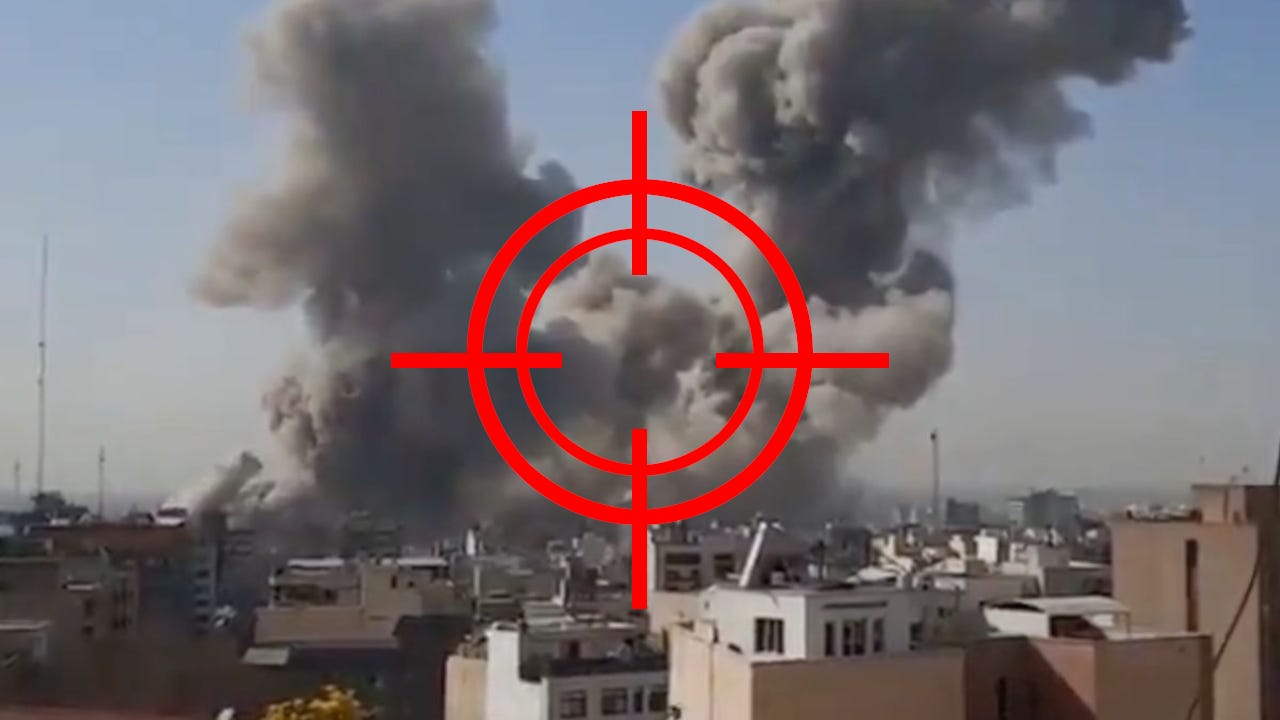
Operation Epic Fury and Operation Roaring Lion have been unqualified successes against the Islamic Republic of Iran.
Ayatollah Ali Khamenei is dead, as are many of Iran’s senior leaders, including many of those who were thought to be potential successors to Khamenei.
While the US and Israel have already succeeded in carrying out a decapitation strike for the ages, the joint operations are continuing. Ending the lives of Khamenei and other top Iranian leaders was a principle objective of Operation Epic Fury/Roaring Lion, but it has hardly been the only one. As Donald Trump made clear speaking from the White House during a Medal of Honor ceremony, the goal is to end Iran’s capacity to make mischief, period.
Our objectives are clear.
First, we’re destroying Iran’s missile capabilities, and you see that happening on an hourly basis, and their capacity to produce brand new ones, and pretty good ones they make.
Second, we’re annihilating their navy. We’ve knocked out already 10 ships. They’re at the bottom of the sea.
Third, we’re ensuring that the world’s number one sponsor of terror, can never obtain a nuclear weapon. Never going to have a nuclear weapon. I said that from the beginning. They’re never going to have a nuclear weapon. They were on the road to getting one legitimately through a deal that was signed foolishly by our country.
And finally, we’re ensuring that the Iranian regime cannot continue to arm, fund, and direct terrorist armies outside of their borders.
It is no exaggeration to say that President Trump has set a lofty bar for what he hopes to achieve.
For their part, the Iranian leadership is determined not to go gently into that good night. They are fighting back, although with uncertain levels of efficacy—the damage that has been done seems more likely to push the Arab states in the region to join forces with the US and Israel against Iran, and may have already done so.
While they have scant hope of victory, it is clear the Iranian regime has no thought of surrender.
Every article I publish takes time, care, and independence. A paid subscription fuels that work and shields it from outside pressure. If you’re able, join me today.
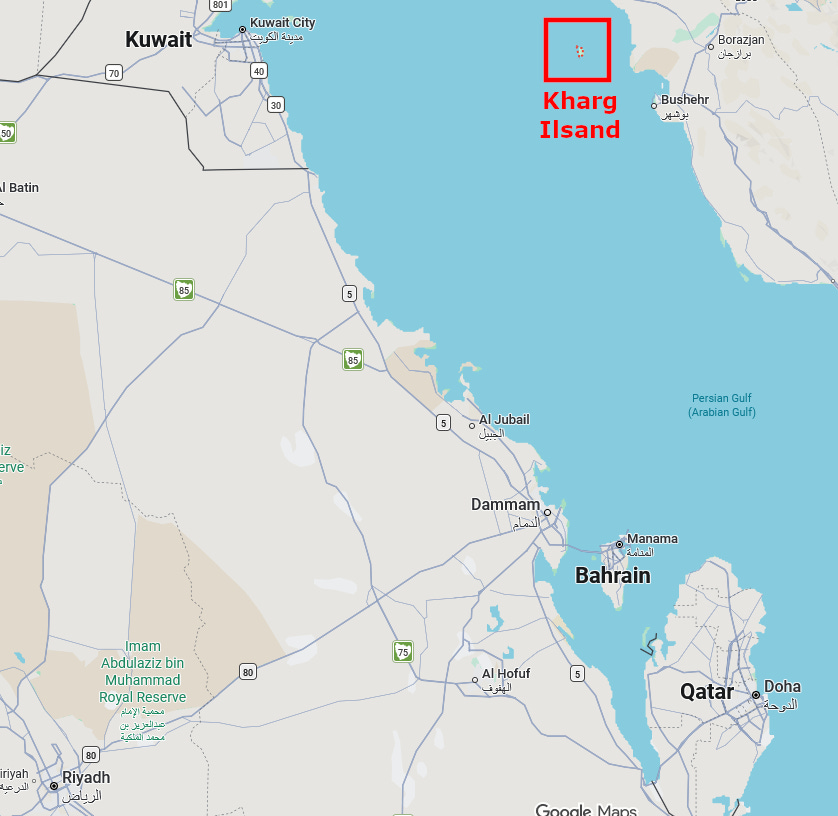
While the US and Israel are the countries attacking Iran, Iran has chosen to retaliate against the Arab nations of the Persian Gulf.
“It is really a tough and serious moment,” said Cinzia Bianco, a visiting fellow at the European Council on Foreign Relations who focuses on the Gulf. “There was nothing that they valued more than that perception of safety — and they prided themselves on maneuvering politically and hedging to be basically on the good books of everyone.”
Dubai had cultivated close ties with Iran, partly in an effort to maintain its safe haven status; the Emirates is one of Iran’s largest trading partners. But not a single Gulf country was spared.
By this morning, Qatar reported shooting down a pair of Iranian Sukhoi Su-24 bombers. While these vintage aircraft date back to the days of the Soviet Union, they nevertheless remain aircraft capable of delivering bombs to targets. Qatar was quite naturally defending its airspace.
However, Iran has now accomplished the hitherto unimaginable feat of having an Arab state firing shots on the same side of a conflict as Israel. How the geopolitical ramifications of that play out we can only begin to imagine.
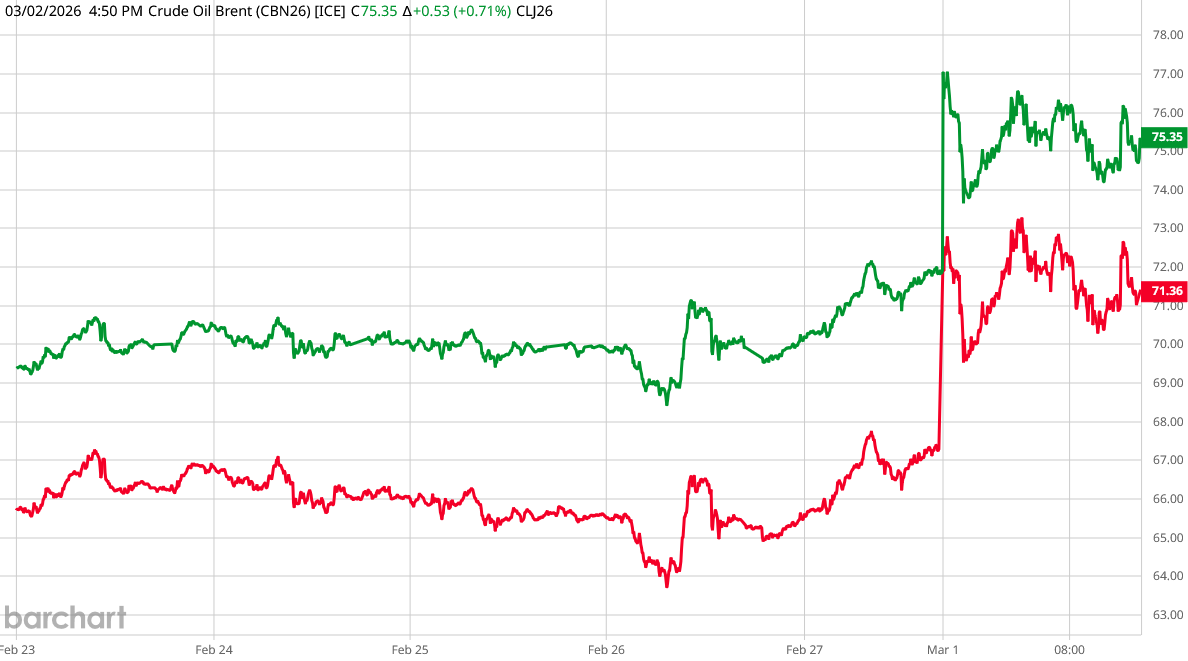
On Monday, Iranian drones targeted a power plant and an energy facility in Qatar, the Qatari defense ministry said. Soon after, QatarEnergy, one of the world’s largest exporters of liquefied natural gas, said that it would halt production, a major shock that sent the price of natural gas soaring.
Earlier on Monday, Saudi Arabia’s energy ministry said that a fire had broken out at the Ras Tanura oil refinery in the kingdom’s eastern province after two Iranian drones were intercepted, causing fragments to fall. Some units of the refinery were shut down as a precautionary measure, it said. Five drones near the Prince Sultan Air Base, a military complex south of the capital of Riyadh, were also intercepted, the defense ministry said.
Saudi Arabia would target “Iranian oil facilities if Iran mounts a concerted attack on Aramco,” the source tells AFP, referring to the state oil giant.
Saudi Arabia does not project military power, as a rule, but with Iran’s air defenses all but obliterated by the US and Israel, if Saudi Arabia decides to end Iran’s oil economy, it has the means to do so.
Which again brings us back to the remarkable state of Middle Eastern affairs at the moment, where the Arab states are lining up on the same side as Israel against Iran. Apparently, the strongest geopolitical truism of all remains “the enemy of my enemy is my friend.”
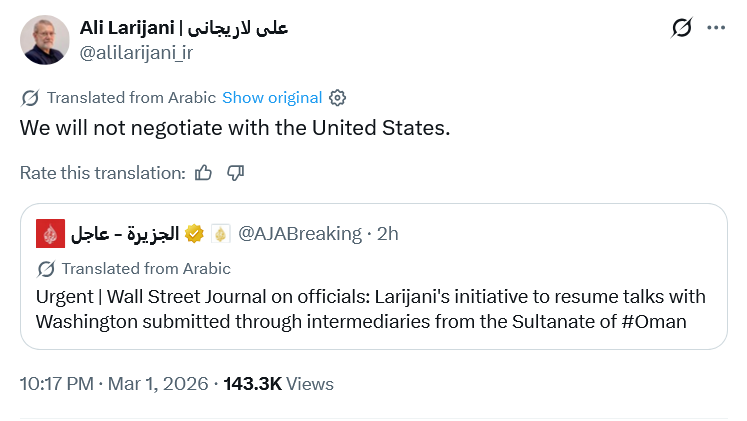
Although the Wall Street Journal published a report yesterday indicating that the Iranian regime wanted to resume negotiations with Donald Trump, late last night Ali Larijani, part of the governing triumvirate running Iran while the clerical Assembly of Experts selects a new Supreme Leader, threw a bucket of cold water on that idea.
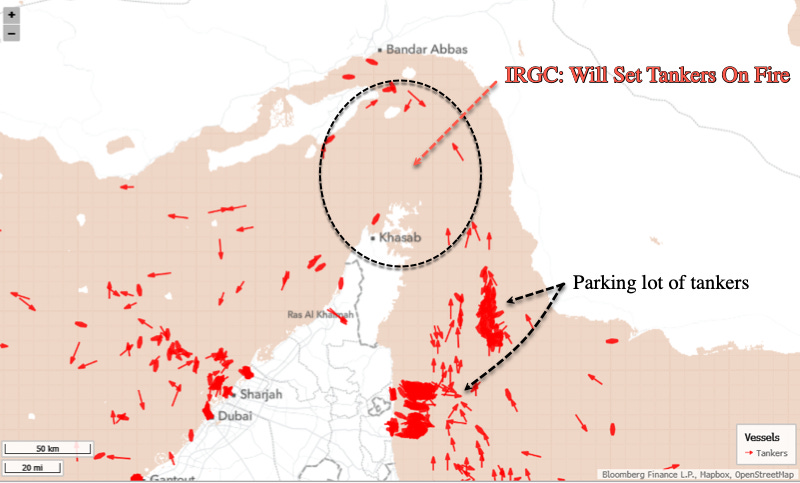
What Iran has done is threaten to blockade the Strait of Hormuz, the choke point between the Persian Gulf and the Gulf of Oman, beyond which lies the Arabian Sea, the Indian Ocean, and the world. A senior Islamic Revolutionary Guard Corps commander has said no oil will transit the Strait.
“Any ship that seeks to pass through the Strait of Hormuz we will set on fire,” Brigadier General Ebrahim Jabbari said in remarks carried by Iranian media on Monday.
With the destruction of most of the Iranian navy it is debatable how well they can carry out this threat. They can go the Houthi route of firing on civilian tankers with anti-ship missiles, or they can try mining the Strait as they did in 1988—which resulted in Operation Praying Mantis, in which the US Navy destroyed one of Iran’s newest frigates (new at the time) and crippled the other, while also demolishing two of the three abandoned oil platforms they used as staging areas for naval activity.
Operation Praying Mantis stands out in particular as a demonstration of one of the more colorful aspects of American military mythology: “don’t f*** with America’s boats.” With Donald Trump unabashedly the most testosterone-fueled President since Theodore Roosevelt, it is most unlikely that any Iranian strategy which imperils America’s maritime resources would not receive an overwhelming response.
Satellite imagery shows extensive damage to Iran’s naval base at Bandar Abbas, including depicting the IRINS Makran sea base-type ship on fire, following strikes as part of the ongoing U.S.-Israeli campaign. In addition to being the main headquarters for the Iranian Navy, Bandar Abbas is a key installation when it comes to Iran’s aims at controlling the Strait of Hormuz. U.S. President Donald Trump has said “annihilating” Iran’s naval forces is a core objective of what American authorities have dubbed Operation Epic Fury, and that 10 Iranian ships have been “knocked out” so far.
The latest Automatic Identification System (AIS) vessel-tracking data, via Bloomberg, shows that tanker traffic in the Strait of Hormuz has been paralyzed, with only a few tankers still transiting the critical maritime energy chokepoint.
FGE NexantECA Chairman Emeritus Fereidun Fesharaki told Bloomberg TV on Monday morning that any attempt by the Islamic Revolutionary Guard Corps to choke off the critical Strait of Hormuz using warships, drones, and missiles would likely be short-lived, as the regime’s naval capability is too weak to sustain a blockade against U.S., British, and French naval forces.
“It’s just a fear factor,” Fesharaki said earlier on Bloomberg TV, following his prediction one week earlier on Bloomberg TV: “I don’t think the U.S. has a choice but to go to war. It is very hard for me to see a scenario in which they would simply avoid this, turn the ships around, and go home.” Fesharaki has tracked the market for decades.
We should also note that it is unclear to what extent the threat to shut down the Strait of Hormuz originates from the top of the Iranian leadership. There is a distinct possibility this would be the effort of individual IRGC elements acting on their own, without any guidance from the ruling triumvirate.
Well, there might be a risk. I have been in touch with all of them, as I said, especially with Qatar and Oman foreign ministers. I explained for them what happened in Oman was not our choice. We have already told our, you know, armed forces to be careful about the targets that they choose. As a matter of fact, you know, our, you know, military units are now in fact independent and somehow isolated, and they are acting based on instructions, you know, general instructions given to them in advance.
If the Iranian Foreign Minister is at all accurate on the state of command and control within both the IRGC and the regular Iranian military, it is quite possible various units of both are acting entirely on their own, without any coordination or support from Tehran. If that is the case, then any effort by an independent IRGC or military unit to blockade the Strait will not last long, as it is extremely unlikely a single unit has the logistical depth for a sustained blockade, even before one considers the virtually certain US reprisals against a blockade.
If there is one word which can sum up the state of Iran’s response thus far to the joint US and Israeli air strikes, it is “chaos”.
Iran has not made focused, concentrated missile and drone attacks, but has literally sprayed both all over the region. Few significant military targets have even been attacked, much less damaged, but the Arab states are not pleased with the damage being done to civilian infrastructure in Bahrain, Doha, and other cities. While many Arab states host US military bases, they also have made it a policy to stay largely out of the geopolitical tensions between US and Iran, and Israel and Iran.
As of this evening, Iran remains defiant. Iran remains hostile. Iran is making a great show of being determined to fight the US and Israel no matter what.
As of this evening, it is becoming increasingly clear that Iran does not have much left with which to fight. Whether it takes another day, another week, or another month, there is only one way this fight seems fated to end, and that is not with the Islamic Republic coming out on top.
If this story gave you real value, help me keep going. All Facts Matter is powered by readers who believe facts should stand on their own. Your subscription makes that possible.
Iran is all bluster at this point. With complete air domination, anything they put to sea or launch from land to clog up the strait, will be destroyed within minutes.
Thank you for parsing through the real truth and succinctly explaining it for us. Lofty goals indeed, weapons cannot change ideology which takes captive hearts and minds.I do pray for our troops, for those caught in the crossfire, the missionaries- and only our Heavenly Father can work this out.


Iran is all bluster at this point. With complete air domination, anything they put to sea or launch from land to clog up the strait, will be destroyed within minutes.
Thank you for parsing through the real truth and succinctly explaining it for us. Lofty goals indeed, weapons cannot change ideology which takes captive hearts and minds.I do pray for our troops, for those caught in the crossfire, the missionaries- and only our Heavenly Father can work this out.