


Did the IRGC expect the Trump Administration to respond differently than it has?
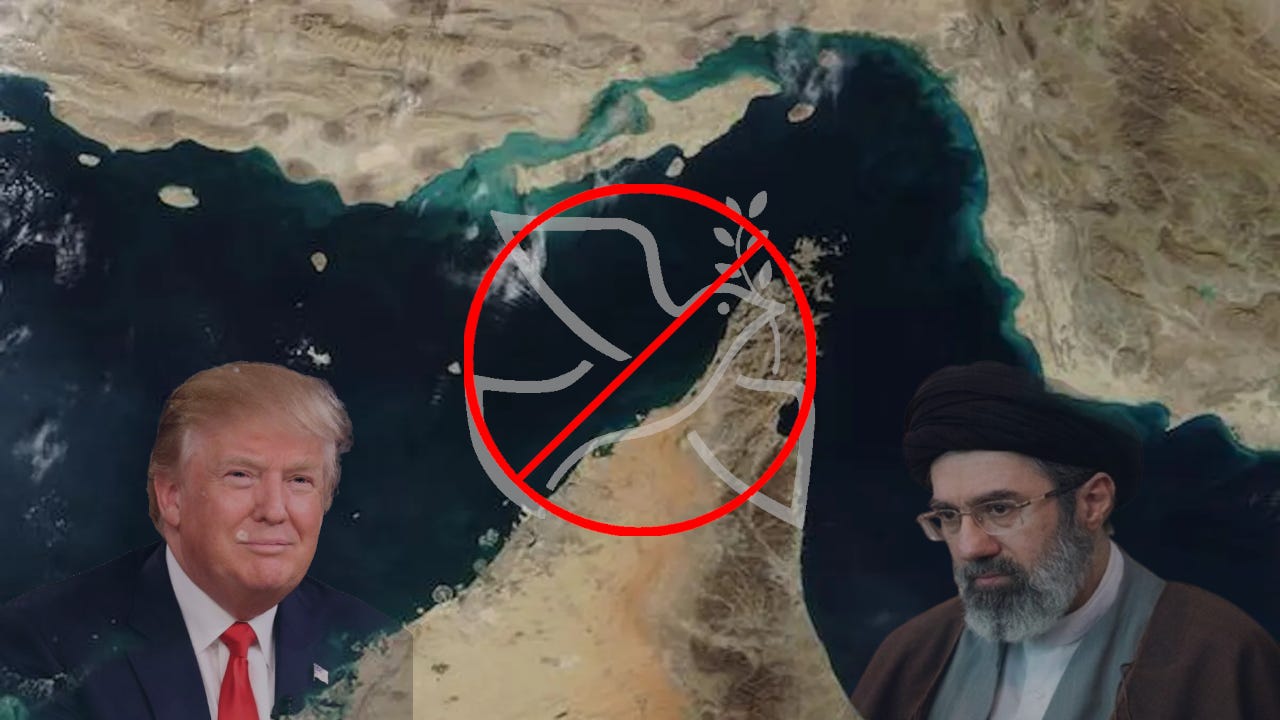
If the IRGC’s goal was to restart the war between Iran and the United States, it has arguably succeeded.
If the IRGC’s goal was to showcase American weakness, it has failed.
For the IRGC, the outcome of today’s tit-for-tat ceasefire violations can be summarized thus: FAFO.
The day began with reports of an Iranian drone attack on the Al Rekayyat, a Qatari LNG carrier.
The Al Rekayyat was struck in the early hours of Tuesday, according to people familiar with the matter, who asked not to be named due to the sensitivity of the issue. An alert from security consultancy EOS Risk Group confirmed the attack about 8 nautical miles (15 kilometers) east of Limah, Oman, and a subsequent fire, classifying it as either a drone or missile strike.
That was one of a number of ships targeted by Iran, presumably for deviating from the shipping lanes Iran fatuously (and illegally) demand ships use when transiting the Strait of Hormuz.
The earlier strikes by Iran were on tankers that were allegedly trying to travel the strait by a route Iran has warned against, CBS News reported. While Iran did not claim the attacks, but state media said at least one ship ignored warnings.
Was Iran testing US resolve? Did the IRGC expect the Trump Administration would fold under the latest threats against shipping transiting the Strait of Hormuz?
If that was the case, the IRGC is almost certainly facing some disappointment tonight.
Response number one was the Treasury Department revoking Iran’s license (really sanctions waiver) to sell oil internationally, according to US officials.
“As President Trump and the administration have repeatedly affirmed, the MOU in effect with Iran is entirely performance-based,” the official said.
“Iran will only reap benefits if they exhibit good behavior,” they said. “Iran’s actions in the Strait were wholly unacceptable to the United States and will be met with consequences.”
Targeting civilian ships is hardly behavior one associates with wanting to sustain a ceasefire or reach a lasting peace deal. If anything, it signifies that Iran wants more conflict.
If Iran wants more conflict, US Central Command is ready to give Iran more conflict, according to CENTCOM’s social media postings on X:
U.S. Central Command forces have begun launching a series of powerful strikes against Iran to impose heavy costs for targeting and attacking commercial shipping crewed by innocent civilians in an international waterway. The U.S. strikes are in response to Iranian attacks on three commercial vessels that were transiting the Strait of Hormuz. Iran’s demonstrated aggression was unwarranted, dangerous, and a clear violation of the ceasefire.
Iranian state media has confirmed the strikes, most of which are concentrated around Iran’s coastline near the Strait. The port city of Sirik, Qeshm Island, as well as Bandar Abbas, were all reported being hit.
Iranian media reported explosions early Wednesday local time in the southern port city of Sirik, on Qeshm Island, and in Bandar Abbas. The reports said strikes hit a commercial pier in Sirik and fishing piers in both Sirik and Bandar Abbas.
A U.S. official told Reuters that strikes targeted Iranian air defense systems, coastal surveillance systems, surface-to-air missiles, anti-ship cruise missiles and drone launch sites.
The incidents were only the latest threat to the ceasefire agreement the U.S. and Iran struck last month, pausing the conflict that started in February with U.S. and Israeli strikes across the Islamic Republic. In a potentially major blow to that agreement, Washington moved on Tuesday to withdraw a key concession that had allowed Iran to sell oil on international markets.
Iran is back under oil sanctions. The US is attacking Iranian targets.
These are not events which suggest the ceasefire is at all still in effect.
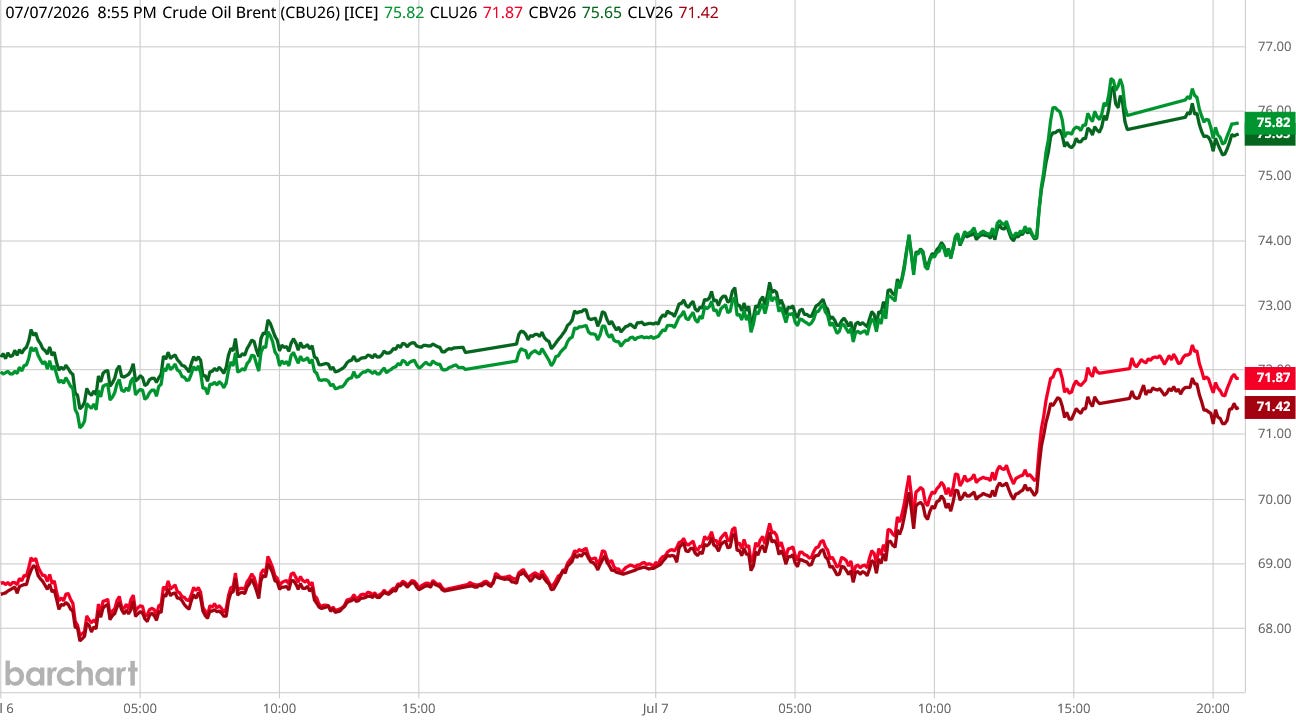
Oil markets are coming to that same conclusion. The announcement of new US strikes in Iran caused a quick surge in the price of both Brent Crude and West Texas Intermediate this afternoon, for both September and October delivery.
All of this was easily predictable before the first drone struck the Al Rekayyat. Even if President Trump were desperate for any sort of deal with Iran, he has put out too much bluster with too much swagger to back down over three ships lawfully transiting a recognized international waterway.
Either the IRGC-dominated Khamenei regime believed President Trump would not dare respond for fear of a spike in gasoline prices with the mid-term elections right around the corner or the regime anticipated that Iran could absorb a likely “proportional” response to the tanker attacks. In either scenario, the Khamenei regime guessed wrong.
According to US officials, the latest series of strikes are meant to be “punishment, not proportional”. That characterization gained credibility when Iranian state media reported explosions on Kharg Island, Iran’s main oil export terminal handling more than 90% of the country’s petroleum export loadings.
Whether the US considers the ceasefire still in effect or not is unclear, although CENTCOM has indicated that it has completed this round of air strikes.
Update:
President Trump has declared the ceasefire over.
“As far as I’m concerned, it’s over,” Trump told reporters in Ankara before a NATO summit.
“I don’t want to deal with them anymore. They’re scum... they’re sick people, they’re led by sick people, and they’re vicious, violent people.”
Trump said he would allow US negotiators to continue talks if they wished but signaled he no longer believed diplomacy would succeed.
“They want to negotiate. They’re good people... but they have to come back to me,” he said. “As far as I’m concerned, it’s just a waste of time dealing with them, they’re liars.”
Iran is back under sanctions. Iranian infrastructures near Bandar Abbas, Qeshm Island, and Kharg Island have been hit. How this outcome aids the IRGC is unclear.
If the Khamenei regime did not anticipate a response like this from the United States, it has not been paying attention at all to Donald Trump.
At some point, the Artesh are going to have to start fighting the IRGC. An Iranian civil war seems inevitable.
One of these days I'm expecting some third world dictator to do another, "do it bitch! I dare you! I double dare you! You're not going to do nutin'!" Only to immediately be tackled by everyone else in the room followed by a "we are currently experiencing technical difficulties."