


The latest wrinkle in the ongoing confused narrative surrounding the Trump Administration’s negotiations with Iran: “leaked” US intelligence reports indicate Israel is preparing a strike against Iran with or without US support.
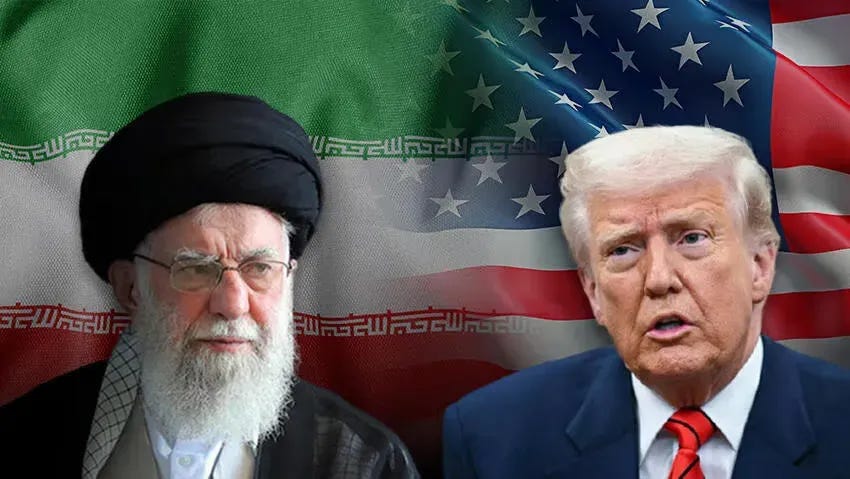
The US has obtained new intelligence suggesting that Israel is making preparations to strike Iranian nuclear facilities, even as the Trump administration has been pursuing a diplomatic deal with Tehran, multiple US officials familiar with the latest intelligence told CNN.
We should note that even CNN is couching this report in problematic terms, and is far from saying that such a strike is imminent.
Officials caution it’s not clear that Israeli leaders have made a final decision, and that in fact, there is deep disagreement within the US government about the likelihood that Israel will ultimately act. Whether and how Israel strikes will likely depend on what it thinks of the US negotiations with Tehran over its nuclear program.
But “the chance of an Israeli strike on an Iranian nuclear facility has gone up significantly in recent months,” said another person familiar with US intelligence on the issue. “And the prospect of a Trump-negotiated US-Iran deal that doesn’t remove all of Iran’s uranium makes the chance of a strike more likely.”
We should also note that this report comes on the heels of Iran’s latest apparent shifting of goalposts regarding uranium enrichment.

Iran’s latest comments via Arab and Persian Gulf media outlets are a direct contradiction of statements made just last week by senior Iranian officials, which indicated that a deal on Iran’s nuclear weapons program was feasible.
As I have mentioned previously, the core issue—the only issue of substance—in these talks is uranium enrichment.

With enrichment facilities Iran has a nuclear weapons program. Without enrichment facilities, Iran does not have a nuclear weapons program. Everything else is truly just details.
Ayatollah Khameni, Iran’s top cleric and Supreme Leader, has repeatedly reiterated his stance that Iran has a “right” to uranium enrichment.
However, Iran ratified the Nuclear Non-Proliferation Treaty in 1970 and remains bound by its constraints. Article II establishes the constraint of a commitment not to manufacture nuclear weapons.
Each non-nuclear-weapon State Party to the Treaty undertakes not to receive the transfer from any transferor whatsoever of nuclear weapons or other nuclear explosive devices or of control over such weapons or explosive devices directly, or indirectly; not to manufacture or otherwise acquire nuclear weapons or other nuclear explosive devices; and not to seek or receive any assistance in the manufacture of nuclear weapons or other nuclear explosive devices.

Perhaps unsurprisingly, Iran last fall threatened to withdraw from the NPT should international sanctions be re-imposed.
In an interview with Iran’s national television, Deputy Foreign Minister for Legal and International Affairs Kazem Gharibabadi stated that Iran's stance was communicated to European leaders through an official letter during the late President Ebrahim Raisi's administration. “This position remains unchanged,” the diplomat declared.
The snapback mechanism outlined in UN Resolution 2231 permits permanent members of the Security Council and Germany to reinstate UN sanctions if Iran violates its JCPOA obligations.
Iran has threatened to withdraw from the NPT repeatedly in the past two decades, ever since it was first called out for non-compliance with NPT obgliations vis-a-vis inspections by the International Atomic Energy Agency (IAEA).
Despite these threats, however, Iran has not yet withdrawn from the treaty and is still bound to treaty commitments to the non-proliferation of nuclear weapons.
Iran’s mercurial and even contradictory negotiating postures over uranium enrichment have led some media outlets to speculate that the “rift” between the Trump Administration and Israel over Iran’s nuclear program may be more performative than substantive. As Breitbart noted nearly two weeks ago, Trump may be far less opposed to an Israeli strike on Iran than his outward postures might indicate.
The chance is growing that Israel will strike Iran on its own and leave the U.S. to mediate in the aftermath. That may be what Trump actually wants; public disagreement with Israel gives him plausible deniability.
Either way, do not be surprised when it happens.
Is this latest leaking of intelligence reports to the media a sign Israel is moving ahead with plans for an attack, or is this merely a shot across Iran’s bow not to be coy in negotiations with the Trump Administration?
Given Iran’s recent contradictions within its own public stances, we certainly cannot rule out either possibility.
Negotiation always involves more than just people sitting at a table talking.
Is Israel stepping up on its own, or is this more likely a signal to Iran not to get cute during negotiations with the Trump Administration?
How should the US respond if Israel does attack Iran?
Leave a comment below, or sound off in chat and share your thoughts on a potential nuclear weapons agreement with Iran