


We can sum up the August ADP National Employment Report in two simple words: it sucks. Far from the heady job growth numbers being reported in the spring, in these dog days at the end of summer, job growth has apparently decided to take an extended vacation from the US economy.

How bad were the job numbers? Bad enough that even ADP’s Chief Economist Nela Richardson couldn’t come up with a nifty quote for the news release, only disjointed word salad.
Pay can tell us a lot about today’s choppy hiring. To understand hiring patterns, you have to look deeply into where pay growth is accelerating, where it’s slowing, and for whom. Once-predictable wage growth has been overtaken by the complexities of demographic change, persistent inflation, and AI’s effects on jobs.
In other words, ADP looked at job growth down at 38,000 jobs and had no good explanation.

Just last night, readers will recall, Wall Street was anticipating job growth of 48,000 jobs.

The ADP report missed that projection by 10,000 jobs. Against 38,000 jobs total, that’s a pretty big miss.
The internal numbers were even uglier. Only three sectors had better job growth in August than in July, while five sectors showed job loss.
In the spring elevated jobs numbers naturally opened the door to the question of whether or not a jobs recovery was underway. Today’s reduced jobs numbers naturally opens the door to the question of whether or not the economy is falling back into a jobs recession.
The ADP jobs data does not quite answer that question with “yes”, but it definitely does not answer that question with “no”.
Corporate Media Subdued
One indication of the level of suckage in the jobs report is the muted response from corporate media, with both Fox Business opting to say little beyond the bare numbers of the report itself.
Which industries are hiring the most workers, according to the ADP report?
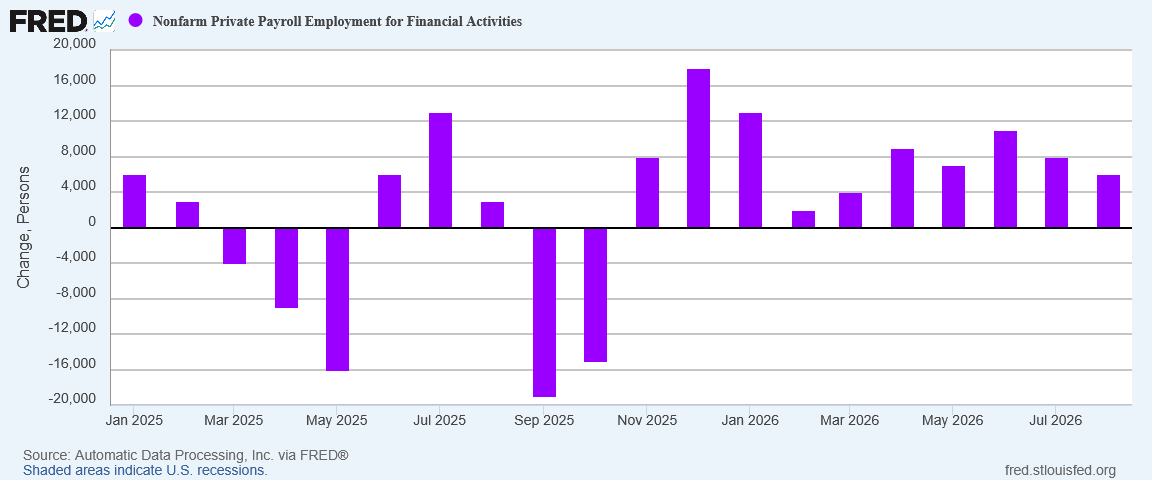
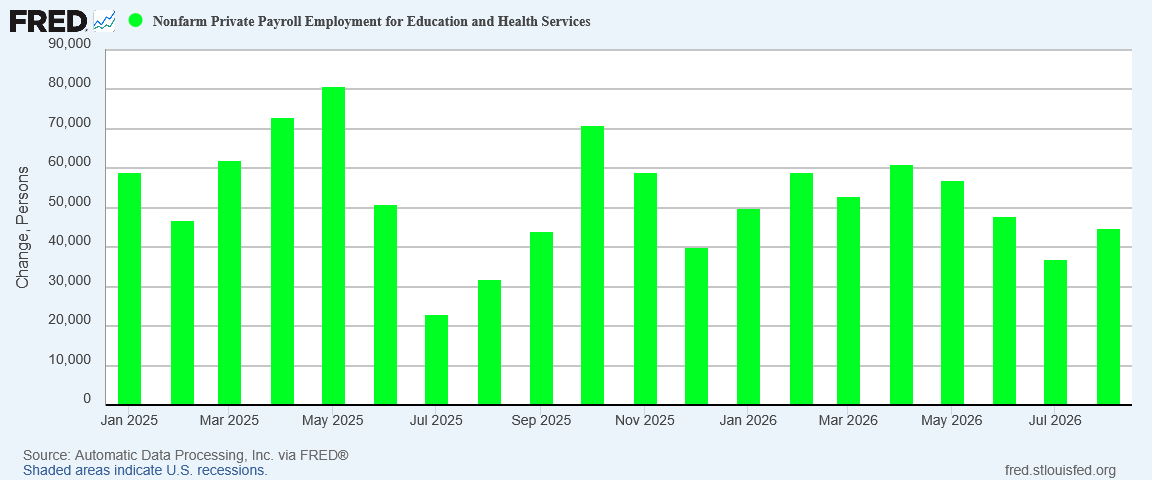
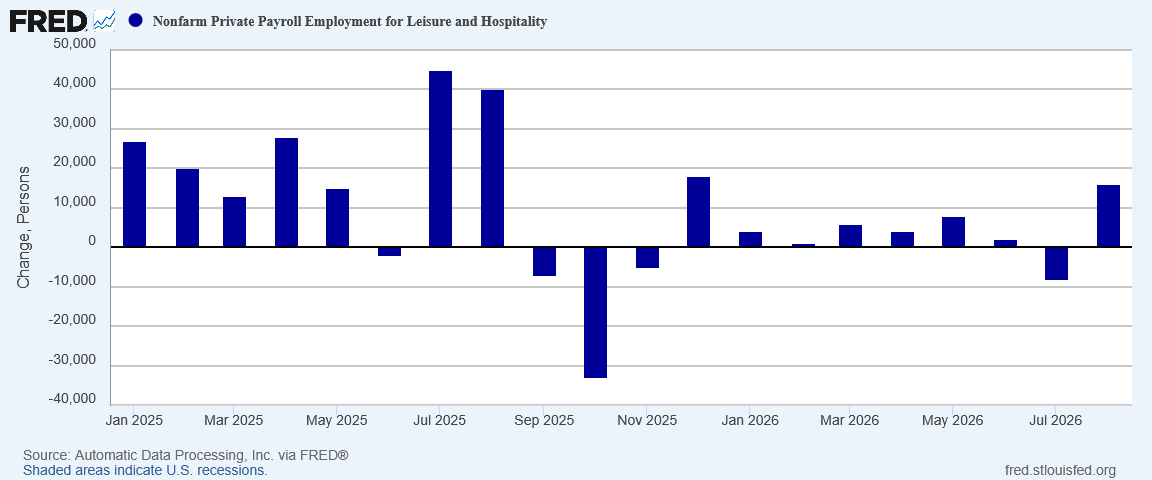
Education and health services added 45,000 positions, leading job creation in August. Leisure and hospitality added 16,000, and financial activities and other services each gained 6,000.
On the negative side, manufacturing lost 17,000 jobs and professional and business services lost 16,000. Natural resources and mining, and trade, transportation each lost 5,000, while information lost 4,000 positions in the month.
and CNBC noting that labor markets have slowed bigly.
Though job creation held positive, August was the smallest gain since January and reflective of a broader slowdown in the labor market. Moreover, most of the jobs came from three sectors, with multiple others showing declines.
August was the third straight month the ADP National Employment Report posted a smaller job growth figure than the last.
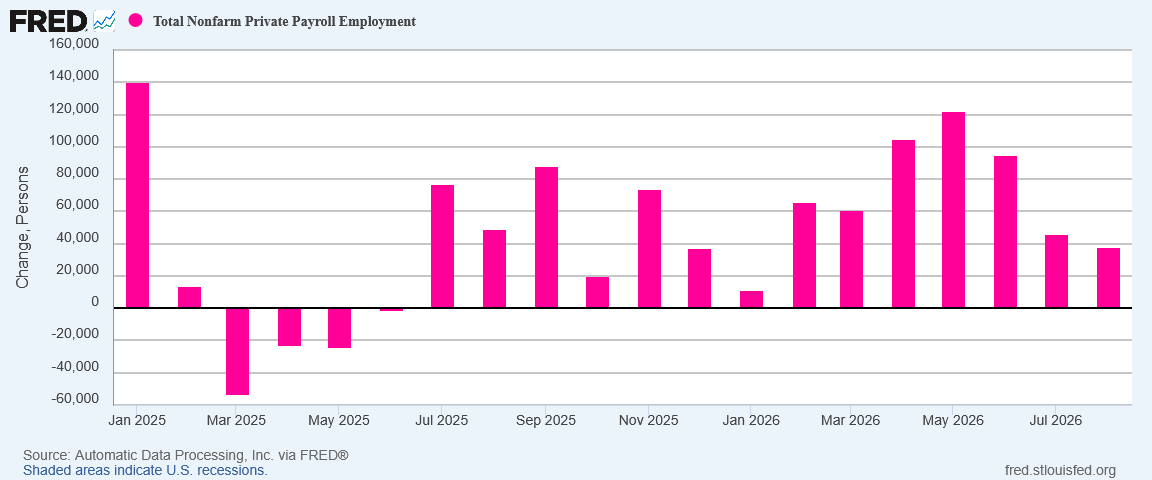
Robust and healthy labor markets should show increasing job numbers, such as what we saw in March through May.
Instead, most job sectors posted job losses in August.
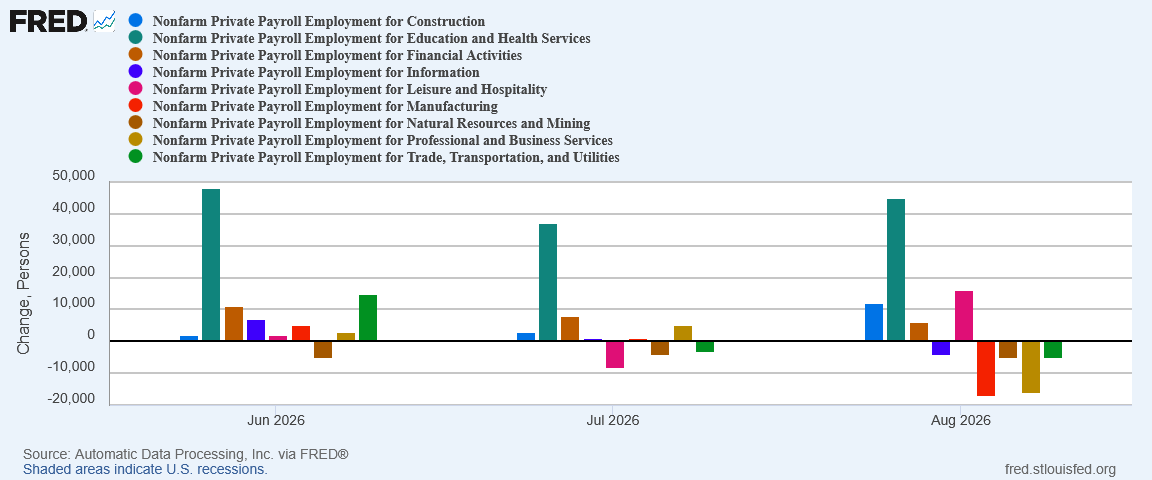
In June, all but one sector posted job gains on the ADP report. Two months later five sectors are posting job losses.
That’s not a trend which speaks to job recovery. That’s a trend which suggests a return to a jobs recession.
Manufacturing Got Hammered
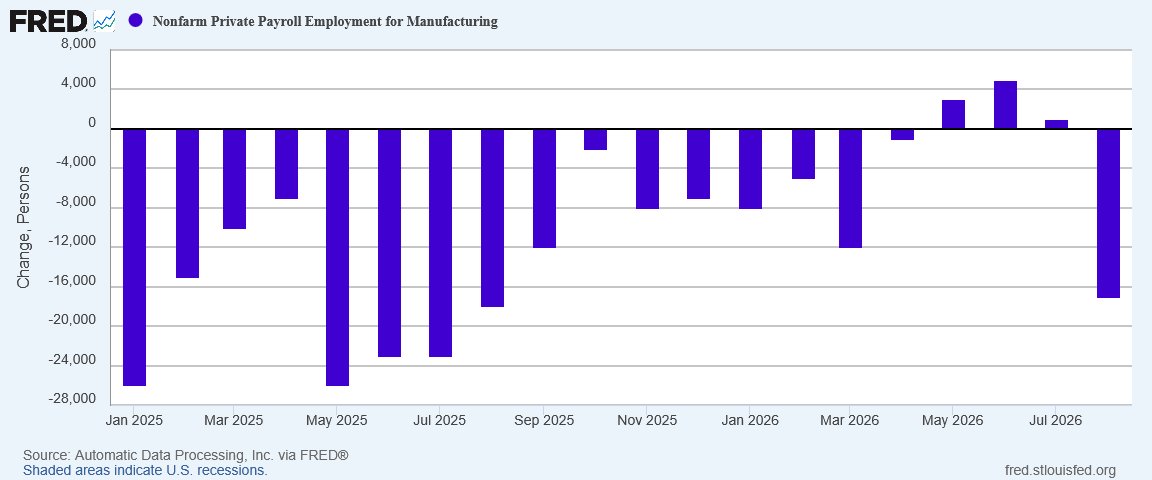
The most disappointing reversal in August was in Manufacturing, which posted a job loss number very close to that from a year ago, shedding 17,000 jobs.
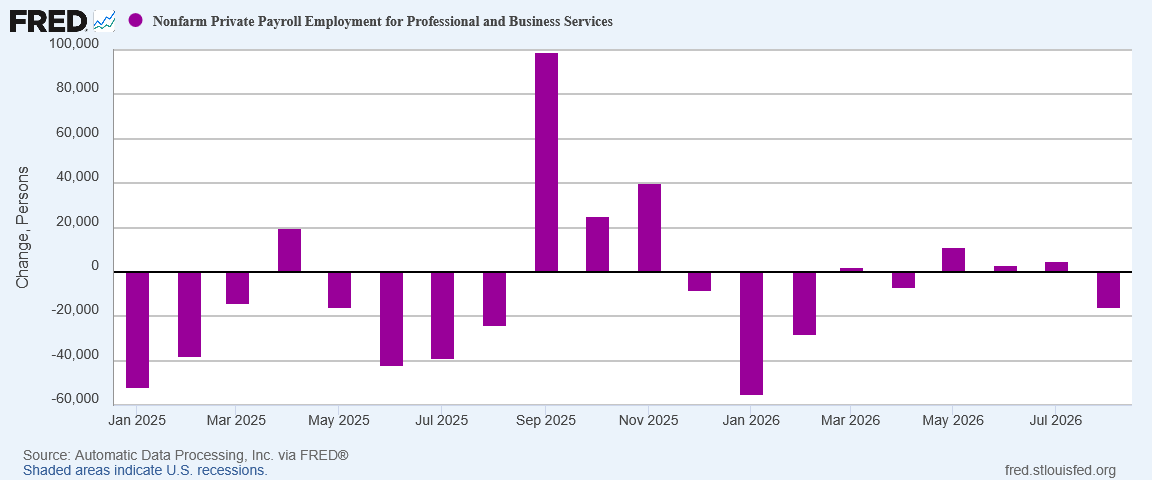
Almost as bad was the Professional Services sector, which shed 16,000 jobs.
Rounding out the roster of job losing sectors was Information, Trade Transportation & Utilities, and Mining.


Finance was in the middle ground, showing cooler job growth than in July but remaining positive.
Continuing with a long-term norm, Healthcare once again posted the best job growth numbers, at 45,000.
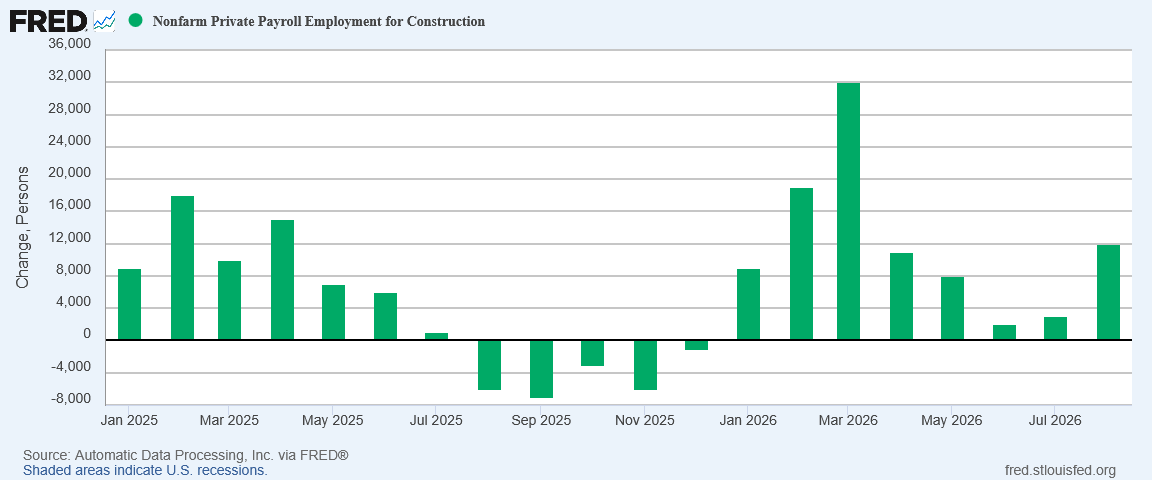
Coming in second was Construction, which improved to 12,000 jobs.
Leisure returned to job growth in August, posting the strongest job growth all year at 16,000 jobs.
Overall, service producing jobs improved from July marginally, while goods producing jobs declined significantly.
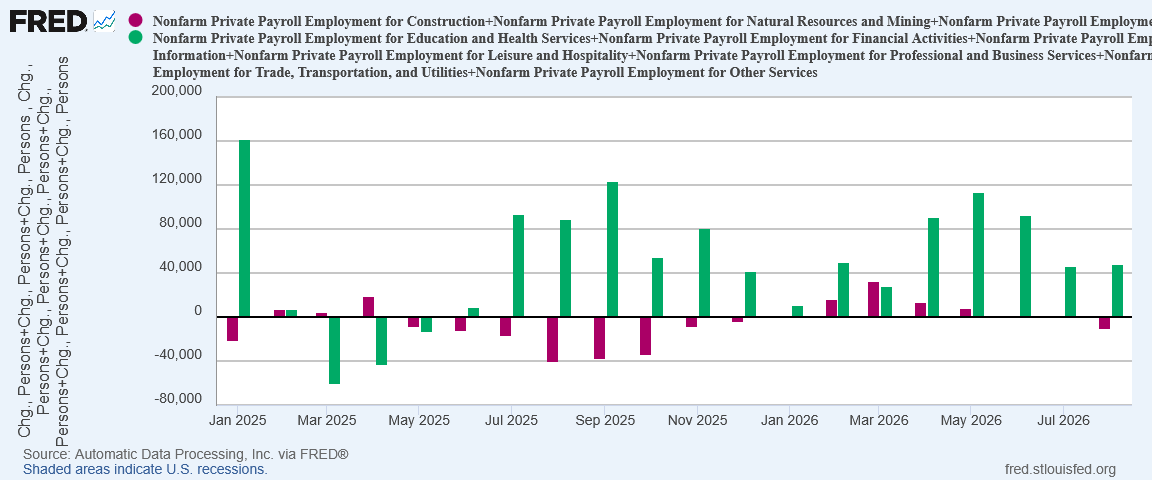
These are not labor trends which America needs if President Trump’s Agenda 47 goal of making the United States a manufacturing superpower is to be fully realized.
Again…PMIs?
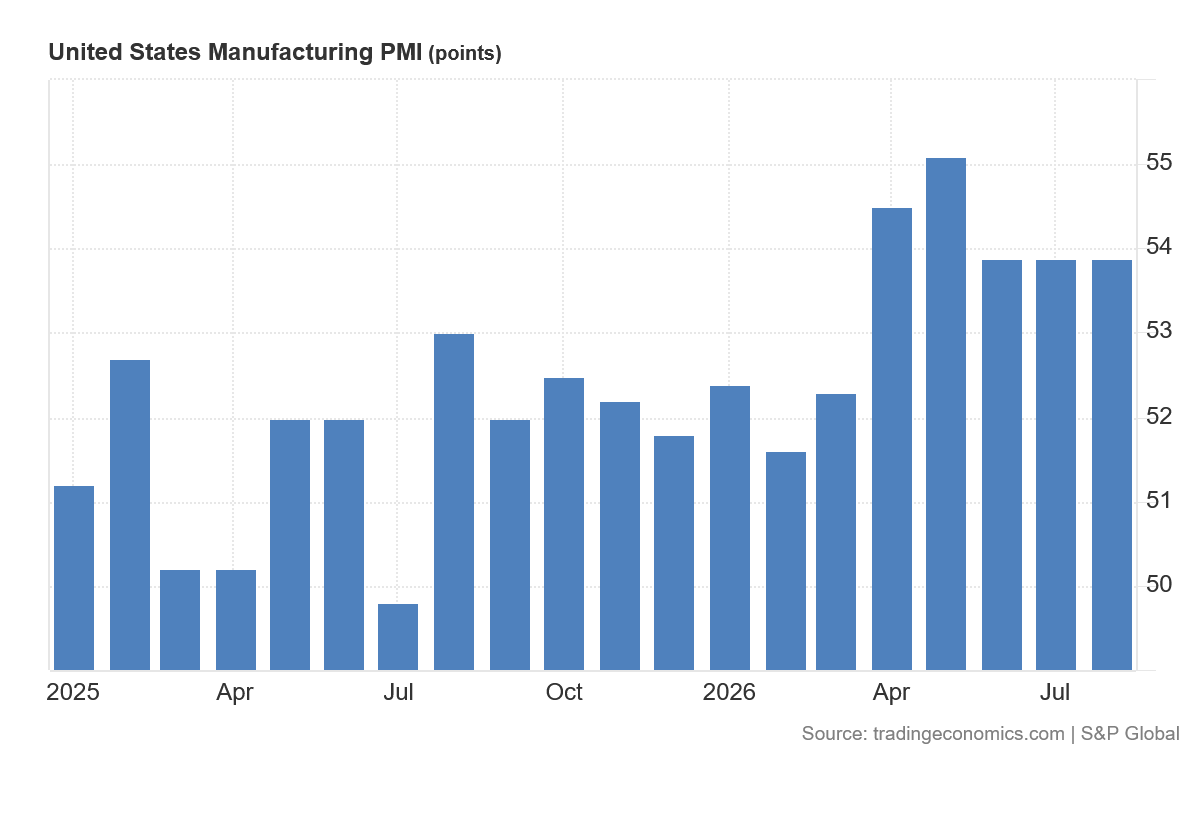
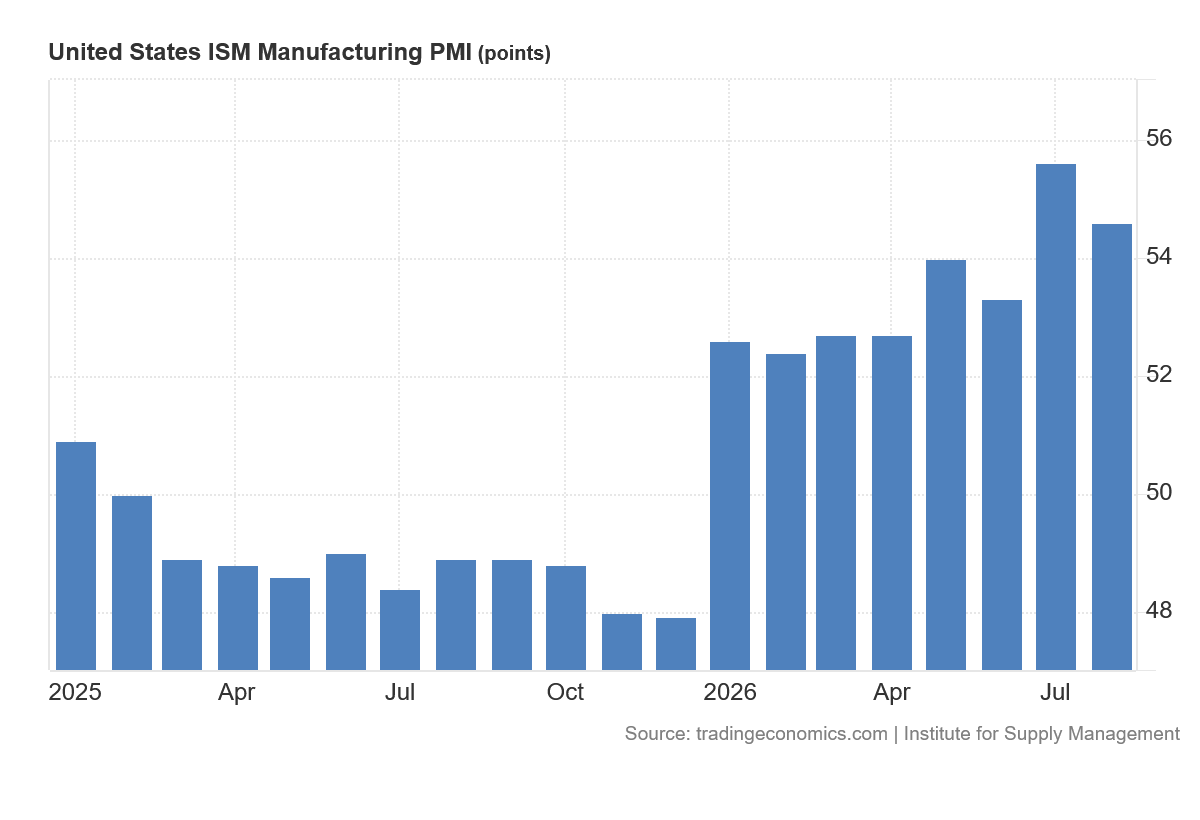
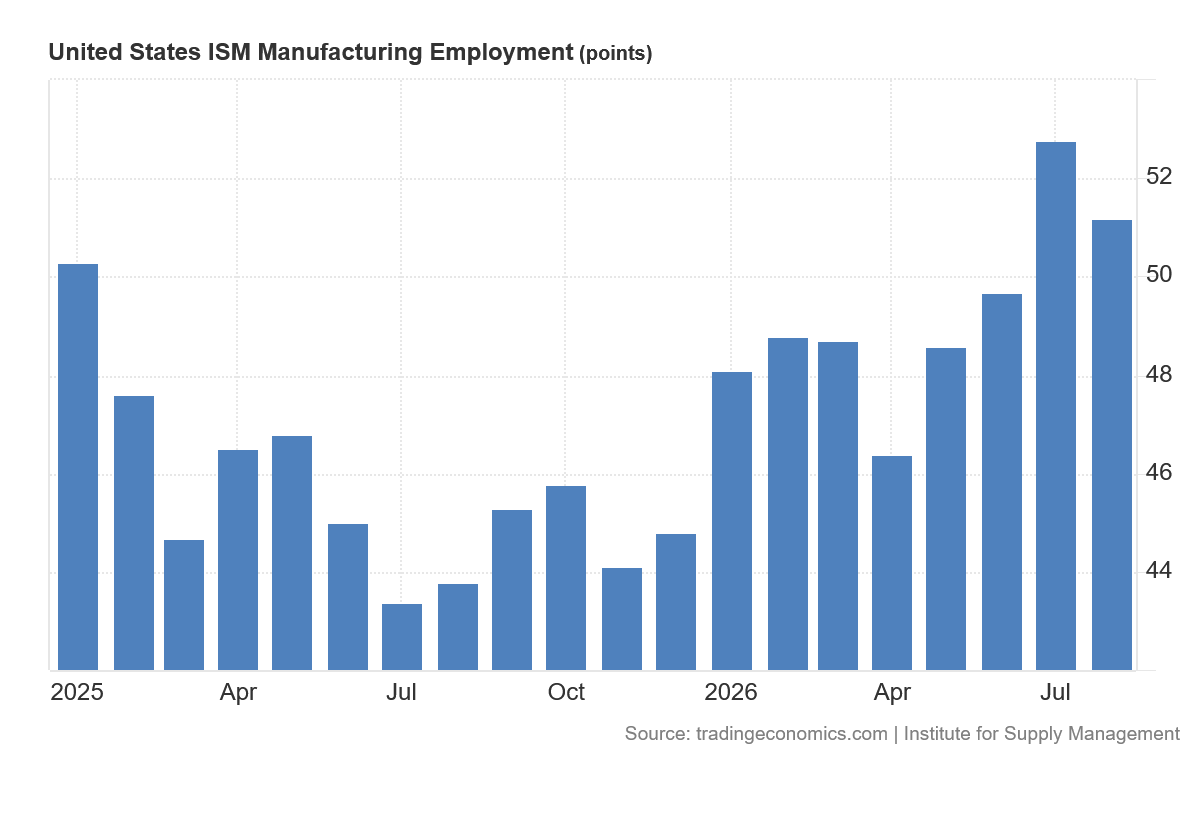
As with the July JOLTS report, the dour economic outlook implied by the ADP jobs report stands in sharp contrast with the upbeat signals from the PMI metrics, particularly for manufacturing.
The S&P Global Manufacturing PMI has been consistently in expansion for a year.
The Institute for Supply Management Manufacturing PMI has printed expansion since the start of the year.
While the ISM Manufacturing Employment index has been slow to move into expansion, it finally did so in July, and remained in expansion for August at 51.2.
The ISM Services PMI data has not yet been released for August as of this writing, but the S&P Global Services PMI improved to 56.8, its best showing of the Trump 2.0 era.
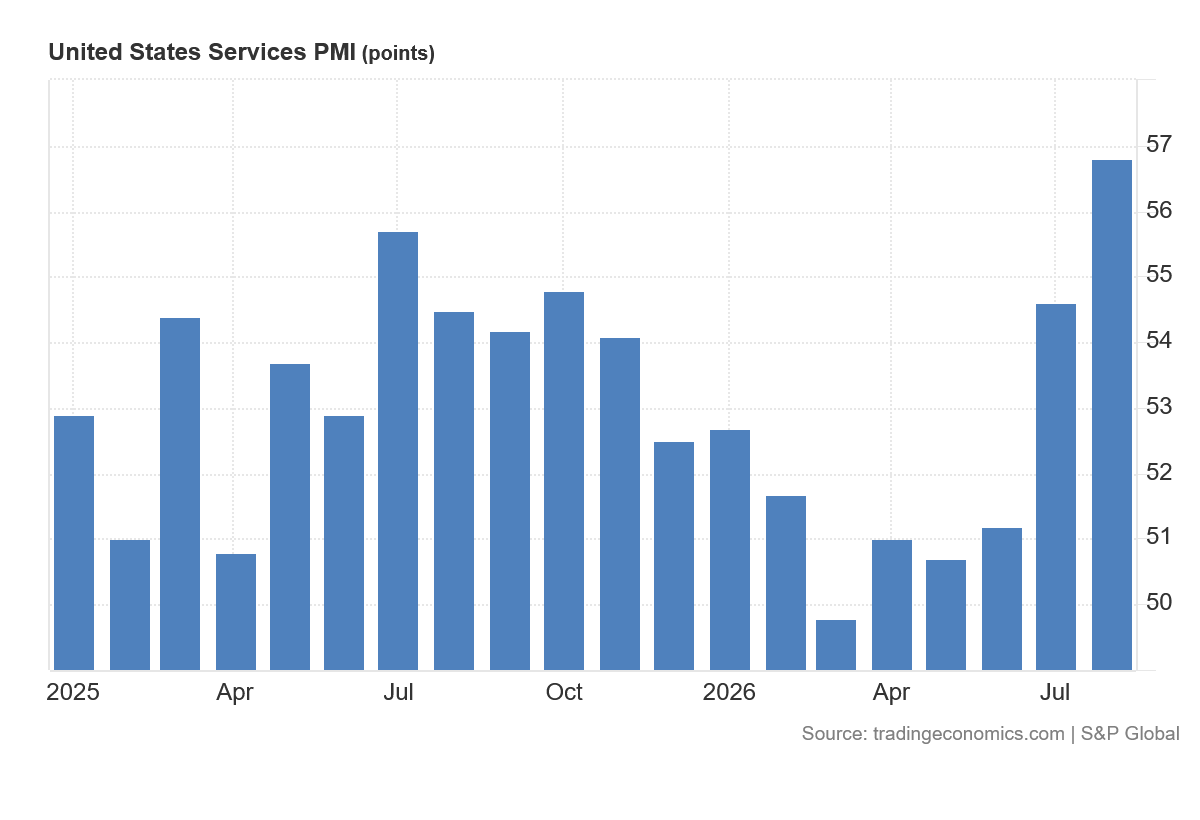
As bad as the ADP jobs numbers are, other indicators are signalling a fair amount of strength and energy in the US economy.
Interest Rates And Oilpocalypse
Despite the presence of positive signals for the US economy, however, there is no escaping the negative backdrop established by the on-again, off-again, now on-again war with Iran, which is continuing to push oil prices high and diesel prices higher, with the spread between oil futures and diesel futures widening.
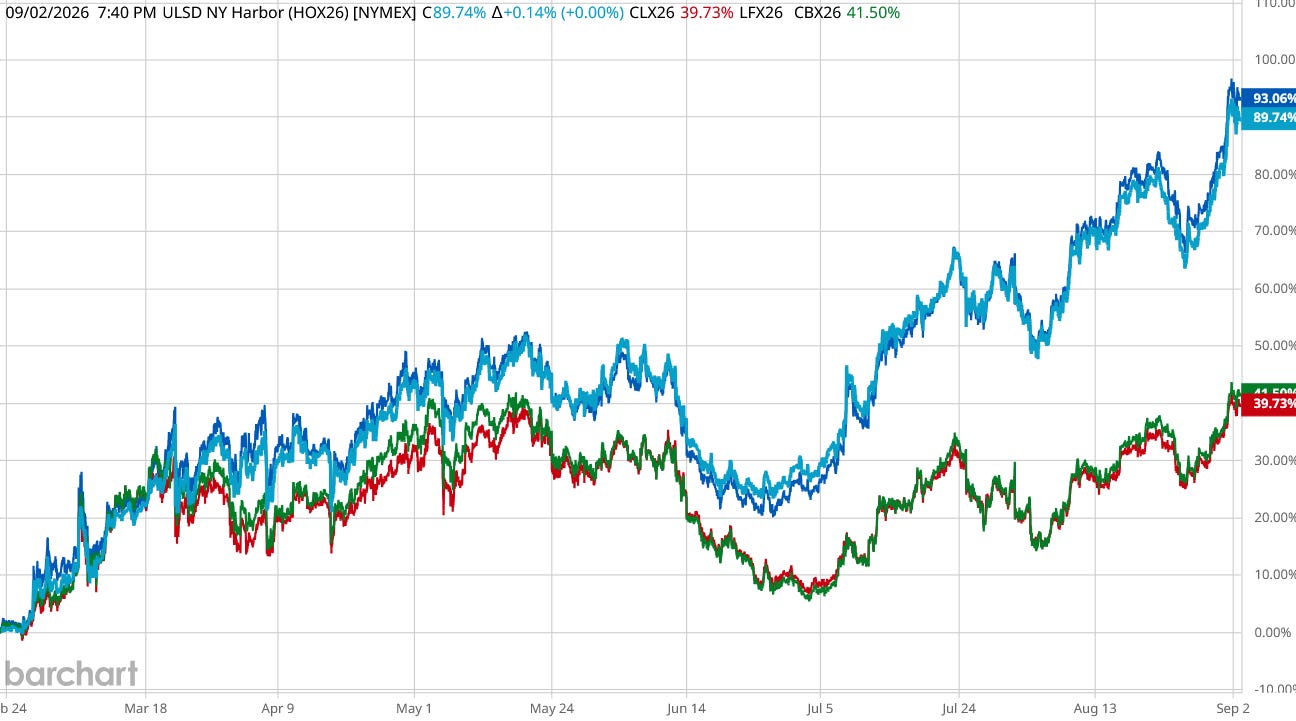
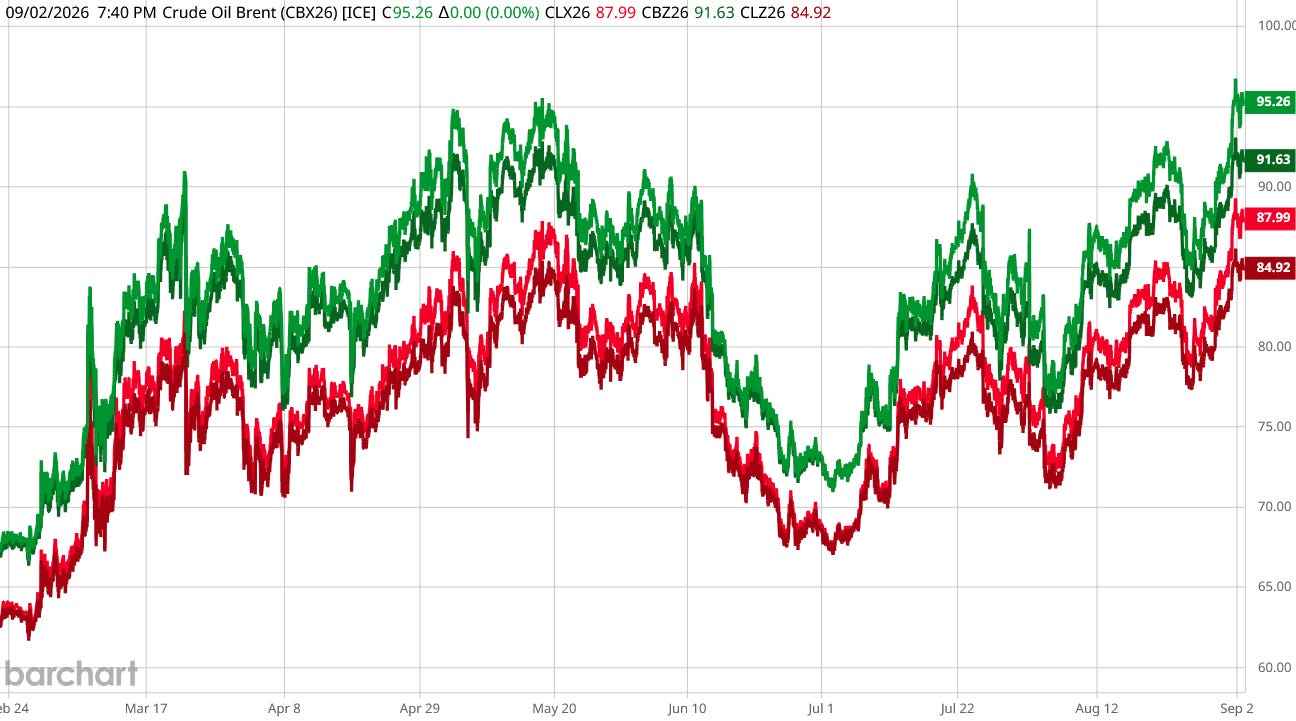
With the November contract on Brent Crude having moved above $95/bbl, diesel prices are shaping up to be the nexus of a slow-motion oilpocalypse, where fuel prices slowly smother the world’s economies.
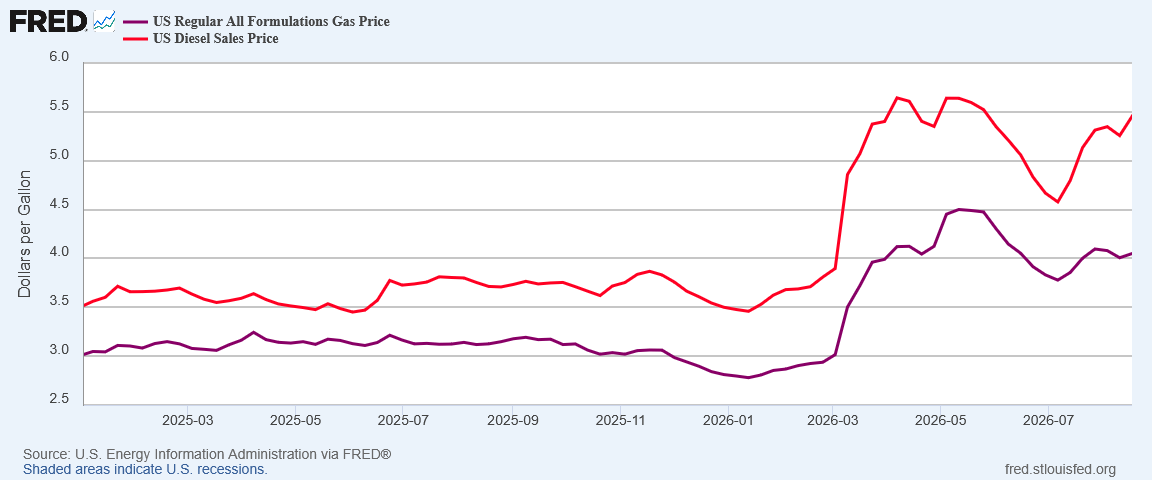
The surge in diesel futures translates into a price at the pump of $5.45 on average across the US, close to the peak prices from April and May, right after Iran illegally closed the Strait of Hormuz.
Rising energy and fuel costs, if they persist, can only act as a drag on the economy, holding growth below potential. That problem is compounded by the continued rise in Treasury yields since the war with Iran began.
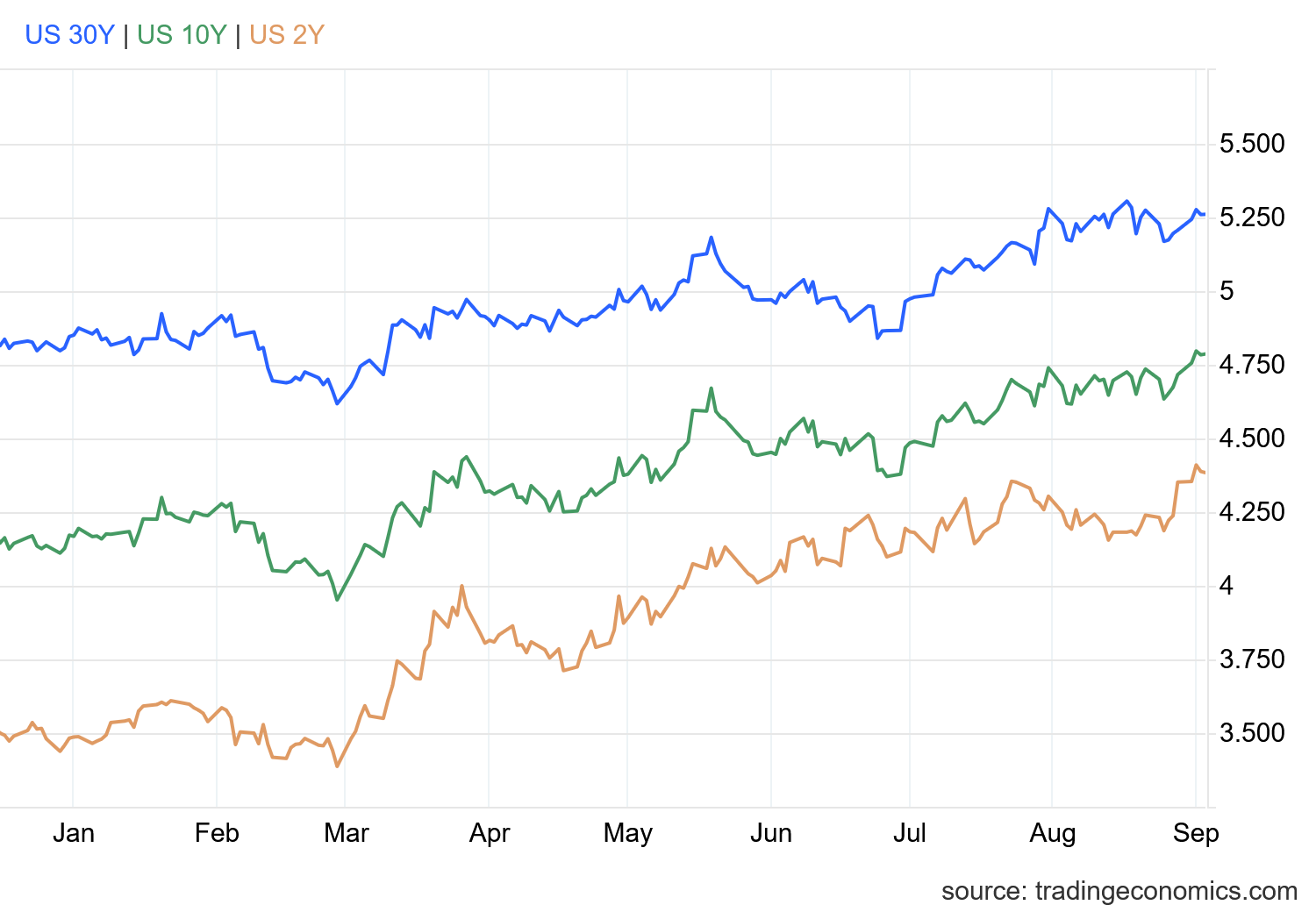
Mortgage rates have followed Treasury yields upward.
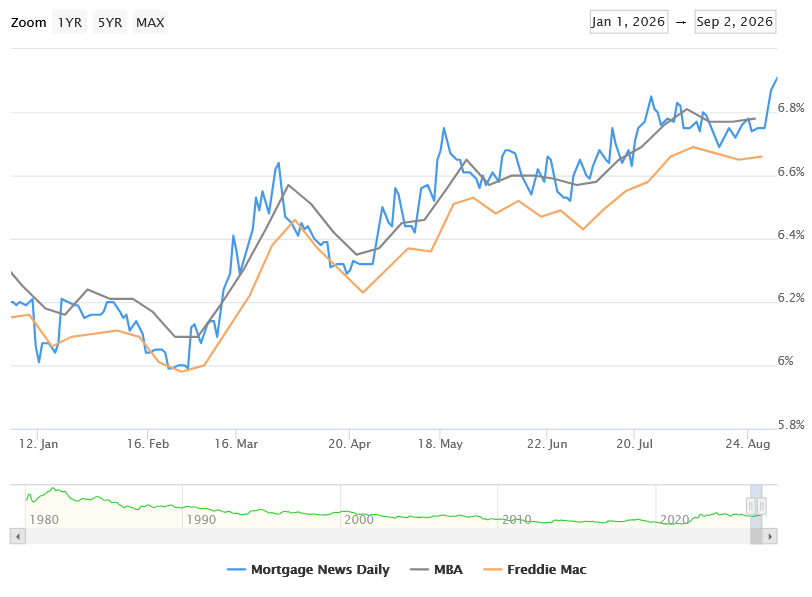
One does not need a PhD in economics to see that rising interest rates and rising fuel costs are obstacles an economy needs to overcome. That was true for the July JOLTS data and it is true now for the August ADP data.
The ADP data indicates job markets in the US are not handling the twin obstacles of rising interest rates and rising energy costs well.
Jobs Recession?
In January, the ADP jobs data showed the US economy still in the grip of a jobs recession. By May, the ADP jobs report had improved to a point where jobs recovery became a far more plausible view of the data.
From June onward, the jobs recovery hope has been fading steadily, leading us back to the uncomfortable question of whether the economy is slipping back into jobs recession after an all-too-brief jobs recovery.
In January, a jobs recession month, ADP charted 22,000 new jobs, well below the August level of 38,000 jobs. However, August is the worst ADP jobs report since January.
Does 38,000 jobs created put the US economy back in jobs recession? Potentially, especially considering that July’s ADP report started out at 44,000 jobs before improving slightly to 46,000 on the August revisions.
Does the ADP report having missed the Wall Street consensus estimate by some 10,000 jobs alter expectations for the upcoming Employment Situation Summary report? The common sense answer is that it should. Both the ADP report and the BLS report charted stronger jobs numbers in March, April, and May, and both reports have charted progressively weaker job numbers in June and July. The continuation of the cooling trend on the ADP report for August suggests that the same continuation will be seen in the BLS report as well.
How much of the cooling trend in job growth since June is due to economic fallout from the war with Iran? There is, of course, no easy quantification which can be done to answer that. What is indisputable, however, is that market interest rates have risen steadily since the war began at the end of February. Equally indisputable has been the rise in fuel prices at the pump, as well as benchmark crude oil prices. An economic environment characterized by rising costs is never, as a general rule, going to be particularly conducive to job growth.
As it is certain the war with Iran is, at the very least, not helping fuel job growth, we should not be surprised if job growth continues to deteriorate so long as the war with Iran continues. If war with Iran brings the world’s economies to the brink of an oilpocalypse through continued pressure on oil prices and oil supply, job growth is also sure to be significantly impacted by that outcome.
Has the US returned to jobs recession? The data might not yet be there for us to confidently say “yes”, but the data definitely is not there for us to confidently say “no.”
Regarding the manufacturing sector. It seems that organizations are hiring temporary employees in low level manufacturing operations to fill labor type jobs. Once orders have been filled or inventory built, those people are laid off to reduce cost.
Gig work by W-2, so to speak....
Just depressing.
Trump needs to win the war, and concentrate on winning the midterms with better economic news. NOW.