


For most of the year, the primary driver of oil and energy prices has been the United States’ war with Iran and the consequent disruptions of oil flows from the Persian Gulf.
More recently, Ukraine’s success with targeting Russian oil refineries has emerged as a significant additional factor magnifying the “oilpocalypse”.
Russia may have leave from the US to export 500,000 tons of diesel. It remains to be seen if Russia has the capacity to produce 500,000 tons of diesel for export. Ukraine is certainly doing what it can to ensure Russia does not have that capacity.
Putin’s war in Ukraine and the war with Iran have produced synchronous energy supply shocks, each amplifying the effects of each other and magnifying the global oilpocalypse.
With the collapse of Trump’s latest diplomatic effort on Ukraine, an “energy ceasefire” where both sides stopped targeting each other’s infrastructure, we are not only seeing Ukraine emerge as a major factor in global energy prices, we are witnessing the inability of Europe as a whole to do much about it.
Europe is being squeezed by high diesel prices, and has no good options for alleviating them.
Ukrainian “Trick Or Treat”—Three Refinery Strikes In Three Days
In the overnight period of October 31-November 1, Ukraine’s long-range drone strikes notched their third strike against Russian refineries in as many days, targeting the Lukoil-Nizhegorodnefteorgsintez refinery near the city of Kstovo in the Nizhny Novgorod Oblast.
Video clips and images being shared from local social media sources suggest the damage done was significant.
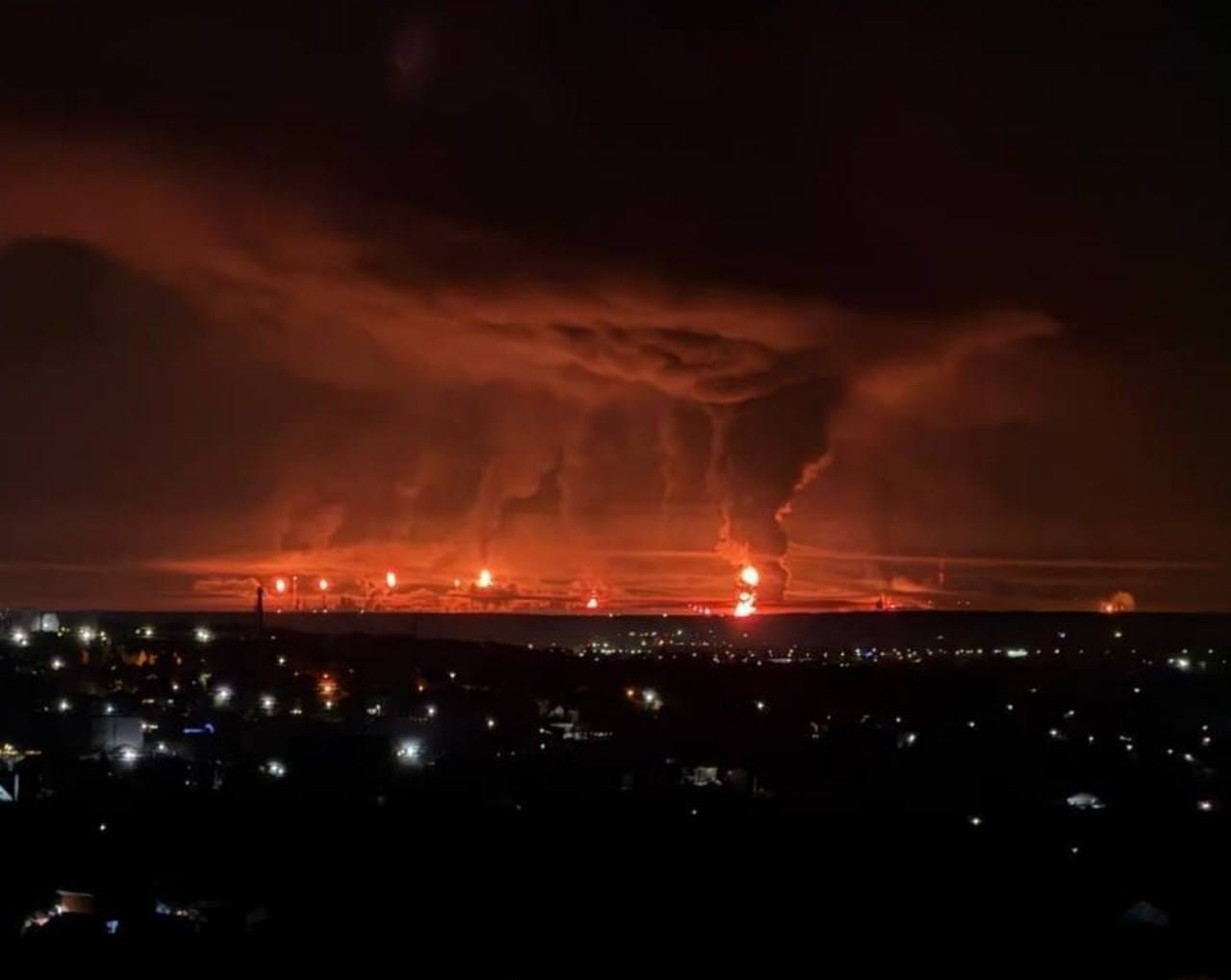
Reporting from Open Source intelligence sites as well as Ukrainian media appear to confirm the significance of the damage:
Open-source intelligence monitors, including Ukrainian OSINT channel Exilenova+, reported that incoming unmanned aerial vehicles (UAVs) penetrated dense local air defenses, causing simultaneous large fires in several operational sections of the facility.
The previous night, Ukrainian drones penetrated deep into the Russian heartland, striking the Bashneft-Novoil refinery near Ufa in the Republic of Bashkortostan.
Open-source intelligence (OSINT) analysis of eyewitness photographs conducted by Astra confirmed that an aerial impact ignited a major fire at the Bashneft-Novoil refinery.
Preliminary visual assessments by OSINT analysts indicate that the fire specifically engulfed the enterprise’s L-35 catalytic reforming unit.
Ufa itself is some 1,200 kilometers from the Ukrainian border, highlighting once again Ukraine’s ability to reach seemingly anywhere within Russian territory it desires.
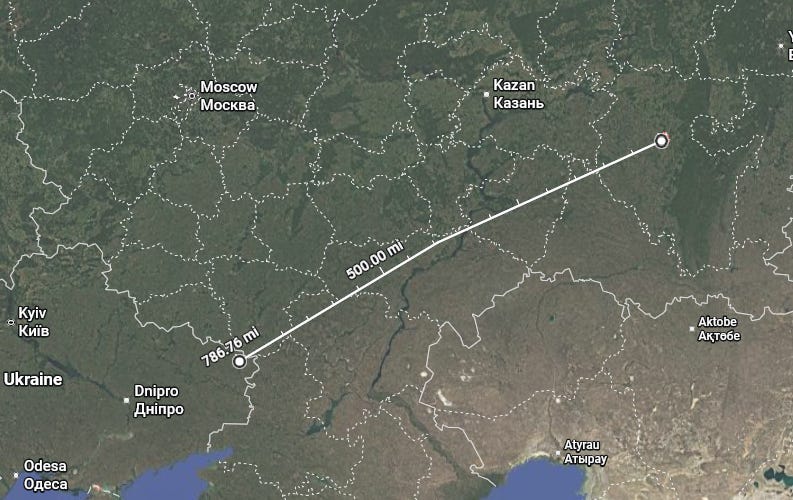
This came on the heels of Ukraine’s Friday attack on Russia’s Novokuybyshevsk refinery in Samara Oblast.
Longtime readers will recall that this has been an obvious vulnerability within Russia’s defense posture since the start of Putin’s invasion of Ukraine in 2022. With the war in Ukraine about to enter its fifth year, Russia still does not have a defense against Ukrainian drones that can protect its oil infrastructure.
Europe Is Stuck With Soaring Diesel Prices
For Europe the consequence of Ukrainian drone strikes on top of the disruptions of energy flows from the Persian Gulf is easily seen in soaring market prices for diesel.
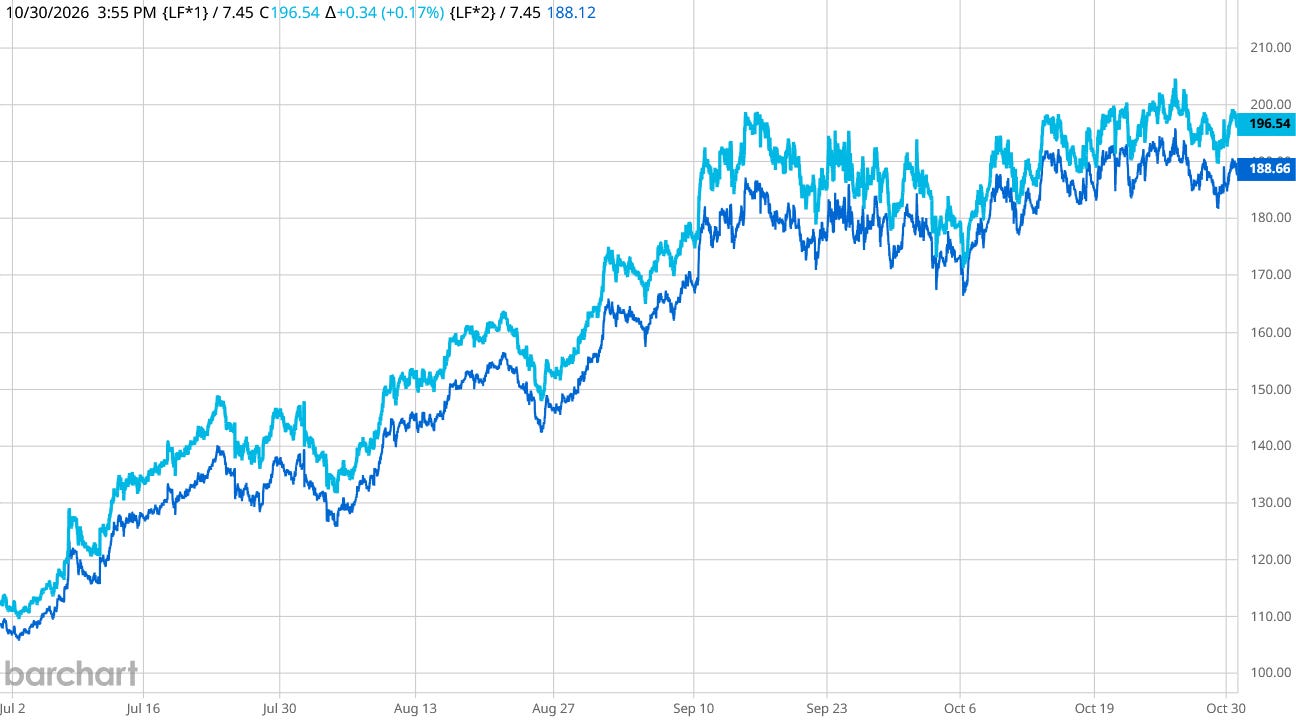
Just since July 1, diesel has climbed more than 74%, after rising 41% during the first half of 2026.
At the same time, Europe is grappling with natural gas prices that have climbed some 270% since the start of 2026.
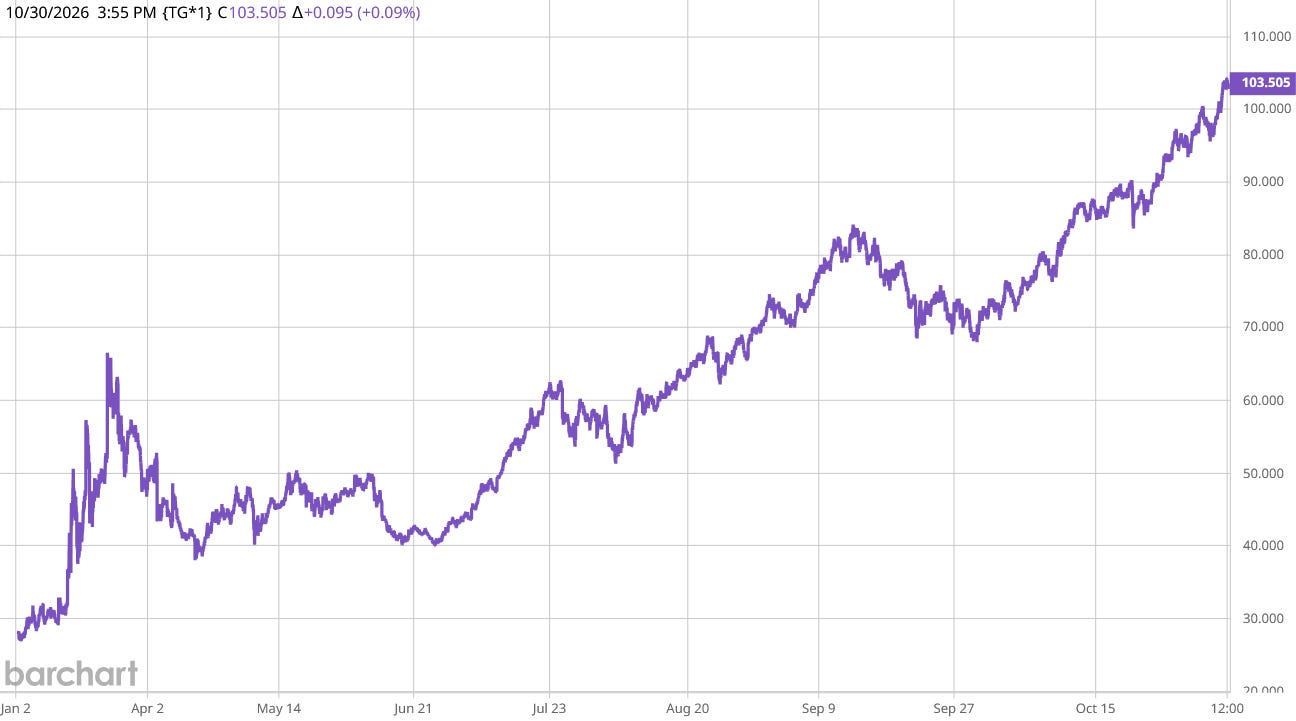
With Europe as a whole lagging in natural gas storage against winter demand, natural gas prices are likely to put many countries in a very uncomfortable (and cold) position over the next few months.
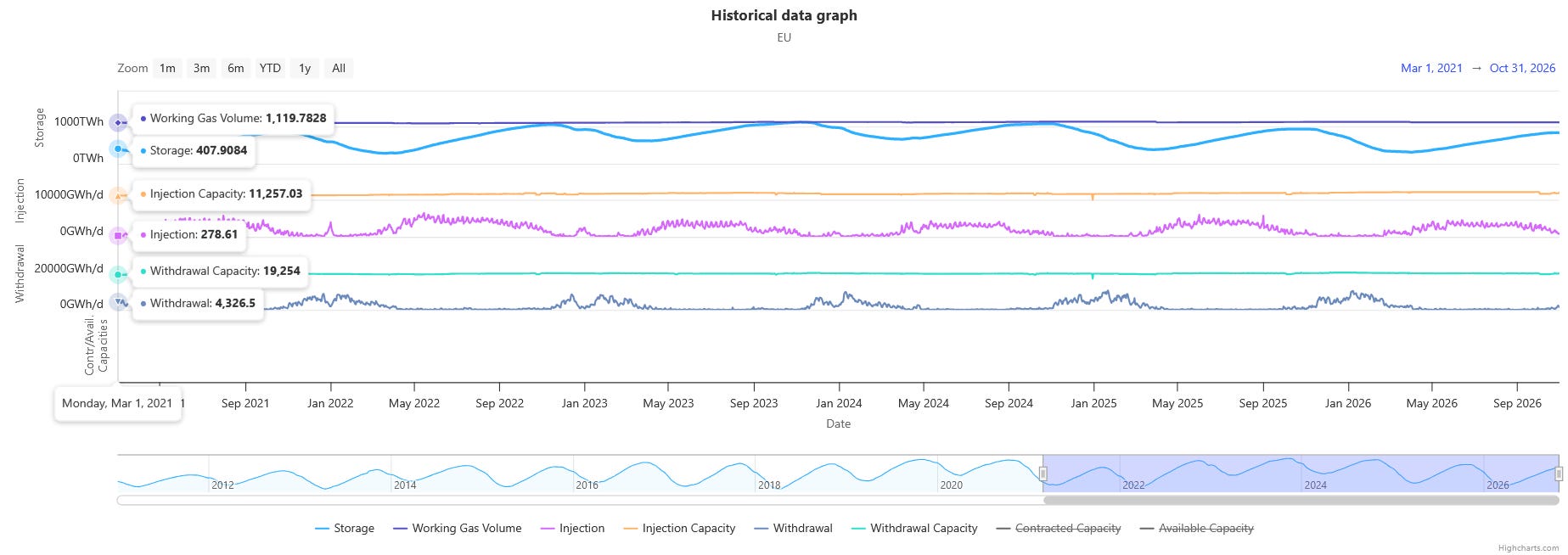
What can Europe do about the energy situation? Nothing. Europe does not have either the oil production or diesel refining capacity of the United States, and that shows in just how much higher diesel is in Europe compared to the US.
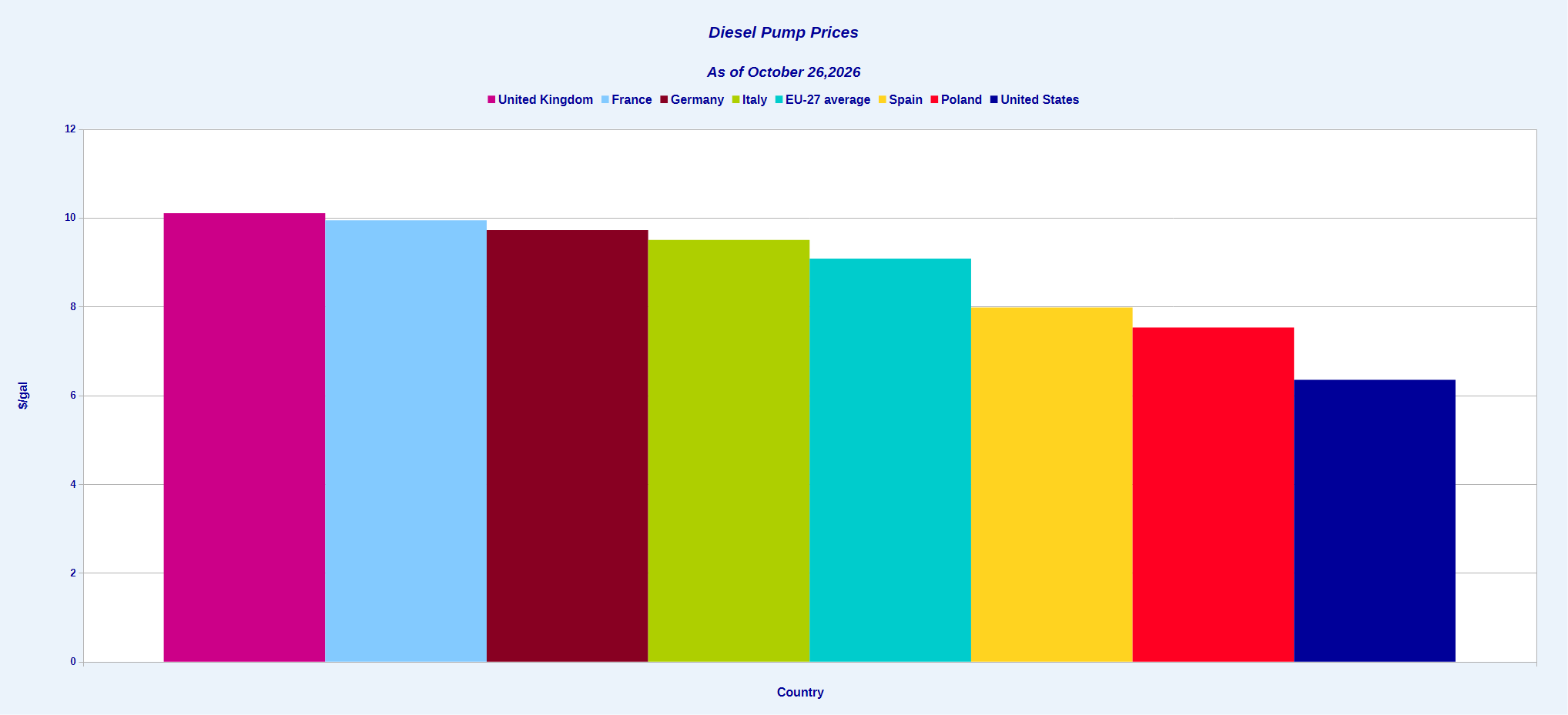
Perversely, a lot of that price differential is European taxes. Base diesel prices in both Europe and the US before taxes are included are much more even.
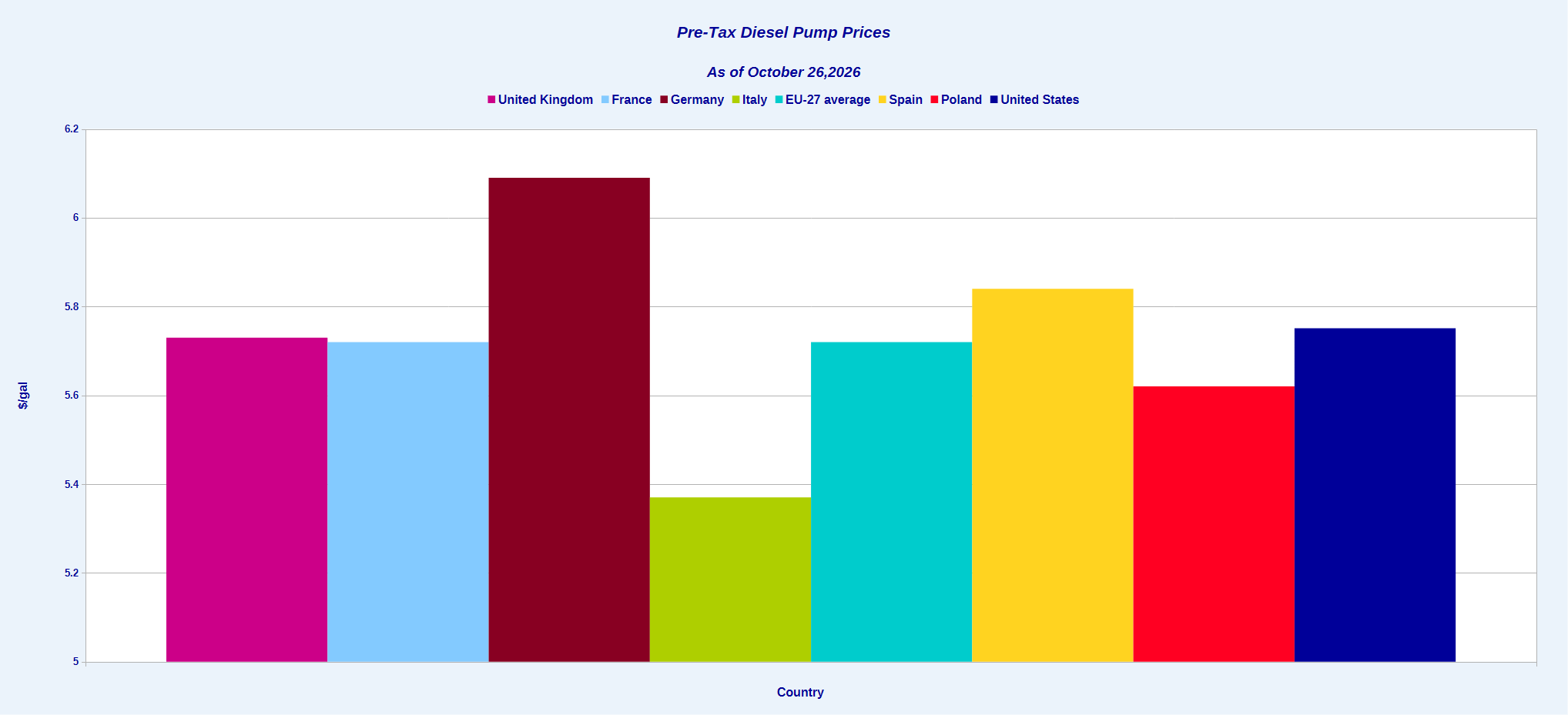
In other words, Europe’s diesel dilemma is in large measure an “own goal” of sclerotic and counterproductive tax policies on energy.
Europe Chose This Path
For better or worse, rightly or wrongly, we must acknowledge that this is a course Europe’s political leaders have chosen.
Setting aside questions about Putin’s justifications for starting the war in Ukraine, the reality for Europe is that the EU chose to engage in attritional economic warfare with Russia in response to Russia’s invasion of Ukraine. The EU made an economic adversary of its primary energy supplier prior to 2022, and its economies have taken major hits as a consequence. Even early on it was apparent that heavy industry within the EU was going to struggle as a result of EU policies regarding Russia.
The prevailing wisdom of the supposed “experts” among corporate media’s chattering class has long been that Europe possessed diplomatic and trade leverages to counter the consequences of US hard military power in the Persian Gulf.
Energy prices since the start of Operation Epic Fury have proven just how much actual leverage Europe has: none. From the start, the Byzantine nature of EU geopolitics has paralyzed any sort of response from Europe to the war with Iran, reducing the continent to a mere spectator to the conflict being prosecuted by the United States.
With peace in both Ukraine and the Persian Gulf still frustratingly out of reach, with no diplomatic or military recourse to restore normal energy flows from either the Persian Gulf or Russia, Europe is faced with rising energy costs and no good policy alternatives. For obvious reasons of social as well as economic policy, simply doing without energy goods such as diesel and natural gas is simply not a practicable option for Europe.
While it is still far from certain what the ultimate outcome of the war in Ukraine will be, it is becoming increasingly difficult not to cast the EU as having lost that conflict. Even if the Putin regime should implode under Russia’s compounding economic difficulties because of the war, the economic damage to Europe has already been done, and is continuing.
Unless current energy trends somehow reverse, and dramatically so, Europe’s energy outlook is sure to get worse before it gets any better. Diesel prices are going to rise. Natural gas prices are going to rise going into the winter months. The economic fallout of inflation and demand destruction is almost certainly unavoidable.
When the wars finally do end, as all wars eventually must, how much “Europe” will be left standing, economically speaking?
If current trends continue, not much.
My teenage self would not have believed the adults in the world can be so irrational. Europe has sabotaged itself in dozens of purely insane ways!
Tomorrow is Election Day, and I’m sure looking forward to your expert analysis of the results, Peter. I have sent you a small ko-fi tip so that you can fortify yourself with some indulgence while you watch the election results come in. Let’s hope that instead of crying in your beer, you’ll be toasting some encouraging victories! (Yay, Paxton!)