


Last month the main economic question was “oilpocalypse for whom?”

Iran may be losing the only leverage it has had in this conflict, but it is doing so incrementally. The Iranian position is eroding, not collapsing. Operation Economic Outcast is likely to eventually cause the Khamenei regime to crack and collapse, but, barring some unforeseen development, that could still be weeks if not months away. Meanwhile, the attritional nature of such economic warfare means the US is still grappling with the inflationary influences of high oil and fuel prices. If Iran manages to launch another strike at Saudi Arabia’s East-West Pipeline, or if the Houthis eventually succeed in imposing a more stringent blockade of the Bab al-Mandeb, oil prices and thus diesel prices could quite easily soar upward again.
With oil prices remaining quite high, but not trending sharply higher, the oilpocalypse is still looming just ahead. It’s just not clear who it’s for: the US or Iran.
Here in the United States, the summer had been a tantalizing mix of curiously optimistic inflation news and problematic job market news.
Now that summer has moved into fall, however, we have seen a decided and negative shift to both the news and the underlying economic data in particular.
Job growth is slowing. A new jobs recession may be looming.
Nor is the grim economic outlook confined to the US. Europe is facing its own energy crises—inadequate natural gas stores with winter fast approaching as well as a growing shortage of diesel fuel—with scant prospects of either improving any time soon.
The oilpocalypse has arrived for everyone. The oilpocalypse is getting worse, and we still do not know how much worse it will get.
Iran Still Contesting The Strait Of Hormuz
The war with Iran has faded from front page of most media outlets, but it is continuing, and the IRGC is still determined to prove it has control over the Strait of Hormuz.
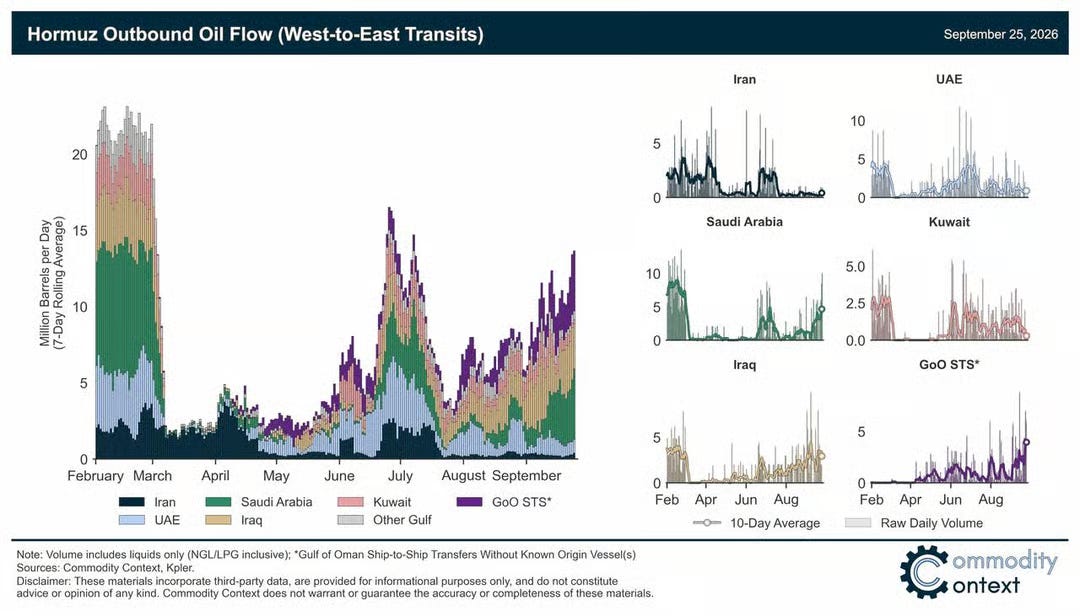
That control has become indisputably more important for the IRGC, as last month saw multiple sources reporting that crude oil flows from the Persian Gulf were near prewar levels.
One consequence has been a surge in incident reports by the United Kingdom Maritime Trade Operations Center, making October the most eventful month of 2026 even before the month is halfway over.
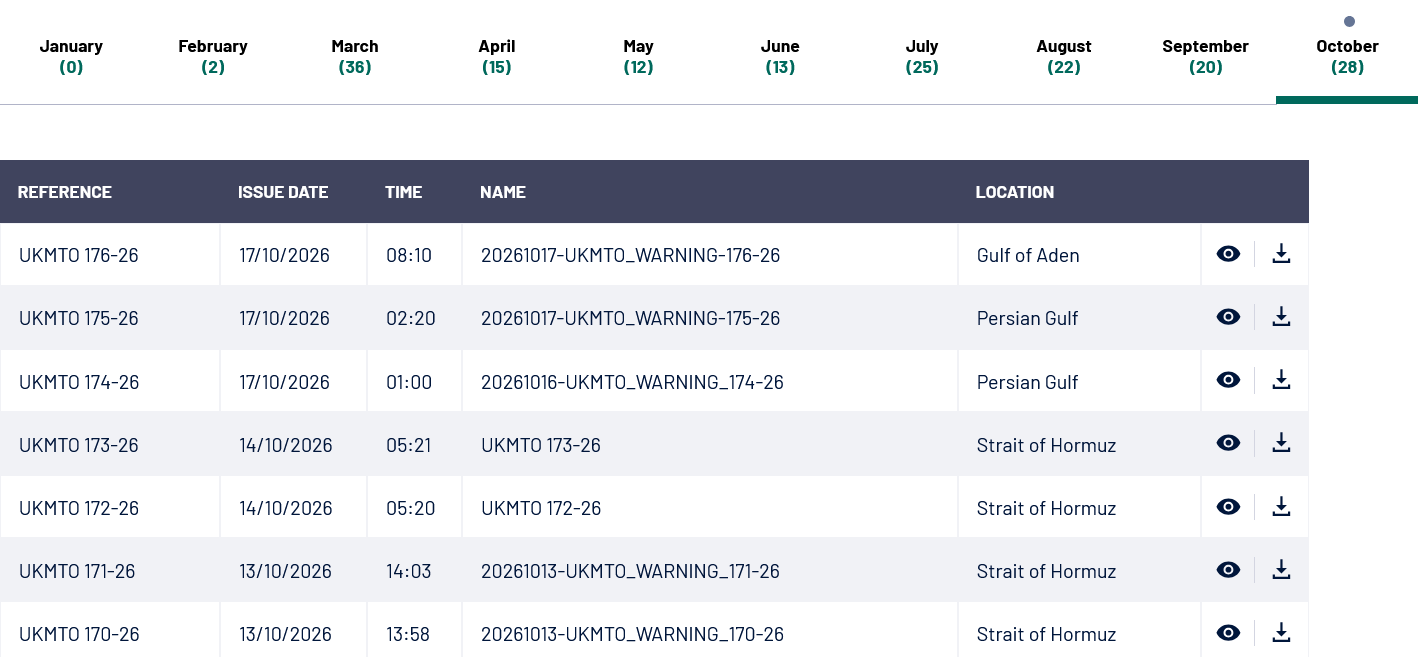
Notably, the IRGC has once again expanded its theater of attack operations, with two of the most recent attacks on civilians shipping coming not in the Strait of Hormuz, but well inside the Persian Gulf off the coast of Al Jubayl, Saudi Arabia.


Reporting based on commercial data from Kpler and other agencies shows the consequence of the increase in IRGC activity to be an inevitable decrease in Persian Gulf oil flows.
Data from trade consultancy Kpler showed that average weekly flows through the Strait of Hormuz climbed as high as 15mn barrels a day in late September, almost 90 per cent of prewar levels.
But these have since fallen back to about 11mn b/d. Preliminary data showed just 4mn barrels transiting the strait on Tuesday.
Adding credibility to that reporting is the continued reduced oil production around the Persian Gulf.
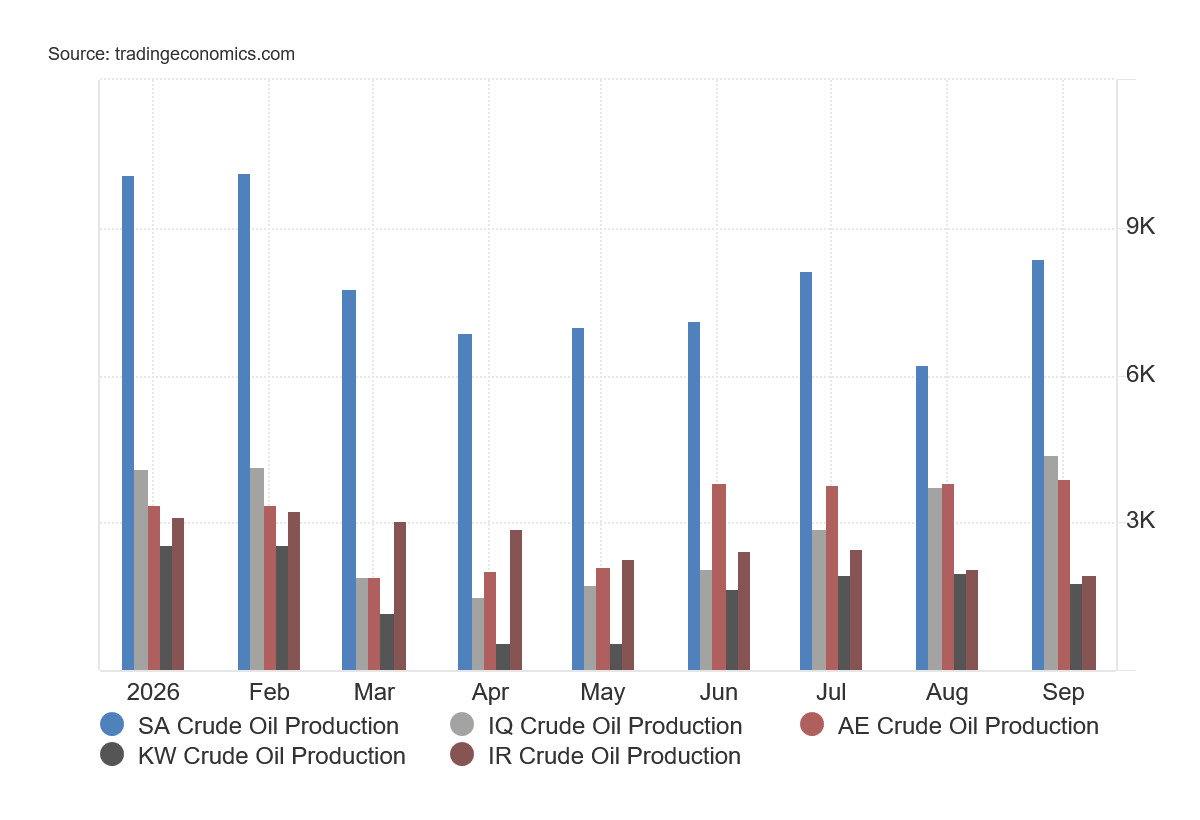
Only Iraq and the UAE succeeded at bringing crude oil production to back to prewar levels and above. Saudi Arabia, Kuwait, and Iran are all producing substantially much less oil.
Oilpocalypse has always been the inevitable result of Persian Gulf oil not flowing. For now, at least, Persian Gulf oil is not flowing—certainly not at levels to which the world was long accustomed.
Ukraine And Russia Add To Global Diesel Distress
Oil dislocations in the Persian Gulf have certainly been the catalyst for the oilpocalypse, but they are not at all its sole cause.
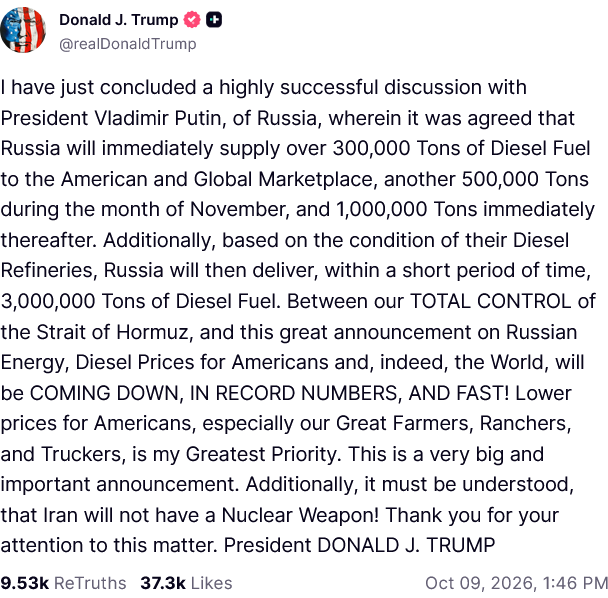
The world was reminded of the “other” source of global energy supply shocks when President Trump announced last week on Truth Social that Ukraine and Russia would enact an “energy ceasefire”, halting attacks on each other’s energy infrastructure.

That came on the heels of a deal between Russia and the US whereby Russia agreed to release some 500,000 tons of diesel fuel into global markets, while the US agreed to lift sanctions on Russian diesel for those 500,000 tons.
Beyond the dislocations in the Persian Gulf, a large part of what drove both the deal with Russia to release diesel fuel into global markets and the energy ceasefire itself is the ongoing effectiveness of Ukraine’s drone campaign against Russia oil infrastructure, particularly oil refineries.
With 32 major refineries and roughly 6.5 million barrels per day (mb/d) of installed refining capacity, Russian has historically been the world’s third-largest producer of refined oil products, after the United States and China. However, a long-standing Ukrainian campaign of deep drone strikes on Russian refineries has intensified significantly over the past 18 months. In June, Russian refinery throughput fell to 3.8 mb/d, its lowest level in more than 20 years and roughly 30% below a year earlier. Reported gasoline output is down by 20% compared with 2025 levels, while diesel production is estimated to have fallen by nearly 30%, prompting the government to restrict fuel exports to protect domestic supplies.
Ukraine has targeted Russian oil infrastructure since 2022, when Russia’s full-scale invasion began. However, the growing range and impact of Ukrainian drone strikes in 2025 and 2026 point to a dramatic expansion of Ukraine’s technological and military capabilities. In the first eight months of 2026, a Russian refinery was hit on average once every three days.
Ukraine’s drone attacks have reduced Russia’s operational diesel refining capacity to the point where Russia earlier this year felt obliged to suspend most exports of diesel fuel, focusing diminishing production capacity towards the domestic market instead.
Ukraine’s continued success in targeting Russia’s refineries led to an expansion of the export ban at the end of September.
Ukraine’s strategy is self-evident. By targeting and disrupting Russia’s oil refineries, Ukraine deprives Russia of fuel it needs for the front lines in Eastern Ukraine. By disrupting Russian energy exports Ukraine deprives Russia of much needed hard currency to fund its war efforts.
The effectiveness of that strategy succeeded by July in pushing the second-largest exporter of diesel almost entirely off the global market.
Russia is the world’s second-largest diesel exporter after the U.S., and refinery outages there can significantly affect global supplies of fuels. Its exports were already slowing prior to the ban due to domestic shortages left by Ukrainian drone attacks.
Diesel and gasoil loadings from Russia were just 234,000 barrels per day from July 1 to 10, according to Kpler, down from 400,000 bpd in June and the 2025 average around 817,000 bpd.
Given that Persian Gulf diesel exports amounted to 1.4million bpd in 2025, the twin disruptions of the war with Iran and the war with Ukraine have disrupted over 2 million bpd in diesel exports.
With peace remaining elusive with Iran, President Trump has sought to ease some of the Russian diesel dislocation through the “energy ceasefire” between Russia and Ukraine. The clear conclusion here is that Trump is having better luck engaging in diplomacy with Russia than with Iran. The tacit admission is that diesel diplomacy with Russia is made necessary because Ukraine pushed Russian diesel out of global markets.
Ukraine’s strategy also makes it highly problematic whether Russia will be able to honor its export commitment to President Trump. The “energy ceasefire” scarcely got started before there was a Russian missile attack on Ukrainian energy infrastructure, and within days, Ukraine announced it was “done” with the ceasefire.
Zelenskyy said Ukraine had honored a proposed energy ceasefire for three days, refraining from both attacks and retaliation, while Russia subsequently launched a massive assault on Ukrainian energy infrastructure, including approximately 40 ballistic missiles.
Russia may have leave from the US to export 500,000 tons of diesel. It remains to be seen if Russia has the capacity to produce 500,000 tons of diesel for export. Ukraine is certainly doing what it can to ensure Russia does not have that capacity.
Putin’s war in Ukraine and the war with Iran have produced synchronous energy supply shocks, each amplifying the effects of each other and magnifying the global oilpocalypse.
Oil Prices Resume Rising, Diesel Never Really Stopped Rising
We can easily see the shape of the oilpocalypse in the form of benchmark crude and diesel prices.
Benchmark Brent and West Texas Intermediate had eased significantly in late July and early August, only to see prices push up once more heading into September.
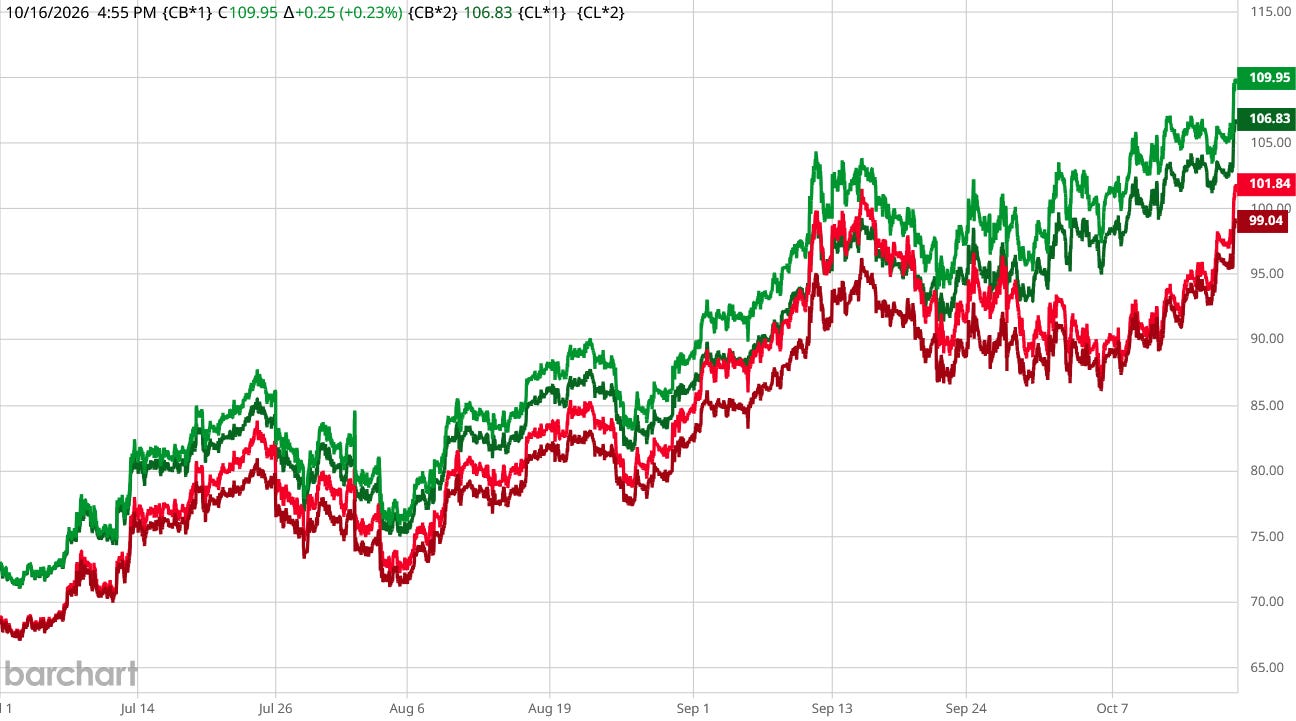
Even more tellingly has been the widening spread between Brent Crude and West Texas Intermediate since late September. As crude prices began rising again after a brief stabilization interlude, Brent has risen faster than West Texas Intermediate.
The US is hardly the only oil supplier to the world, but it is rapidly becoming the most reliable oil supplier.
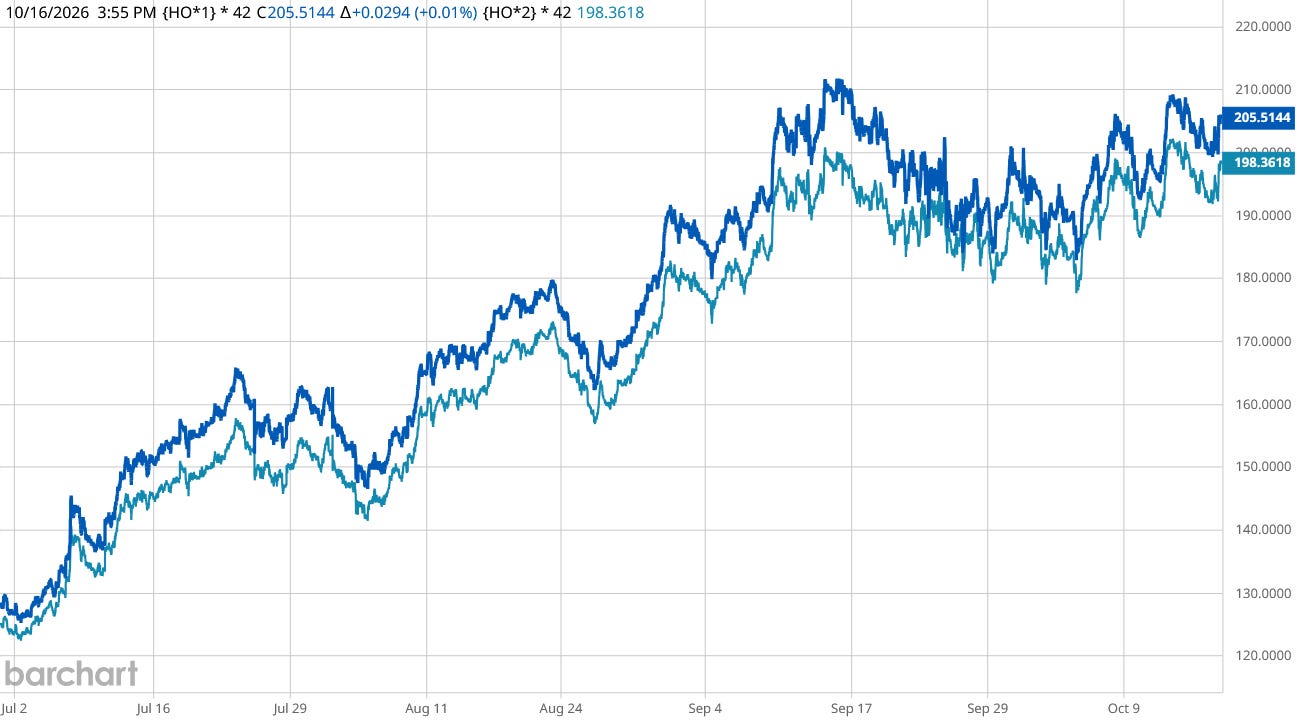
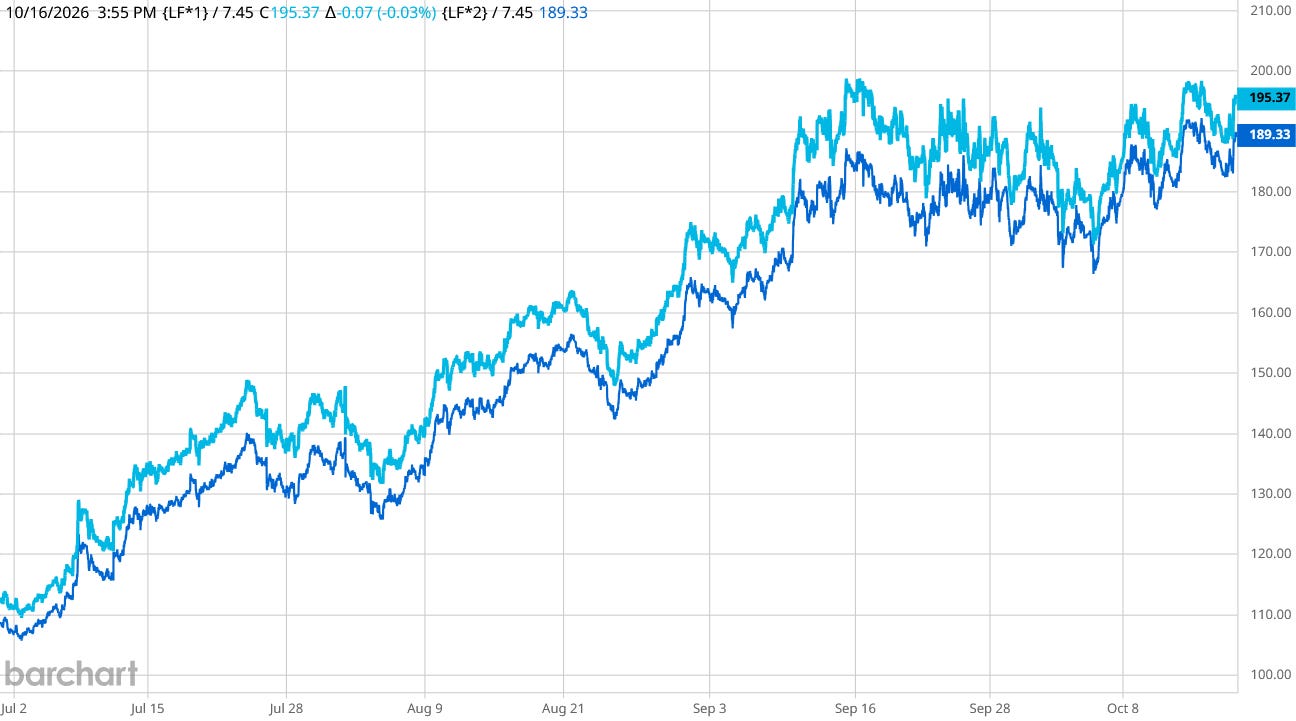
Far more disconcerting, however, has been the inexorable rise in diesel contracts.
US diesel prices had stabilized and even trended down starting in mid-September before reversing in October.
European diesel prices had not seen even that much stabilization. There was a much smaller decline starting in September, but events have since reversed that tiny bit of improvement..
Perversely, while the shortage of diesel in the global marketplace is the result of both the war with Iran and the war in Ukraine, part of the corporate media chattering class wants to dismiss the indisputable facts of Russia’s diesel export ban and prior diesel export volumes and make the ongoing diesel supply shock all about the war with Iran. The loss of 817,000 bpd of diesel from global markets doesn’t matter when it is Russian diesel, but the disruption of 1.4million bpd of diesel does matter because it is Persian Gulf diesel, or so the “experts” would have you believe.
One of Fox News’ resident “experts”, retired Lt. General Keith Kellogg, advanced exactly this thesis this past Friday:
If he thinks he can negotiate with these guys, I think he is dead wrong in the sense that the real problem with diesel prices is not Zelenskyy in Ukraine. It’s not with Russia in Ukraine. It’s all what’s happening in the Gulf. And if you look at the graphs that have come out of Kpler, you can see where the real problem is with not that having good transit through the Strait of Hormuz. Just recently they had a mine hit a ship and five of the nine major oil transport vessels, companies, have now said they’re not going to go into the Gulf.
Meanwhile, over the weekend Ukrainian drone attacks set fire to the Petersburg Oil Terminal in St. Petersburg, Russia, yet again.
The data shows the impacts of Ukraine’s strategy of targeting Russian refineries and export terminals. Russian revenue from sea-borne oil products exports plunged 32% month on month in August, before Putin tightened the global diesel export ban. The places where Russia is increasing diesel exports is to landlocked Central Asian countries such as Kazakhstan, Kyrgyzstan, Mongolia and Tajikistan. The rest of the global market is having to do without Russian diesel exports.
To pretend Ukraine’s strategy against Russia has no ramifications outside of Russia and Ukraine is simply delusional. Keith Kellogg proves once again that “expert” is wokespeak for “blithering idiot.” We only need to see what has happened to diesel and gasoil prices globally to recognize that any reduction in global diesel supply is a supply shock—and Ukraine has shocked global diesel markets beyond Central Asia by disrupting Russian refining and sea-borne export operations to the tune of over a million and a half tons of diesel.
Ukraine has absolutely contributed to the rise in EU diesel pump prices over the past year. On that point the data leaves little room for doubt or debate.

We saw the impacts of these diesel price rises when the Consumer Price Index Summary report came out last week. Not only had energy price inflation become significantly worse in the United States, the surge in durable goods prices coupled with rising service prices were some of the many indicators that energy prices were having an inflationary impact on other consumer goods—something that has been forecast, projected, and even expected, but which only began to appear last month.
The Producer Price Index Summary report was an even more cynical assessment. Among its many inflation signals was a surge in inflation for Stage 2 Intermediate Demand.
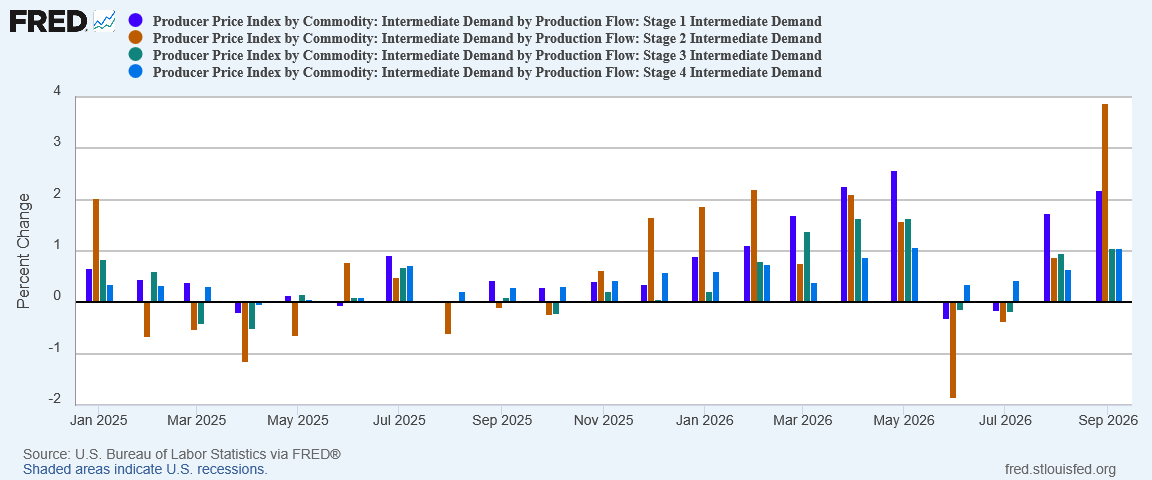
The rise in inflation within the US economy is being echoed across the Atlantic throughout the Eurozone, with year on year Eurozone inflation posting its second-largest monthly increase this year.
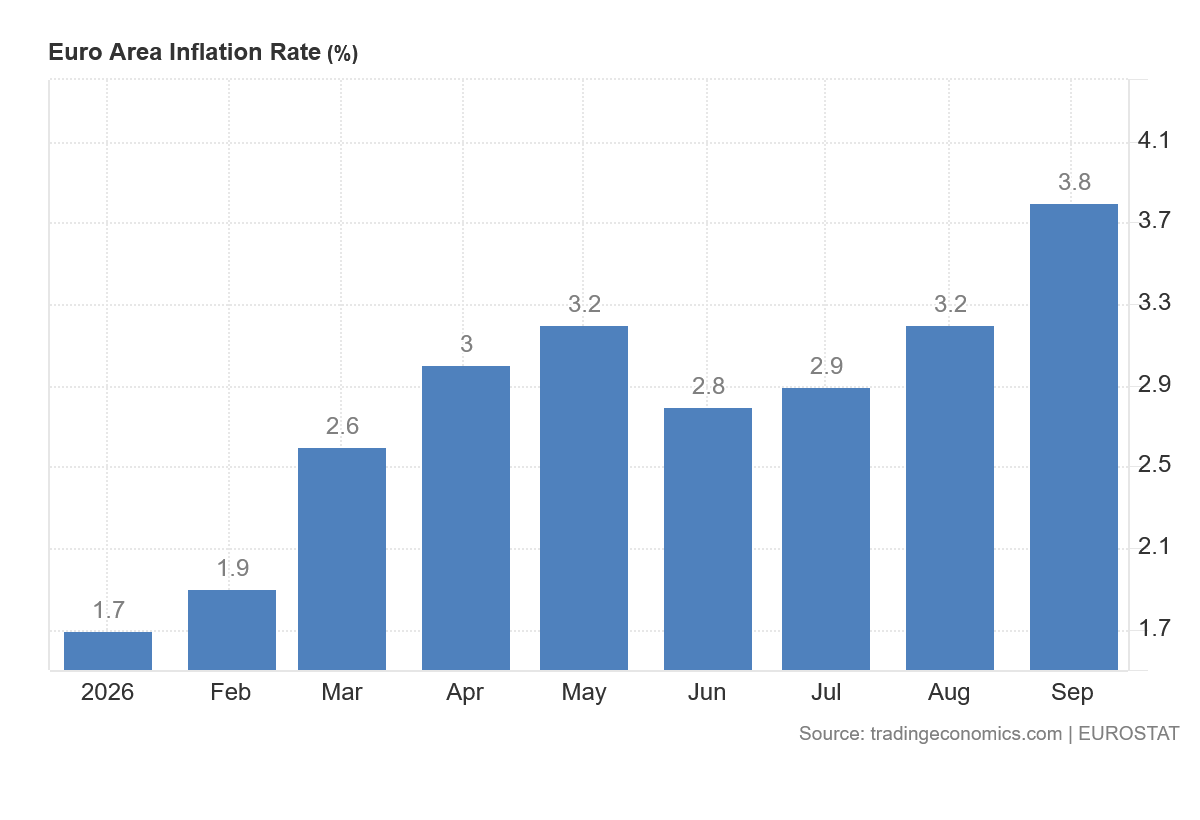
The war in Ukraine and the war with Iran have disrupted a large portion of global diesel supply on top of disrupting global oil supply. These twin disruptions have been pushing both oil and diesel prices up ever since the start of Operation Epic Fury. This past month we have seen the inflationary pressure of those high energy prices finally break through into the broader consumer price metrics in both Europe and the US.
This has been the fear from the beginning of the war with Iran: energy supply shocks from disrupted Persian Gulf oil flows would result in global stagflation. Throughout much of the summer, with President Trump and the IRGC doing an endless on-again, off-again cycle of escalation and peace negotiation, that fear was held back, as the price impacts remained confined largely to the energy sector. As of last month, that fear is finally becoming a reality.
Not Done Yet
We do not need to read the latest warnings from the UKTMO about IRGC attacks in the Strait of Hormuz to know that the oilpocalypse has arrived, nor do we need to see inflation data from around the world. We can see the impact of the oilpocalypse directly in the price of fuel at every fuel pump in the United States.
The oilpocalypse is here. Its impacts are real. Its price effects are real.
Nor do we need expertise in oil logistics or military strategy to see that the wars which have brought oilpocalypse down on the world show no sign of ending any time soon. Both the war in Ukraine and the war with Iran have devolved into slow, grinding wars of attrition, with both sides believing the other side will eventually suffer more damage than it is willing to accept, and with both sides consequently suffering far more damage than was ever anticipated.
Despite the damage, despite the global economic shocks brought on by these wars, peace remains not only elusive, but largely rejected.
Neither war is done yet. Neither conflict is finished wreaking economic chaos on the world. Neither pair of belligerents is ready to do what they must to end the war and pursue lasting peace instead.
The wars therefore continue. The attrition continues. The oilpocalypse continues.
We cannot say how much worse the oilpocalypse will get. We can say that, so long as these wars persist, the oilpocalypse will continue to get much worse.
A couple of weeks ago Trump indicated that there would be no more bombing until after the election. Peter, do you think that he must now resume attacks, in order to prevent the oilpocalyse from derailing Republican election victories? Do you see anything else that he could realistically try before the midterms?