


The September Consumer Price Index Summary was not a good report. It was not a good report for the Trump Administration. It was not a good report for the American economy. It was not a good report for Americans.
The September inflation report confirmed what real world prices have been saying: energy price inflation is getting worse. It may also be starting to impact other prices as well.
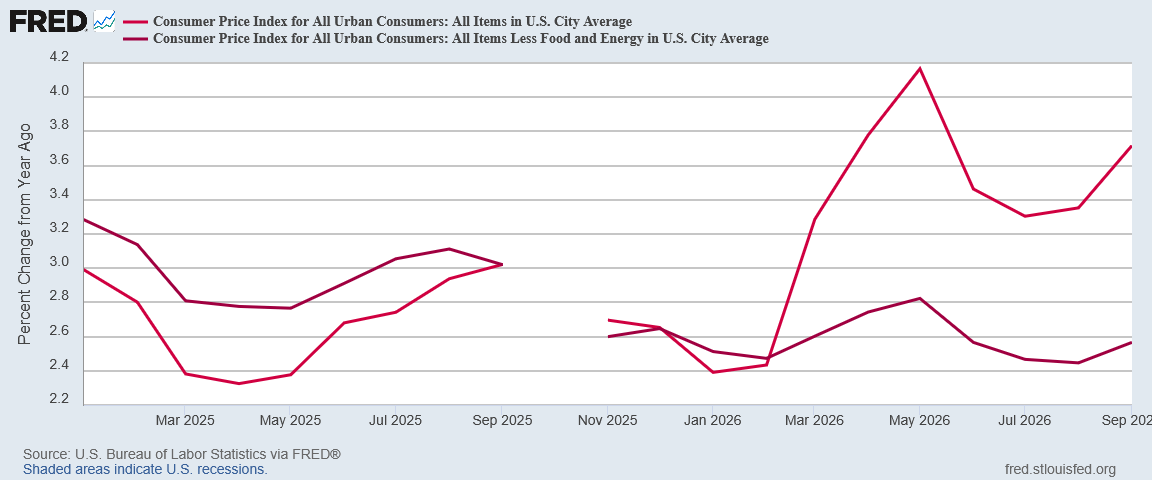
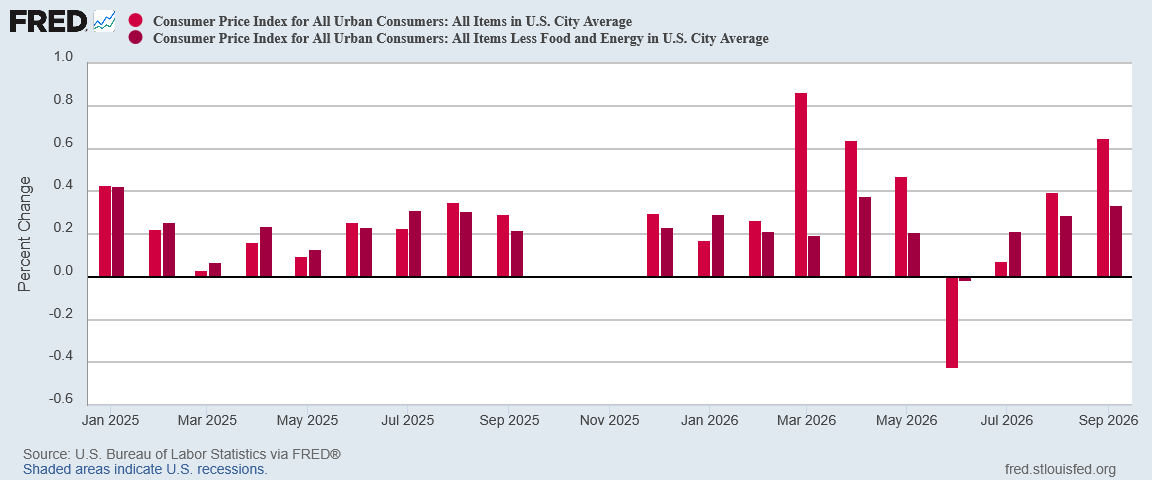
The Consumer Price Index for All Urban Consumers (CPI-U) increased 0.6 percent on a seasonally adjusted basis in September after rising 0.4 percent in August, the U.S. Bureau of Labor Statistics reported today. Over the last 12 months, the all items index increased 3.7 percent before seasonal adjustment.
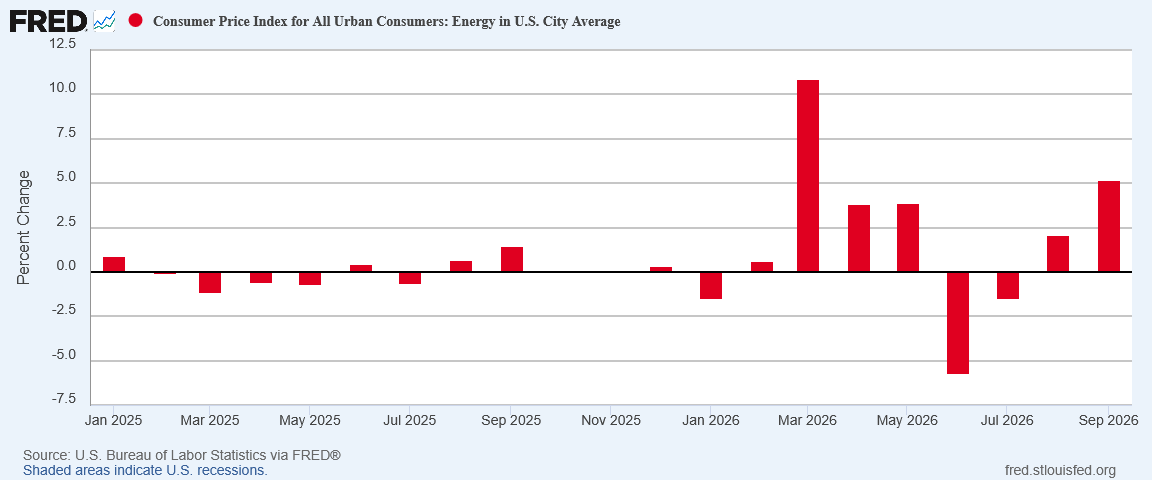
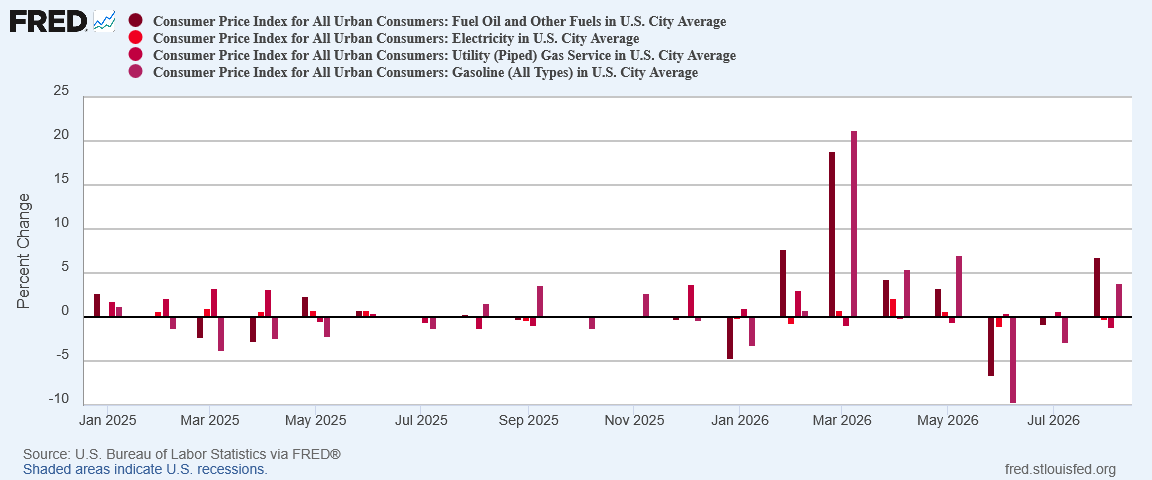
The index for gasoline rose 9.1 percent in September, accounting for over half of the monthly all items increase. The energy index increased 5.2 percent over the month following a 2.1-percent increase in August. The shelter index rose 0.4 percent in September after rising 0.3 percent in August. The index for food was unchanged in September, as the index for food away from home increased 0.2 percent and the index for food at home fell 0.1 percent.
The index for all items less food and energy rose 0.3 percent in September, as it did in August. Indexes that increased over the month include recreation, used cars and trucks, education, airline fares, medical care, and apparel. Conversely, the index for communication was among the small number of major indexes that decreased in September.
The all items index rose 3.7 percent for the 12 months ending September, a larger increase than the 3.4-percent increase reported for the 12 months ending in August. The all items less food and energy index rose 2.6 percent over the year, following a 2.4-percent increase over the 12 months ending August. The energy index increased 20.4 percent for the 12 months ending September. The food index increased 2.5 percent over the last year.
Inflation was up more than expected. Wall Street, Trading Economics, and the Cleveland Fed inflation nowcast had all projected inflation to come in 0.1pp lower than it did.
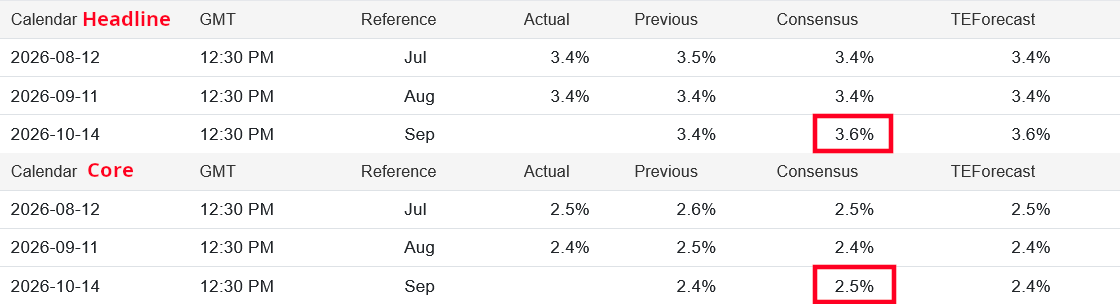
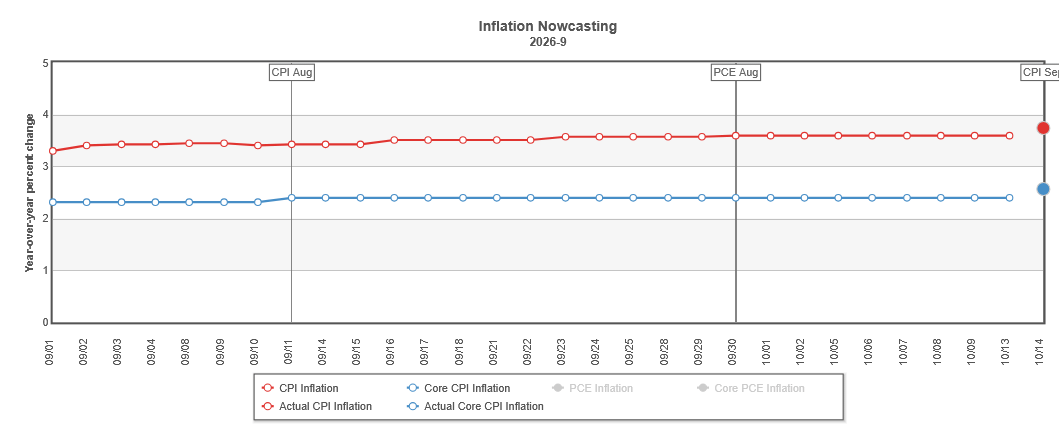
Inflation is up across most price categories. Even services and shelter printed hotter.
With broad price increases across multiple sectors, are we finally seeing the contagion effect that has always been a lingering possibility from the energy supply shock of the “oilpocalypse”? The data says that may very well be the case.
Corporate Media Overreacted…Again
The inflation report was not good. Corporate media, predictably, played up the negatives in Wall Street’s reaction.
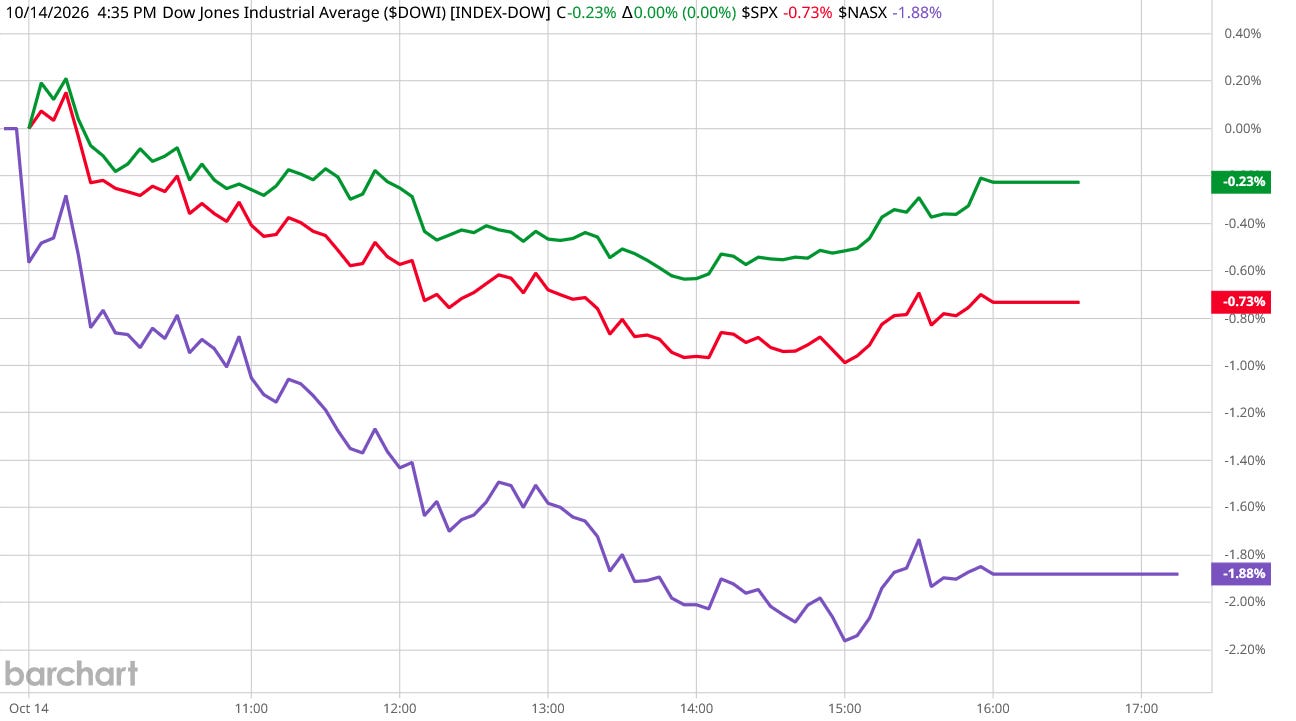
U.S. stocks closed sharply lower Wednesday, October 14, as accelerating inflation fueled expectations of additional Federal Reserve interest rate increases, sending technology shares tumbling and placing renewed pressure on companies heavily invested in artificial intelligence infrastructure.
The Nasdaq Composite fell approximately 1.9%, while the S&P 500 declined 1.1%, marking its largest single-day percentage loss since July 29. The Dow Jones Industrial Average slipped 0.1%, according to Reuters’ market report.
Equities were down on the day, although they did rebound towards the end of the trading day.
Even alternative media outlets decided to hyperventilate, with ZeroHedge going more for clickbait than for journalism.

What gets lost beneath the florid headline is the reality that, after an initial surge Treasury yields ended the trading day down across the yield curve.
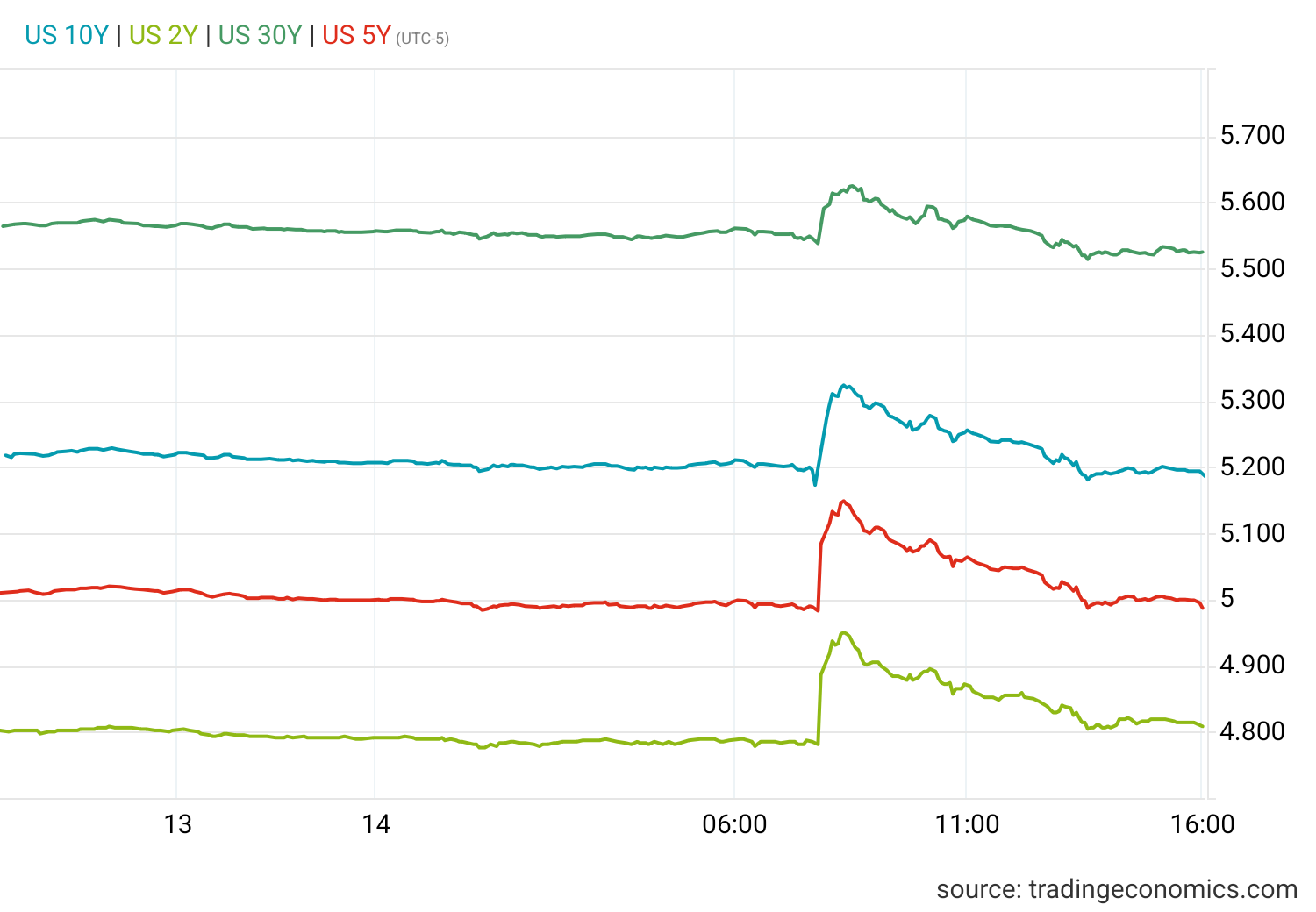
The bond vigilantes literally decided to shrug off the inflation report as the day went on.
As for fears that the Fed is going to raise interest rates at the October FOMC meeting, as of this writing the odds still favor the Fed standing pat.
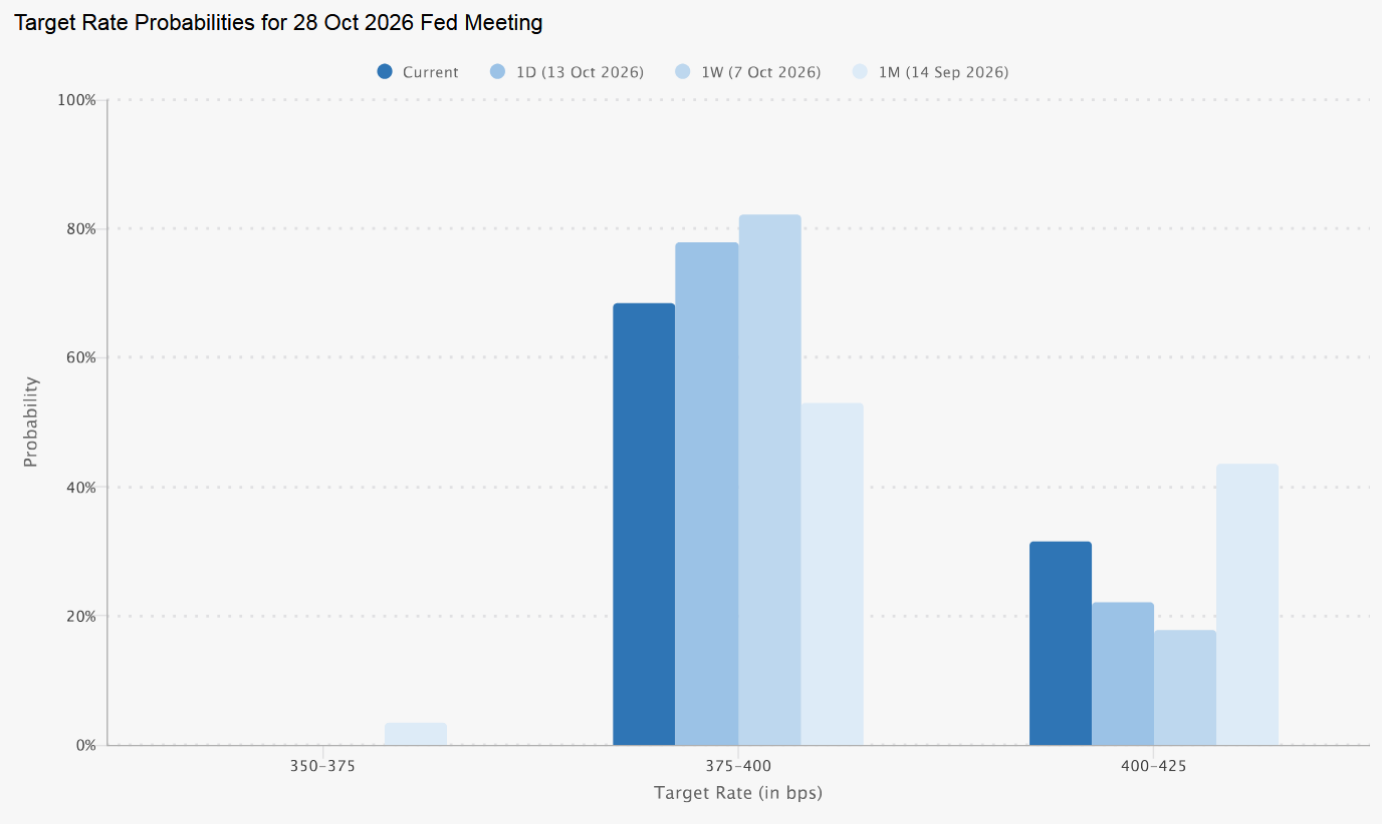
The FOMC meeting is still two weeks away, and the probabilities are sure to shift more between now and then. For now, however, we cannot presume the Fed will for certain raise interest rates; even Wall Street is not convinced of that.
Inflation Is Up
We should not pretend that corporate media’s exaggerated pessimism means inflation did not heat up in September. That it clearly did.
We can see that in the year on year numbers.
We can see that in the month on month numbers.
With September having been a weak month for jobs and wages, the hotter inflation print did not help move affordability in the right direction. When we index wages and prices to January 2021, we can see that wages still have not caught up to food and service price inflation, and service wages especially fell further behind in September.
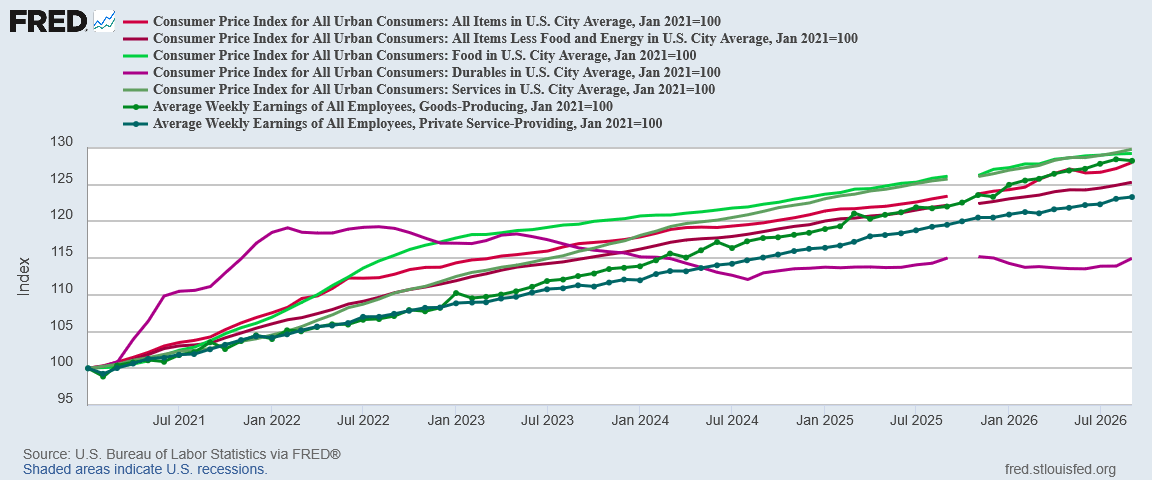
These inflation numbers are not going to help President Trump and the MAGA Coalition as people head to the polling booth to cast their votes in the midterm elections. They are moving in precisely the wrong direction to do the MAGA Coalition any good.
Prices Are Up Across The Board
There is no surprise that energy price inflation was up. Nor was there any surprise that diesel and gasoline were the reasons why energy price inflation was up.
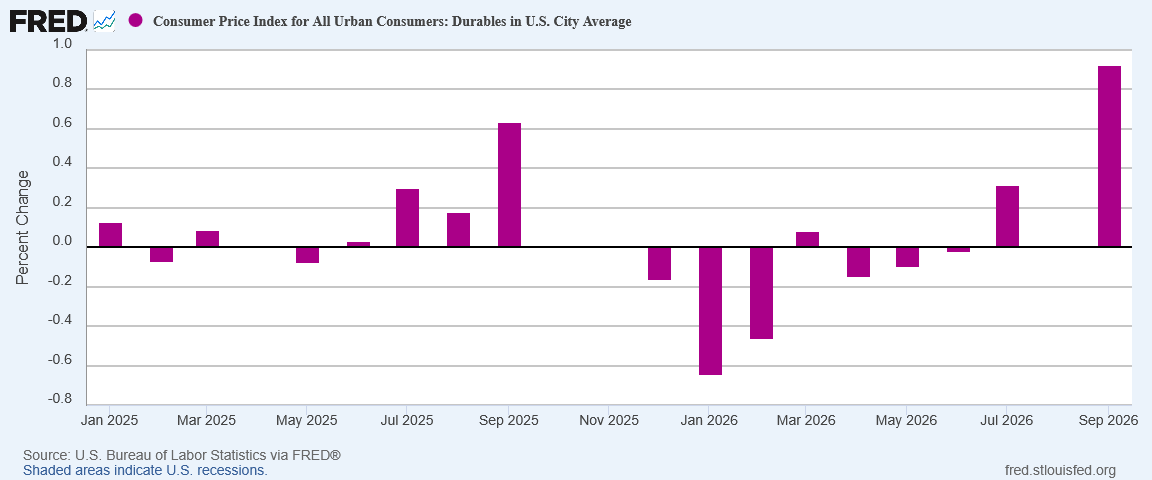
Far more disconcerting, however, is that durable goods prices surged in September.
Nondurables, Services, and even Shelter all rose month on month in September.


The one notable category where inflation cooled somewhat: Food.
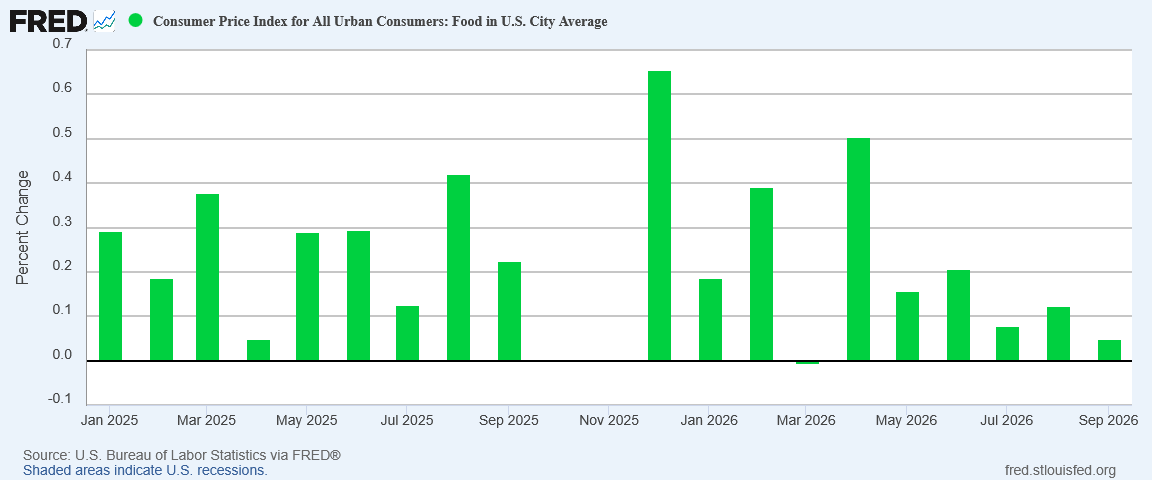
While the downward trend in food price inflation month on month is inarguably a good thing, it is the sole bright spot in an otherwise glum inflation report. In every other major category, inflation rose, in some sectors significantly.
Computers Contributed?
While the anticipation has been that inflation is rising, one of the more interesting predictions was the guesstimate that semiconductor prices would play a major role in driving inflation during September.
The artificial intelligence buildout has also sharply elevated the cost of semiconductors, computer equipment, and electrical components, which have been passed into costs for consumer electronics such as gaming devices, laptops, and smartphones.
On September 1, Nintendo increased the price for its Switch 2 gaming system by 11% to $499.99. And Apple’s newest iPhone, the iPhone 17, cost about 10% more than its previous upgrade, though some of that likely reflects greater capabilities.
However, according to the BLS report, prices for computers and computer components rose more slowly in September, with prices for Communications, Information Processing and Information Technology actually printing deflation.
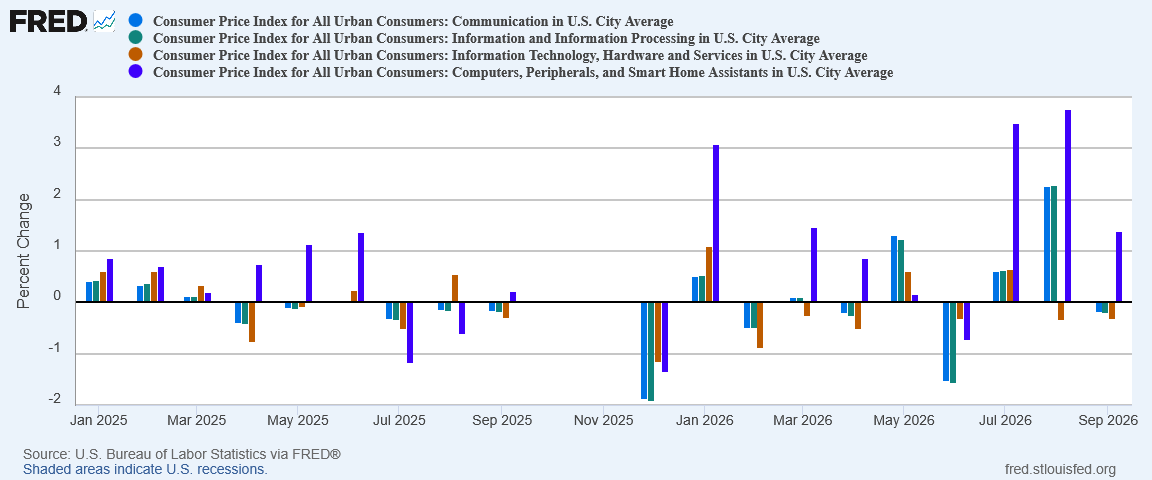
With peripheral price inflation within computer technology easing from last month, whatever is driving higher prices, the tech sector contributed more to overall inflation in July and August. As an inflation driver, the tech sector is currently fading in influence.
Was This Predicted?
We do well to remember that prices for intermediate demand within the August Producer Price Index signaled rising inflation was in the near future.

After two cool months with deflation within the intermediate demand PPI, the August signal was unmistakable.
Did that signal land in September’s CPI print with a vengeance? That is not an unreasonable read on the data.
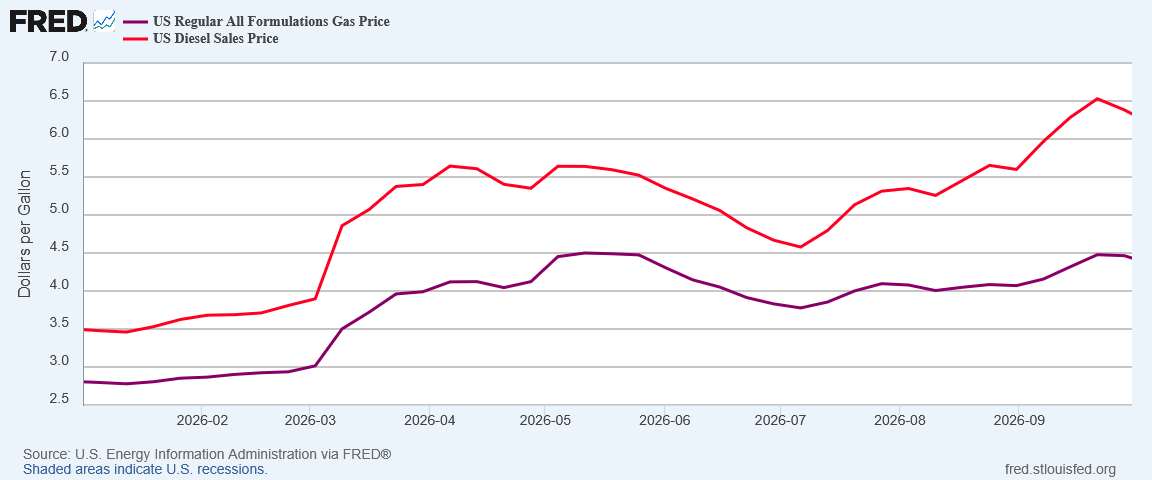
That read is made even more likely when we look directly at diesel and gasoline prices, which have risen sharply over the summer.
We get an additional signal from the August PPI’s transportation subindex.
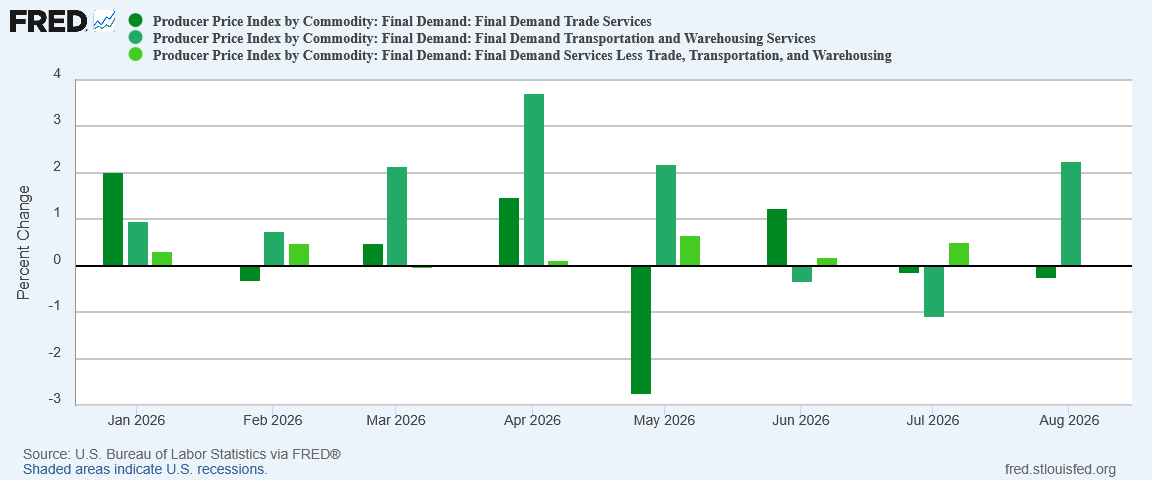
Rising transportation prices mean rising transportation costs for goods and services.
Are we seeing the impact of August’s rise in transportation prices/costs in the September consumer price data? With the rise in fuel costs—a rise which is still largely continuing—that is certainly a plausible and even probable interpretation of the data.
Inflation Is Rising…Finally
Longtime readers may recall that I have said in the past that higher inflation was going to result if the oil dislocations from the Persian Gulf persisted.
Regardless of what the CPI data set shows for July, there is no doubt that energy prices rose in July. Crude oil, RBOB Gasoline, and diesel all showed significant price increases over the month, yet none of it charted for July.
Curiously, the Producer Price Index for July also failed to capture any of the July energy price increases.
Whether this month or next, those price increases will percolate into the CPI and PPI data sets before too long.
With both Iran and the US continuing their economic brinksmanship over the Strait of Hormuz, not only should we anticipate August or September capturing the July energy price increases, we should be watching for signs of the second wave oil supply shock I call the “oilpocalypse.”
What we are seeing in the September CPI aligns very well with the projections I made in July.
Will there be more inflation yet to come? Probably. While oil prices have come down, albeit slowly and stubbornly, diesel crack spreads are not coming down at all.
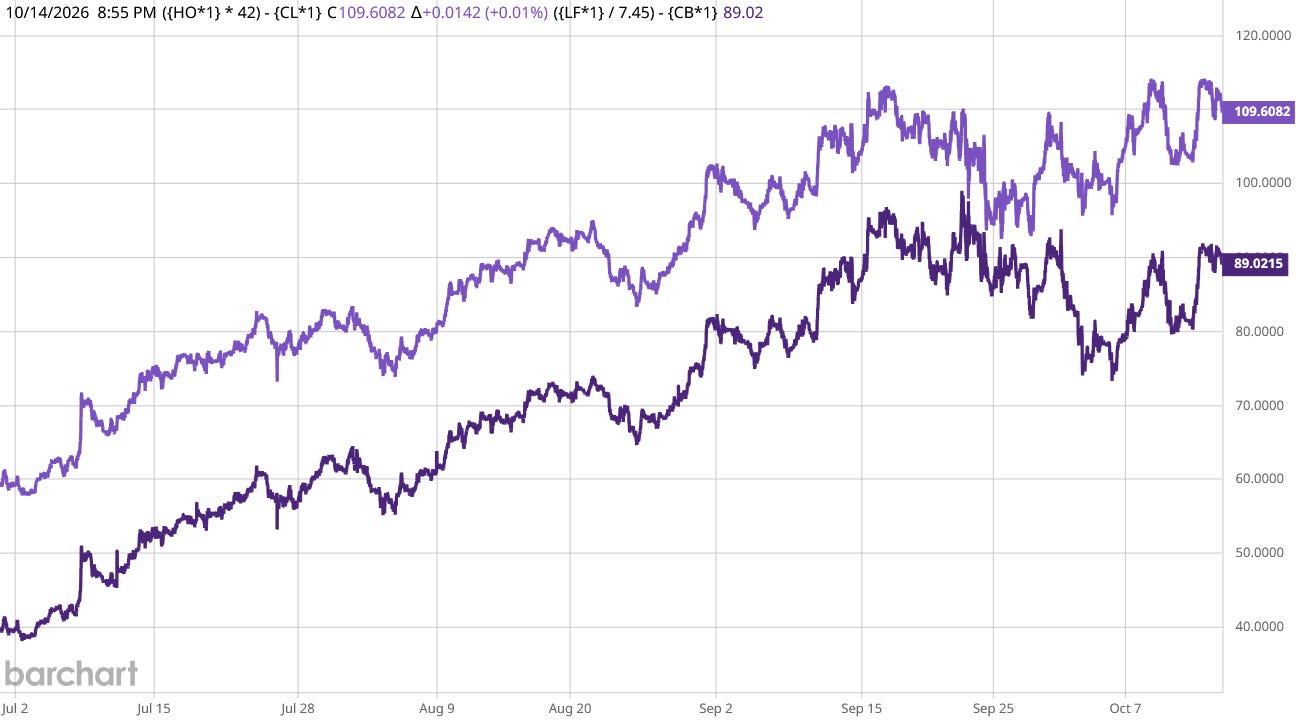
The primary driver of energy price inflation is fuel costs, and the market data shows that fuel costs are not going to get better just yet.
We already saw transportation shoot up in the August PPI. We should not be surprised if we see that happen again in the upcoming September PPI report.
At the same time, personal consumption data last month did not show that rising demand was a significant factor in rising prices. We have seen consumption rising steadily over the summer, but we have not seen inflation trends to match. Only energy prices have been a consistent upward pressure on the price indices.
While that will not help President Trump and the MAGA Coalition with upbeat economic messages heading into November and the midterm elections, that is a point we can only hope someone at the Fed points out to Kevin “Completely Wrong” Warsh and the rest of the FOMC. We are not seeing the sort of inflation that is easily responsive to incremental adjustments of the federal funds rate. Demand-driven inflation can plausibly ease with such microadjustments of interest rates, but we are not seeing demand-driven inflation. We are seeing the results of prolonged disruption of energy supply.
Whenever a supply shock is introduced, the only way for market equilibrium to be restored is for demand to come down proportionally. Supply shocks can only be resolved through demand destruction and recession. Tweaking the federal funds rate in this macro environment will not ease inflation. All it will do is undermine a still fragile jobs recovery.
How much more inflation will we see? A lot of that depends on what happens next in the ever-changing geopolitical dynamics surrounding oil and its refined products. If Russia is allowed to return to diesel exports, that inflation driver may ease. If the Arab nations in the Persian Gulf are able to repair their damaged oil refineries, that inflation driver may ease. If a lasting peace with Iran fully reopens the Strait of Hormuz that inflation driver may ease.
If. If. If.
Those are the great uncertainties behind the inflation data. The main drivers pushing energy prices up remain geopolitical events, and those are eternally unpredictable.
We can plausibly say that, so long as tensions continue in the Persian Gulf, so long as the Saudis and the Houthis are at war, so long as Ukraine can target Russian refineries at will, the energy supply shock will continue. Rising energy prices will continue. Rising transportation prices/costs from rising energy prices will continue.
Will those events continue? That we do not know. At present it is more reasonable to calculate they will than it is to assess that they won’t.
Inflation is rising at last. The oilpocalypse says we should expect it to get worse before it gets better.
Not the news I was hoping for today. Less than three weeks until the election. Sigh.
Maybe it will goad Trump into doing something dramatic, to get headline-worthy encouraging news. It sure would be nice to have this war won and done!