


Will Vladimir Putin sabotage the talks he himself proposed just days ago?
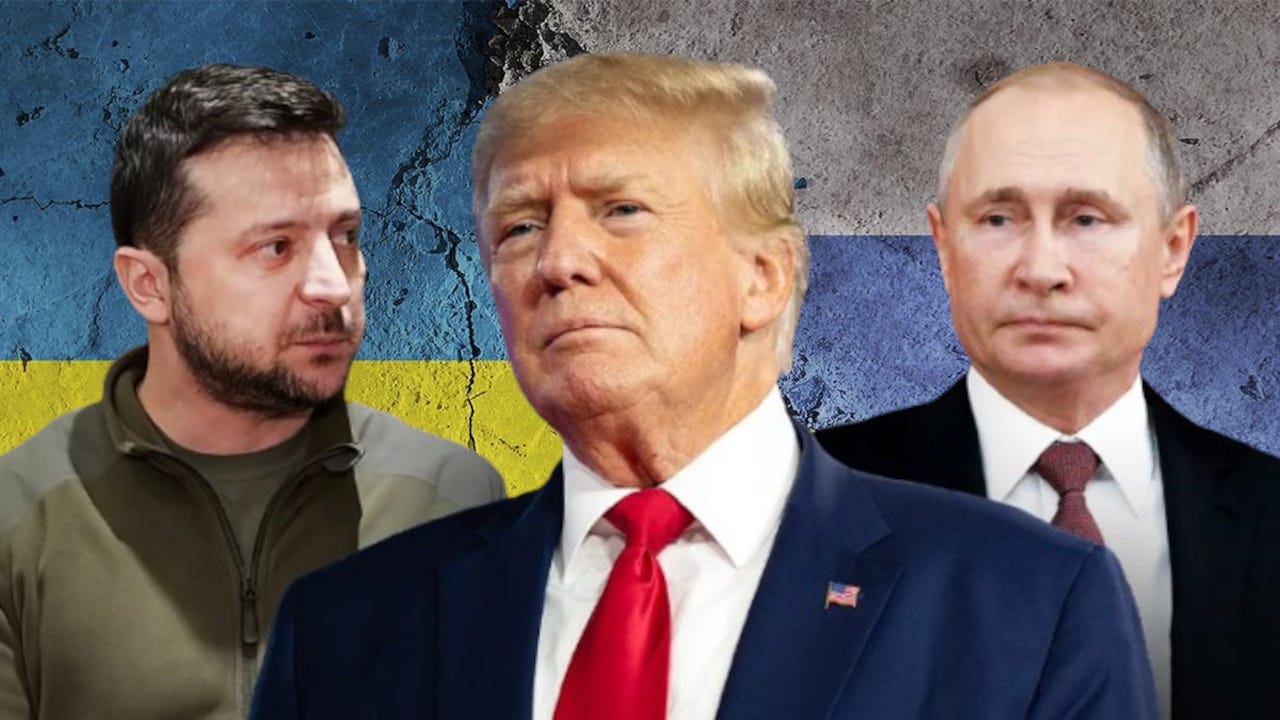
Update 3:00AM CDT 15 May 2025
According to RIA Novosti, the Russian delegation has arrived in Istanbul to being direct negotiations with Ukraine on ending the war.
RIA Novosti also detailed the composition of the Ukrainian delegation.
As reported by Radio NV, citing sources, the Ukrainian delegation that will travel to Turkey with Volodymyr Zelensky will include the head of his office Andriy Yermak, deputy head of the office Ihor Zhovkva, Defense Minister Rustem Umerov and Foreign Minister Andriy Sybiha.
Will the talks be productive? That is always the existential question surrounding any negotiations.
RIA Novosti is certainly providing a narrative which could rationalize these negotiations ultimately failing.
Former senator from Crimea, member of the expert council under the Federation Council Committee on Constitutional Legislation and State Building Olga Kovitidi believes that the upcoming talks in Istanbul will raise the issue of establishing the root causes of the Ukrainian conflict, since without this it will be difficult to move forward.
If the Russian focus is on arguing “root causes” of the conflict, is that likely to be a framework which can lead to at least a ceasefire agreement—which is one of Ukraine’s immediate objectives?

Insofar as a debate over “root causes” is concerned, it is worth noting that Medinsky is an ardent Russian nationalist with a hagiographic view of the Russian Federation and how it ties to the former Russian Empire as well as the Soviet Union, a view which dovetails with Vladimir Putin’s own views on Russian history.
It should also be noted that RIA Novosti reports that Vladimir Putin, Foreign Minister Sergei Lavrov, and Security Council head Sergi Shoigu met with Medinsky and the delegation prior to their departure for Istanbul, which suggests the Kremlin has fully briefed the delegation on how they want the talks to be handled.
It is anybody’s guess what the outcome of the negotiations will be. The Gateway Pundit has struck a hopeful note that the talks are still scheduled to take place, with neither Russia nor Ukraine backing out.
The success or failure of the talks hinges on the willingness of the two delegations to actually engage in a dialog and not merely reiterate both sides’ predetermined talking points. Only time will reveal if the two delegations are up to that challenge.
Update 3:30PM CDT 14 May 2025
According to Russian media outlet Kommersant, Russian Foreign Minister Sergei Lavrov will not be attending the talks with Ukraine to be held tomorrow in Istanbul. The Kremlin still has not said if Putin will be attending.
This clarifies and corrects earlier unconfirmed reports that Lavrov would be heading the delegation.
Kommersant has also published the names of the officials comprising Russia’s delegation. They are:
Vladimir Medinsky. Assistant to the President of the Russian Federation (Delegation Head)
Mikhail Galuzin, Deputy Minister of Foreign Affairs of the Russian Federation
Igor Kostyukov, Head of the Main Directorate of the General Staff of the Armed Forces of the Russian Federation
Alexander Fomin, Deputy Minister of Defense of the Russian Federation
Medinsky was the head of the Russian delegation to the failed peace talks in 2022.
We should remember that Putin was the one who proposed these talks. This begs the question: Is the Russian delegation indicative of Russian seriousness about the talks?
Has Putin assigned individuals who can speak decisively on the Russian perspective and regarding Russian issues?
Should Putin have assigned Lavrov or someone else from the Kremlin’s inner circle? Should Putin have put himself on the Delegation?
These talks are Putin’s idea. He proposed, Trump endorsed, Zelensky agreed.
Is it too much to expect that Vladimir Putin should put in an appearance at “direct talks” he himself requested?
At the moment, Putin appears to be doing an excellent job of proving the naysayers right. If that’s the case, he’s also making an excellent case for President Trump to get fully behind increasing sanctions on Russia.
Starting Point
Ukrainian President Volodymyr Zelensky has agreed to Putin’s proposed direct talks in Istanbul, but insists he will only negotiate with Putin himself.
Ukraine’s President Volodymyr Zelensky raised the stakes ahead of a potential meeting with Vladimir Putin in Turkey by saying he wouldn’t hold talks with any Russian representative other than the president himself.
However, Kremlin spokesperson Dmitry Peskov has been evasive on whether Putin will attend the scheduled talks.
“No, nothing has changed in that regard. We will do this when we receive appropriate instructions from the President. So far, there have been no such instructions,” he said when asked whether it is already possible to present the composition of the Russian delegation.
Peskov stressed that everything said by Russian President Vladimir Putin in the night statement on May 11 remains relevant. “The Russian delegation will wait for the Ukrainian delegation in Istanbul on May 15, Thursday, that is, tomorrow,” the press secretary of the head of state reminded.
Ironically, Russian state media is playing up the direct talks as proof of Putin’s “mastery” of events in Ukraine.
Although the Russian president spoke quietly and gently, attentive listeners unmistakably caught the verdict in his words: the goodwill of Russia, which Kiev has repeatedly wiped its feet, violating absolutely all our peace initiatives, has exhausted itself, so no one can blame us now. But, based on respect for the efforts of the American side to end the conflict and personal good attitude to US President Donald Trump, Putin took a huge reciprocal step and agreed to negotiate with the Kiev regime.
Thus comes the question: why is Putin being coy about whether he will or will not attend?
While it may be fairly argued—and I have argued—that Putin is taking a step towards peace by proposing the talks, that step only moves towards peace if it is followed by other steps.
Putin took a step by proposing the talks. At President Trump’s urging, Zelensky agreed to the talks.
Russian state media quotes Trump in Saudi Arabia about Trump’s high expectations for the talks.
“It is very important that the talks will be held in Turkey at the end of this week, possibly Thursday. And they can give quite good results,” he said, speaking at an investment forum in Saudi Arabia.
With Russia’s own media outlets playing up the talks both in terms of strategic importance and as a demonstration of Putin’s geopolitical leadership, arguably Russia is helping set the expectation that Putin will be at those talks.
That makes the Kremlin’s silence on Putin’s presence at the talks somewhat mystifying.
One admittedly cynical interpretation comes from the Institute for the Study of War, which suspects Putin is trying to self-sabotage the talks.
The Institute for the Study of War (ISW), a US-based conflict monitor, said on Monday that Russian officials already appeared to be setting conditions for Putin to reject the meeting, quoting several key aides as questioning Zelensky’s intentions and calling the proposed meeting “pure spectacle.”
That would be a strategic gamble on Putin’s part, as not following through with the talks he himself proposed only adds weight to the argument for the EU to sanction Russia further for failing to agree to a ceasefire ultimatum. The gamble is that any additional sanctions will likely require US agreement and involvement in order to be enforceable.
If the Trump Administration does not agree to more sanctions, the EU ultimatum could be revealed as a largely empty threat.
However, given that Trump urged Zelenksy to agree to the talks, and is being vocal about the talks’ potential for a diplomatic breakthrough on Ukraine, Putin backing out of talks would give President Trump a reason to go along with additional sanctions.
Achieving peace requires taking chances. Putin took a chance proposing the talks. Trump took a chance supporting the idea of talks even without a ceasefire. Zelensky took a chance agreeing to talks.
Now additional chances must be taken by actually having the talks. Zelensky has said he is willing to take those additional chances by going to Istanbul. Putin would be well advised to take those additional chances as well and be in Istanbul to talk to Zelensky as Putin himself suggested.
