


The August Job Openings and Labor Turnover Survey report reassured us that the stellar job growth figure from the Bureau of Labor Statistics Employment Situation Summary was real.
The September Job Openings and Labor Turnover Survey report is now reassuring us that the lackluster job growth figure from the Bureau of Labor Statistics Employment Situation Summary was not real.

The number of job openings was little changed at 7.5 million in September, the U.S. Bureau of Labor Statistics reported today. Hires and total separations changed little at 5.4 million and 5.3 million, respectively. Within separations, quits (3.4 million) increased, while layoffs and discharges (1.6 million) were little changed.
One does have to admire the BLS’ talent for understatement. The “little change” in reported job openings was an increase of 333,000 openings, to a total of 7.523 million openings We do well to remember that on Monday Wall Street’s projected job openings figure was 7.13 million.

The JOLTS report blew completely past the Wall Street consensus.
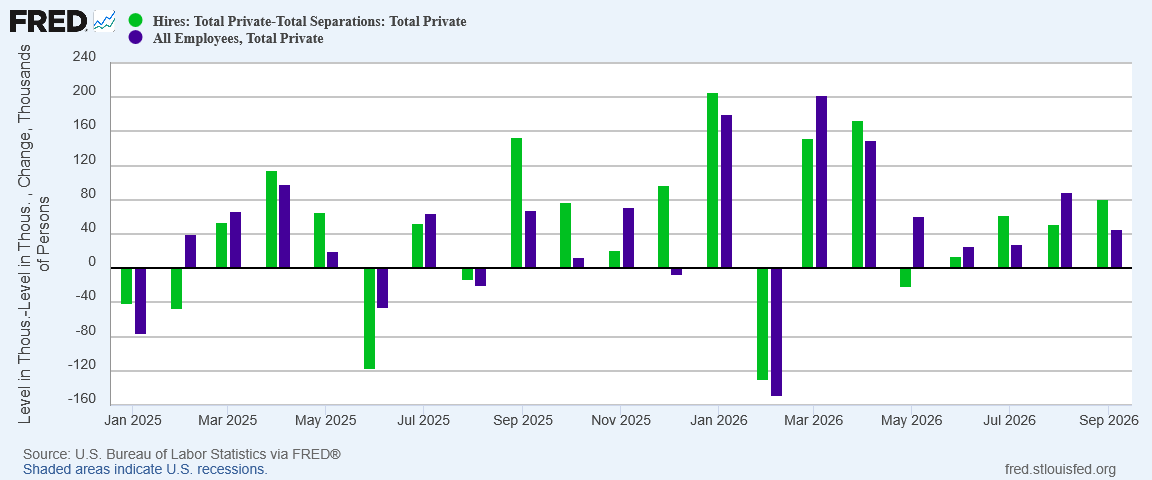
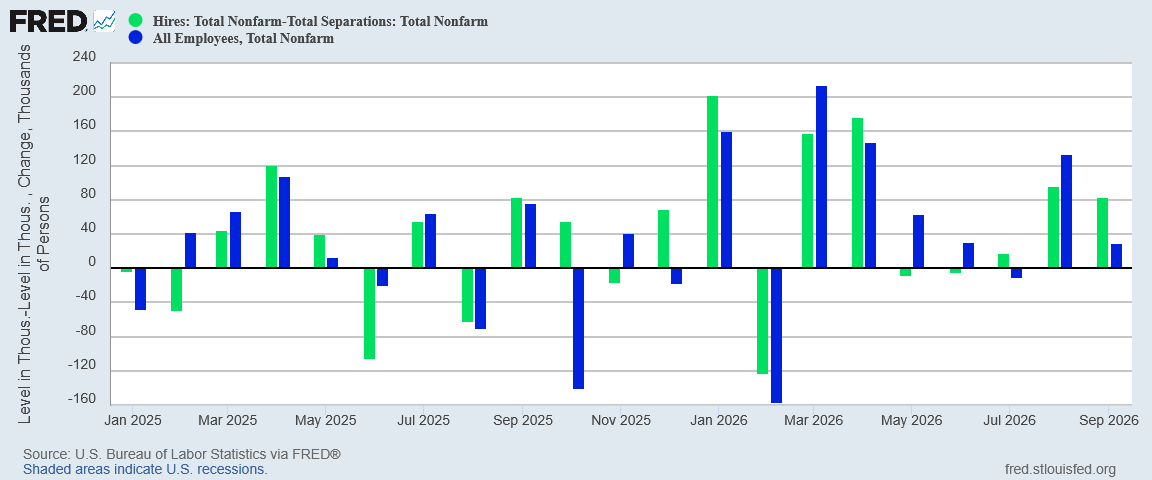
Net Hiring was similarly elevated, with total nonfarm Net Hiring at 83,000, and total private Net Hiring of 81,000.
While these figures align well with September’s ADP National Employment Report, they stand in stark contrast to the September Employment Situation Summary, which at the time reported total nonfarm job growth of just 29,000.
Given where the Employment Situation Summary stands as of September, the JOLTS report shows surprising strength!
Private Net Hiring Added 81,000 Jobs
How good was job growth in September according to the JOLTS data? With total Net Hiring in the private sector coming in at 81,000, the JOLTS job growth figures are nearly double the 46,000 private sector jobs reported in the Employment Situation Summary.
At a total of 83,000 nonfarm jobs filled in September, the overall JOLTS Net Hiring figure came in nearly three times above total job growth per the ESS.
The unexpectedly strong numbers left corporate media feeling downright giddy, as was demonstrated by the very bullish headlines used to report the numbers.
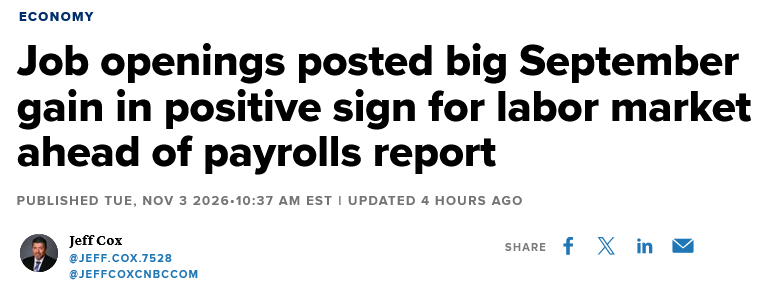
Corporate media was also suitably impressed at the number of quits in the JOLTS report.
At the same time, the total of employees leaving their jobs spiked to 3.36 million, an increase of 321,000 from August and the highest level since March 2025. Quits are considered a barometer for worker confidence in finding new jobs after leaving their prior positions.
“There are more job openings than unemployed people in the United States right now. That doesn’t solve all problems, but it’s a big change from a year ago,” said Heather Long, chief economist at Navy Federal Credit Union. “It’s an encouraging sign that despite all the headwinds right now with high diesel and gas prices and ongoing inflation problems, companies are slowly increasing their hiring.”
Worker confidence certainly seems well founded. Initial claims for unemployment have been in long-term decline for a year now.
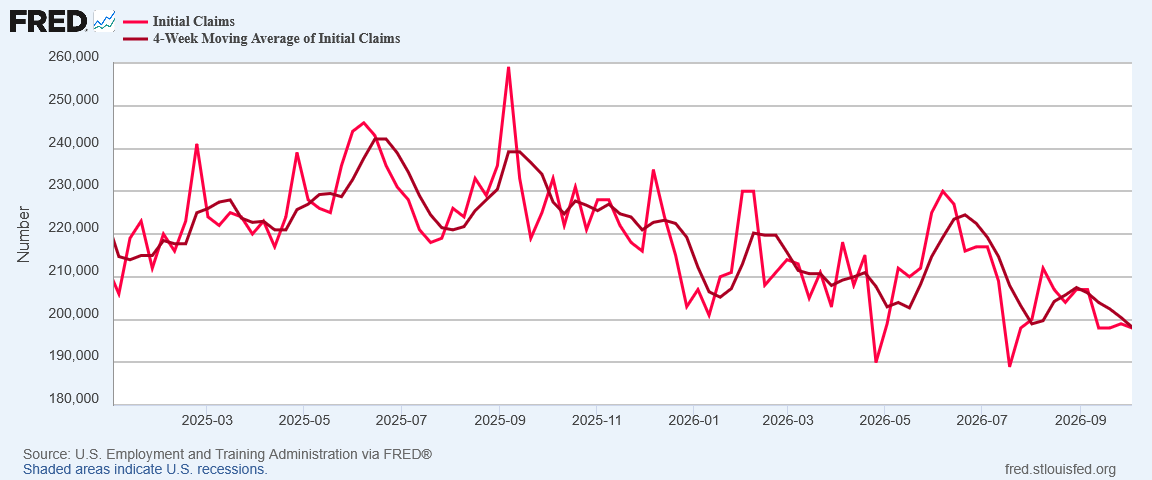
Continuing claims began their long-term downward trend a few months later.
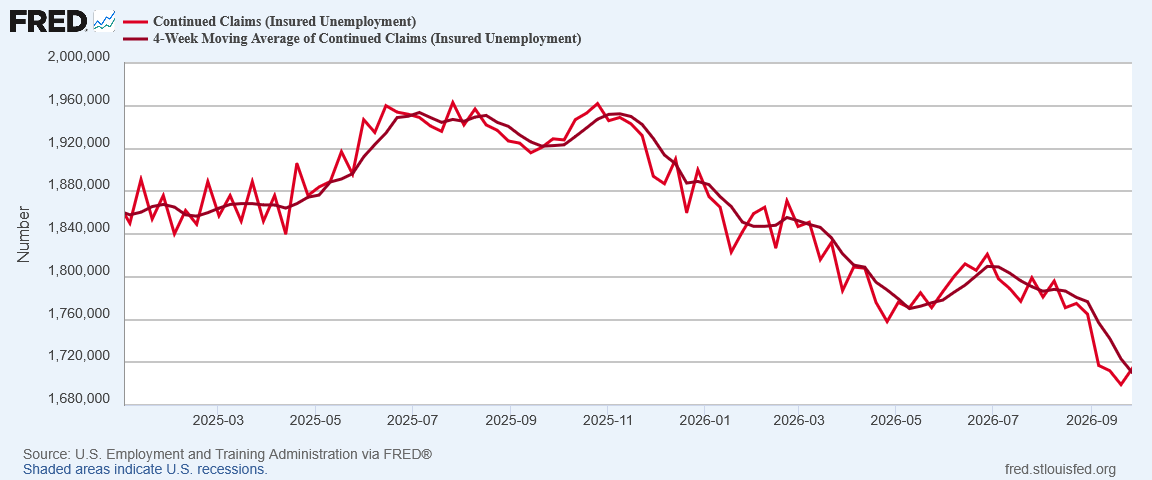
Worker confidence was high in September, and the data says there was reason for that worker confidence.
Overall Net Hiring Strong On Mixed Sector Level Data
While the overall JOLTS report showed strength in US labor markets, drilling into the individual sectors shows a much more mixed outlook.
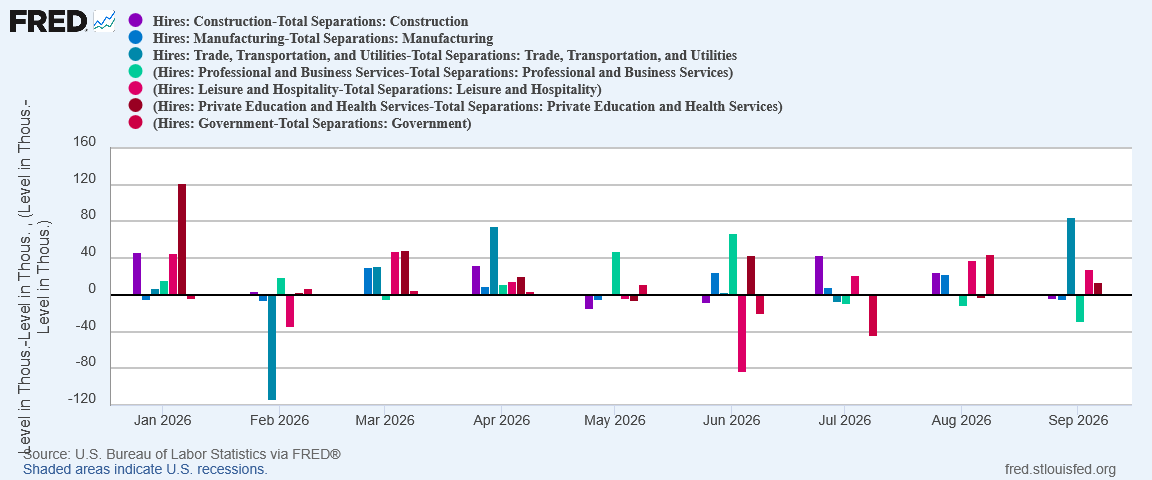
Net Hiring for Construction, Manufacturing, and Professional Services all showed job loss in September.


Net Hiring for Trade, Transportation, and Utilities showed the greatest amount of job growth, at 85,000 jobs.
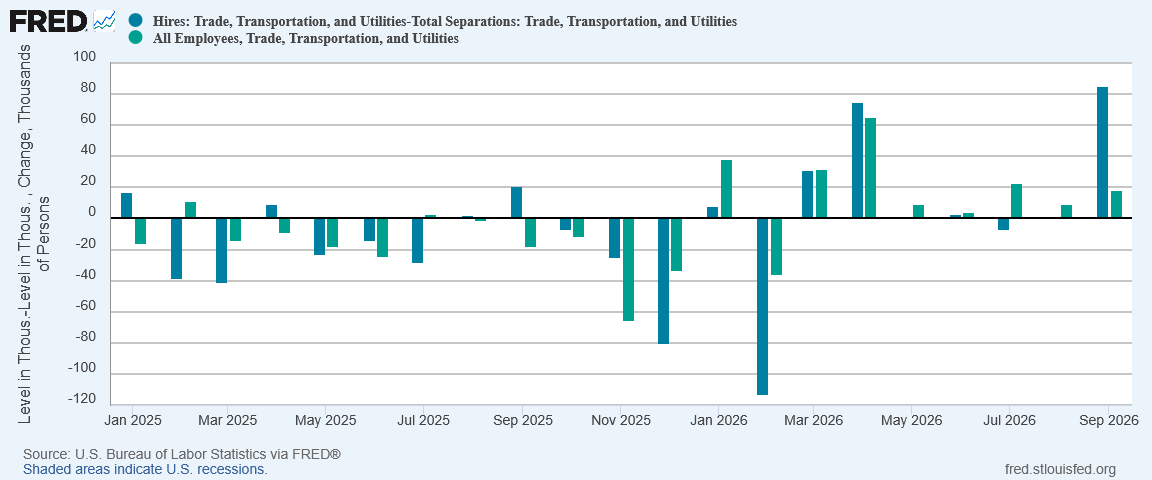
Net Hiring for TTU showed more job growth than the overall JOLTS data set.
Net Hiring for Government, Healthcare, and Leisure all printed positive job growth, just not a lot of it.


While this was not completely across the board job growth, the September JOLTS report was at least somewhat balanced in the job growth numbers, with multiple sectors contributing, and only a few sectors showing job losses.
PMI Data Confirms JOLTS Signals
One reason we can have greater confidence in the JOLTS data at least in September is that, because it is the last jobs report to come out for the month, we can look to independent data sets such as the Purchasing Manager’s Index numbers for confirming and complementary signals.
The Institute for Supply Management’s Manufacturing Employment PMI showed September to be the third straight month of manufacturing employment expansion, with a PMI print of 52.7.
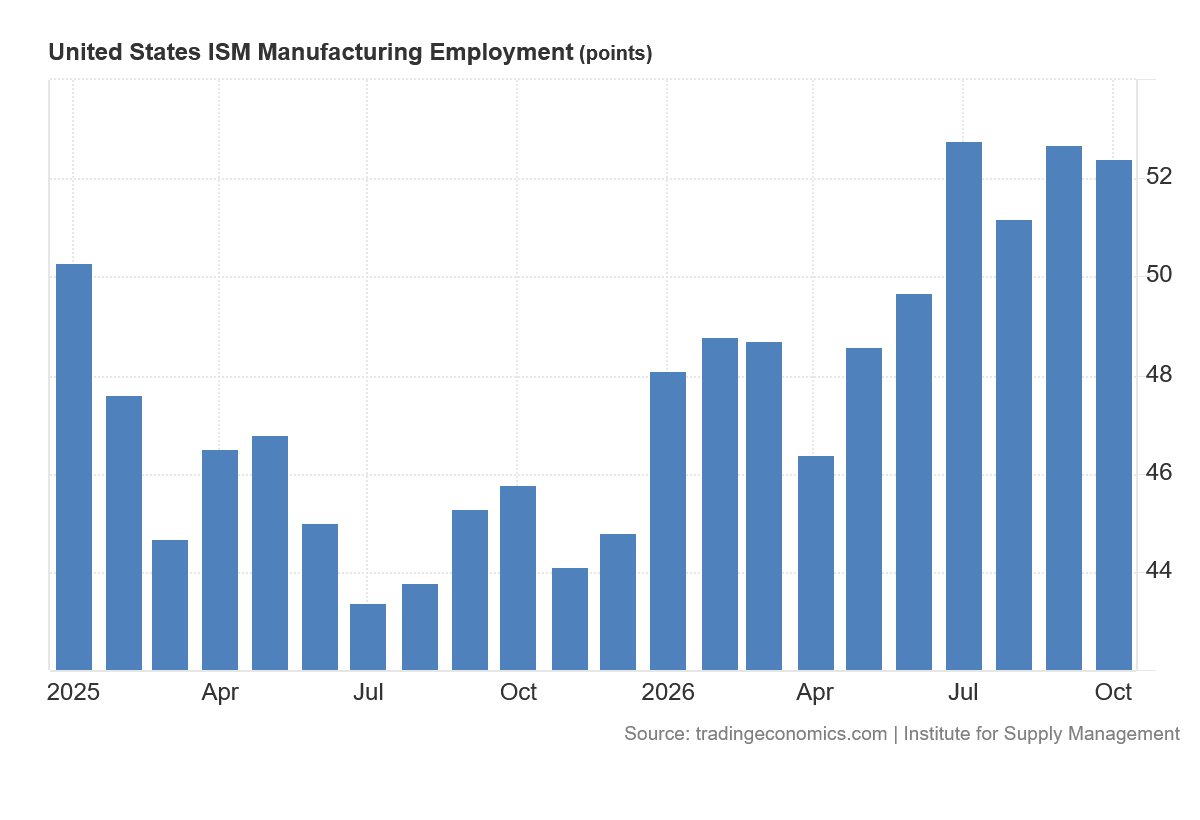
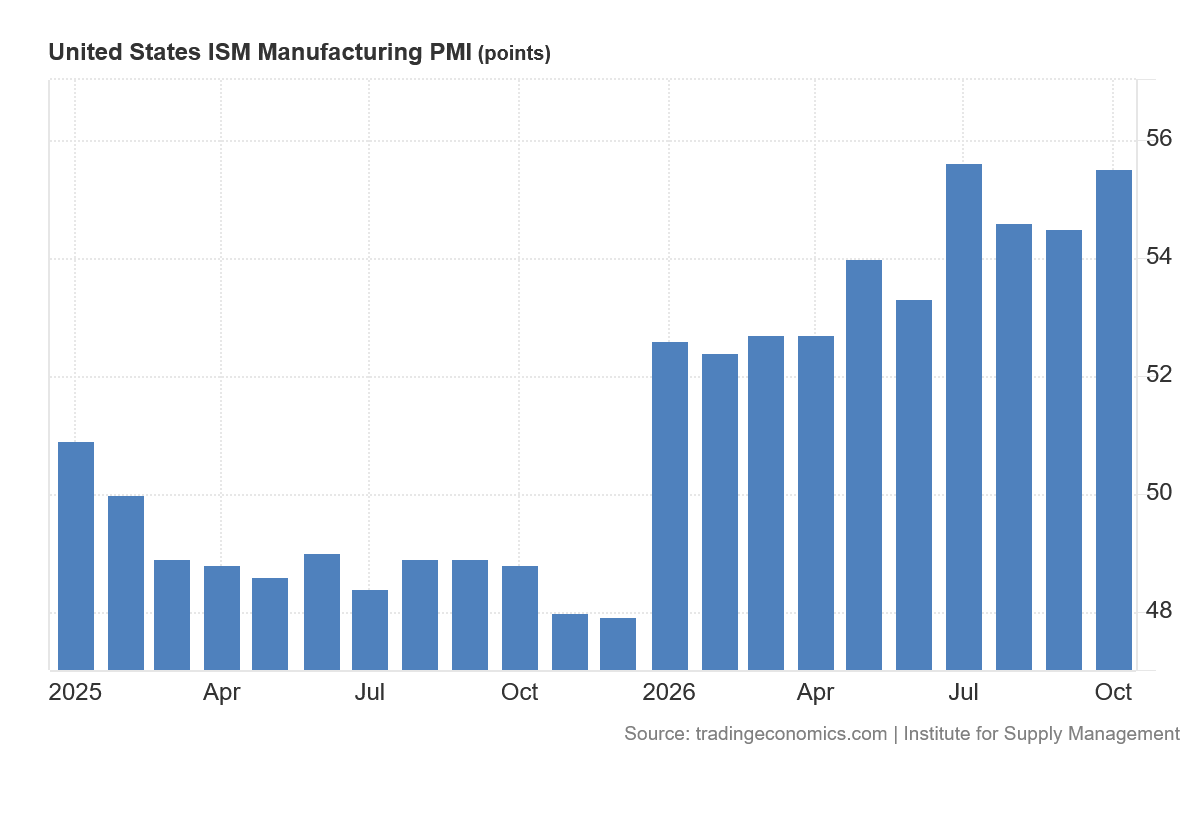
ISM's overall Manufacturing PMI has shown the manufacturing sectors to be in expansion every month so far this year.
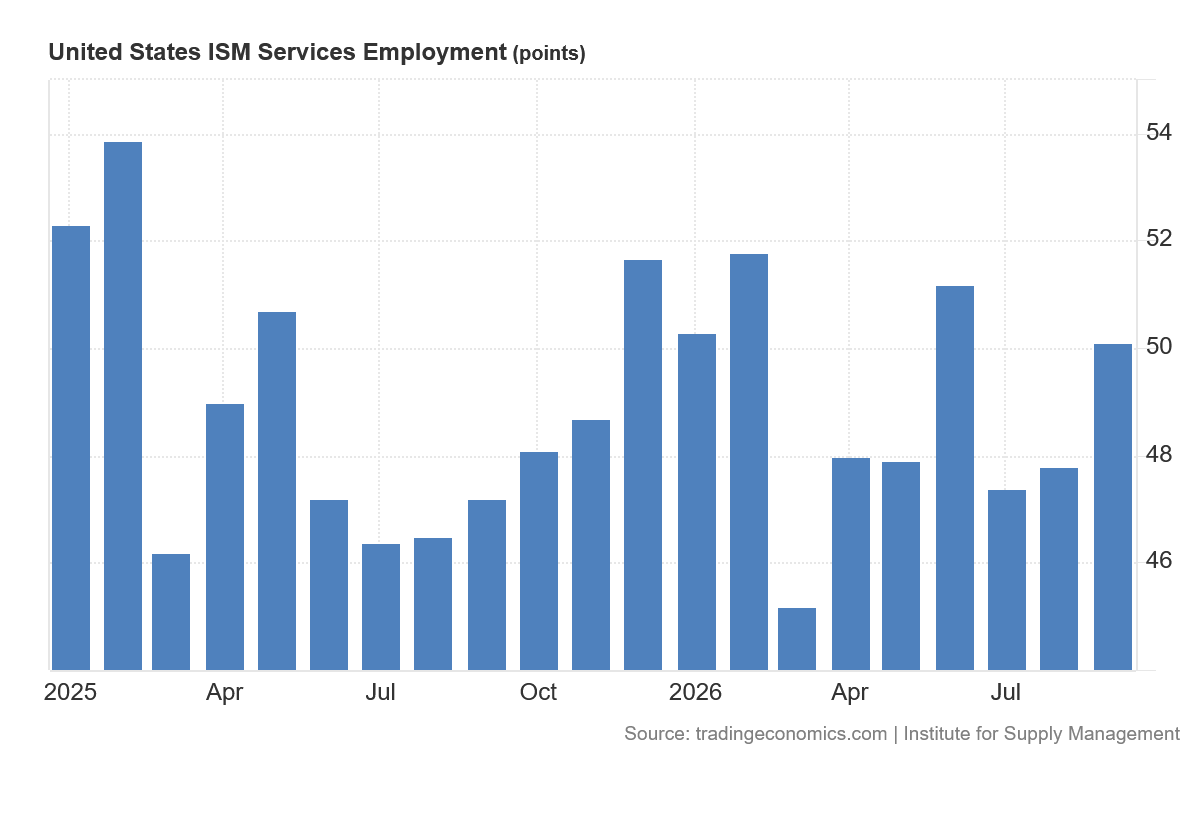
Within Services Employment, the ISM PMI data showed service jobs moving from contraction into expansion during the month of September.
The overall Services PMI has been in expansion since before Donald Trump returned to the Oval Office.
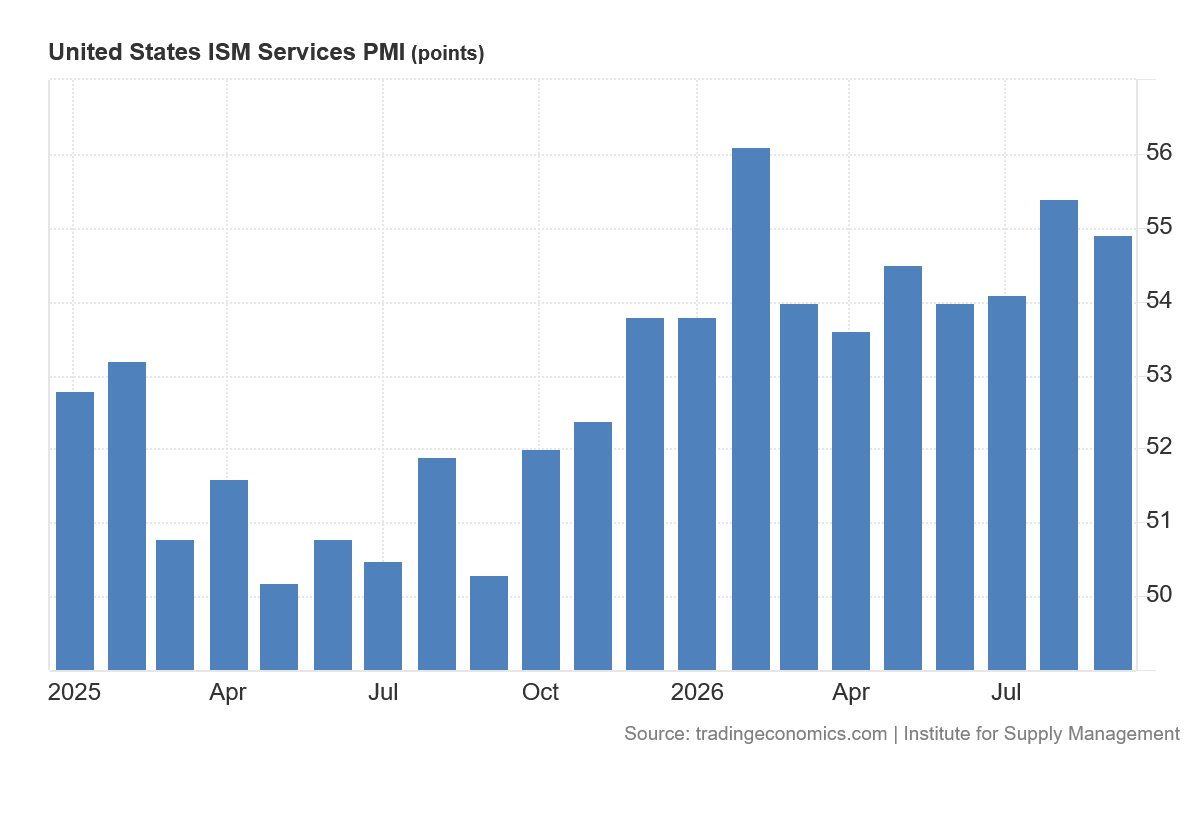
The ISM data for September shows strong economic and employment growth—which is exactly what the JOLTS data says we should see.
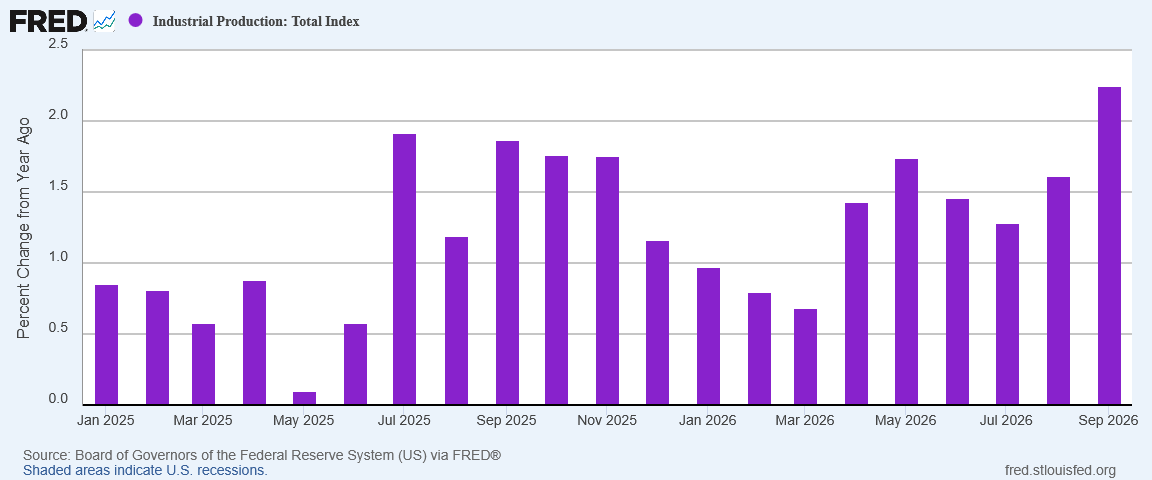
Industrial Production as monitored by the Federal Reserve also showed strong growth in September, with the index notching a 2.2% gain from a year ago.
With the September ADP National Employment Report showing 90,00 jobs, we have multiple data points indicating healthy job growth and expansion for the month.
Ironically, the one major outlier report is the BLS’ own Employment Situation Summary, which printed a mere 29,000 nonfarm jobs in September. Outside of that report, most jobs data for September showed growth and strength in US labor markets.
A Good Omen For October?
Does the strong job figures in the September JOLTS report point to upbeat numbers for October as well?
Wall Street certainly seems to think so. At the time the JOLTS report came out, Wall Street was projecting job growth on the ADP National Employment Report of 69,000 jobs for October.

(Note: The ADP National Employment Report itself will have already been released when this gets published.)
Wall Street is only slightly less bullish about Friday’s Employment Situation Summary report, projecting that report will show 65,000 private sector jobs created in October.

Given the dour results from the September ESS report, one could easily be forgiven for projecting a less than robust October going off that data set. With other reports showing employment expansion and overall economic expansion in September, however, there is some rationale behind a more upbeat October assessment even after September’s abysmal numbers.
Will we see the September jobs numbers revised up when the ESS report comes out on Friday? That is a real possibility, especially in Trade, Transportation, and Utilities, given by how much the JOLTS data surpassed the ESS data.
The September Employment Situation Summary gave a grim view of US labor markets. The September Job Opening and Labor Turnover Summary suggests that negative outlook may have been premature.
If President Trump is royally irked this morning, he has good reason to be. He has improved the economy by several metrics; his policies have created job growth and economic expansion. He has created Trump Accounts for 60 million children, he has reduced the poverty rate to the lowest level in the history of our nation. He has eliminated taxes on tips, overtime, and Social Security. He has played nice with the IRGC, going back to negotiations repeatedly. If Trump woke up this morning thinking, “No more Mr. Nice Guy!”, I wouldn’t blame him. Lead on, Mr. President!