


In March. ADP printed a respectable employment report that was on the surface a repeat of February.
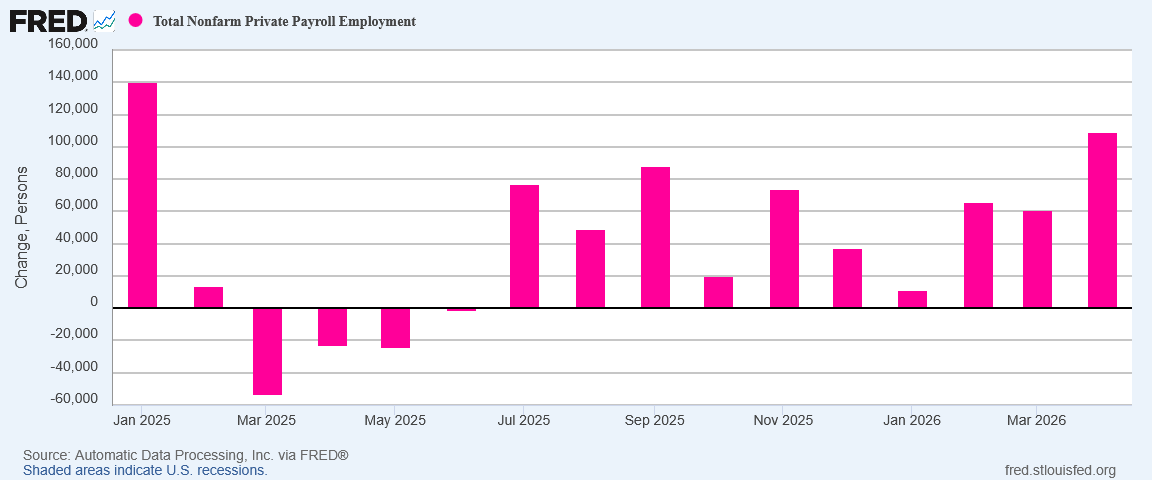
For April ADP hopped on the BLS bandwagon and printed a blowout National Employment Report showing strong growth across all job sectors, for an aggregate of 109,000 new jobs.


ADP’s Chief Economist Nela Richardson provided her usual optimistic statement for the press release, touting job gains among small businesses.
“Small and large employers are hiring, but we’re seeing softness in the middle,” said Dr. Nela Richardson, chief economist, ADP. “Large companies have resources to deploy, and small ones are the most nimble, both important advantages in a complex labor environment.”
Coming in the second month of a war with Iran that has sent energy prices soaring, that April surpassed March by more than 40,000 jobs is a remarkable report by any measure.

The March figures have subsequently been revised downward, to 61,000.
How strong was the report? The Wall Street consensus was some 10,000 jobs less, and the Trading Economics Forecast was only 8,000 jobs above the March number.

Wall Street was not expecting the ADP report to be this strong.
Coming as it does on the heels of a strong March Job Openings and Labor Turnover Report, and with minimal revisions from March, the ADP report is a strong signal that labor markets in the US are waking up.
Will the April Employment Situation Summary also surpass Wall Street expectations?

With a consensus projection of 73,000 private sector jobs, and a Trading Economics forecast of 83,000 private sector jobs, the stage is certainly set for the “official” monthly jobs report to do exactly that—or provide a crushing disappointment.
Almost Every Sector Showed Growth
One reason the March JOLTS report deserves serious scrutiny was that it showed job growth in every sector.

The April ADP report very nearly matches that.
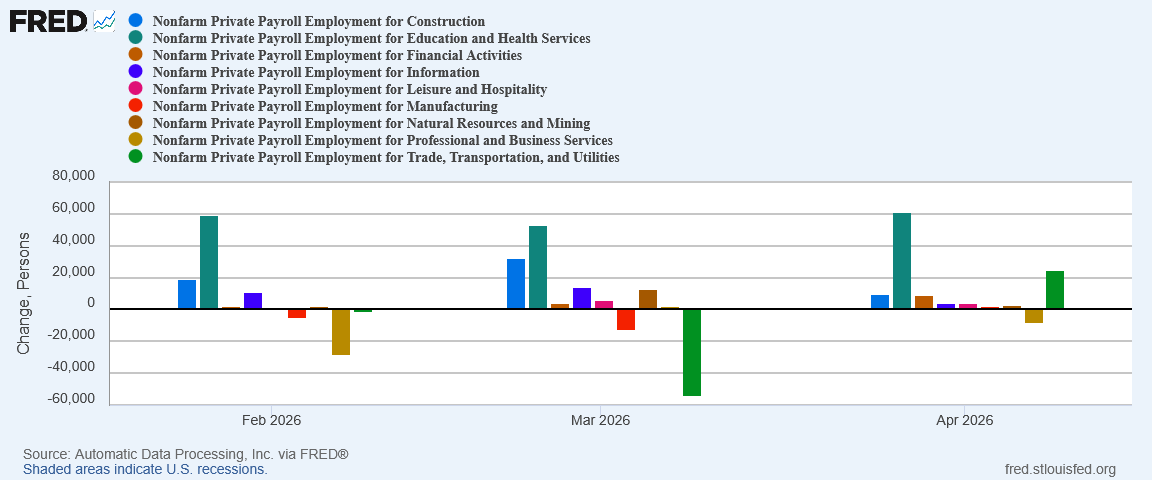
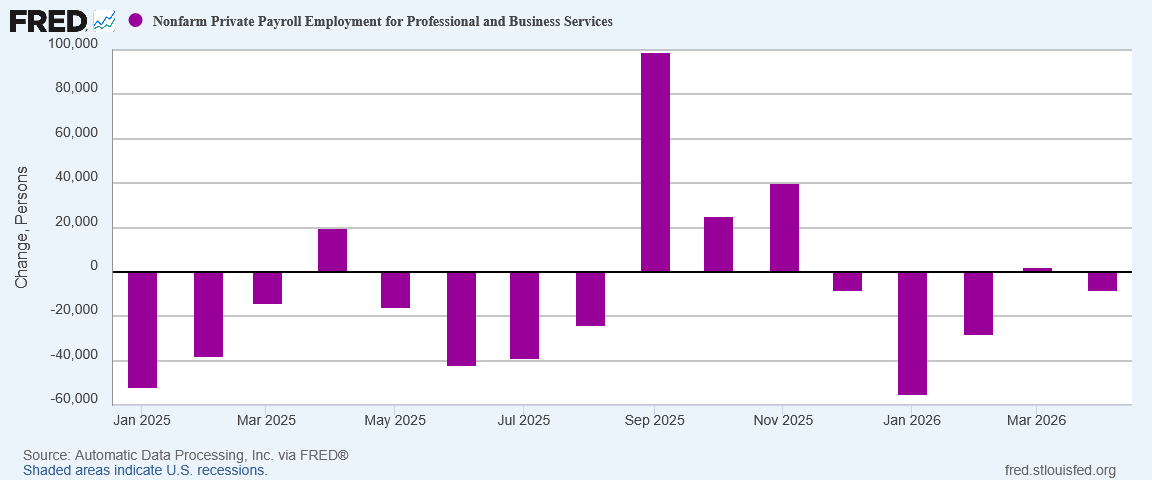
While healthcare provided the bulk of the jobs reported, only Professional and Business Services reported a loss of jobs in April.
The ADP report has been showing consistent job growth for several months, with six of the last nine months at 60,000 jobs or more.
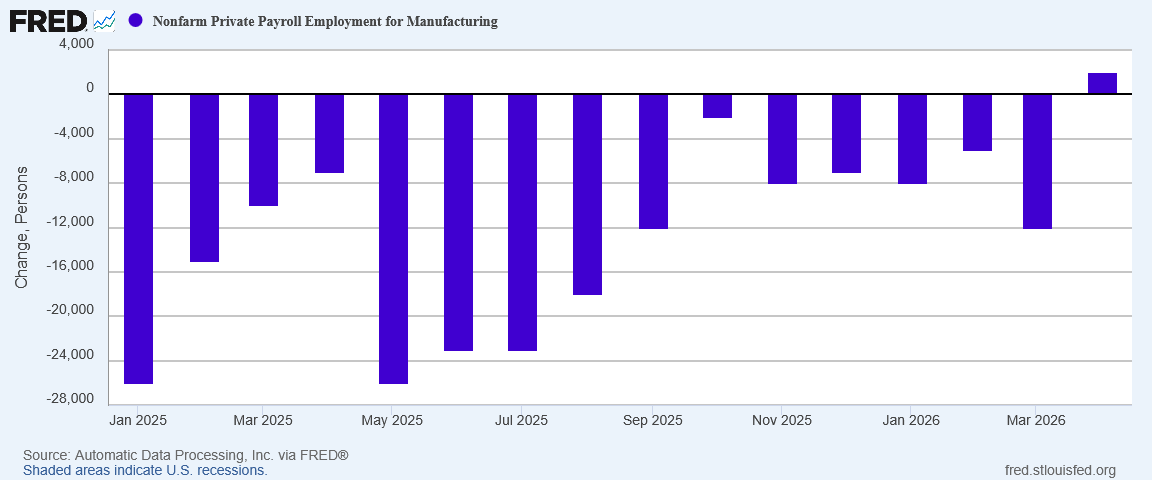
Manufacturing showed a welcome increase in jobs, the first such increase on the ADP report since March 2024.
Construction and Mining were also positive on the month, making the ADP report very positive for goods-producing jobs.


Among service-providing sectors, only the Professional and Business Services segment lost jobs in April.
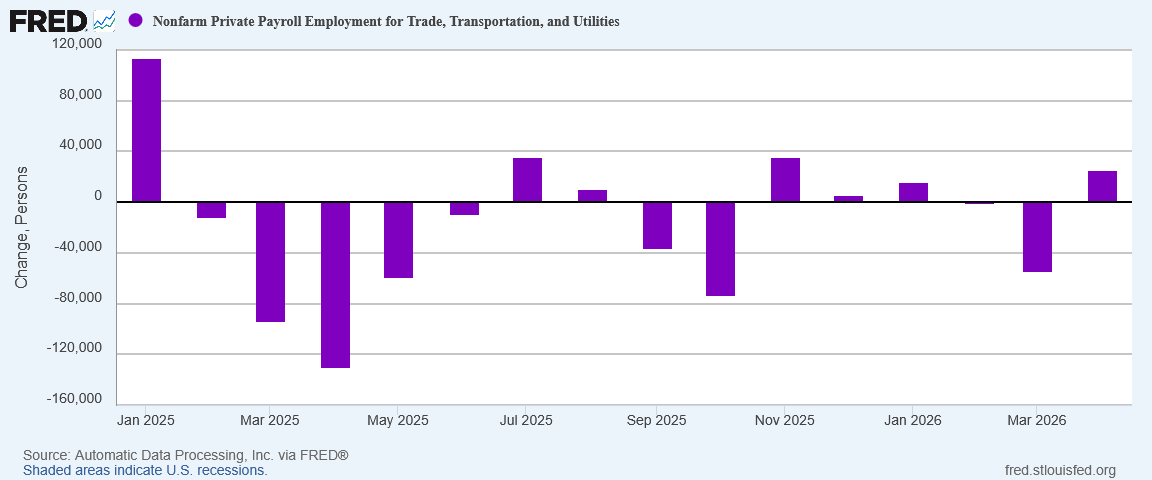
Trade, Transportation, and Utilities reversed a March decline, printing 25,000 jobs.
Leisure and Hospitality, Information, and Finance all showed solid if unremarkable gains.


By far Healthcare showed the biggest increase in jobs, with more than half of the total jobs created for April
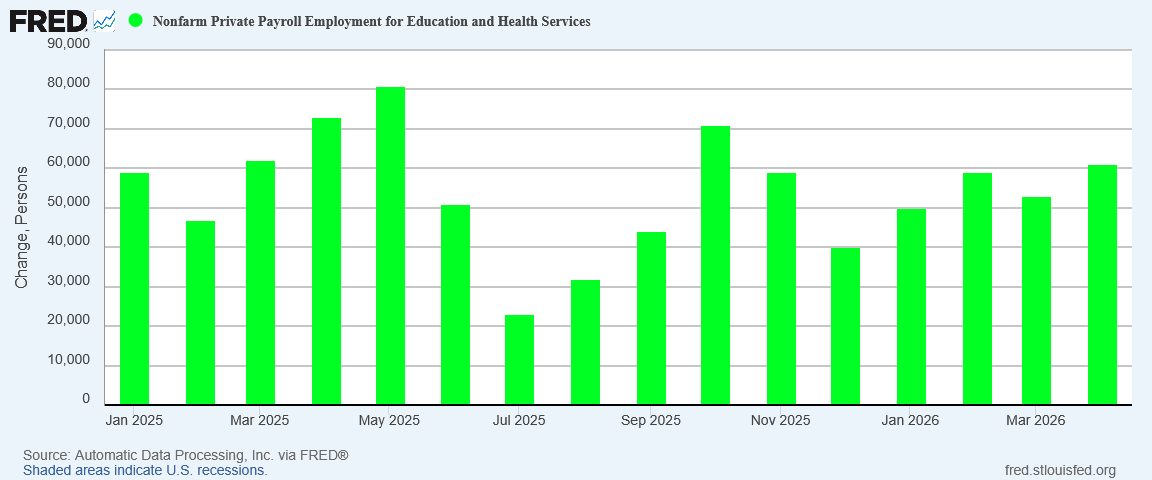
As with the March JOLTS report, job gains across all sectors but one signals rising labor demand, and that is a necessary predicate to wage growth.
New Strength In Goods Producing Jobs
The ADP report has shown positive job growth among service producing jobs for the last nine months. Goods producing job sectors, however, were shedding jobs for most of 2025. 2026 has been a year of new strength for the goods producing job sectors, even as service producing job sectors stayed strong.
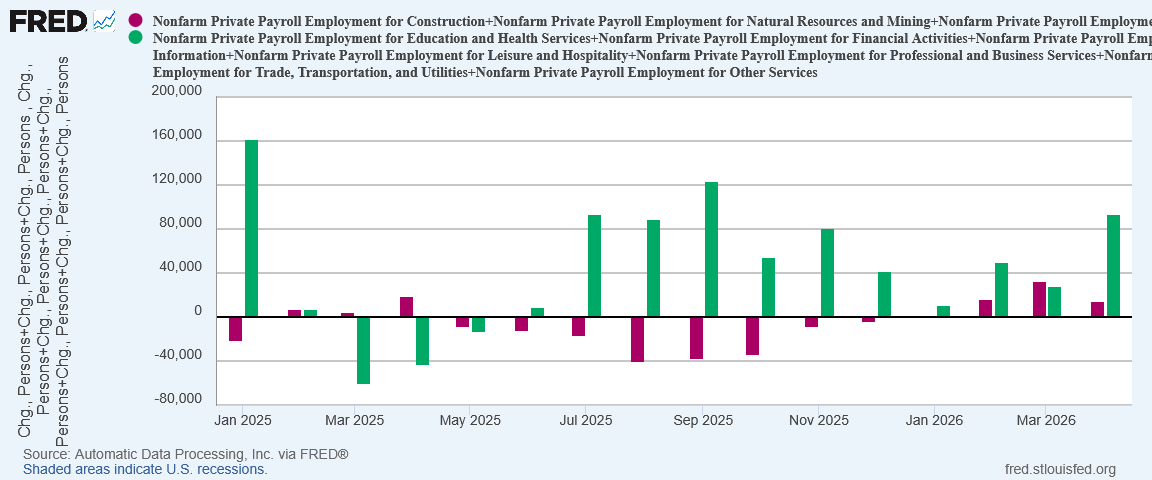
That 2026 is a year of recovery for goods producing jobs coincides with the return to expansion for the Institute for Supply Management Manufacturing PMI.
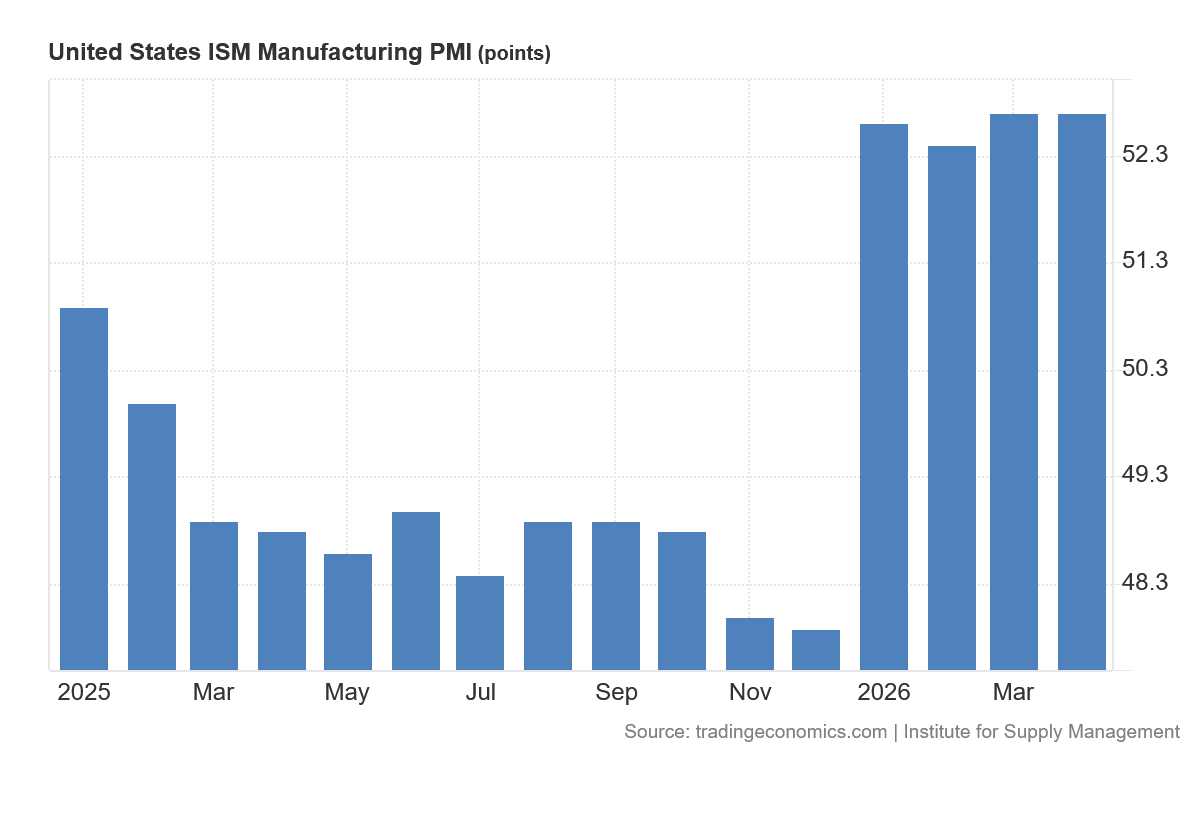
April was also a month of improvement in the S&P Global Manufacturing PMI, which has been printing expansion for several months, but surged to 54.5 from March’s 52.3.
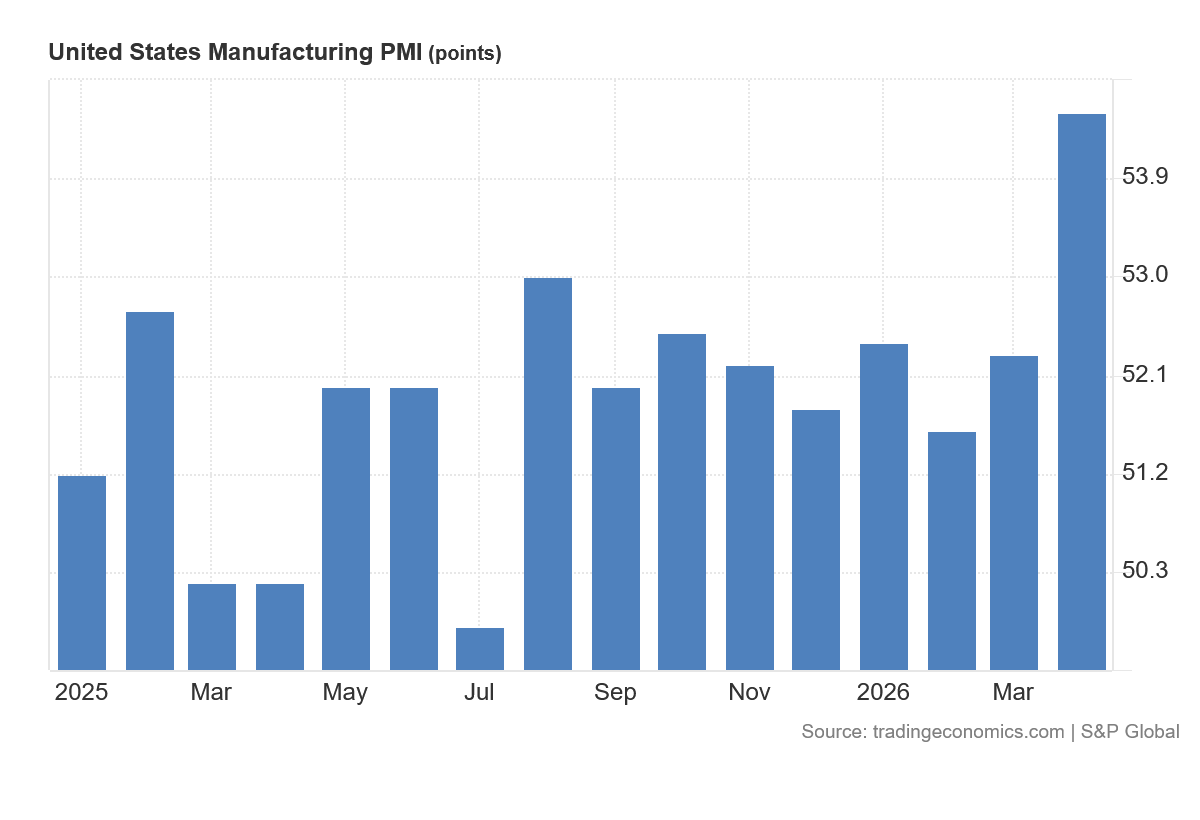
As with the March JOLTS data, the ADP report is consistent with the PMI data showing manufacturing coming out of the gate strong for 2026.
ADP Report Consistent With Unemployment And Layoff Data
The ISM PMI data are not the only metrics consistent with the ADP jobs report.
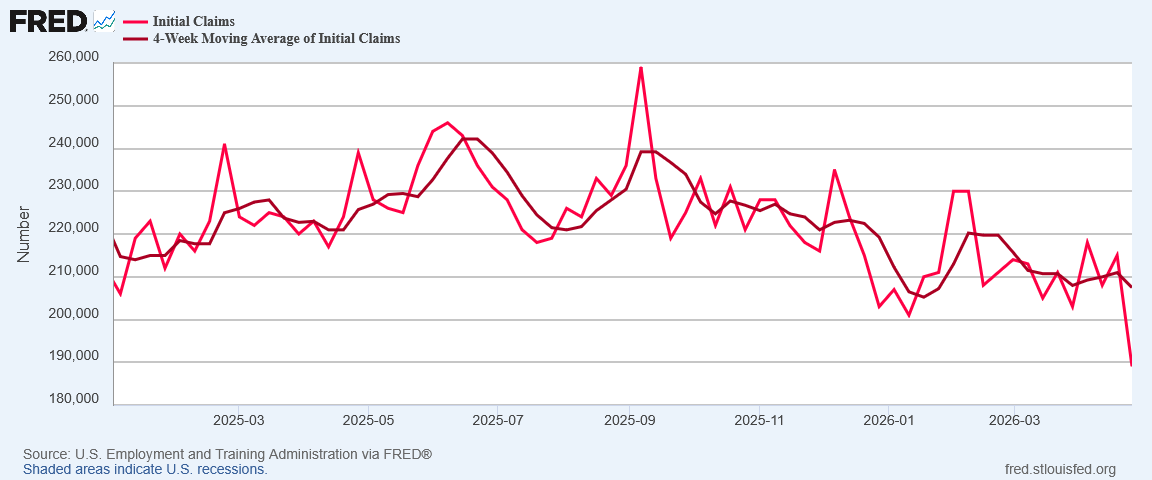
The Department of Labor’s unemployment data has been charting a steady decline in initial unemployment claims going back into last fall.
Continuing claims have also been charting a decline since the fall.
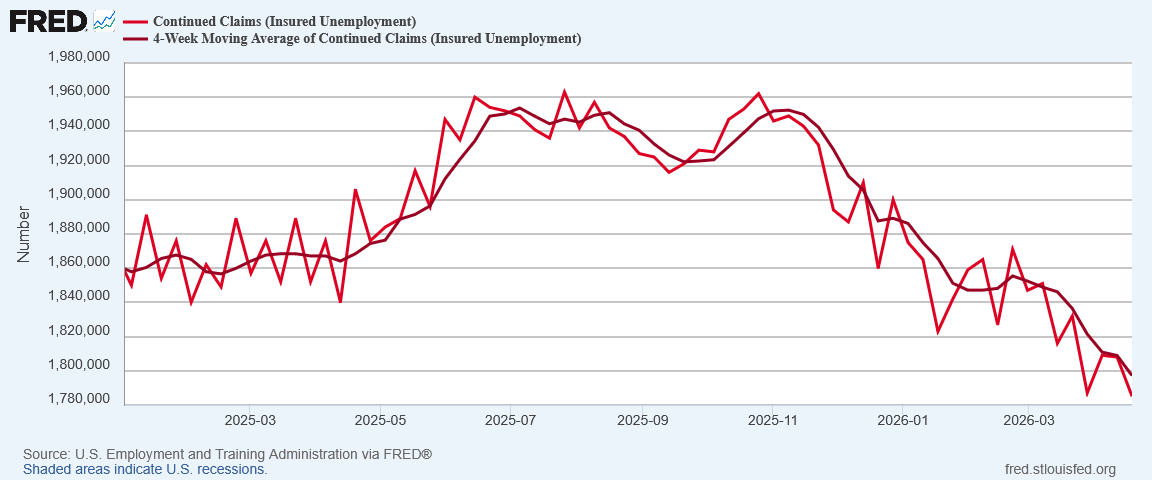
The decline in continuing claims especially has been more rapid in recent weeks, a trend which is entirely consistent with the job growth being reported by ADP.
The Job Cut Announcement report from outplacement firm Challenger, Gray, and Christmas also indicates 2026 is a stronger year for jobs than 2025. In the first three months of 2026, only January exceeded 2025 levels for layoffs and job cuts.

These employment reports are independent signals that are consistent with what the ADP report is showing for 2026. We have at least these reports as reason to take the ADP report at face value.
Not All Other Data Shows Strength
While the ADP report is backed up by a number of independent metrics indicating an improving economic situation, we should not pretend that there are not countervailing signals which present a far less optimistic view of American jobs markets.
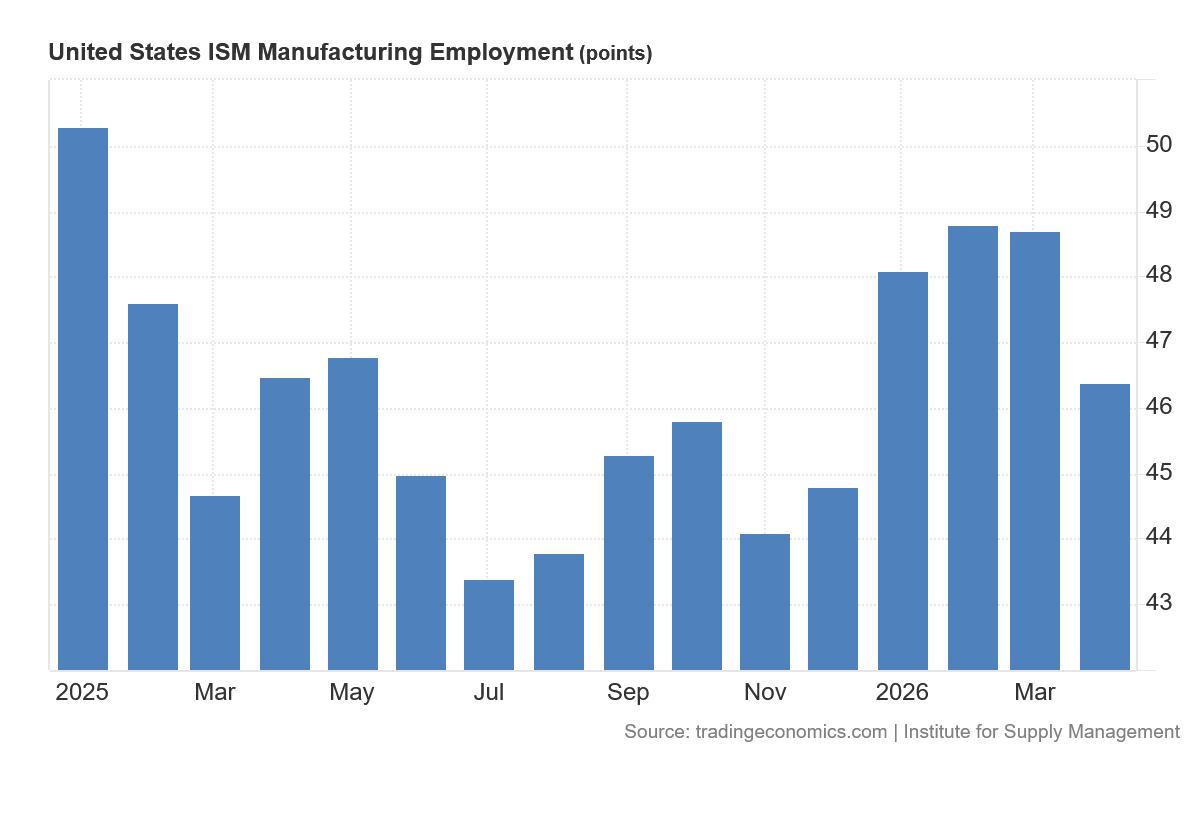
The ISM Manufacturing Employment metric has been printing contraction since January 2025.
The ISM Services Employment metric has been more volatile than the ADP data suggests for service-providing jobs.
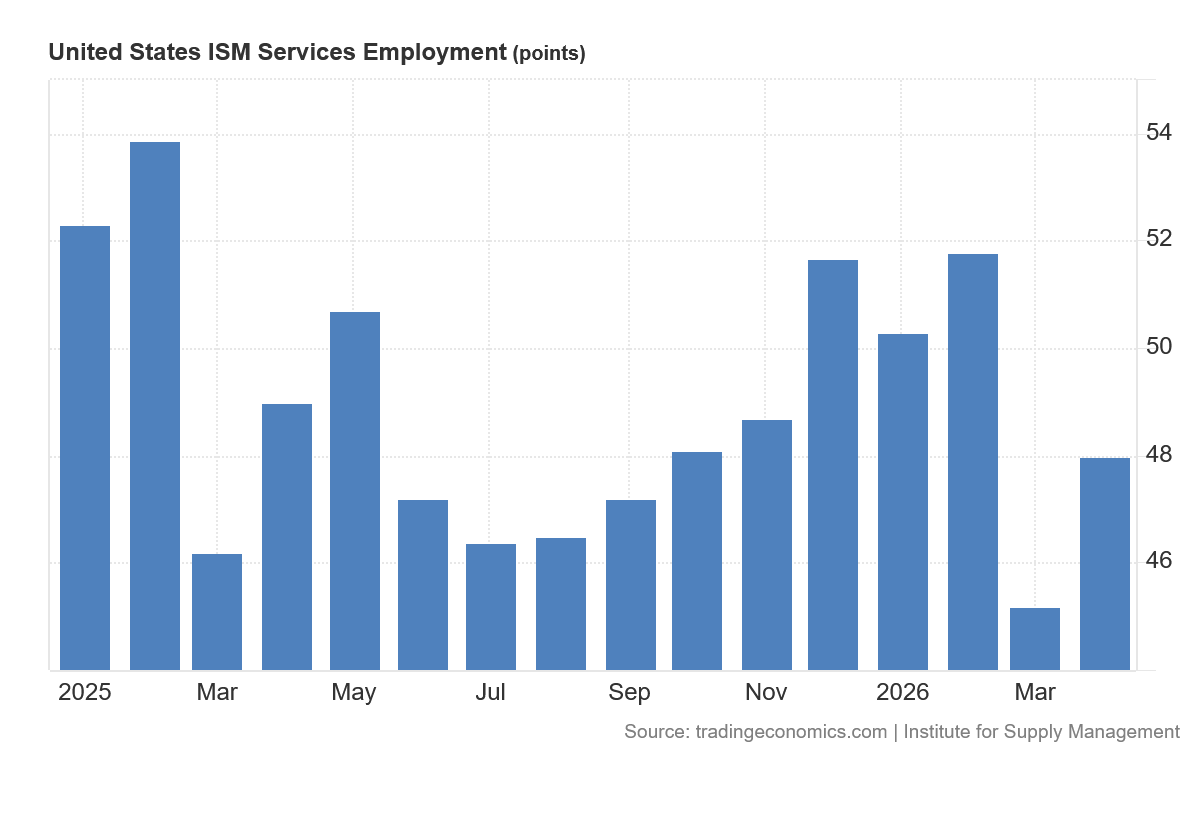
Nor should we overlook that the Bureau of Labor Statistics unemployment level data indicates that joblessness has been trending up since mid 2023, a long-term trend which has persisted through last month’s Employment Situation Summary.
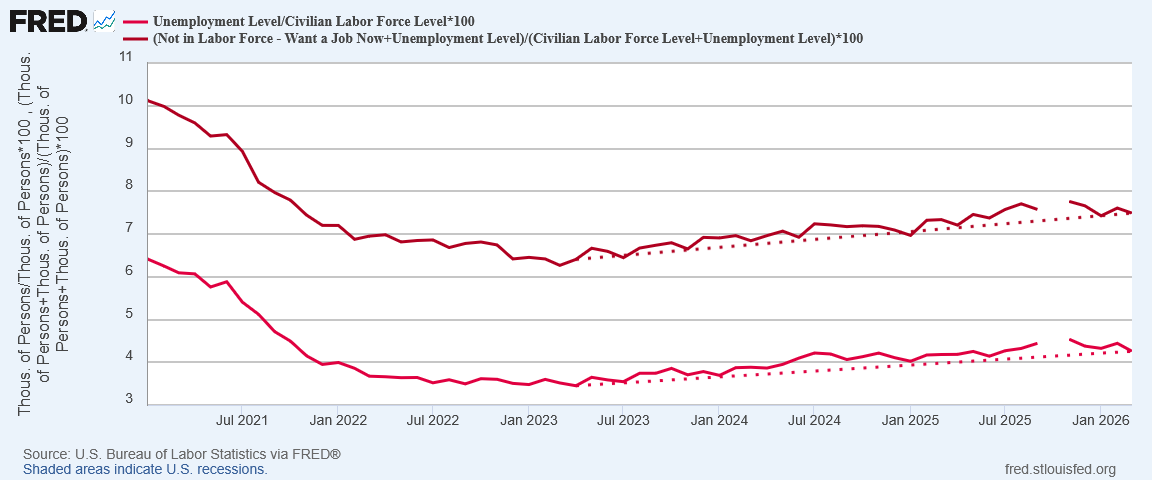
If overall unemployment levels are rising in this country, then jobs markets are less robust than the ADP report indicates.
Is The Data Real?
If the ADP report is accurate, American jobs markets have expanded significantly in recent months.
If the ADP report is accurate, labor demand is increasing at a significant pace.
The caveat, of course, is the predicate stated both times: “if the ADP report is accurate.”
Is the ADP report accurate? That revisions to the March report were only 1,000 means the report’s authors at the very least consider the report to be accurate.
The ADP report presents us with the same question as the March JOLTS report: Is the jobs recession coming to an end? The ADP report invites us to reach the same conclusion as that implied by the JOLTS report: yes, the jobs recession is coming to an end.
Could the ADP report be wrong? Absolutely it could be wrong. As with all of the jobs reports, the ADP report is fundamentally a report of estimates and extrapolations. As we have seen with the Employment Situation Summary, the extrapolations themselves can be problematic. If the baseline models upon which the estimates are based are flawed, the reports generated will be flawed.
By the same token, the ADP report could be correct. The baseline models might not be flawed, or might not be egregiously flawed.
This much is certain: The ADP report raises the expectation bar for Friday’s April Employment Situation Summary. After the blowout month the BLS jobs report had in March, that ADP prints a blowout report for April suggests the BLS jobs report will be positively stellar.
Is the jobs recession ending? ADP is telling us that it is.
There’s a lot of encouraging data here! Even if there are corrections and counter-indications, Trump now has data he can use to fundraise for the midterms, and to bolster his MAGA agenda. We’ll take it!
Thanks, Peter, for your usual fact-based efforts!