


On the June Producer Price Index, producer prices suddenly ran cold after heating up over the previous few months.
The July Producer Price Index is running even colder. Month on month deflation persisted, as did year on year disinflation.
The Producer Price Index for final demand was unchanged in July, seasonally adjusted, the U.S. Bureau of Labor Statistics reported today. Final demand prices edged down 0.1 percent in June and rose 0.5 percent in May. (See table A.) On an unadjusted basis, the index for final demand increased 4.7 percent for the 12 months ended in July.
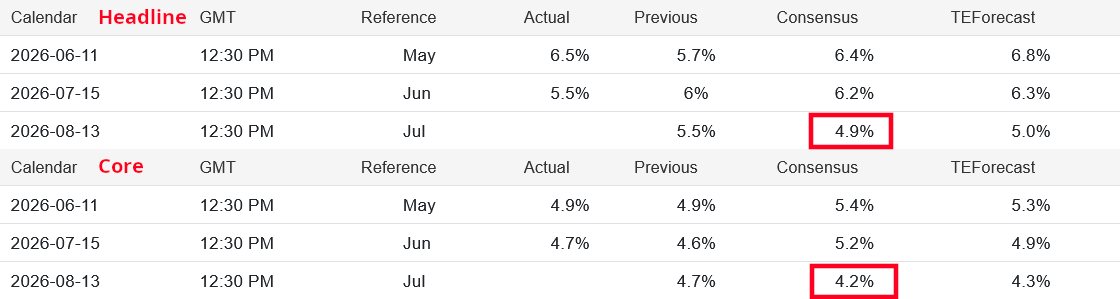
At 4.7% year on year, the PPI ran even below Wall Street’s consensus forecast of 4.9%.
As was true with the Consumer Price Index, the PPI once again printed energy price deflation—despite energy prices rising in July.
While the mystery of the disappearing energy price inflation remains, beyond energy prices the July PPI report showed disinflation and deflation across the board. Despite an ongoing war, with all the inflationary pressures war usually brings, factory gate prices in the US economy cooled in July.
Broad-based disinflation and deflation in the July PPI could be a warning signal of a cooling economy, perhaps one slipping towards recession and contraction.
Headline Deflation, Core Disinflation
While the year on year headline producer price inflation rate showed unexpected disinflation, month on month the headline rate printed outright deflation.
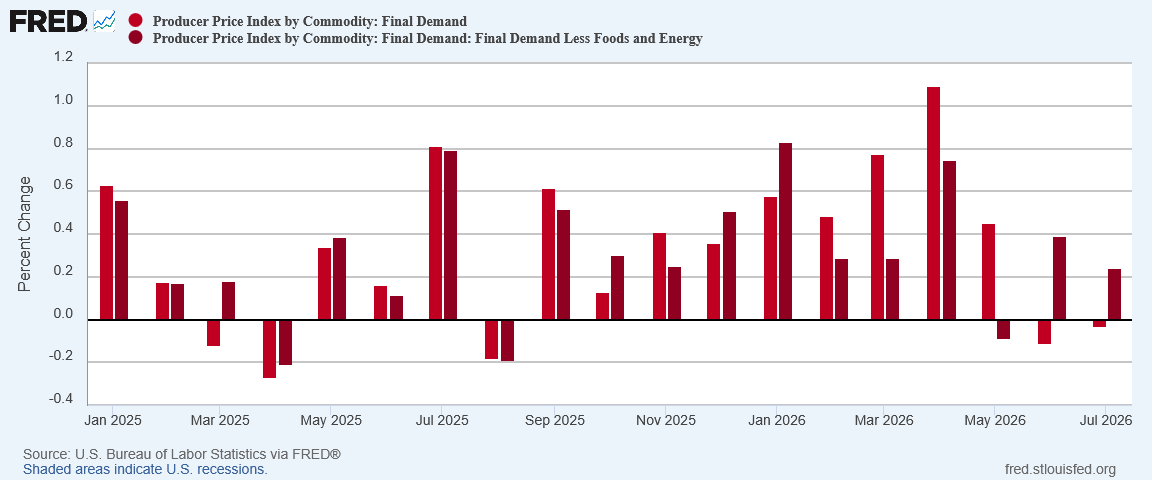
Month on month, the core PPI showed significant disinflation, dropping from just under 0.4% to just over 0.2%.
Consistent with the month on month numbers, the year on year inflation rate showed greater decline at the headline value than at the core level.
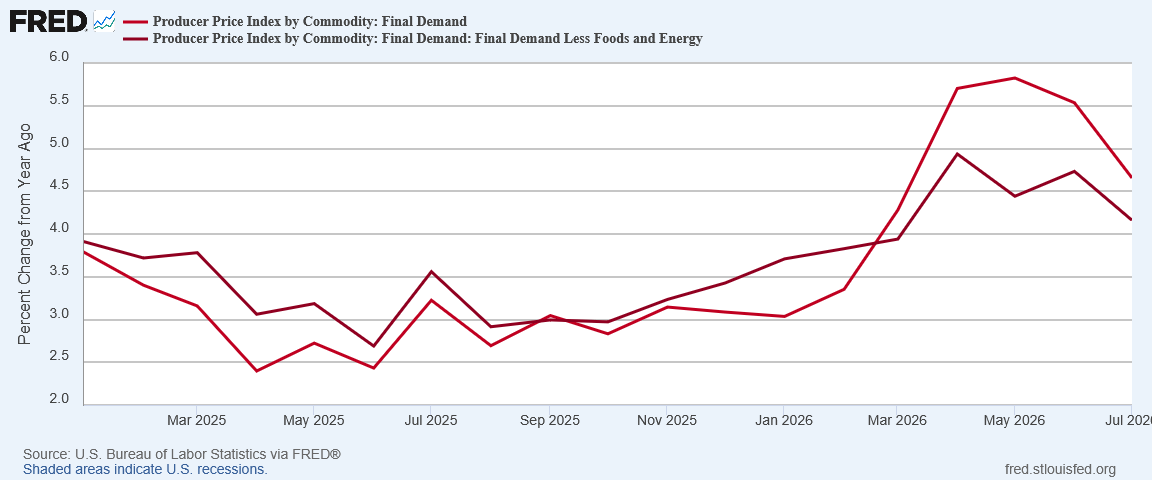
The index itself also drives the point home: inflationary pressures on producer prices eased significantly in July.
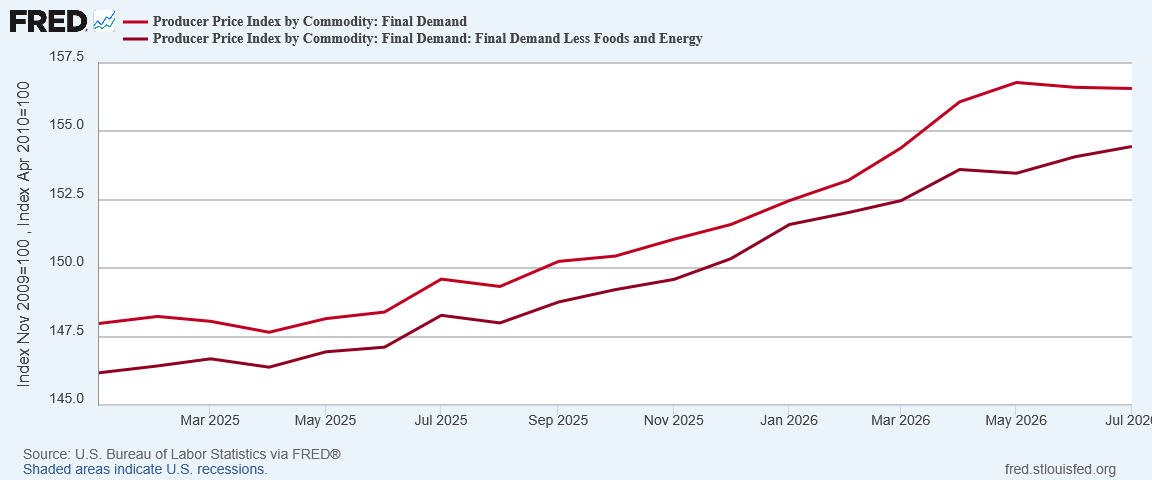
That the PPI showed deflation for the second consecutive month its another warning signal of growing weakness in the US economy.
When we recall that the most recent GDP estimate showed real economic growth slowing significantly over the past two quarters. the PPI signaling economic weakness is an alarm we should not ignore.
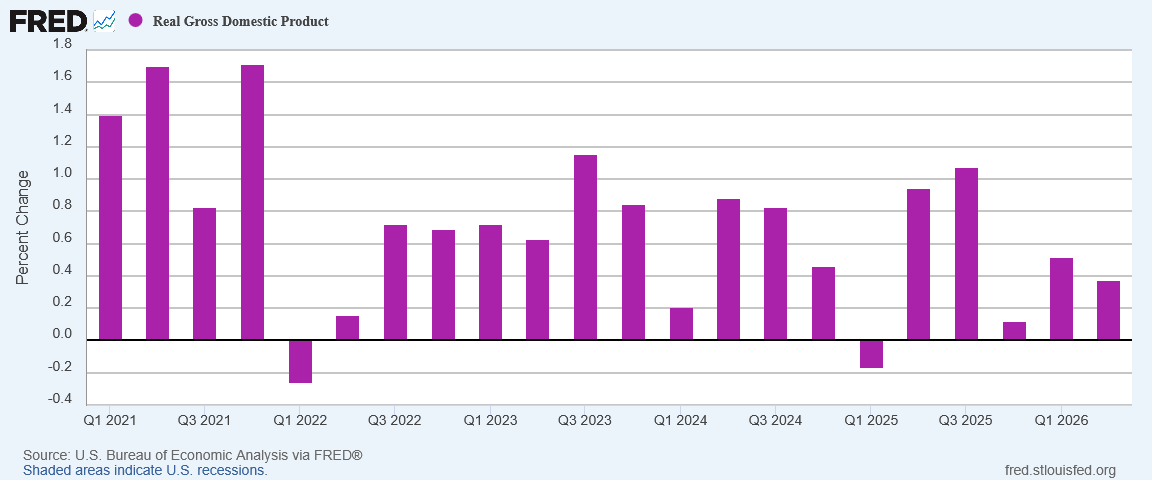
While the lack of energy price inflation is as counterintuitive for the PPI data as for the CPI data, beyond energy there simply are not many inflationary pressures in the US economy at present.
Energy Prices Declined?
As with the Consumer Price Index, the one counterintuitive number in the report was the energy price inflation data. Despite a month of rising energy prices, the energy price index showed energy prices falling for the second consecutive month.
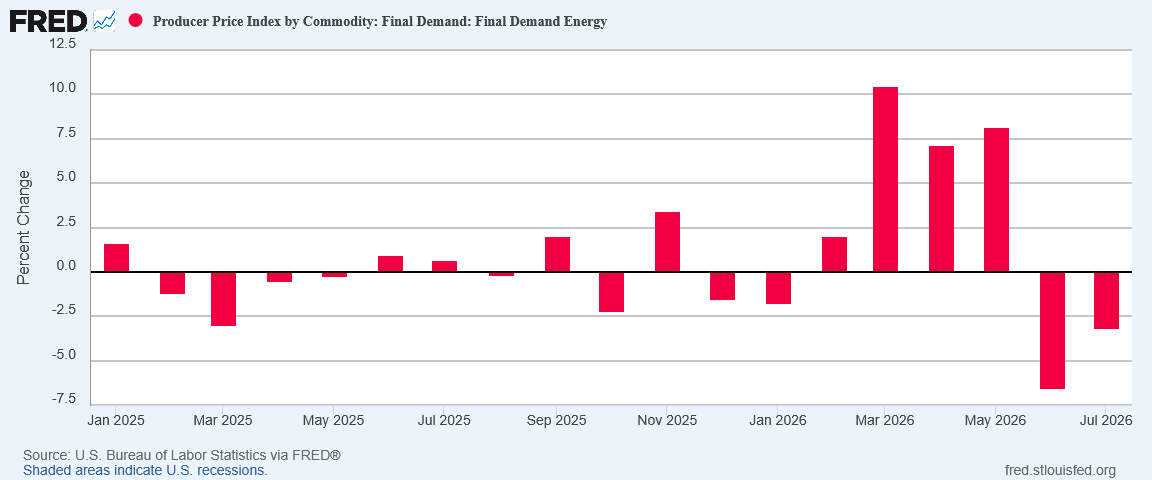
However, that there was only disinflation for unprocessed fuels as opposed to outright deflation for processed energy goods may confirm that recent energy price increases simply have not percolated through to the indices yet.
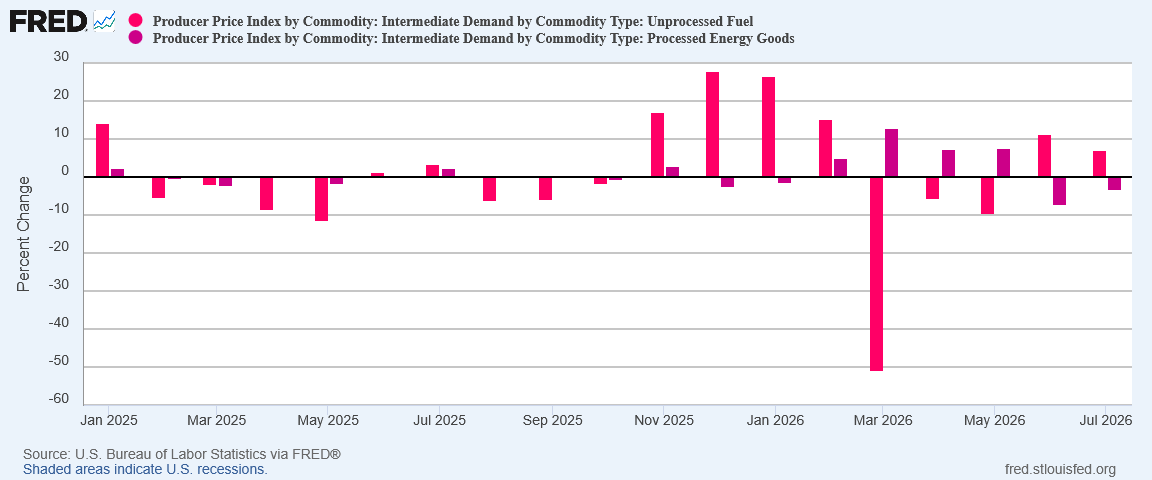
While we might have expected a higher intermediate demand inflation print for unprocessed fuels (i.e., crude oil), that same expectation makes the deflation in processed energy goods (i.e., gasoline) that much more remarkable.
As we noted with the CPI, RBOB Gasoline futures rose 15% in July.
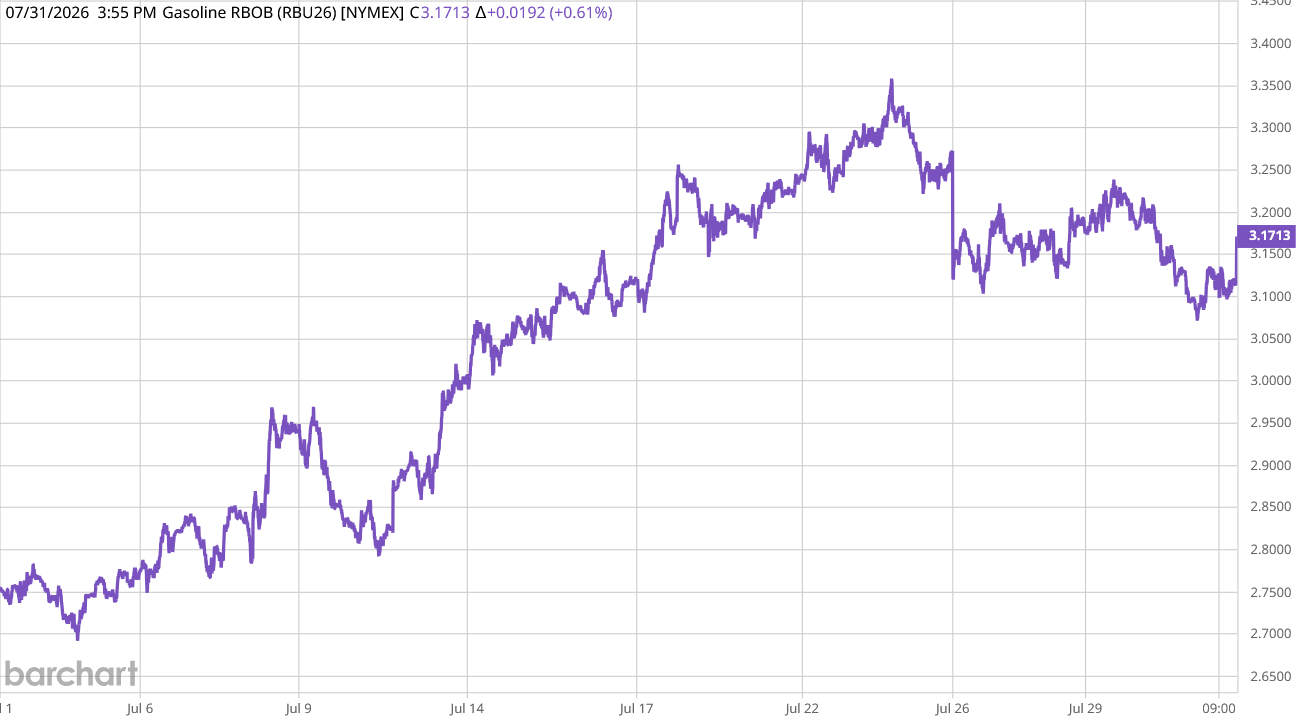
Deflation among oil’s refined products should be coming from market prices falling.
Market prices for oil’s refined products are not falling. Retail prices for fuels also did not fall in July.
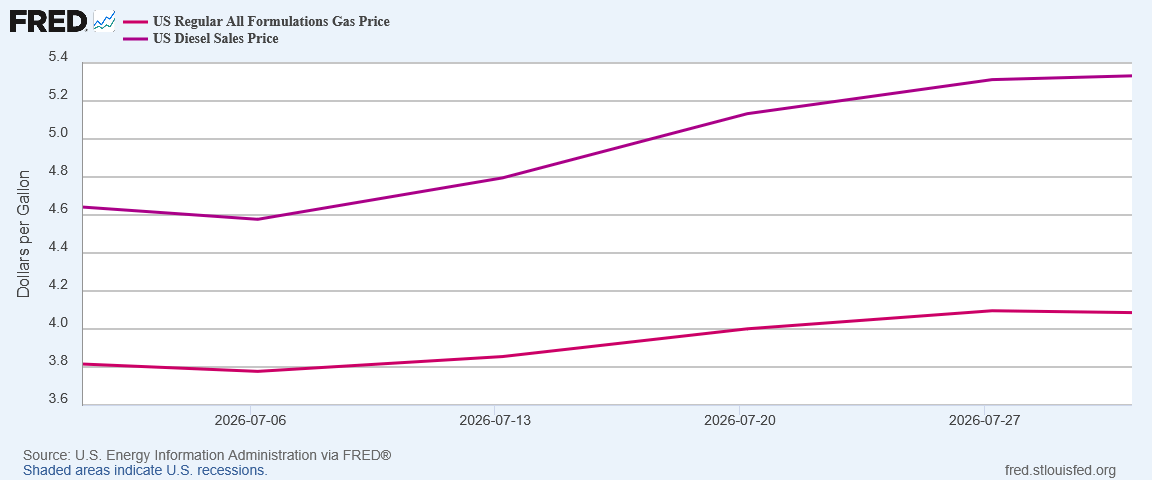
As with the CPI, for whatever reason July’s market energy price hikes did not make it into the PPI report.
Food Prices Fell Again
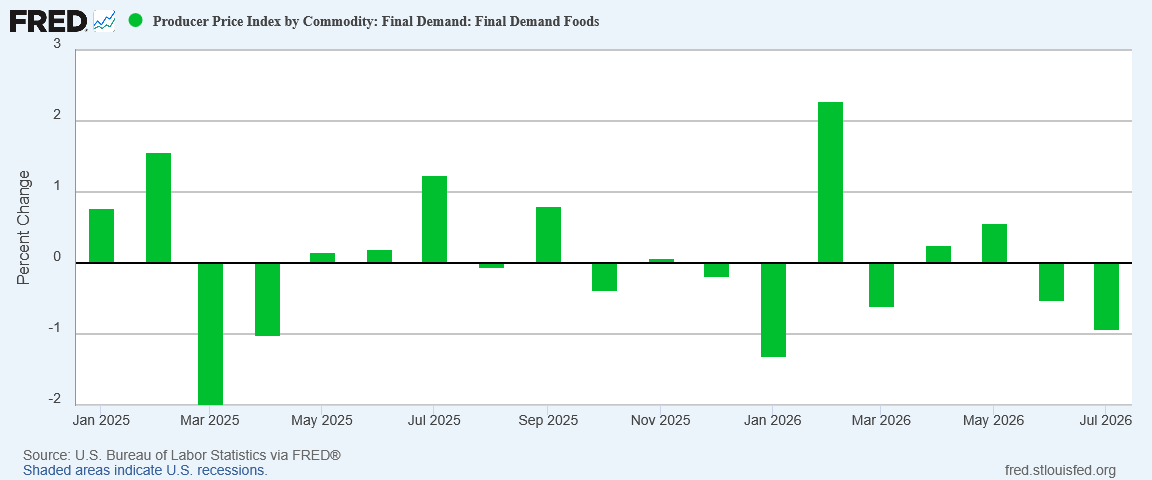
One welcome bit of producer price deflation came in the Food subindex, which showed deflation for a second consecutive month.
Additionally, fertilizer prices also showed deflation for July.
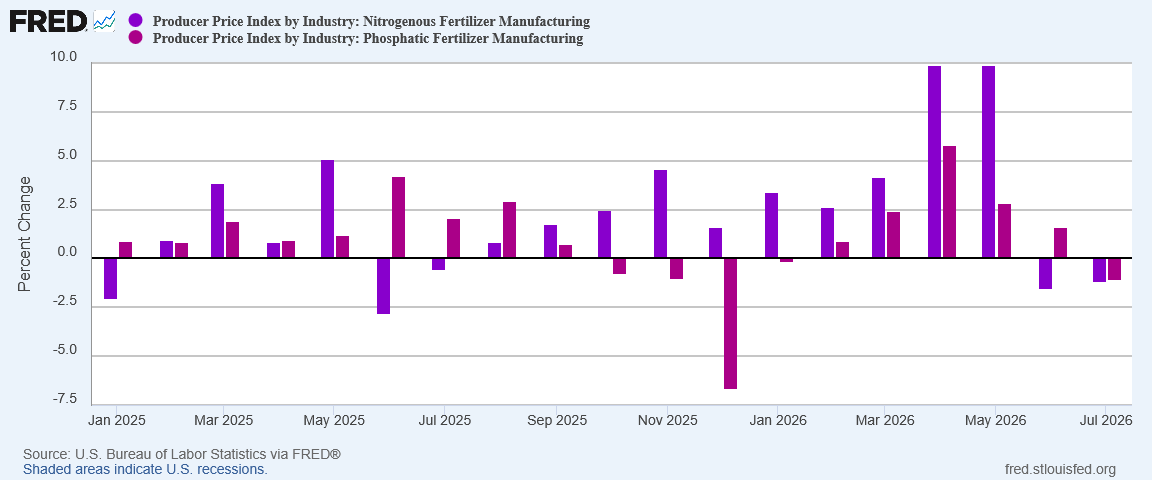
Fertilizers, particularly nitrogenous ones, experienced significant inflation during April and May. Today’s fertilizer prices are tomorrow’s food price inflation factors, making any unwinding of fertilizer price increases a positive development for future food prices.
Goods Prices Cooled For Both Final And Intermediate Demand
While the lack of energy price inflation is a counterintuitive conundrum, goods prices overall could be signalling a lack of inflationary pressure for the next few months.
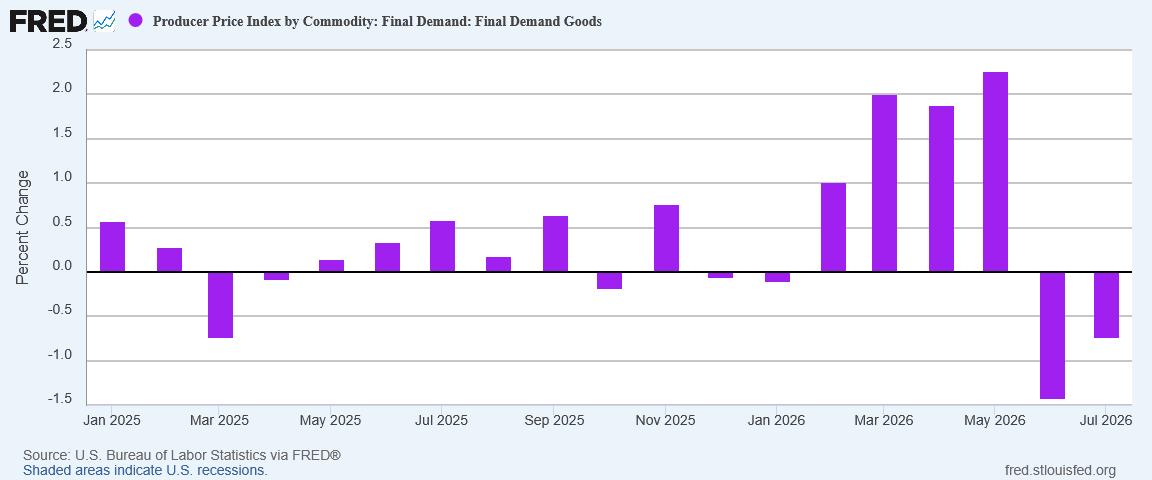
Within final demand, goods prices printed deflation for the second consecutive month, consistent with overall final demand.
We should note that intermediate demand also printed deflation in all stages except Stage 4, again for the second consecutive month.
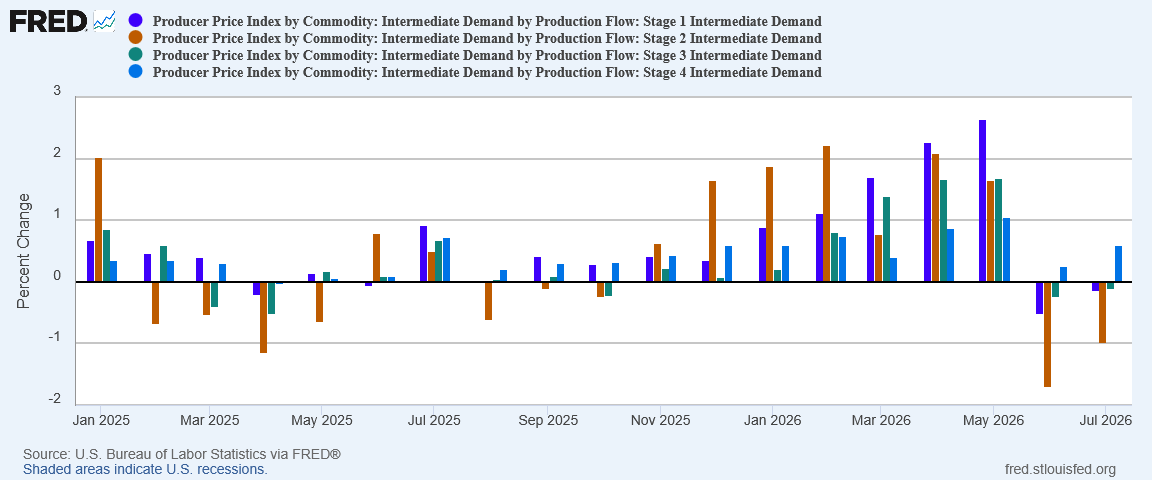
The pipeline for future goods output is not presenting with any clear inflationary pressures, and that indicates lower final demand goods price prints for the coming months.
Outside of the possibility of higher energy prices from a potential resurgent oil supply shock, the PPI data is not showing many inflationary pressures particularly for goods, and even services printed disinflation for the month.
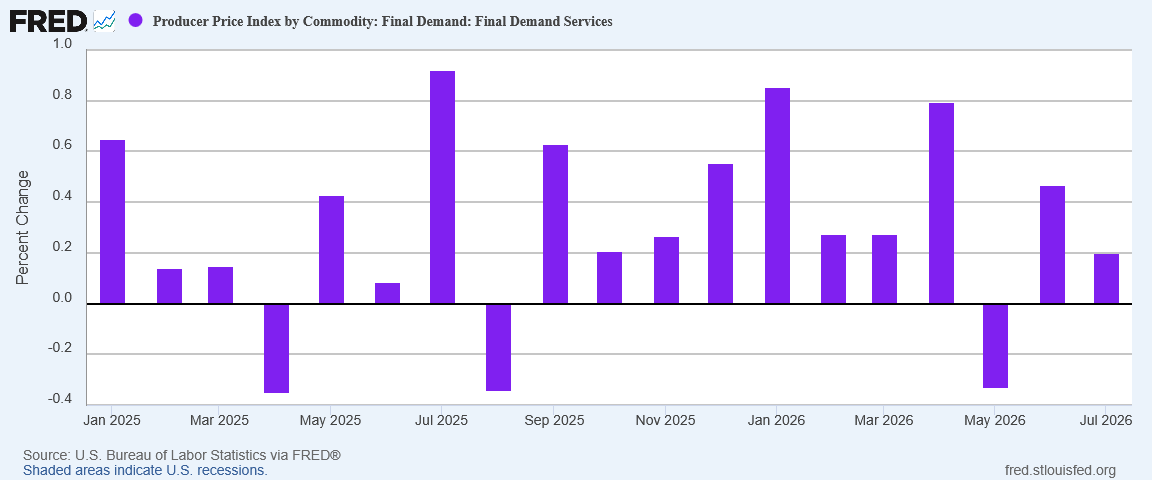
Barring that possible reversal in energy price inflation (which is possible given the apparent unreported July price rises in energy commodities), there simply are no rising price trends within the Producer Price Index at this time.
No Inflation Anywhere
If we proceed from the conventional presumption that the Producer Price Index is the leading indicator for the Consumer Price Index, we are seeing indications of lower inflation expectations heading into the fall and possibly beyond.
Arguably, we should be seeing inflationary pressures in energy, and it remains likely that we will see energy price inflation in August and September, as the market price increases notched in July percolate through to the PPI and CPI. Outside of energy, however, no inflationary pressures are making their presence known.
With “affordability” sure to be a campaign theme for mid-term election races around the country, a near-complete lack of obvious inflationary pressures is likely to prove a boon for Republicans and a burden for Democrats. The possibility of an “oilpocalypse” of surging oil prices from the stalemate with Iran over the Strait of Hormuz, leading to global stagnation, global demand destruction, and eventually a global recession, is the only significant potential inflationary pressure visible in the price index data at present.
If President Trump can avoid the oilpocalypse, inflation could be effectively pulled off the table as a potential campaign issue for the general election cycle. It will be hard for Democrats to make a campaign issue out of prices if inflation keeps trending down.
If.
The big question mark remains the oilpocalypse. At present, neither the US nor Iran is inclined to make any concessions in order to secure even a temporary ceasefire. As a result, the Strait of Hormuz remains effectively closed as of this writing, and may very well remain closed for the foreseeable future.
Closing the Strait means global oil supplies are significantly reduced. While strategic reserve releases have buffered the obvious oil price hikes global oil markets have seen since the start of Operation Epic Fury, those releases cannot go on forever, and it is becoming increasingly probable the Strait’s closure will last longer than strategic reserve releases can be sustained. When that buffer is at last exhausted, oil prices are likely to move in only one direction—up.
In the worst case scenario, that of the oilpocalypse, not only do energy prices surge, but the increase in fuel prices and thus transportation and logistics costs also creates inflationary pressures on other goods as well.
In the best case scenario, the lack of inflationary pressures to either push prices up or keep them up suggests that consumer price inflation may yet come back down to 2% or less year on year—the “Holy Grail” for the Federal Reserve, and presumably the key question for when the Fed decides what to do about interest rates each month.
Which scenario we get hinges entirely on the outcome of the United States’ war with Iran. Recent news reports suggest both Iran and the US are anticipating an extended attritional conflict. An extended conflict means the Strait of Hormuz will remain closed for the foreseeable future. An extended conflict almost certainly means the oilpocalypse will happen.
If the oilpocalypse does not happen, there are no other obvious inflationary pressures showing up in the price index data to drive consumer or producer prices higher over the coming months.
This could be a positive development, as it means inflation will not heat up. However, as noted earlier, a lack of inflationary pressures can also be a lack of economic growth pressures. The same rising demand which tends to push prices up is the same rising demand which tends to push the economy to expand. Lack of producer price inflation or consumer price inflation could mean a lack of economic growth and a continuation of the cooling GDP growth figures reported for the first half of the year.
On the surface the PPI report looks good—prices came down. If prices came down because the economy is slowing down, the PPI report is a warning signal of greater concerns than just rising energy costs.
It’s a very muddled picture. The deflationary trends pointing to the economy slowing down but the construction and manufacturing (PMI) indices showing expansion.
Deflationary Slowdown? 🧐🧮📝📉🤔🏦
Rising rates....?
We definitely need more refinery capacity🛢️🏭⛽🚙🛻🚜👨🏽🌾 and Nuclear-powered ⚛️⚡⚙️ Electricity generation.