


Between the September and October Personal Income and Outlays reports, inflation cooled at the headline level, and remained the same at the core level.
Which is to say, inflation rose year on year and fell month on month.
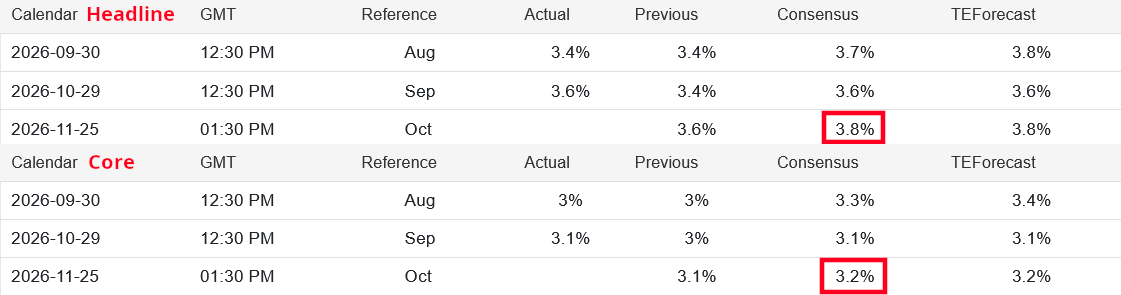
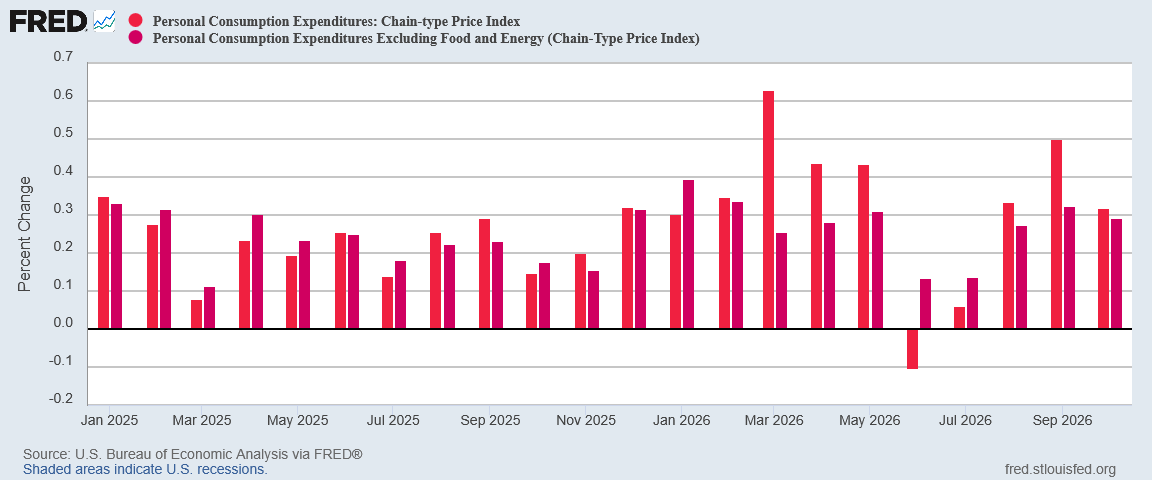
From the preceding month, the PCE price index for October increased 0.3 percent. Excluding food and energy, the PCE price index also increased 0.3 percent.
From the same month one year ago, the PCE price index for October increased 3.8 percent. Excluding food and energy, the PCE price index increased 3.3 percent from one year ago.
Once again, the PCE Price Index (PCEPI) numbers landed almost exactly where Wall Street projected they would.
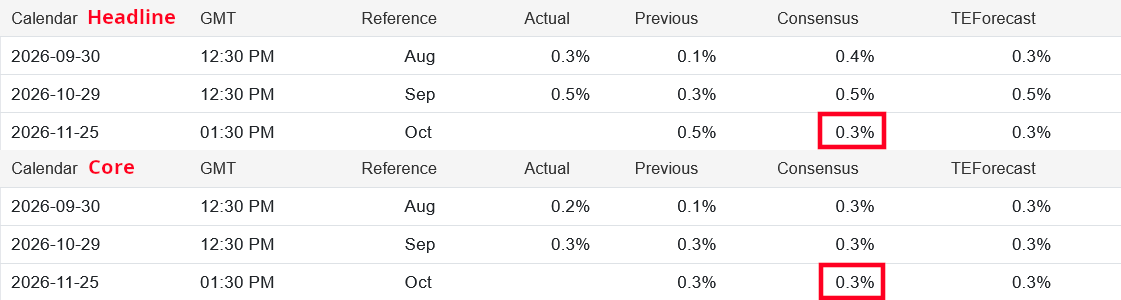
Even Wall Street’s month on month projection was spot on.
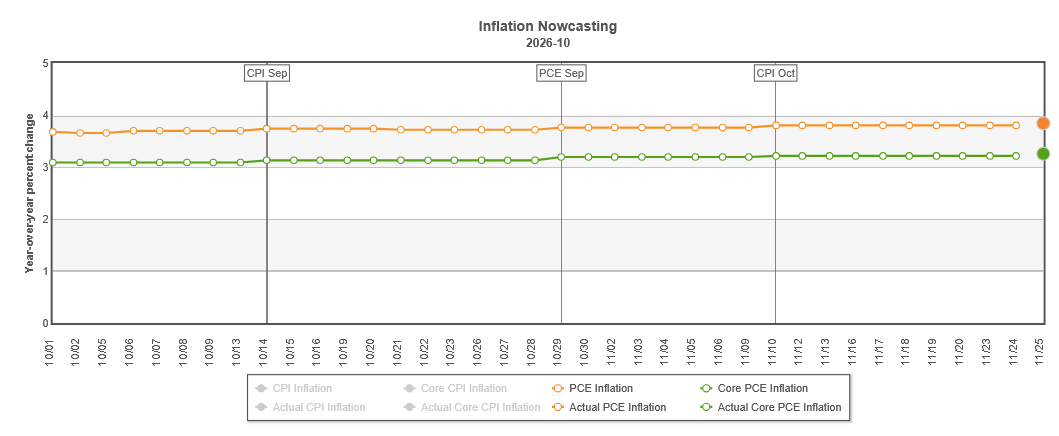
Even the Cleveland Fed’s inflation nowcast was quite close to the final PCE print.
The numbers are different, but the pattern is largely a repeat of the earlier Consumer Price Index data.
True to form, corporate media and the markets are once again tantruming because there was insufficient cooling in the October data. Corporate media is yet again promoting the certainty of a federal funds rate hike in December, because inflation is “accelerating”.
There’s just one problem: inflation did not “accelerate” in October. It didn’t accelerate in the CPI and it didn’t accelerate in the PCEPI.
Still No Sugar Coating: Year On Year Inflation Rose In October
We shall dispense with the obvious reality first: Yes, consumer price inflation per the PCE Price Index rose year on year in October.
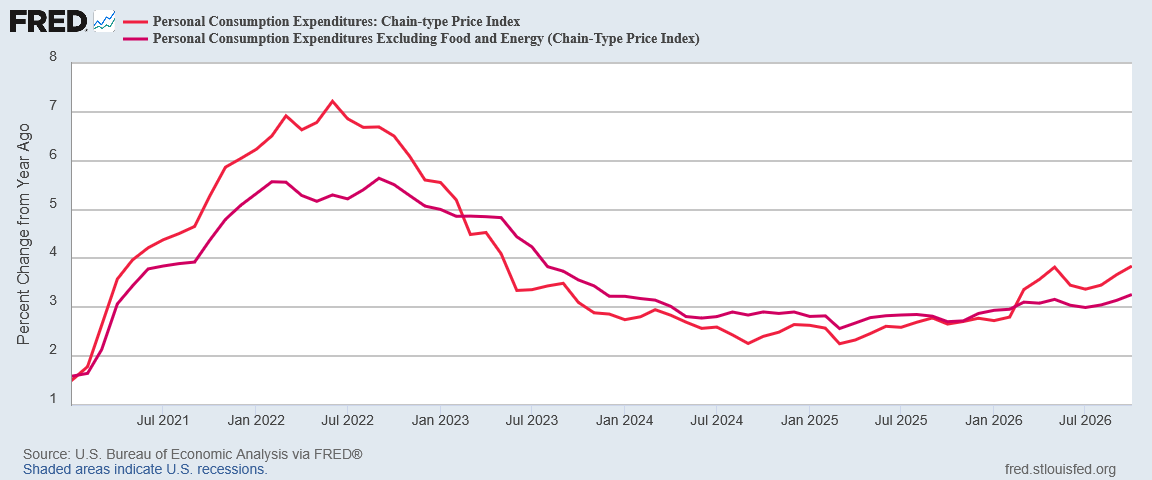
However, headline inflation month on month fell in October, with core inflation month on month staying almost the same.
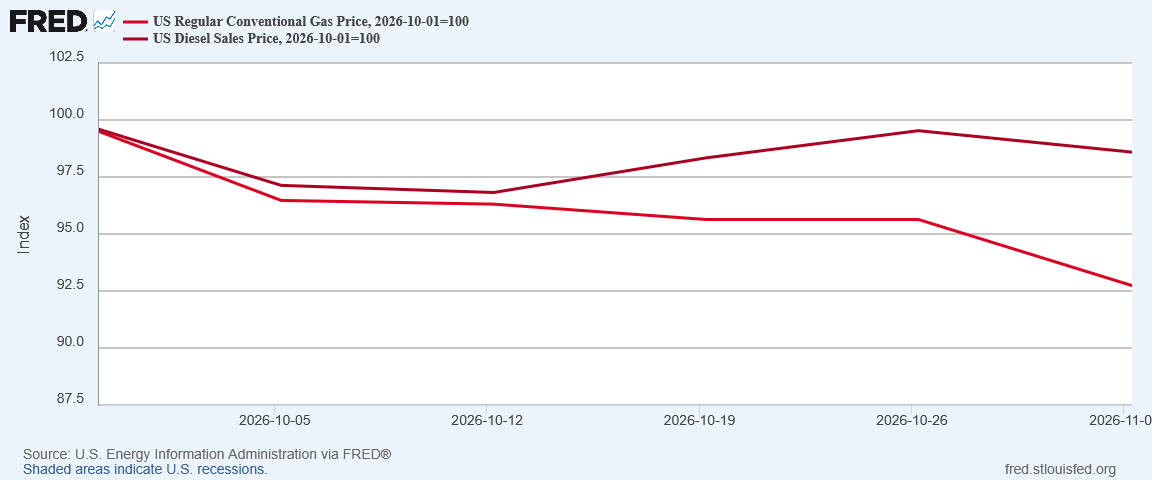
As we saw with the Producer Price Index data, this is entirely consistent with how key prices such as the pump price for gasoline and diesel fuel have moved.
The important distinction that routinely gets lost in corporate media is that the year on year inflation number is exactly that: how much inflation there has been in aggregate across the preceding year.
The month on month inflation number is what describes how inflation is shifting in the most recent month.
When we look at the raw index numbers themselves, we see a slight downward inflection in the headline PCE Price Index and no real inflection in the core index.
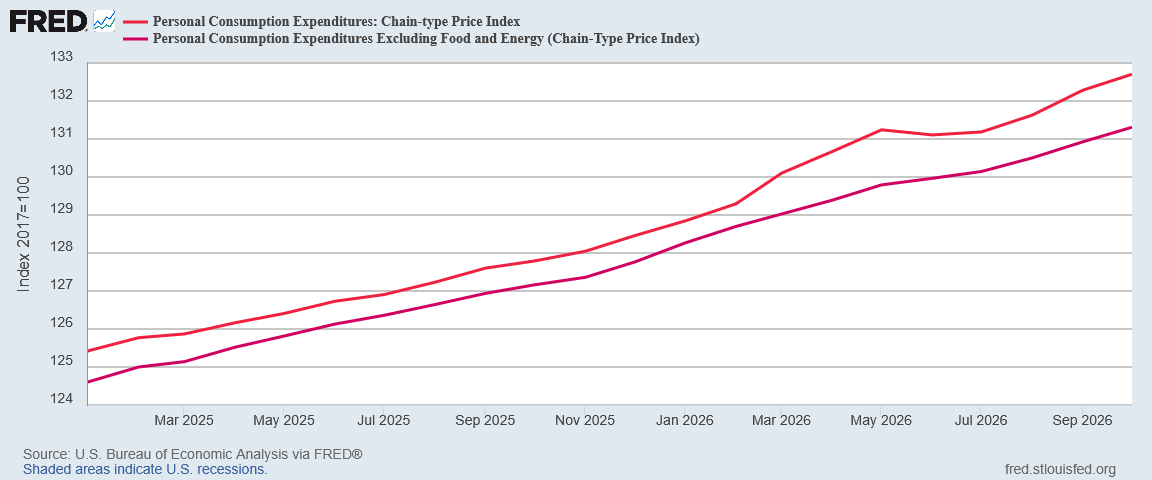
Where the raw index curve bends down even slightly, it is mathematically impossible for that to be “acceleration”. Acceleration is an increase in the rate of change, and that means the curve has to bend up, not down.
The rate of inflation in October 2026 is greater than the rate of inflation in October 2025, but even a cursory glance at the PCE Price Index graph between those two months shows that this is largely (entirely?) attributable to price increases that occurred earlier in the year. The year on year inflation metric reveals the increase—and thus the acceleration—that has already occurred. The year on year inflation metric tells how large the barn door is through which the proverbial horse fled.
The downward inflection in the index curve for October shows deceleration in October, not acceleration.
The lack of any discernible inflection in the core index curve in recent months affirms that virtually all of the shift in headline inflation is attributable to the highly volatile food and energy price sectors.
Naturally, Corporate Media Is Oblivious
Ever the reliable propagandists and economic fabulists, those nuances were missed by corporate media.
CNBC, in reporting this morning’s PCEPI print, erroneously described inflation as acclerating, using that false narrative to bolster an argument for a December federal funds rate hike.
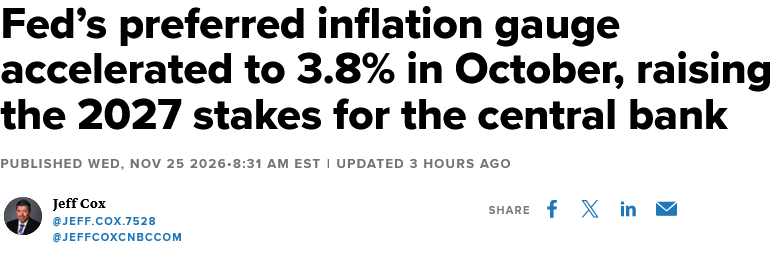
Inflation moved further away from the Federal Reserve’s target in October, reinforcing expectations that another interest rate hike is in the cards for December and raising questions about how much more work the central bank will have to do in 2027.
The personal consumption expenditures price index, the Fed’s preferred inflation gauge, showed a seasonally adjusted 3.8% annual inflation rate, in line with the Dow Jones consensus estimate and nearly twice the central bank’s goal. The reading was 0.1 percentage point higher than September.
The politically oriented The Hill also played up the correlation between the higher year on year inflation print and a likely federal funds hike.
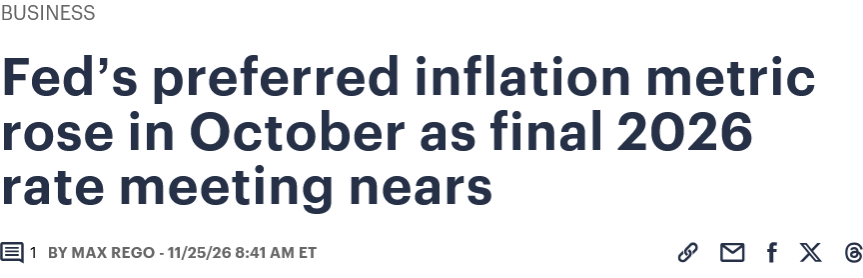
Inflation increased slightly in October, new data from the Bureau of Economic Analysis (BEA) showed Wednesday, as the Federal Reserve’s final rate-setting meeting approaches in two weeks.
The personal consumption expenditures (PCE) price index rose 0.3 percent last month and was up 3.8 percent relative to October 2025, the BEA reported.
The corporate media talking heads reliably contributed their declaration that inflation is too hot and interest hikes are necessary. CNBC’s chosen “expert” du jour Chris Rupkey explicitly called for less demand in the economy.
“Inflation is too hot and it will not be brought under control as long as economic demand is also too hot,” said Chris Rupkey, chief economist at Fwdbonds.
Let that sink in. CNBC’s chosen economic “expert” is saying the problem of inflation is people are spending too much. That is exactly what “economic demand is also too hot” means.
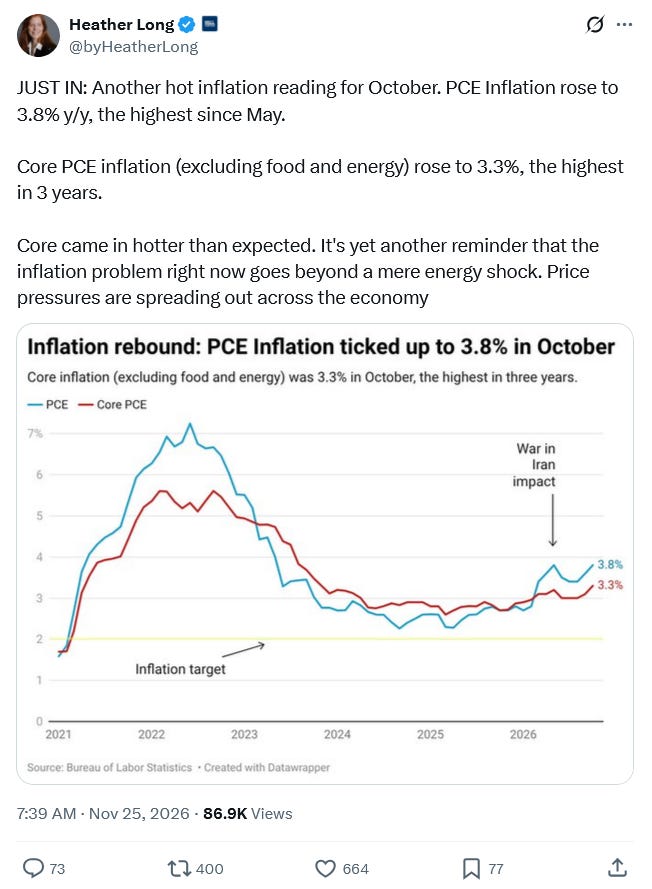
The Hill quoted a post on X from the Navy Federal Credit Union’s Heather Long.
Put a pin on both of their comments. The lunacy of their remarks will be made plain shortly.
Energy Price Inflation Cooled
Just as with the CPI and the PPI inflation prints, energy price inflation cooled. considerably in October.
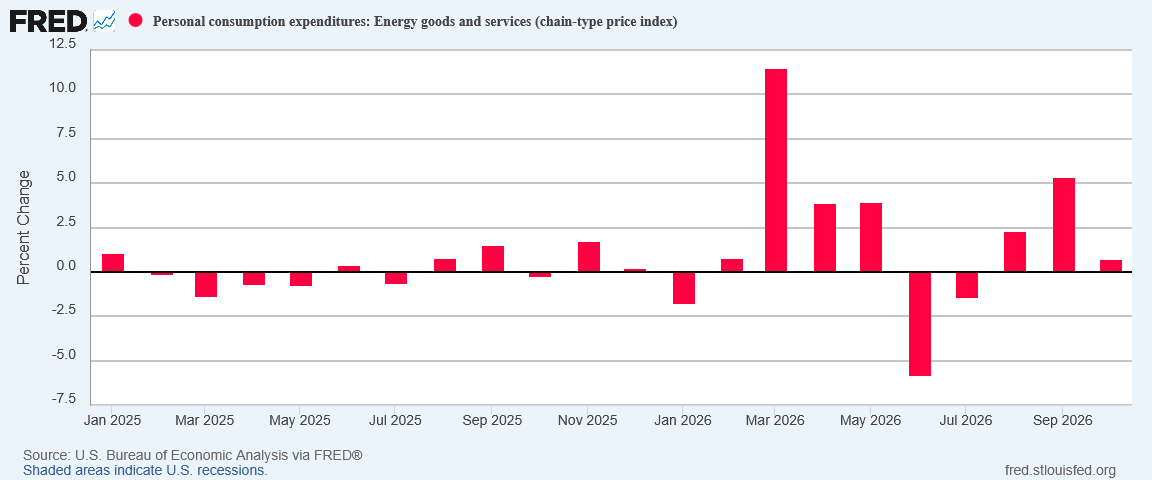
We should say energy price inflation “decelerated”—because it did.
Even more significant is that energy prices as a component of both nondurable goods and services also declined.
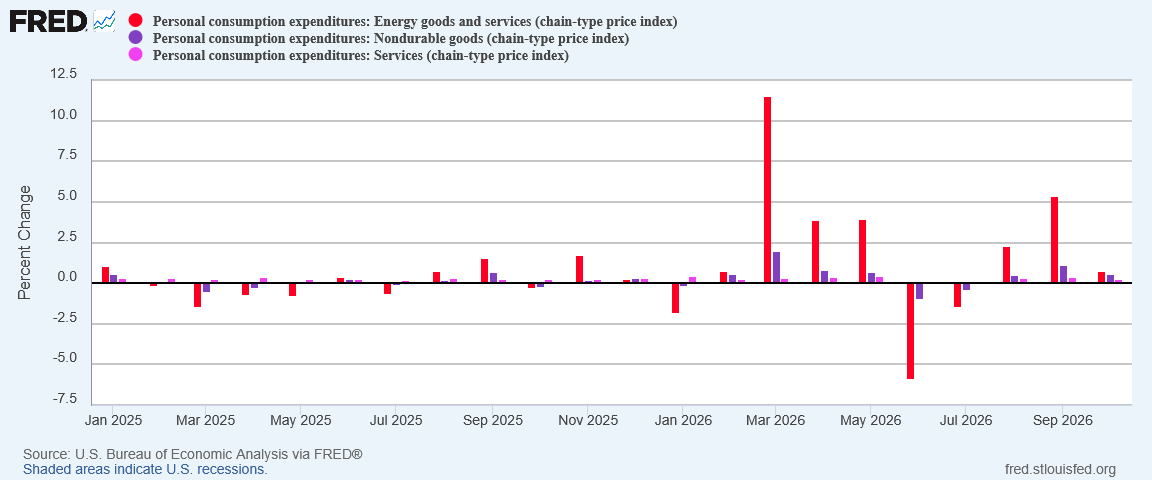
Yet even when we look at energy price inflation year on year, we see in October a downward inflection in the curve.
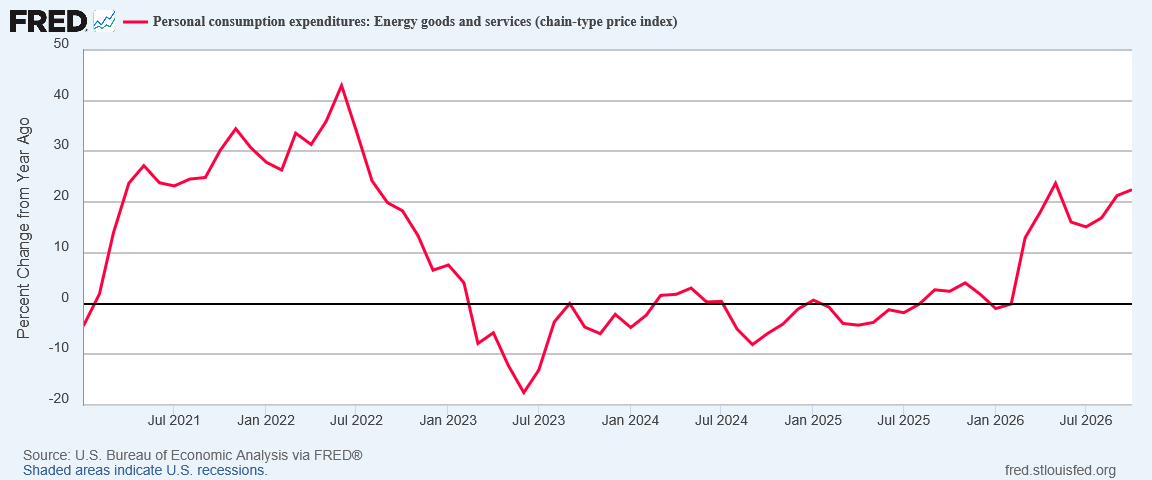
There clearly was no acceleration of inflation from energy prices in October!
Food Price Inflation Did Acclerate
We should also acknowledge the obvious that food price inflation did accelerate in October.
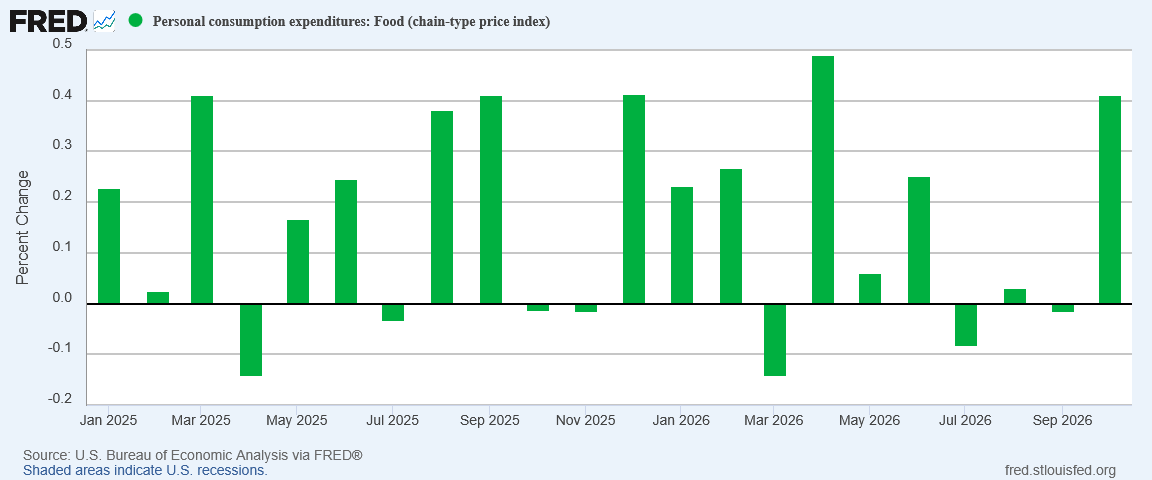
A jump from a slight deflation in September to just over 0.4% month on month in October is a significant increase.
That acceleration is evident even year on year.
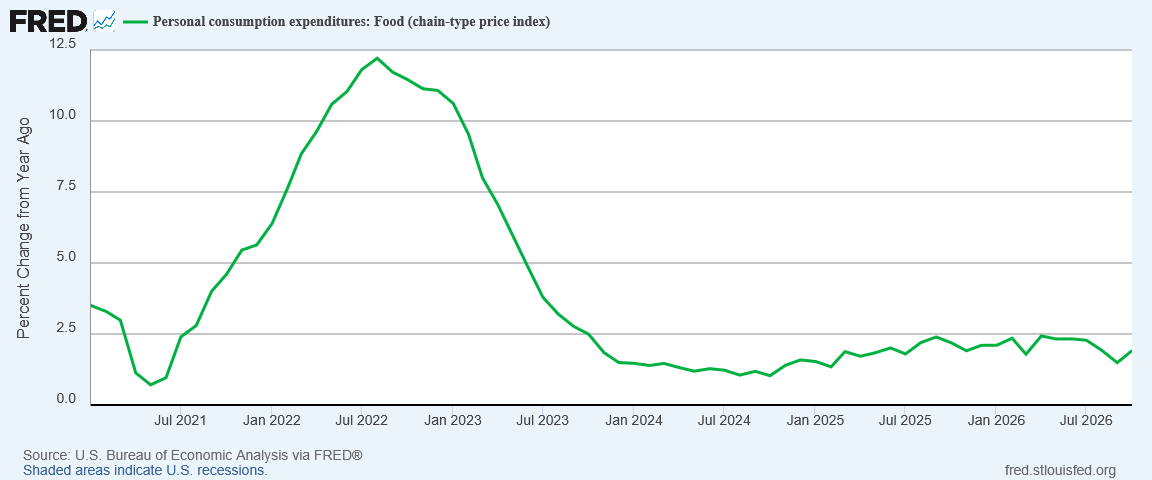
While food price inflation did accelerate in October, it remained a smaller inflation amount than for energy.
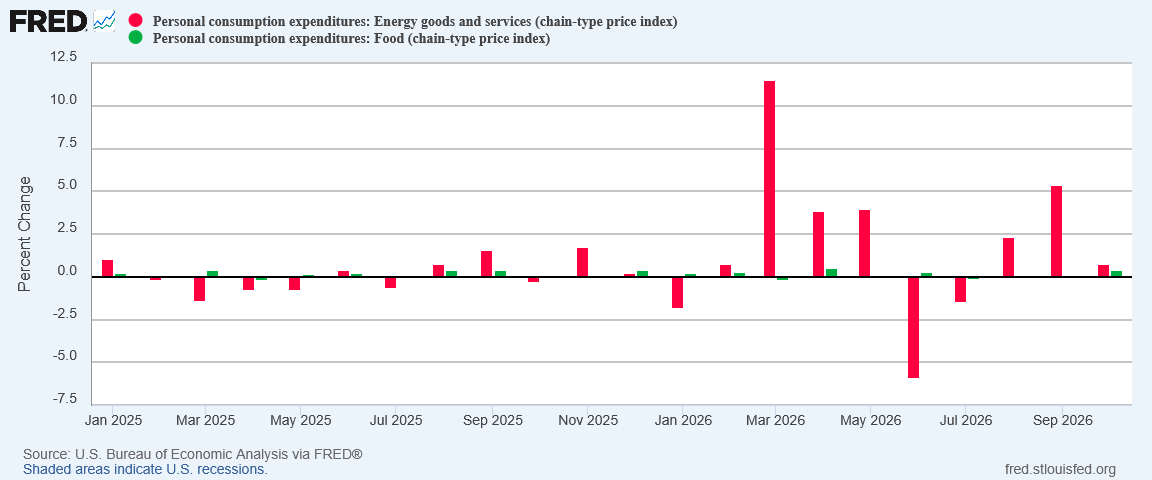
Food and energy are the two price components which differentiate the headline inflation numbers from the core inflation numbers. Even with food price inflation accelerating and energy price inflation decelerating, energy prices are still a more significant inflation factor overall.
Goods And Services Cooled
Inflation among durable goods, nondurable goods, and services all cooled noticeably in October.
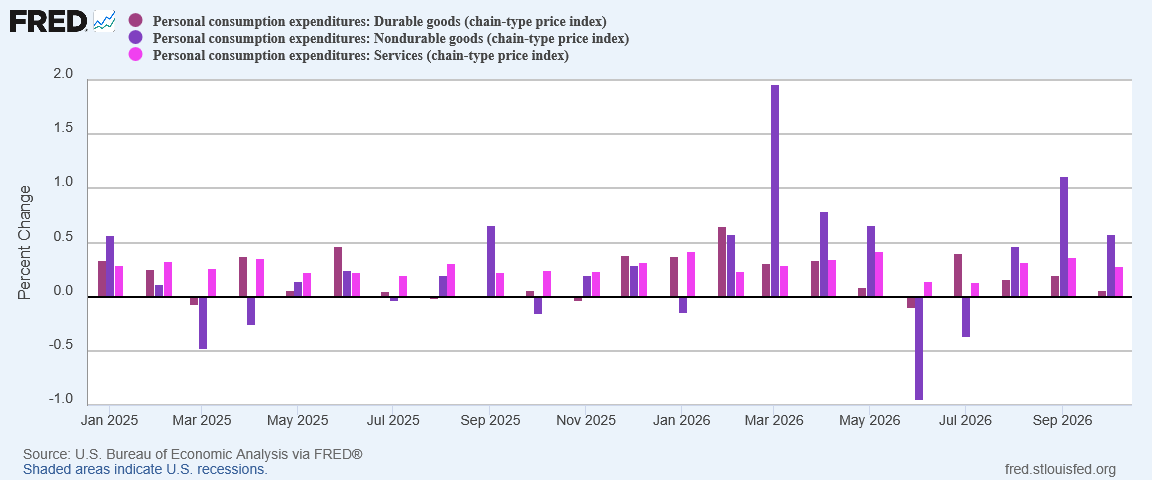
Viewed year on year, only nondurable goods showed any acceleration of inflation.
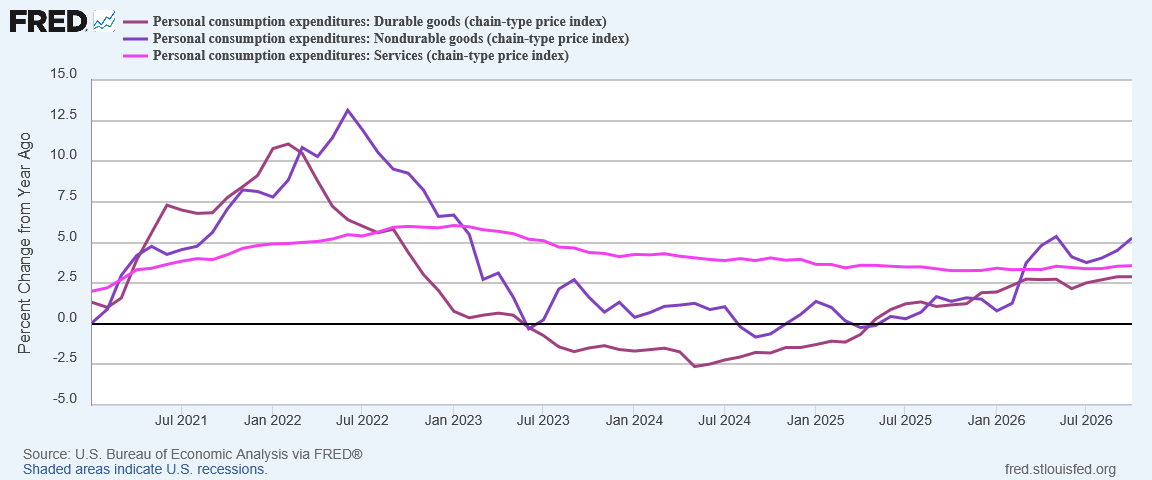
The acceleration within nondurable goods, however, is quite likely attributable an unusual contribution of food price inflation alongside the usual impacts of energy price inflation.
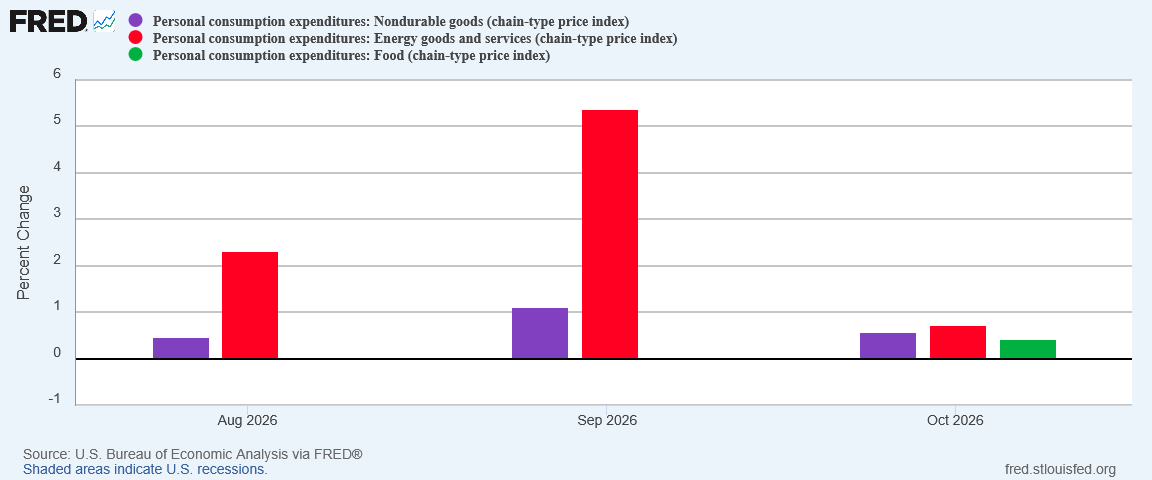
As we’ve seen over the past few months, food prices do not usually factor into nondurable goods price changes. This month they did.
Why did durable goods price inflation especially cool off in October? Probably because durable goods spending decreased in October.
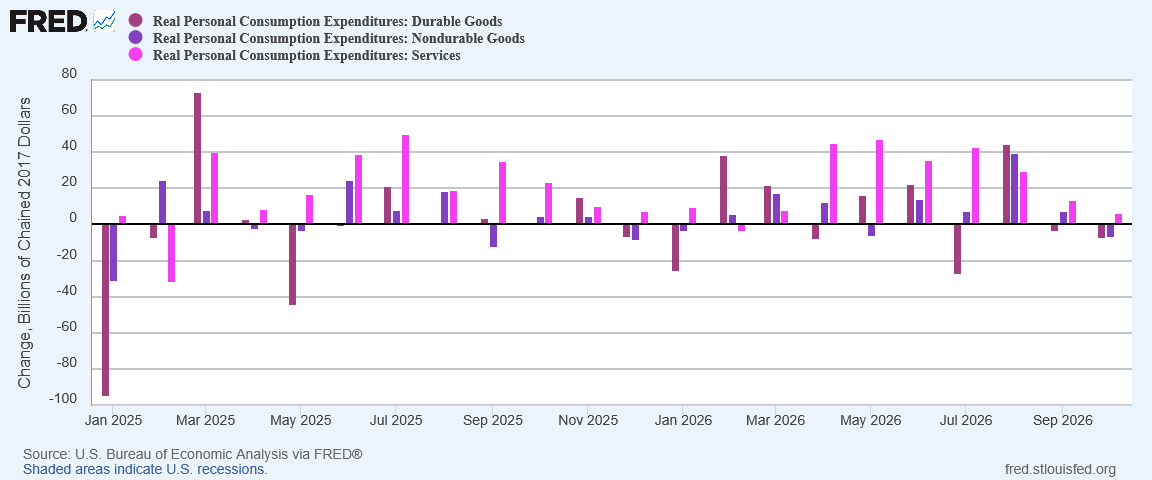
Non durable goods spending also decreased, and service spending increased substantially less than in September.
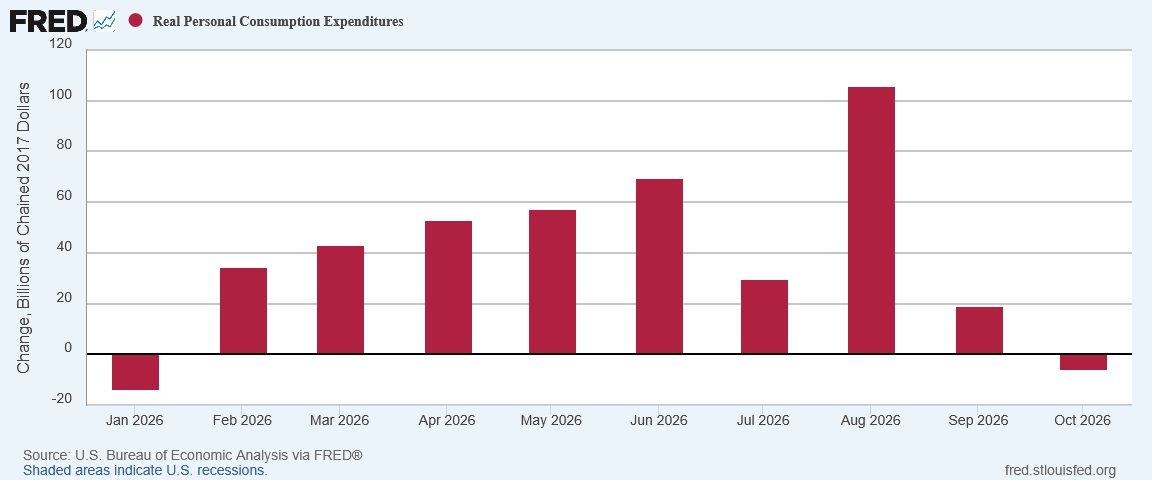
Yes, real consumption overall shrank in October.
Remember Chris Rupkey’s assessment of economic demand?
“Inflation is too hot and it will not be brought under control as long as economic demand is also too hot,” said Chris Rupkey, chief economist at Fwdbonds.
People spent less and Rupkey thinks they’re still spending too much. Even those spending has eased for the second consecutive month, Rupkey still wants people to spend less.
Even at the core level, with food and energy stripped out, real consumption cooled significantly.
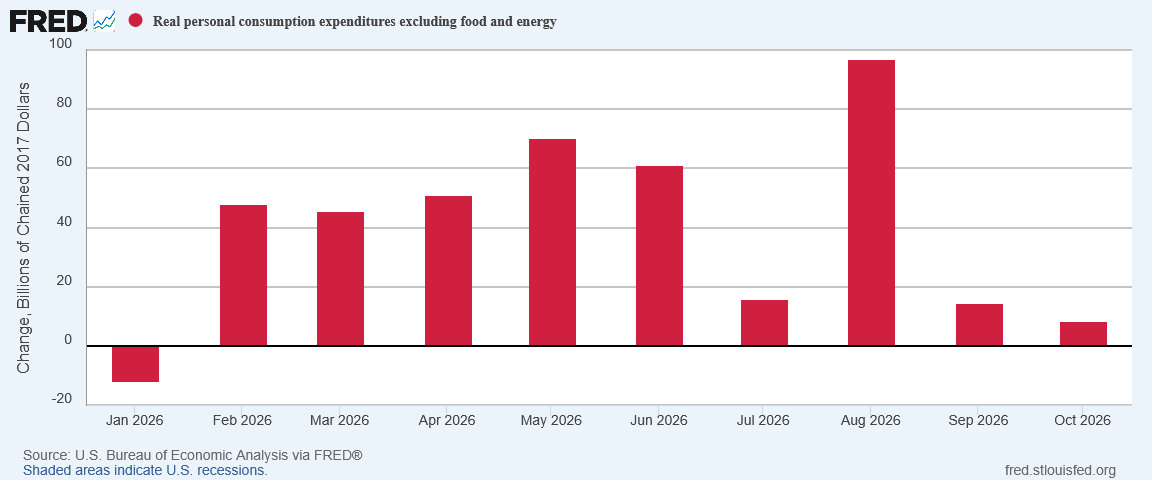
October was the second month of easing in core real consumption as well.
What did increase in October were real disposable personal incomes.
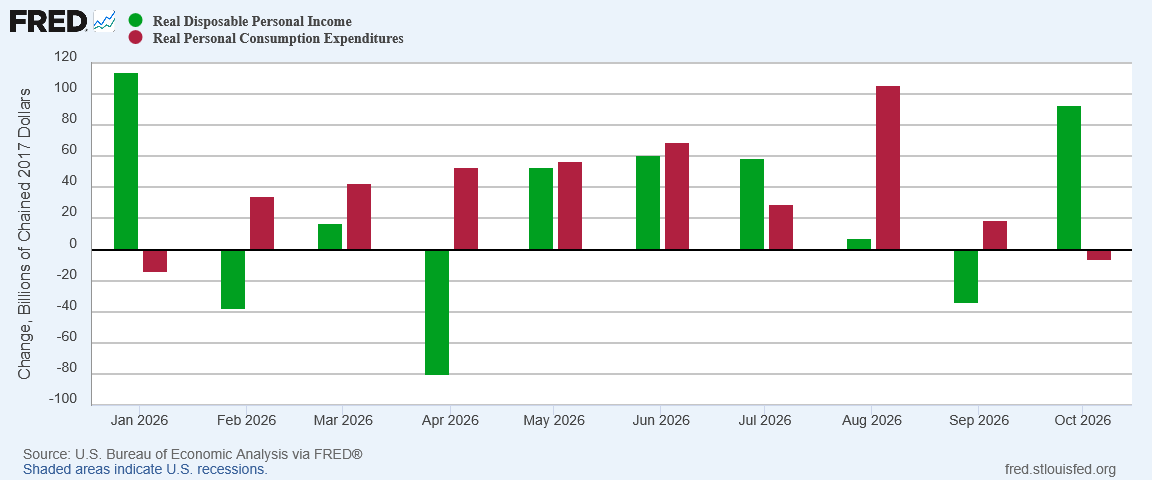
Perhaps Rupkey wants lower incomes for American workers as a way to combat inflation.
As for Heather Long’s pearl clutching about inflation spreading beyond energy, where is that happening, outside of food? It’s not happening in services, and its not happening in durable goods. With even nondurable consumption dropping in October, where is the inflationary contagion from energy prices? It is not in the inflation data.
One would think “experts” would take the time to actually scrutinize the details behind the headline inflation prints—or perhaps I am just once again afflicted with high expectations.
Year On Year No Guide For Interest Rate Decisions
What the detail within the October PCE inflation report shows is that the year on year inflation metric is not a useful guide for whether or not higher interest rates are going to be useful.
Year on year inflation is inflation that has already happened. Short of a deflationary shock, that is not inflation that can be reversed.
The month on month figures are a far better indicator if inflation is accelerating. Looking at just the last month, they are far closer to a realtime indicator than the year on year numbers.
Since July, month on month headline and core inflation per the PCEPI did increase, most notably in September. Those same metrics then cooled significantly in October.
A hike in the federal funds rate will not impact even October’s inflation numbers. With the FOMC meeting in the middle of December, there likely would not be any significant price impact (if there were any price impact) until January at the earliest.
Especially with a volatile geopolitical environment regularly scrambling energy markets, looking to last year’s prices to gauge where this year’s prices are heading simply makes no sense. The most immediate indicators for any inflation trend are always going to be found in the month on month data, not the year on year.
The year on year data gives us a solid historical backdrop for prices, but it can never provide any input on the current inflation trajectory. Too much of that data is stale. Past inflation is never present inflation.
There was not runaway personal consumption in October, and there was not runaway inflation in October. Month on month, there was less consumption and less inflation in October than in September.
Just as with the CPI and PPI data, the PCE inflation data offers no support to the presumption by corporate media, their talking heads, and Wall Street that the best thing for the Federal Reserve to do right now is raise the federal funds rate. They are looking at past inflation, conflating it with present inflation, to justify a wrong answer on what to do about future inflation.
Because justifying wrong answers is apparently what “experts” do.
I’ve said that corporate media is extra stupid because they have destroyed their credibility, and continue to destroy their credibility. You can’t get much more stupid than that!
You, Peter, on the other hand, are super smart, in part because you daily earn everyone’s respect and trust. I am grateful for all you do! Once again, I wish I could be cooking the Thanksgiving feast for you, but I guess the ko-fi tip I just sent you will have to suffice. Happy Thanksgiving, Magnificent Man!
I love how you bring the receipts. 🙏
Happy Thanksgiving! 🦃