


The past few days have proven one thing above all else: “Expert” analyses are not worth much, if anything.
We know this because, when it came to the war with Iran and Operation Epic Fury, self-anointed “expert” after self-anointed “expert” made their predictions, gave their projections, and what we have as of this writing was not what any of them anticipated.
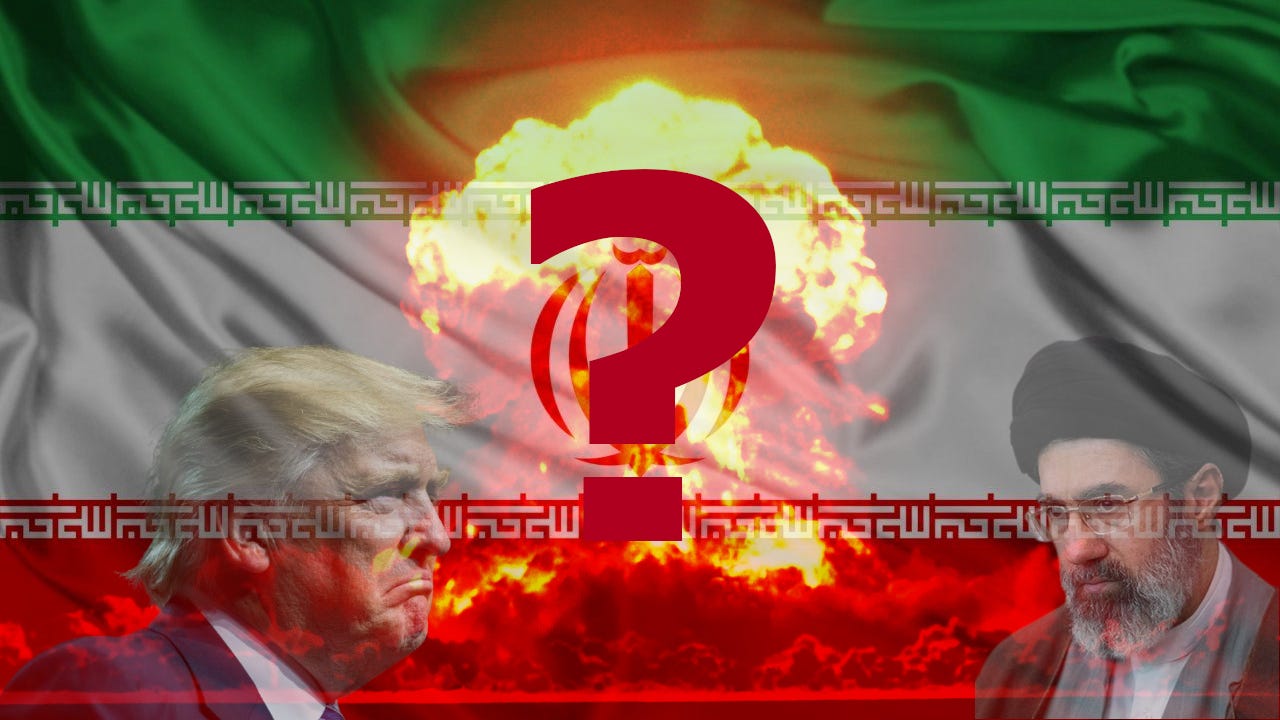
Early yesterday evening, Donald Trump accepted Pakistan’s proposal for a two-week ceasefire.
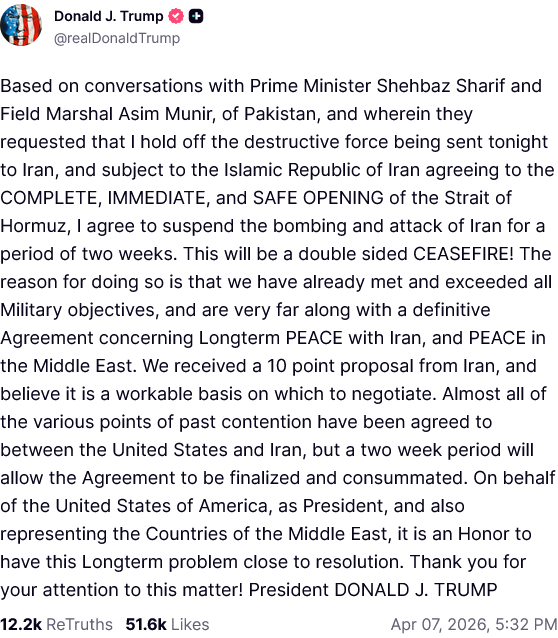
A short time later, Iran followed suit.
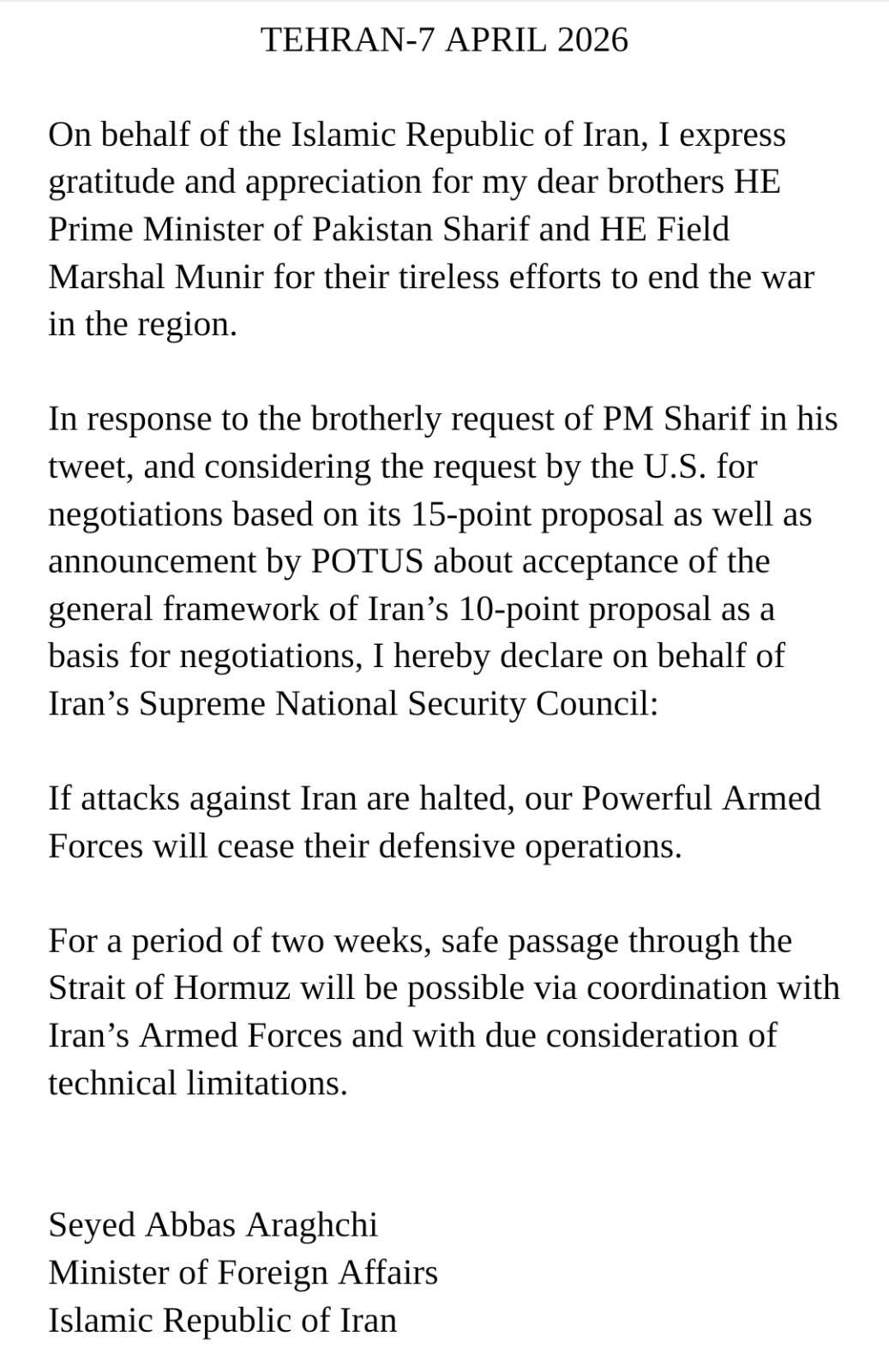
As of this writing, we have the beginnings of a ceasefire and possibly peace between the United States and Iran.
As of this writing, the Strait of Hormuz is open for international shipping.
As of this writing, Persian Gulf oil flows are able to resume.
Will the ceasefire hold? We do not know.
Will the Arab states quickly restore pre-war production levels? That mightily depends on your definition of “quickly”. They will restore pre-war production levels, the only question is “when?”
We are still facing a dramatic surge in energy prices, and while the supply shock may be ameliorated at this point, we will see the beginning of that surge in the upcoming inflation reports. How much inflation are we going to get? We do not know and cannot say.
The analysts who predicted apocalypse, however, got it wrong.
The analysts who extrapolated a Trump win through the seizure of Kharg Island also got it wrong.
As I pointed out two weeks ago, all scenarios were still viable and still on the table.

Virtually every conceivable scenario for what happens next in this war remains very much on the table. Virtually every conceivable scenario could be what happens next in this war.
Which of those scenarios will we see unfold? Nobody knows.
The ceasefire scenario was the one everyone dismissed the most, and that was the scenario we were given.
All scenarios are still on the table. The ceasefire could collapse today, tomorrow, or next week. The Khamenei regime could collapse today, tomorrow, or next week.
Every prediction turned out to be wrong. Every “expert” making the predictions turned out to be wrong.
What comes next? I do not know, and neither do the “experts”.
Energy Apocalypse Postponed
One of the more dire predictions that has emerged since Iran closed the Strait of Hormuz was that the world economy would crash in literally days.
The world is about to run out of diesel. This isn’t a hypothesis, a prediction, or a guess. It is a physical reality.
It will start with the poorest countries.
Laos will run out of diesel in three days (on April 5). It has zero refining capacity. It relies on imported diesel from Thailand. Already 40% of its diesel stations are closed. Cambodia and Myanmar will be next (on April 7). Then Bangladesh (April 9).
No one will notice, most likely. But on April 10, Pakistan will run out of diesel. Pakistan is a nuclear power with more than 250 million people.
They have eight days of fuel left.
Unless the Strait of Hormuz is fully re-opened, the world faces the largest humanitarian crisis since the Black Death of 1347-1353.
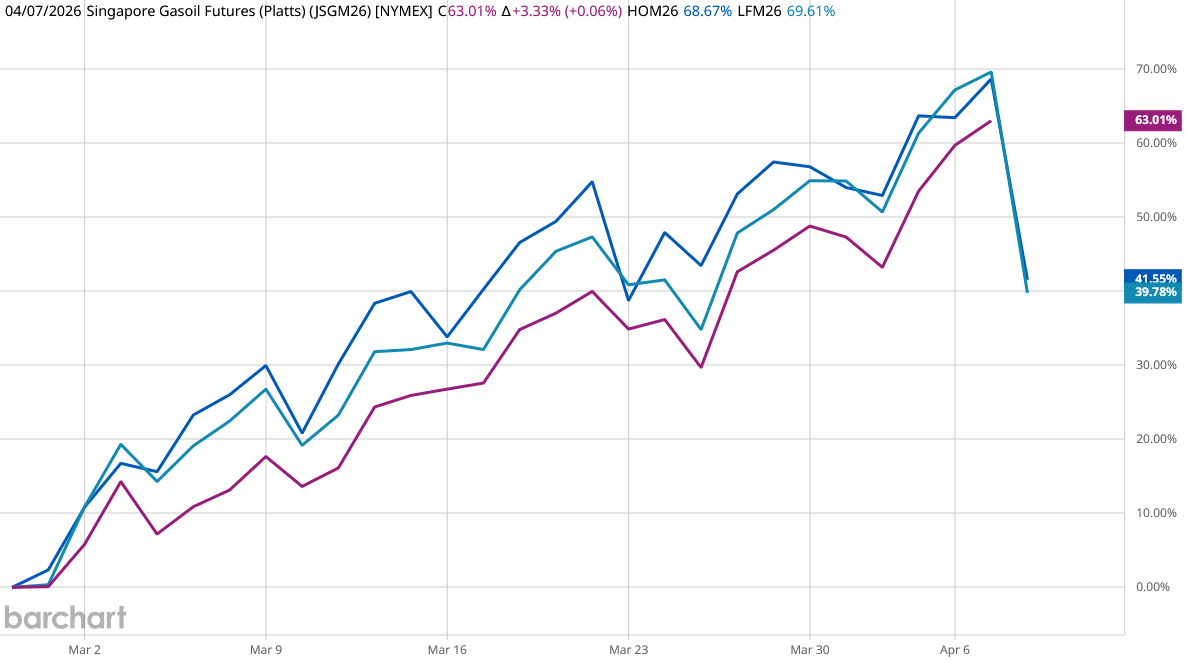
The price of diesel fuel has surged since the start of the war, that much is indisputable. Also indisputable is that, with the announcement of the ceasefire, diesel prices have declined dramatically.
Fuel shortages have also been a reported reality across Southeast Asia. Cities like Manila, in the Philippines, which normally has bustling traffic, is seeing much less traffic on the streets of late.
Those same fuel shortages are also prompting both China and the Philippines to reconsider their behavior in the South China Sea, as both countries would benefit from pursuing oil and gas exploration there.
But in a recent interview with Bloomberg, Philippines President Ferdinand Marcos Jr appeared to flag an interest in renewing joint oil and gas exploration with China in the South China Sea.
Filipino security analyst Chester Cabalza said there was an opportunity to tap into “huge deposits” of oil.
“We know we’ve been struggling with our relations with Beijing because of the 2016 arbitration,” he said.
“Some are saying that we should not close an energy deal with Beijing, because it means we are submitting on our claims in the South China Sea.
“But given the situation and the energy crisis … I think this is a wakeup call for us for how we should treat China.”
Is the world going to run out of diesel? Not yet, and, if the ceasefire holds, not for quite some time.
This does not mean there will not be shortages. The closure of the Strait of Hormuz has been hugely disruptive to oil production in the Persian Gulf. Iraq shut in as much as 70% of its crude oil production in early March after it ran out of oil storage capacity.
Crude oil production from Iraq’s southern fields has dropped by 70% since the start of the U.S. and Israeli war on Iran, with the average daily production at 1.3 million barrels, compared with 4.3 million barrels daily before the war began.
“Crude storage has reached maximum capacity, and the remaining output after the major cut will be used to supply the country’s refineries,” an official from Basra Oil Company told Reuters. The company is the state-owned entity that markets Iraq’s southern oil, which accounts for most of its production.
Around the same time, Saudi Arabia trimmed its oil output by 20%, and for the same reason—storage.
It will take time for the shut-in production to be restored, and that is assuming that the ceasefire holds and there is lasting peace.
Nor is it simply crude oil production that has been disrupted. Everything that comes from oil, from plastics to fertilizers, is disrupted, both because of the oil flows themselves and because the Persian Gulf states are major producers of a number of petrochemical products.
The Middle East accounted for over 40% of polyethylene exports in 2025, led by Saudi Arabia, and ships to nearly every region outside North America, the next largest exporting region.
Prices for plastics such as polyethylene (PE) and polypropylene (PP) have surged since the Middle East conflict began, tracking higher crude and feedstock costs.
“Global logistics have become uncertain, with up to 50% of polyethylene supply either offline, constrained or being impacted following the events in the Middle East,” said Dow CEO Jim Fitterling.
There is already a fuel and price shock unfolding in the global economy. It will continue to unfold for a while yet, and, as I observed yesterday morning, the shock will touch every sector of every economy.
Yet the world still has diesel. Unless (until?) the ceasefire collapses, the world will continue to have diesel. Barring a major turn of events, this worst case scenario will not come to pass.
The “experts” got it wrong.
Kharg Island Not Taken—Yet
Equally misplaced were the predictions that US Marines would land on Kharg Island, seize the oil terminal, and shut down 90% of Iran’s oil exports.
Not only did that not happen, with a ceasefire in place it is not going to happen.
It is true that Kharg Island is where 90% of Iran’s oil exports are loaded.
As the data analytics firm Kpler detailed in a recent update, tiny Kharg Island — roughly eight kilometres long and five kilometres wide — is nevertheless the most critical piece of Iran’s oil economy.
“Iran has spent decades building pipelines from major inland producing areas to the island, turning it into the main collection, storage and loading point for crude before it moves to international buyers,” the update said.
That concentration leaves Iran extremely vulnerable. In the year before the war, 94 per cent of Iran’s crude exports left on tankers from Kharg. Any sustained disruption would immediately threaten most of the country’s export capacity, Kpler warned.
With virtually all of Iran’s oil exports flowing through Kharg Island, there is no doubt that seizing control of the island would cripple Iran’s economy in short order.
President Trump himself has hinted that he might order the seizure of the island, as part of a move to “take” Iran’s oil.
The US president told the FT in an interview on Sunday that his “preference would be to take the oil”, comparing the potential move to Venezuela, where the US intends to control the oil industry “indefinitely” following its capture of strongman leader Nicolás Maduro in January.
Speculation that an assault on Kharg Island was about to happen has been fueled by the deployment of units such as the 31st Marine Expeditionary Unit to the region, along with its floating base of operations, the USS Tripoli.
The U.S. Central Command said in a social media post that the USS Tripoli, which serves as the flagship for the Tripoli Amphibious Ready Group / 31st Marine Expeditionary Unit, arrived in its area of responsibility.
It’s the most updated of the amphibious warships, known as a “big deck,” which allows more room for F-35 Stealth Fighter Jets, Ospreys and other aircraft. The ship had previously been based in Japan when the order to deploy to the Middle East came almost two weeks ago.
While President Trump has consistently downplayed any desire to put “boots on the ground” in Iran, he nevertheless has moved some 50,000 troops into the Middle East—not enough for any sort of invasion of Iran itself, but enough for “small” operations such as the seizure of Kharg Island.
Commentators in corporate media outlets such as The Atlantic have played up the risks of an assault on Kharg Island, noting that the island is close to Iran and relatively far from US bases which could resupply any force sent to take the island.
But even without such tactics, the Iranians could make holding Kharg very difficult. The operation would likely take longer than 15 days, which is about how long an expeditionary unit can operate without logistical support. Kharg is far—140 miles—from American assets in Kuwait City, but very close to Iran’s coast. Resupply vessels would be exposed not only to cruise-missile fire but also to Iran’s “mosquito fleet,” which includes robotic drones, sometimes called unmanned surface vessels (Ukraine used similar devices to bottle up the Russian Black Sea fleet at Novorossiysk).
Kharg Island is a vital link in Iran’s oil economy. Kharg Island is vulnerable to an assault by shock troops such as the 31st Marine Expeditionary Unit. Kharg Island is difficult for a US force to hold.
Kharg Island is also still in Iranian control, and, assuming the ceasefire holds, likely to remain in Iranian control.
Predictions that Kharg Island was the next step in President Trump’s grand strategy were wrong. Predictions that US troops would get bogged down holding the island were wrong. Predictions that President Trump would turn off Iran’s economy like flipping a switch by taking Kharg Island were wrong.
Was taking Kharg Island necessary to force open the Strait of Hormuz? Not so long as Iran keeps to its side of the ceasefire bargain.
What Comes Next?
Every analyst with projections and predictions aims to answer one simple question: “what comes next?” No matter what is being analyzed, no matter who is doing the analyzing, attempting to answer that question.
Looking ahead to see what might come next is fundamentally what I do with All Facts Matter.
The challenge is always recognizing where what is known ends and what is speculated begins.
We know that, as of late last night, futures pricing for Dutch TTF Gas—a main benchmark for natural gas pricing in Europe—is up some 70% since the start of Operation Epic Fury.
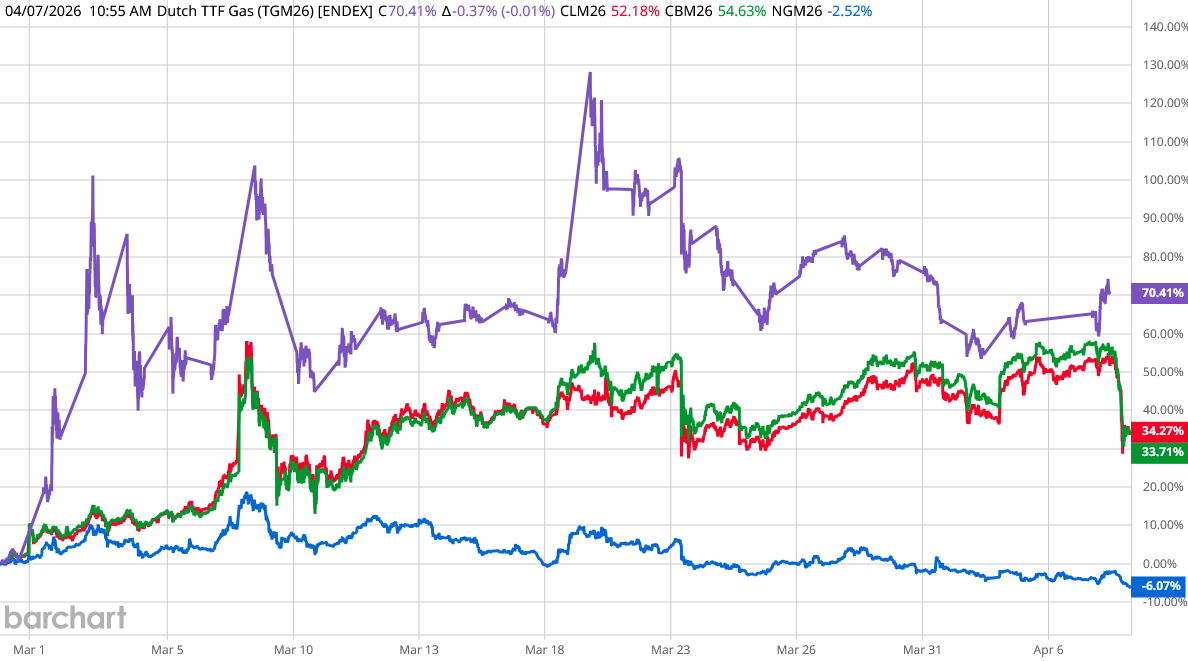
We know also that, as a result of the ceasefire announcement, crude oil prices have fallen from approximately 55% above pre-war levels to “only” 34%. We know that US natural gas prices have actually fallen over the course of the war—a demonstration of what US energy independence actually looks like.
We know that diesel futures pricing in the US and Europe followed crude oil prices down last night.
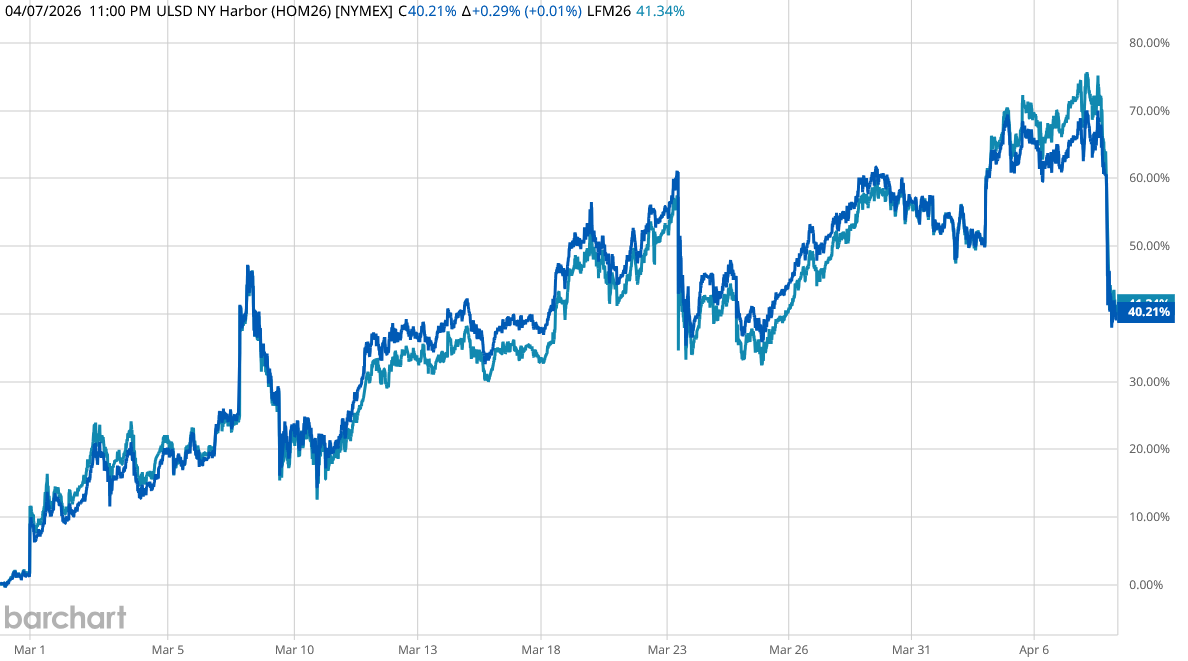
With diesel fuel contracts sill 40% above pre-war levels, the world is still looking at a significant price shock. A 40% jump in roughly six weeks is quite a price surge even for energy prices, which are routinely more volatile than prices for other goods (which is why inflation data separates energy prices from “core” prices).
We know that European inflation has already risen significantly during March, with the war with Iran a likely primary driver.
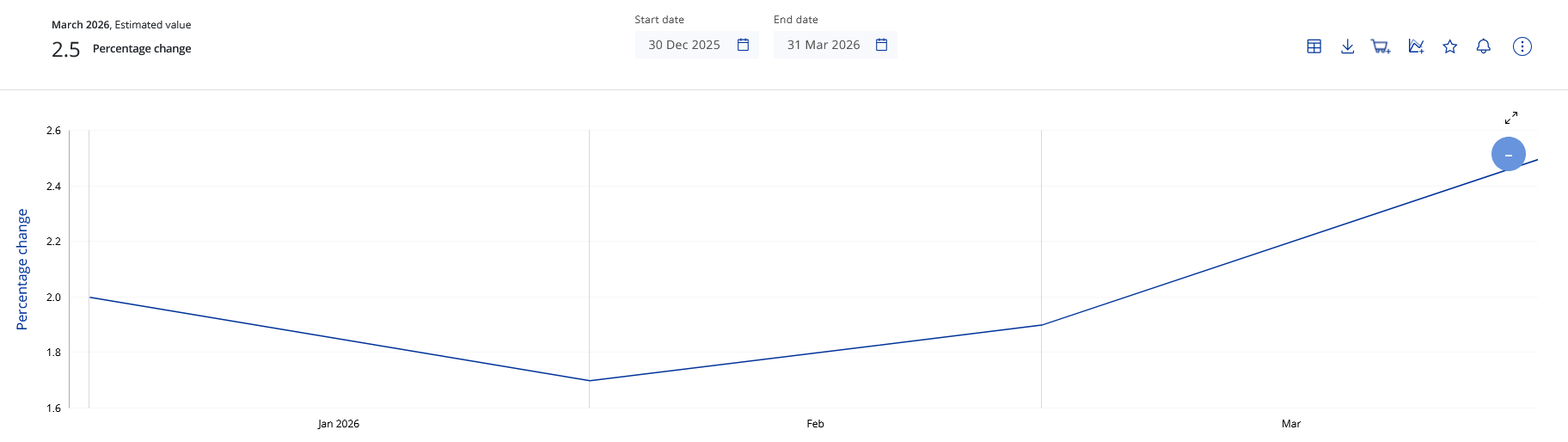
We know that energy inflation in Europe is the main contributor to that overall surge in consumer price inflation.
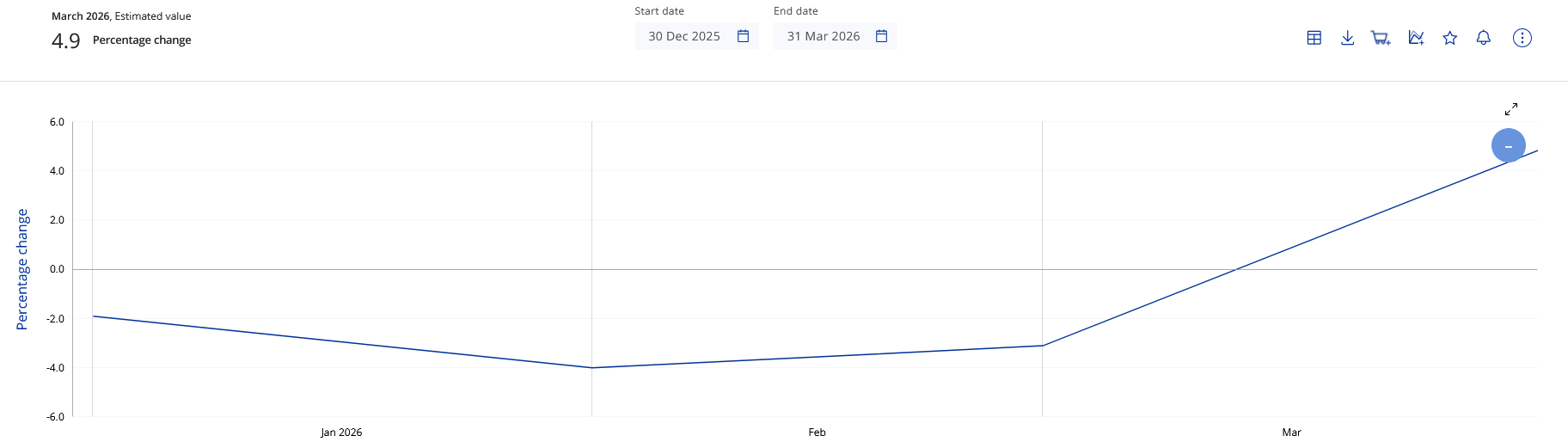
We can plausibly extrapolate that Europe will experience some economic turmoil as a result of this surge in consumer price inflation.
US inflation data for March is due out at the end of this week. We are almost sure to see similar effects within the US data. We can extrapolate that just from the fact that the Energy Information Administration has charted US retail gasoline prices up some 47% from the start of the year, and US retail diesel prices up some 62%.
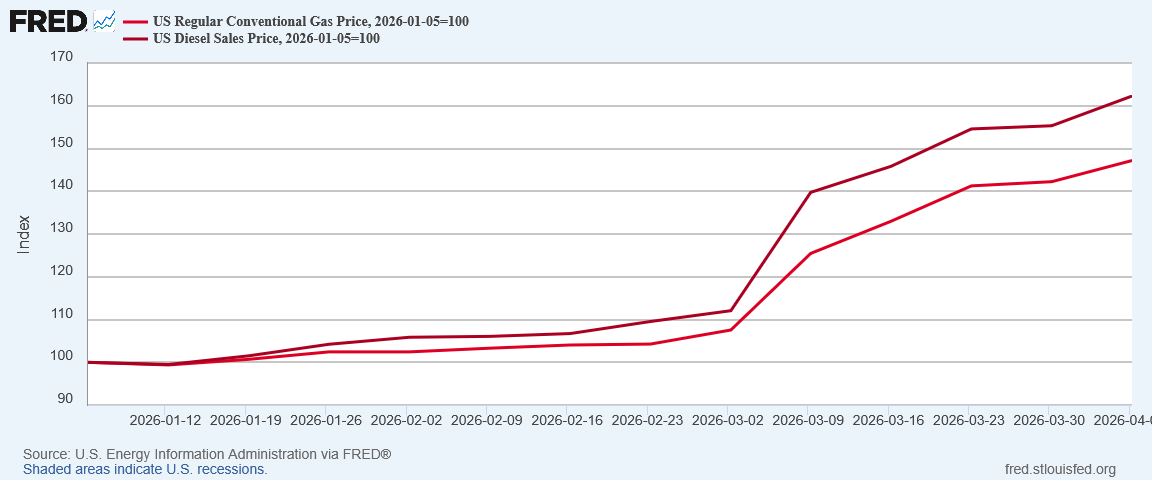
We do not need to speculate if there is going to be a price shock hitting the US economy—we already have evidence that an oil price shock is hitting the US economy even now.
We can plausibly extrapolate that there will be a measure of economic turmoil in the United States from the swift rise in fuel prices. When fuel prices go up, everything gets more expensive, simply because it then costs more to move goods from supplier to consumer.
What we do not know is whether or not fuel prices are going to move higher.
What we do not know is whether or not oil prices are going to rebound and possibly climb even higher than before.
We do not know—and we cannot know—because we do not know—and cannot know—whether or not Iran will continue to keep the Strait of Hormuz open. We do not know—and cannot know—what the outcome of ceasefire and peace talks are going to be. We do not know—and cannot know—if the Iranian people are going to at last rise up and topple the Khamenei regime.
We did not know as late as yesterday afternoon if President Trump would give the go-ahead order for a massive bombing campaign against Iranian infrastructure. We did not know if there would be retaliatory Iranian strikes against the Arab states in the Persian Gulf.
Nobody knew what President Trump would ultimately do until he did it. Nobody knew what the Khamenei regime would ultimately do until they did it.
Nobody knows what either President Trump or the Khamenei regime will do next.
Over the past 72 hours the world has moved from Apocalypse Maybe to Apocalypse Soon and flirted with Apocalypse Now. As of this writing, the world appears to be at Apocalypse Later.
With respect to the war with Iran, that’s what we know.
With respect to the war with Iran, that’s all we can know.
Tomorrow may bring a peace breakthrough or it may bring a ceasefire breakdown. Both outcomes are plausible, and either outcome can be legitimately assessed as being probable.
Tomorrow may bring further reduction in oil, natural gas, and diesel prices, or it may bring a renewed surge in all three. Both outcomes are plausible, and either outcome can be legitimately assessed as being probable.
The ceasefire agreement gives us hope that we will have at least two weeks without war, but hope is all that it really gives us.
There will be “experts” who will assess with confidence what the ceasefire means, and how it will play out for the Persian Gulf and for the world.
What I assess is that all of those “experts” have already proven they have not a clue what they are talking about.
Did Hezbollah agree to the ceasefire? I have not read where they did, and if they didn't then the ceasefire cannot include Lebanon.
This article brings to mind the Kremlinologists during the cold war. Once we had access to their archives in the early 90s, the experts were shown to be decisively wrong. Similarly, our experts don't seem to understand Iran's motivations or likely responses. Took me a while to make that connection.