


With Persian Gulf oil flows still highly disrupted, there are few arguments to be made against the inevitability of the oilpocalypse. If those energy flows are not restored, once strategic reserve releases cease buffering oil prices, a second wave price and supply shock will cascade across the world’s economies.
Given the intractability of both President Trump’s Administration in the US and the IRGC in Iran, that outcome seems unavoidable.
With that as the backdrop, corporate media was quite surprised when China watchers assessed that the Middle Kingdom may have actually added over 200,000 barrels to their strategic reserve in July.
China slashed oil imports, yet somehow slashed oil consumption even more, to the tune of approximately 210,000 barrels surplus in July.
Axios added another surprise with their reporting that the US Navy has put together a stealth operation moving as much as 10mbpd of Persian Gulf oil through the Strait of Hormuz.
The U.S. military has quietly established a shipping corridor in and out of the Strait of Hormuz to transport millions of barrels of oil each day — a notable success even as the broader war remains at a stalemate, two U.S. officials told Axios.
Under the operation, which has been underway for the last several weeks, 15 to 20 tankers have entered and exited the strait through a southern channel along the coast of Oman.
About 10 million barrels of oil a day — roughly half the pre-war volume — are being transported out of the strait and injected into the global energy market, the officials said.
Each report on its own paints an economic outlook starkly different from the probable scenarios intimated by the official data. That China can reduce imports and boost reserves is an indication that the Chinese economy slowed significantly to produce the surplus. That China did so even as the US has presumably found a way to defeat Iranian efforts to control the Strait suggests China’s economy may be significantly more wobbly than many might surmise.
Nor is China alone. Germany is facing energy storage challenges which could have outsized economic ramifications for the EU as a whole, running well behind its usual pace to stockpile natural gas for the winter.
Is the oilpocalypse already here? Much of the official data for China and Europe certainly invites that assessment.
The revelation of a major stealth operation to keep oil flowing through the Strait of Hormuz suggests another possibility: oil disruptions may be obscuring the reality that China and Europe are facing not an oilpocalypse, but a longer-lasting systemic deflation which will not be alleviated simply by reopening the Strait of Hormuz.
China Slowed Everything Down To Conserve Oil
Regular readers will recall that the previous assessment of China’s management of oil imports and consumption during May and June was that China had drawn on some 1.4mpbd of its considerable reserves during May and June.
July’s outlook on China is quite the trend reversal.
The trend of drawdowns in May and June appears to have reversed in July, according to calculations by Reuters columnist Clyde Russell based on officially available Chinese data.
Unlike the United States, China does not report inventories. Analysts are looking at overall supply (domestic production plus imports) and refinery processing rates to estimate how much crude is going into reserves and how much is being processed into fuels.
Using this calculation, Reuters’ Russell has estimated that China had 210,000 bpd of crude available to go to storage in July, considering total crude availability of 12.72 million bpd (8.41 million bpd of imports and 4.3 million bpd of domestic production), and refinery throughput of 12.51 million bpd.
If the Reuters analysis is correct, China may have hardly put a dent in its estimated 1.2 billion barrels of crude oil held in reserve.
Surprising is definitely one word to describe this latest oil market wrinkle.
Ominous is another.
To be sure, China’s oil imports did rise significantly in July:
Pipeline and seaborne flows rose to 35.73 million tons in July, according to customs data released Friday. That’s up 22% from June, when shipments hit the lowest since October 2016. The volume for last month is equivalent to 8.45 million barrels a day, well below the pace in the same period last year.
That increase over June still leaves China importing at least 3mbpd less in July than before Operation Epic Fury.
As analysts writing in The Economist noted, China’s import reduction was achieved in part by reducing domestic demand.
However, ample stocks and restricted exports are not by themselves enough to explain the gargantuan reduction in Chinese imports. The Chinese government also pulled a third lever—curbing domestic demand. In June Chinese refineries processed 2.7m fewer b/d of crude than a year earlier. Production of petrol fell by 14%; output of diesel and jet fuel both shrunk by 21%.
While The Economist was gushing over China’s magical ability to turn oil demand “on and off”, the reality remains that reducing demand means shrinking the economy, period full stop.
The data would seem to confirm that China’s economy has indeed slowed down, with factory output slowing along with retail sales.
Factory output grew 4.5% from a year earlier last month, compared with 5.3% in June, official figures from the National Bureau of Statistics (NBS) showed on Monday, missing a Reuters poll forecast for 4.8% growth.
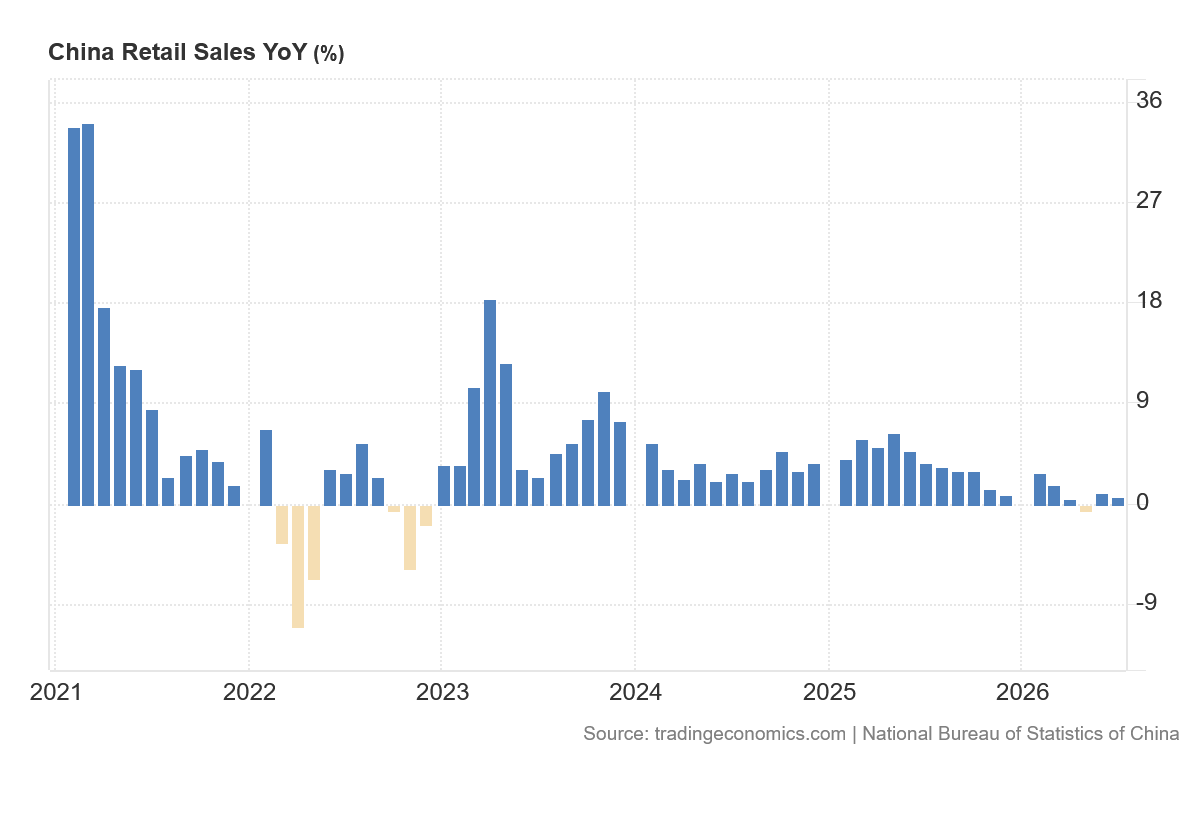
Separate figures showed retail sales grew 0.6%, a slowdown from a 1% rise in June despite summer holiday tourism spending. Forecasters had predicted 1.5%.
The NBS said extreme weather, including high temperatures and heavy rainfall, had disrupted market supply and demand.
The investment outlook in China was no better in July.
China’s urban fixed-asset investment, including real estate and infrastructure, contracted 6.7% this year as of end-July from a year earlier, worse than the estimated 6% decline in the poll. The decline also steepened from the 5.7% drop in the first half of this year.
While China apologists claimed the Middle Kingdom can turn oil demand “on and off”, even China’s official data suggests they succeeded only in turning oil demand off.
China’s Hard Data Is Not Encouraging
Drilling into China’s hard data does not reveal much in the way of economic vitality for July.
While China’s imports broadly surged in the immediate aftermath of the Strait’s closure, July saw imports taper somewhat.
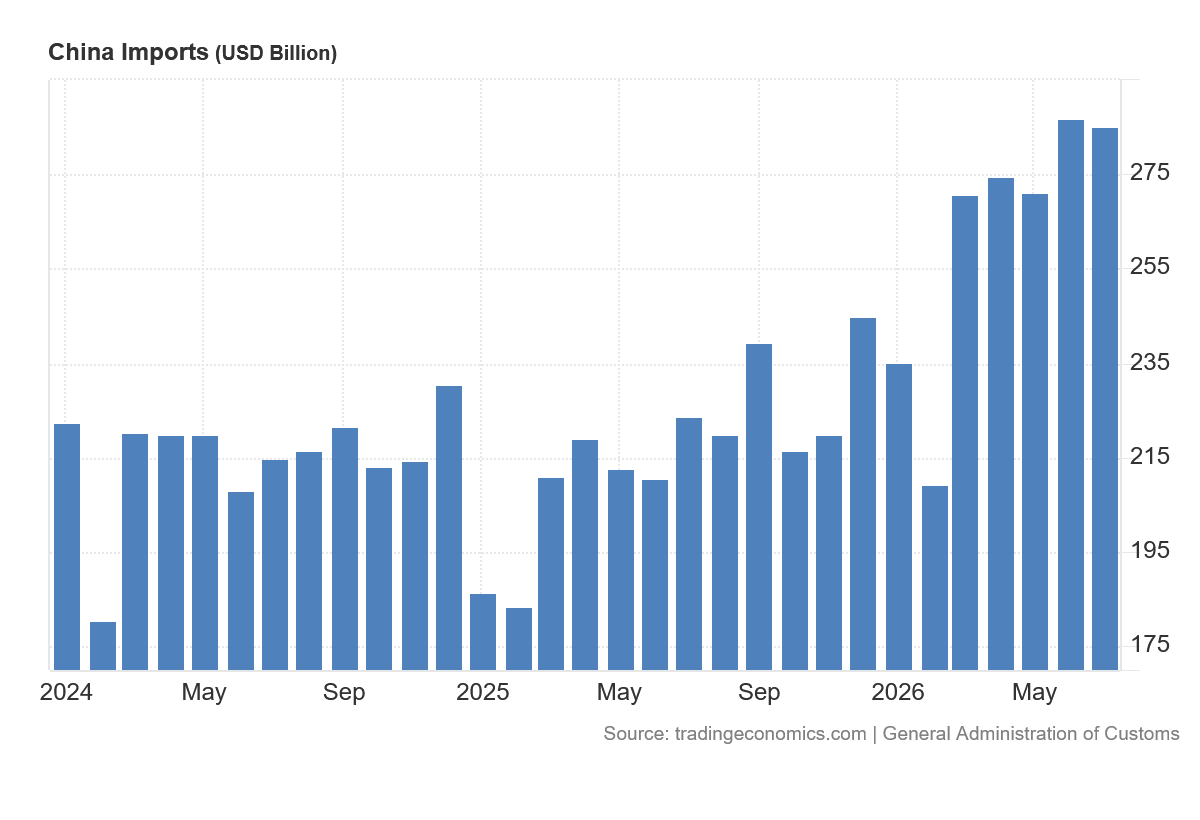
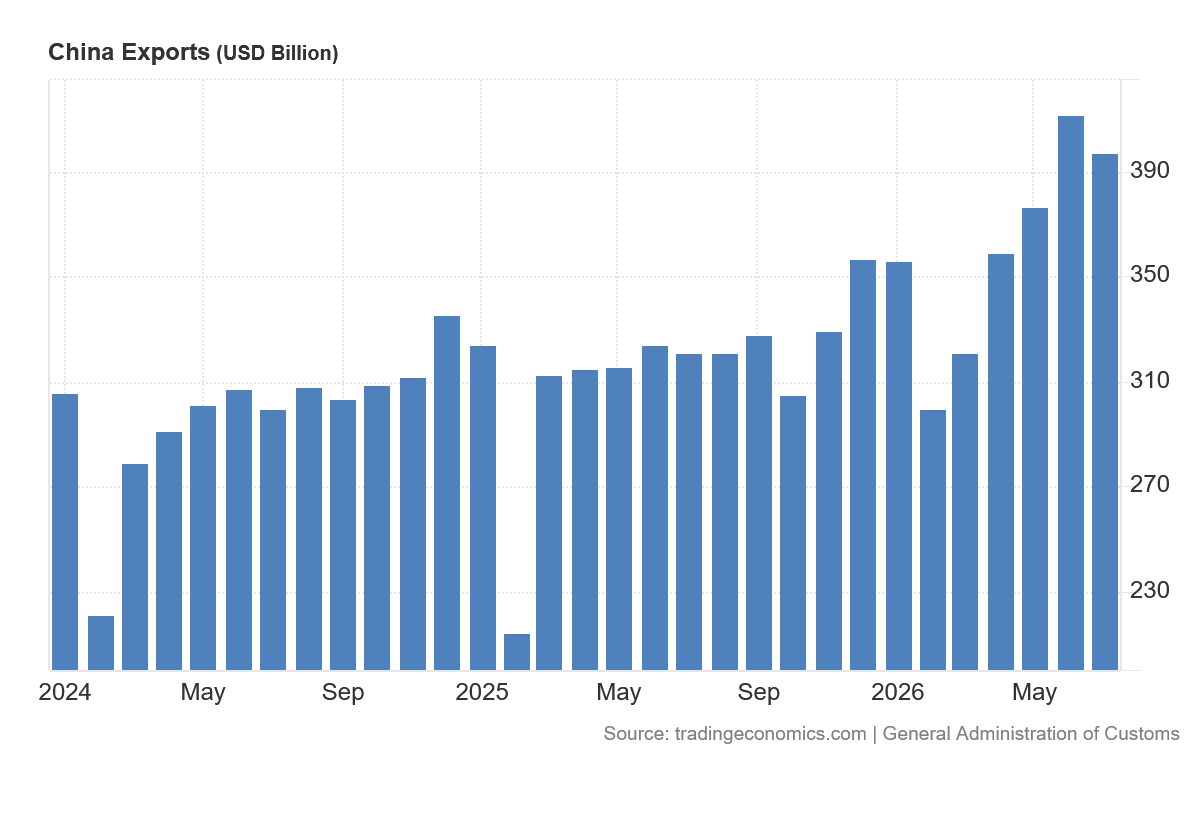
Exports, while still up year on year, eased even more in July.
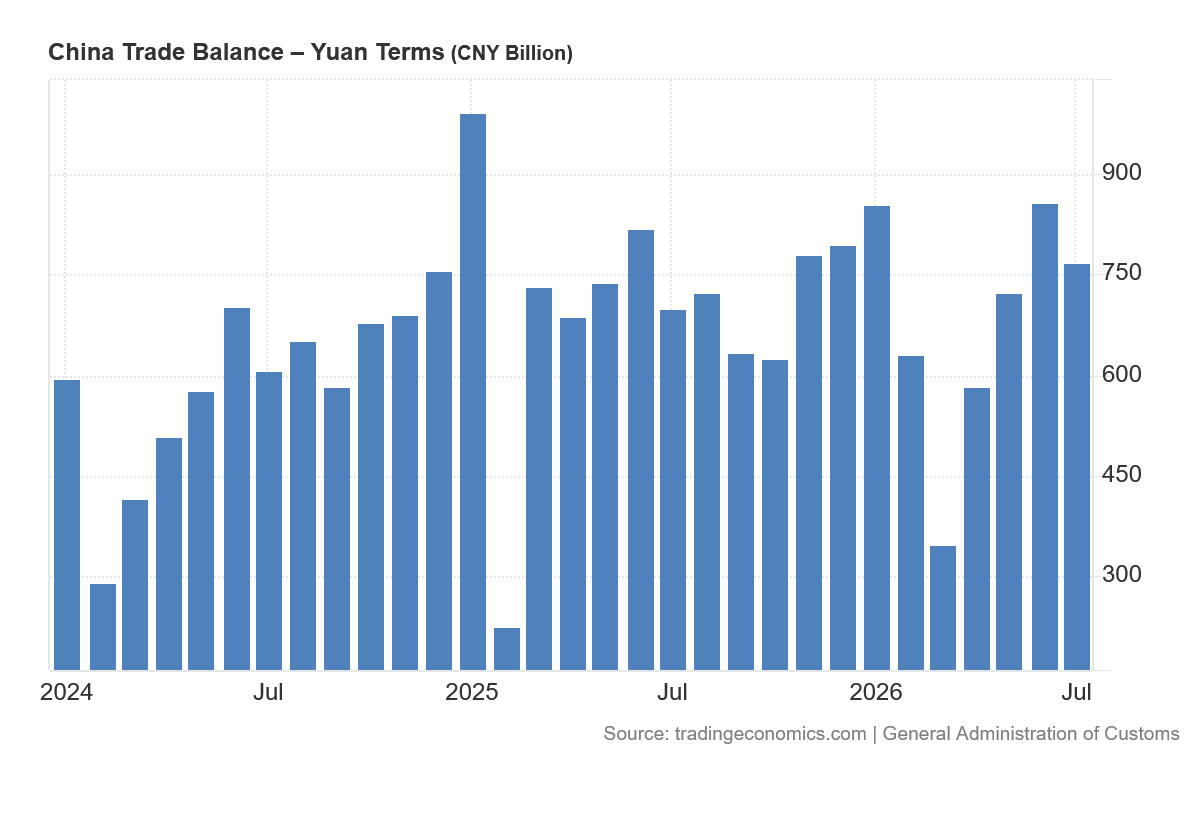
In yuan terms, China’s trade surplus shrank by more than 90 billion.
While China’s producer prices had been showing moderate price growth since last fall, producer prices had surged in March and April before cooling and slipping back into to producer price deflation by June.
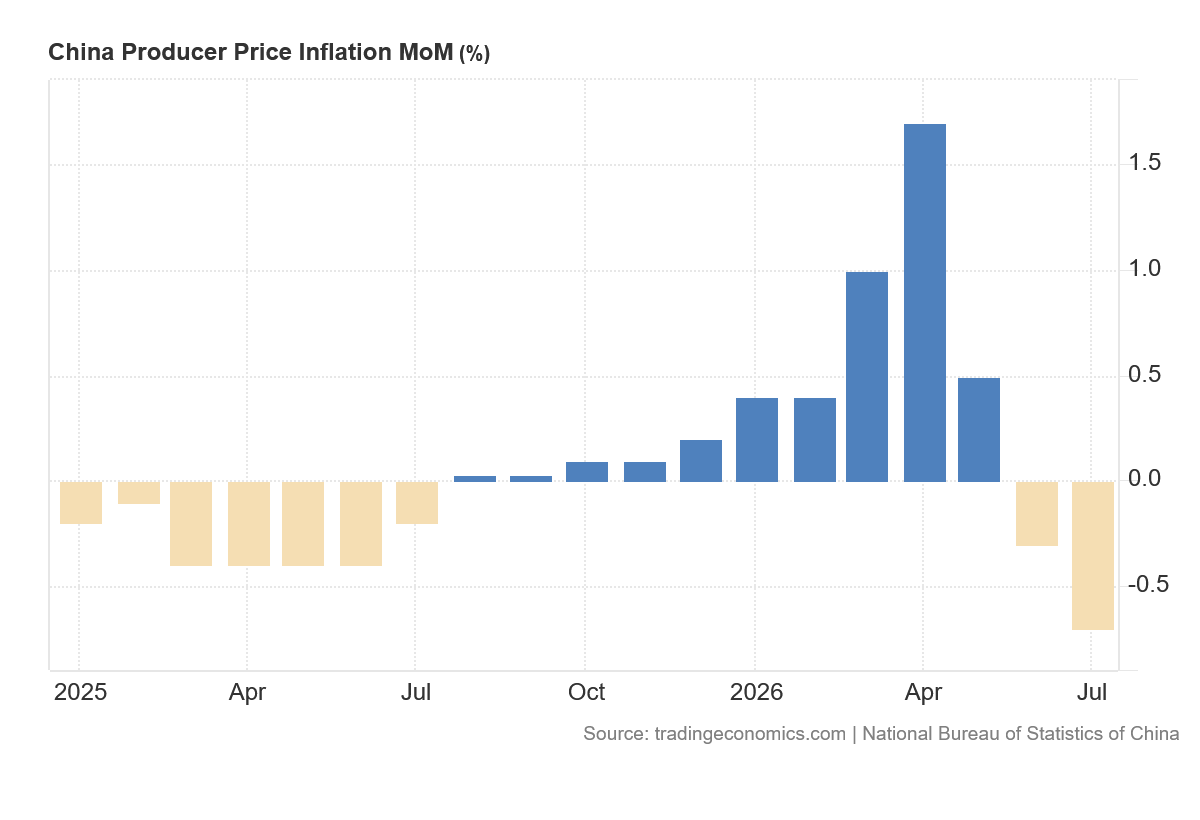
That deflation picked up considerably in July.
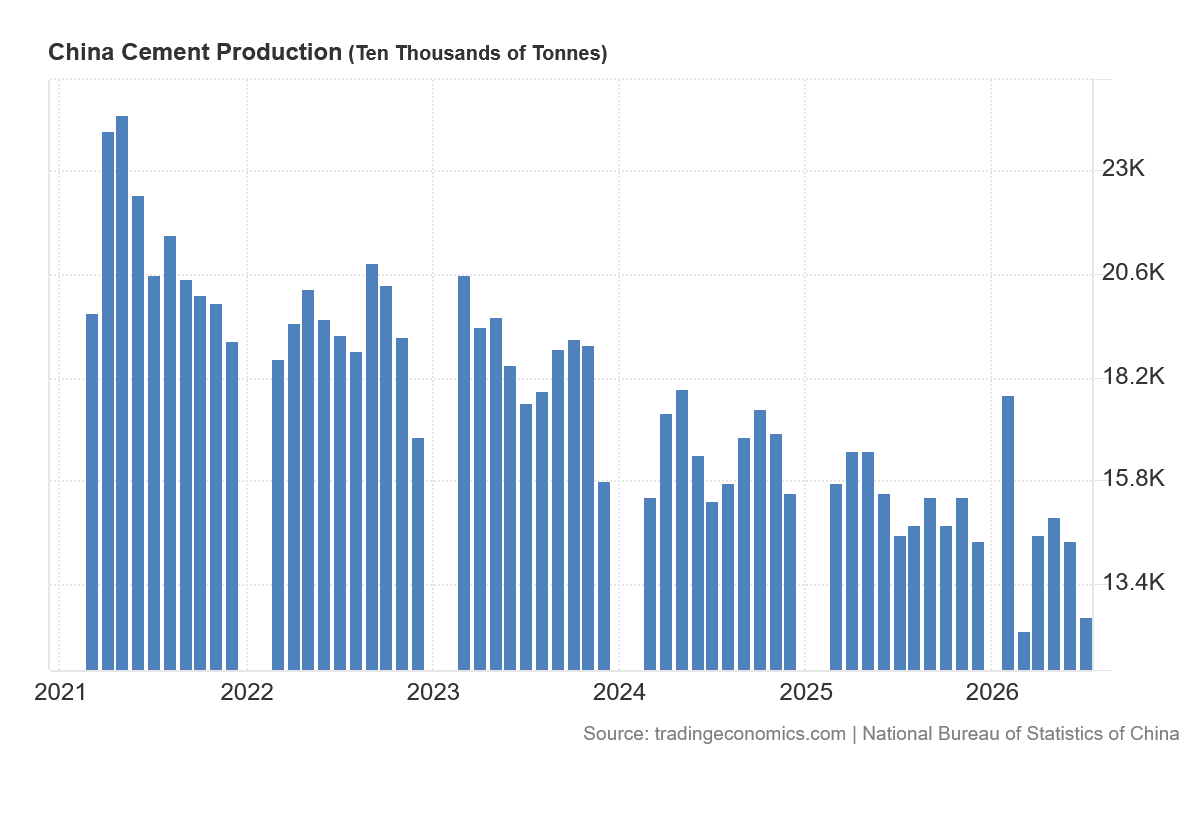
In terms of specific goods produced, China’s cement production, which has been steadily slowing in recent years, decelerated even more in July.
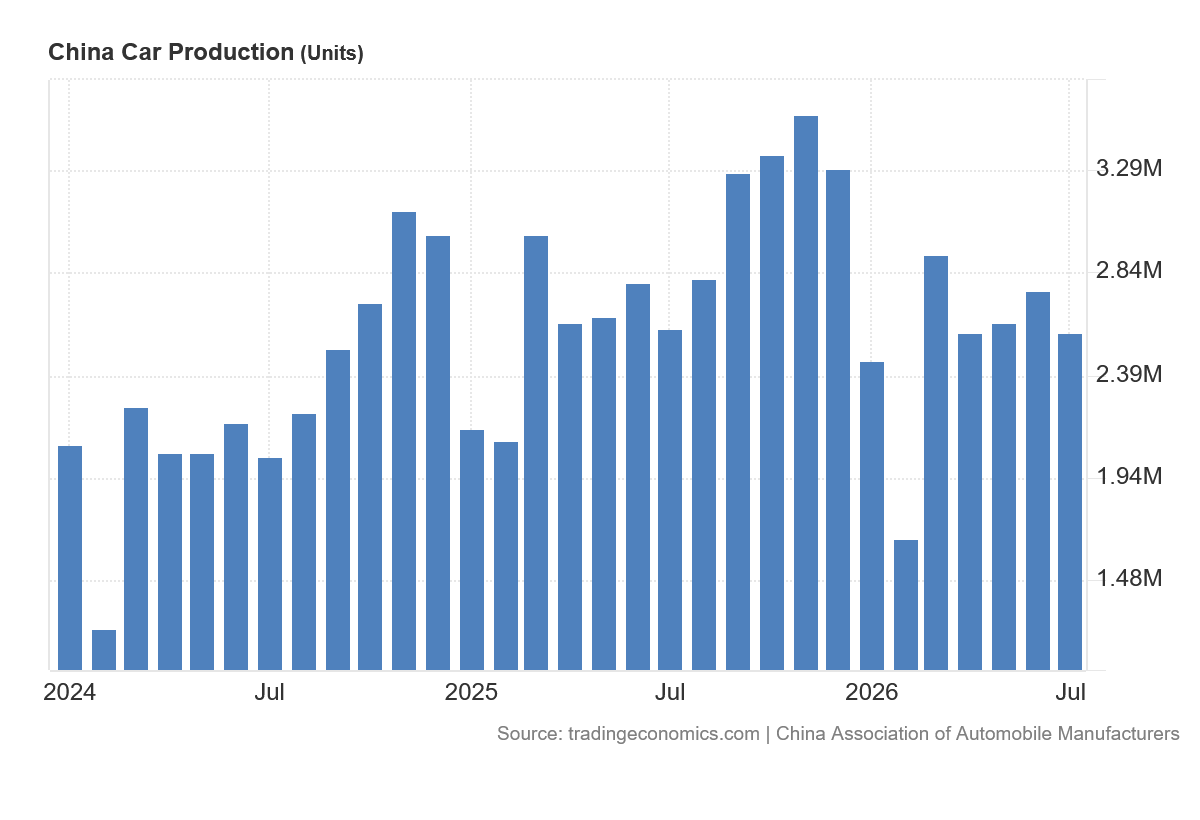
Car production in China peaked last November, and has been trending down ever since.
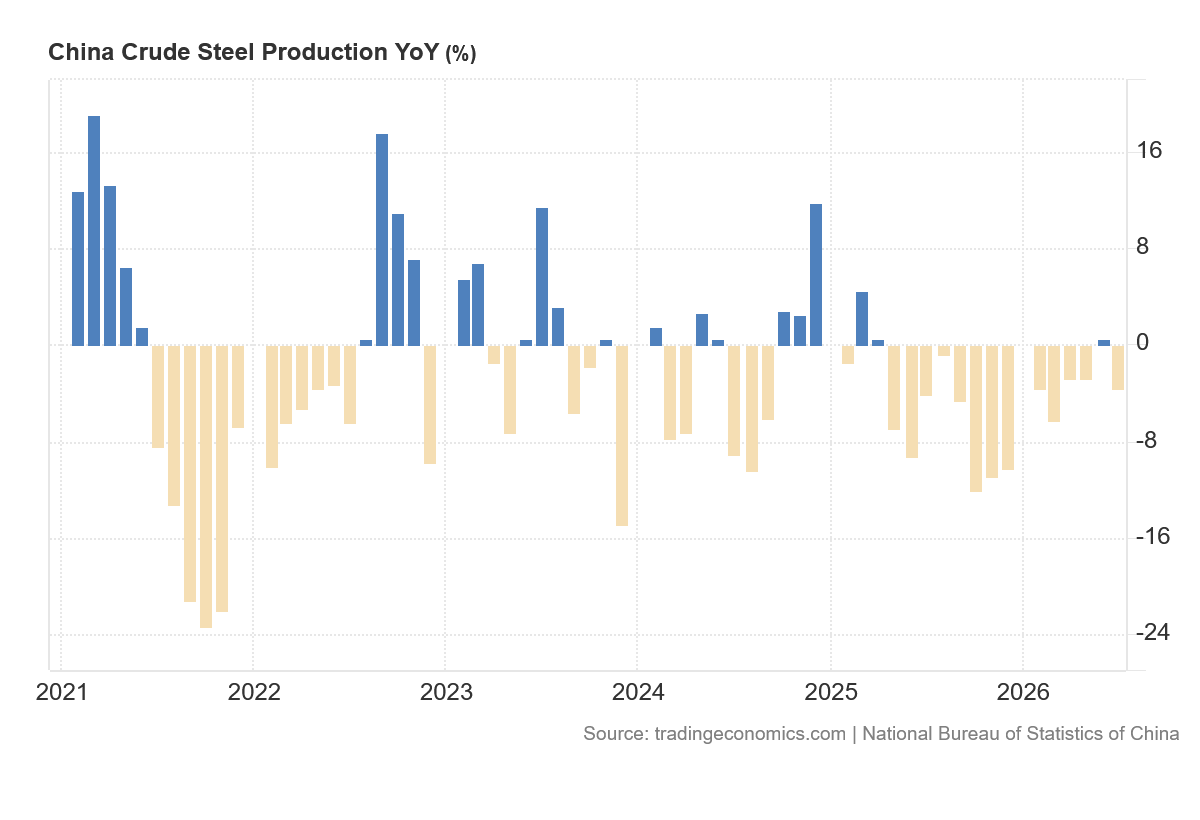
Crude steel production has been declining steadily since 2021.
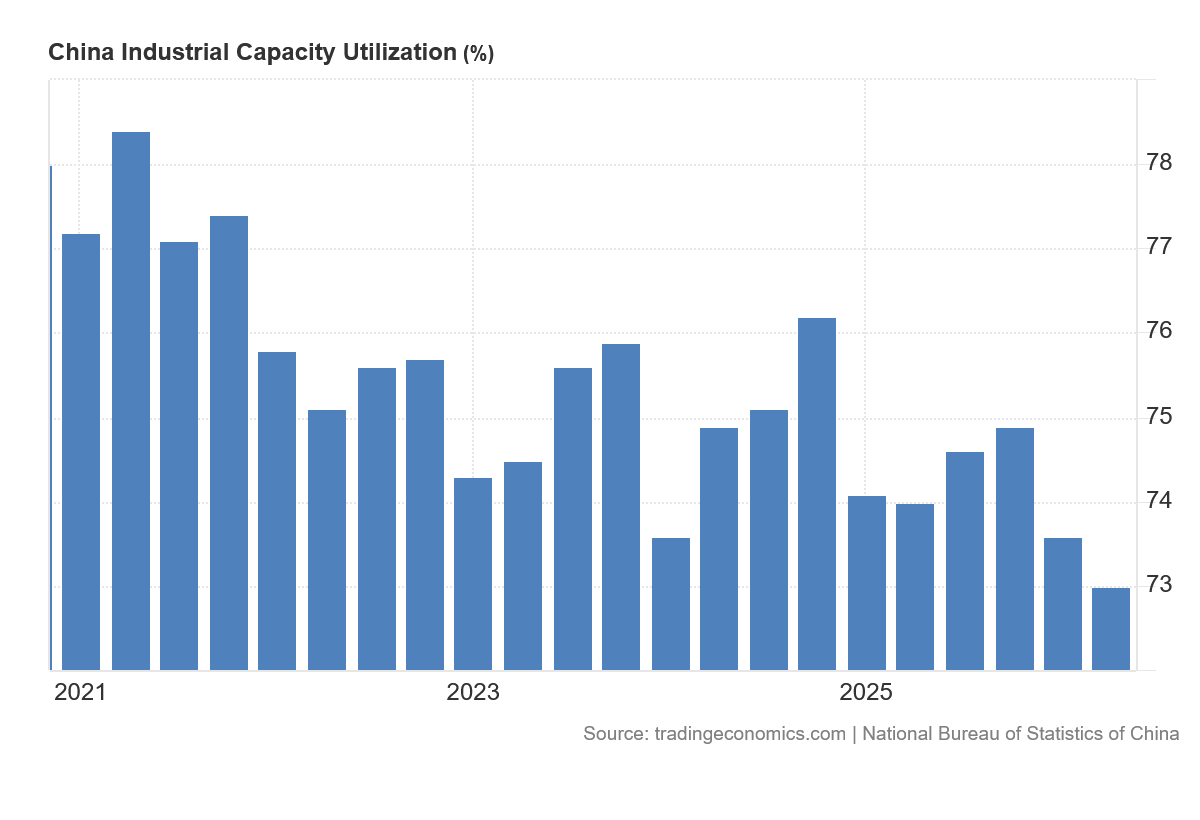
We should bear in mind that China’s economy has been in a parlous state for quite some time. Industrial capacity utilization has been on the decline in China since at least 2021.
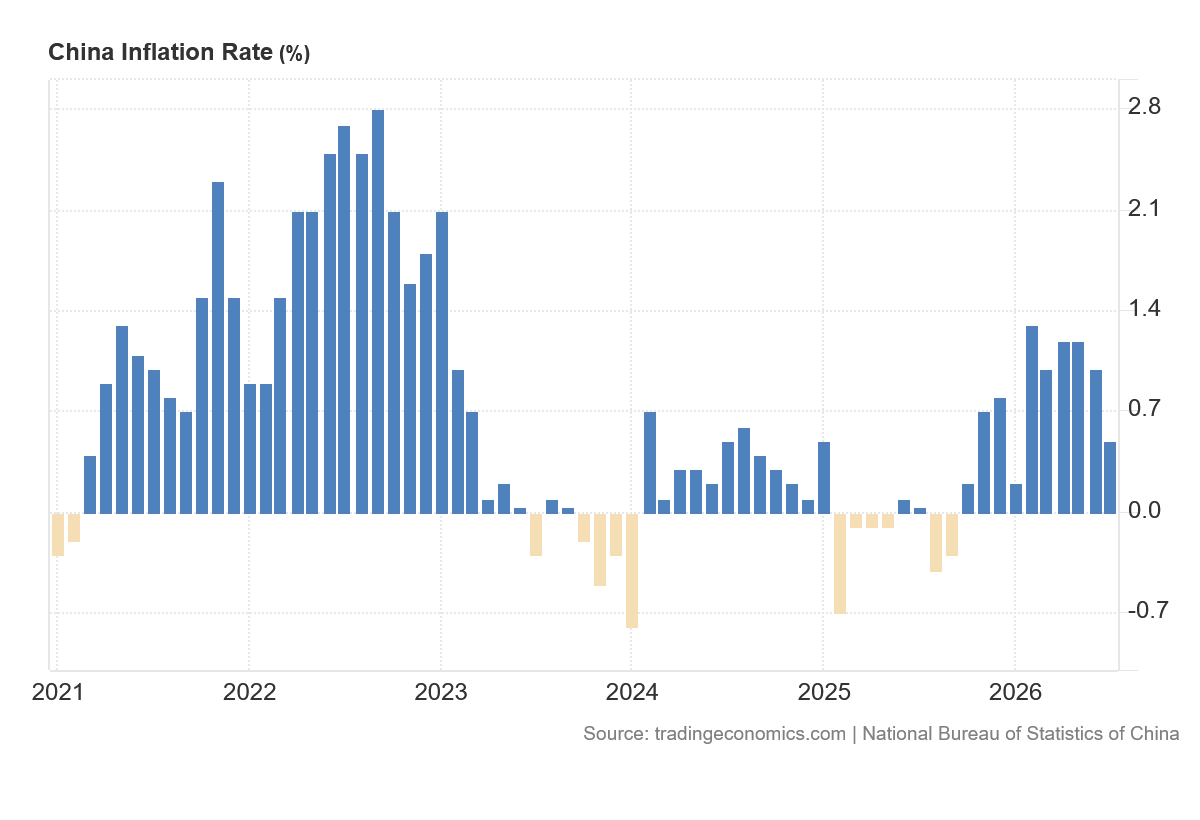
Consumption has not been much better in China. Domestic demand has been weak, as attested by China’s persistent low consumer price inflation metrics.
China’s retail sales growth has been slowing for years, and slowed even further in July.
The data is indisputably indicative of a major economic slowdown. With this data coming on the heels of major reductions in oil imports, the question becomes how much of the data is due to the oil import reductions.
Did Iran closing the Strait of Hormuz deliver a major body blow to China’s economy or did the Strait’s closure merely obscure the extent to which China’s economy has continued to weaken ever since Xi Jinping burst China’s real estate bubble in 2020?
Ultimately, the end result of both narratives is the same: China’s economy is slowing even now, and has not waited on a second wave of oil price and supply shocks from the Persian Gulf. We should acknowledge that the disruption of Persian Gulf oil flows is not the only cause of China’s economic deceleration, nor is it even the initial catalyst for the slowdown; we can also see that decreasing oil imports has increased the pace of economic contraction in China.
“Oilpocalypse now” may overstate the impact of oil supply disruptions on China’s economy, but it does not completely mis-state that impact. Iran closing the Strait of Hormuz made a bad economic situation worse for China.
Far more worrisome for the world economy is the reality that China is not an isolated case. Europe has a similarly grim economic prognosis, centered on natural gas pricing as winter approaches.
Europe Heading Into A Frozen Winter Of Discontent?
Europe’s dilemma is less about crude oil and more about natural gas.
The Persian Gulf is home to one of the world’s major natural gas exporters—Qatar—and many of Qatar’s principal customers are in Europe.
While most media attention surrounding Iran’s closure of the Strait of Hormuz focuses on oil, Iran’s belligerence in the region very quickly resulted in Qatar shuttering its liquefied natural gas (LNG) facilities in early March. Iranian missile and drone attacks were later reported to have damaged Qatar’s LNG facilities, resulting in a loss of as much as 17% of their production capacity for the foreseeable future.
The impact on European natural gas prices has been predictable: prices have soared.
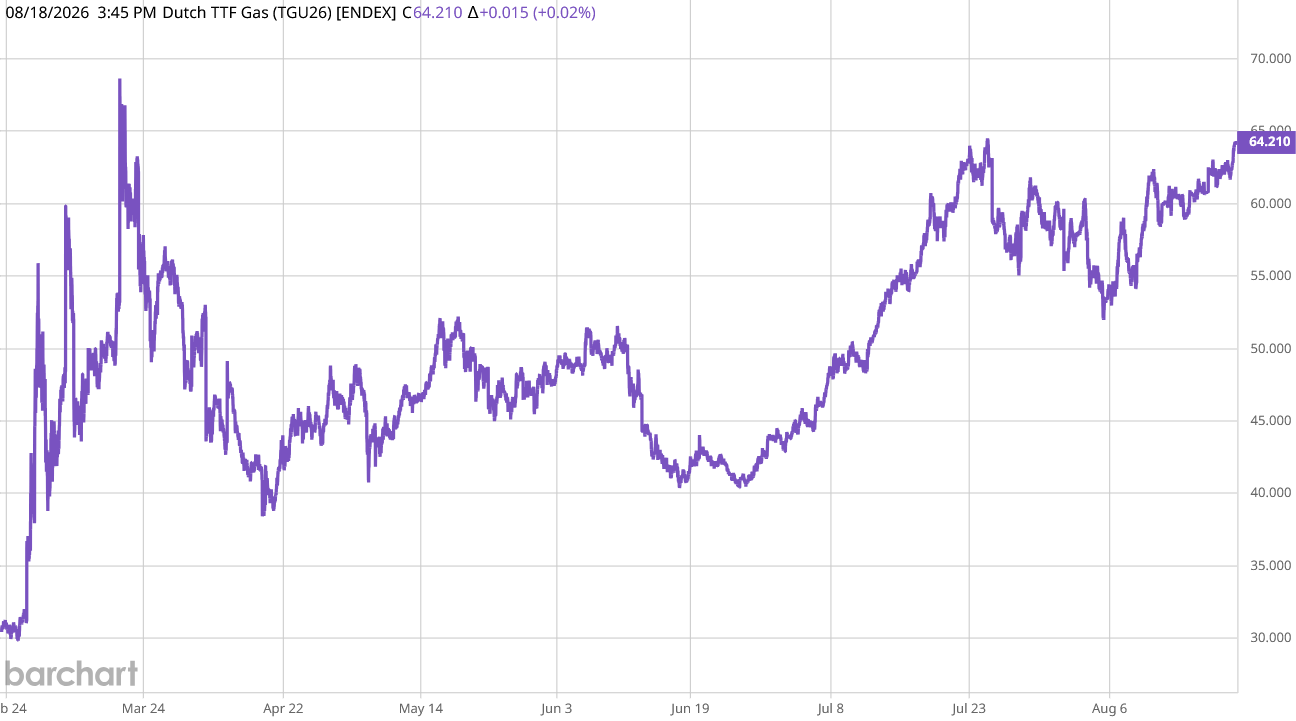
The sustained price increase for natural gas in Europe—currently Dutch TTF contract prices are more than double pre-war levels—poses a particular challenge, as Europe traditionally uses the summer months to stockpile natural gas at low prices to buffer heating demand throughout the winter, when natural gas prices are typically higher.
Many German gas suppliers in particular gambled on the war being short and have delayed their typical summer gas purchases. As the war drags on, and natural gas prices have not come down, Germany is facing a significant shortfall of natural gas reserves when the cooler weather arrives later in the fall.
Again, the data tells the tale. Germany’s reserve of natural gas is right at half of its total capacity, and lags behind much of Europe.
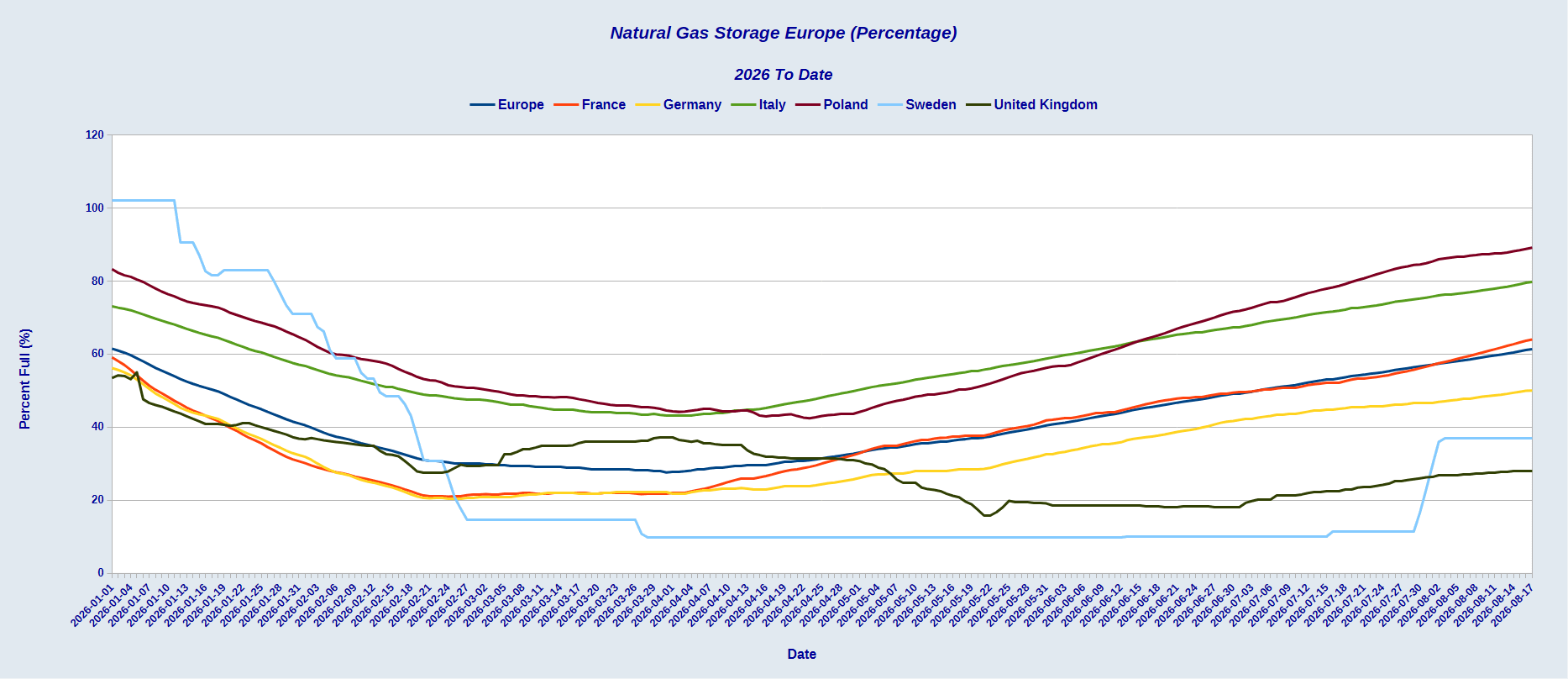
Germany’s looming gas shortage come winter poses an economic risk to the rest of Europe, as the country’s sheer size and natural gas consumption raise a threat that Germany could push natural gas prices even higher across the entire continent during the winter months.
Germany is the EU’s biggest vulnerability because its sheer size means gas shortfalls there could be felt in neighboring countries, driving up prices across the bloc if it fails to restore its reserves.
That’s prompted growing calls for Berlin to do the unthinkable: intervene outright to direct its state-controlled energy giants to buy gas at any price, abandoning years of free-market doctrine on energy policy.
With natural gas prices already elevated, Germany is facing not merely a supply shock but a supply squeeze.
At just over 50% of total capacity, German’s relative natural gas storage is at an historic low for this time of year.
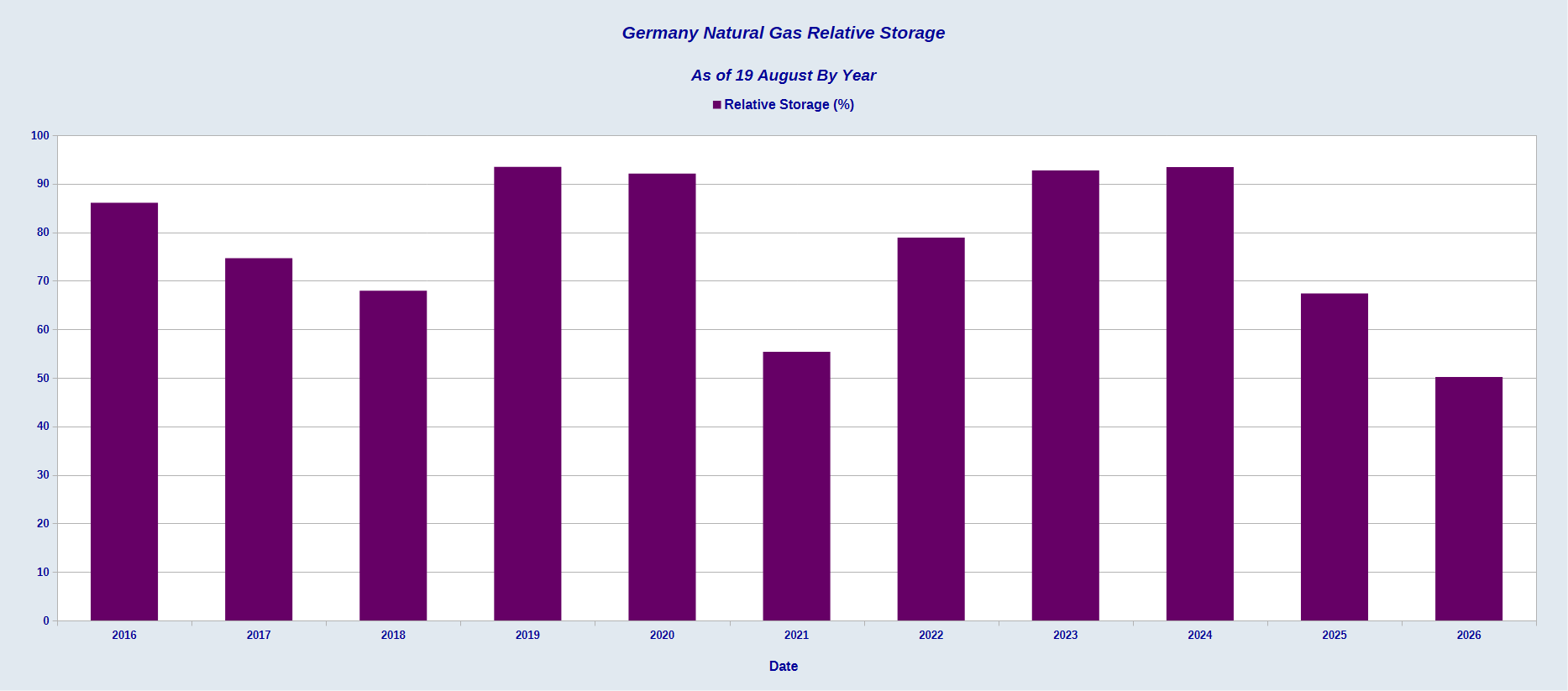
Eventually, Germany is going to be buying more natural gas—a lot more. That 50% of unfilled capacity will need to be filled as winter approaches, and every day the span of time Germany has to fill that capacity shrinks.
When Germany does ramp up their natural gas purchases, prices in Europe will surge even higher than they are now. What this means for Europe is easily grasped when one considers that natural gas prices are already on par with the peak of Europe’s 2022 energy shock.
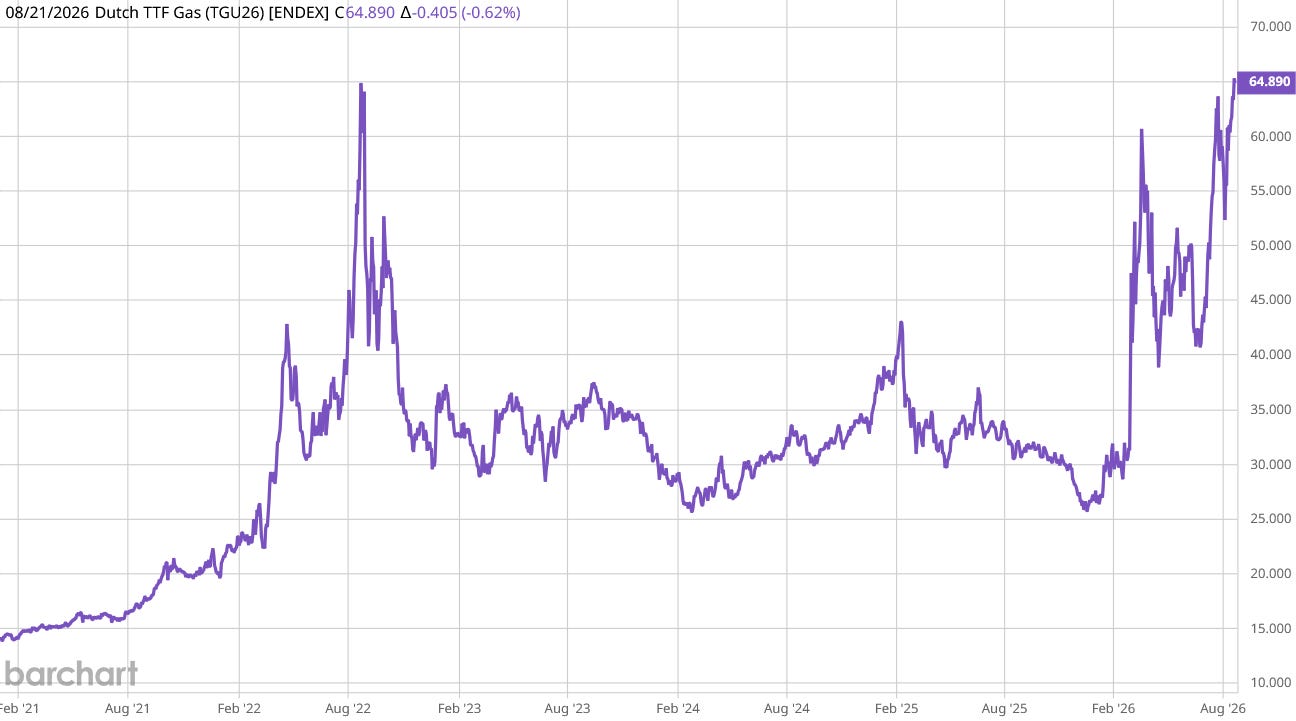
When Germany starts ramping up natural gas purchases, European prices for natural gas are going to soar to record highs. There is no way for this not to happen—a surge in demand against a more or less fixed level of supply can only result in significant price increases.
Nor is Europe’s energy vulnerability limited to natural gas prices. While crude oil prices have been amenable to at least some reductions from earlier price surges, diesel prices have been significantly less so.
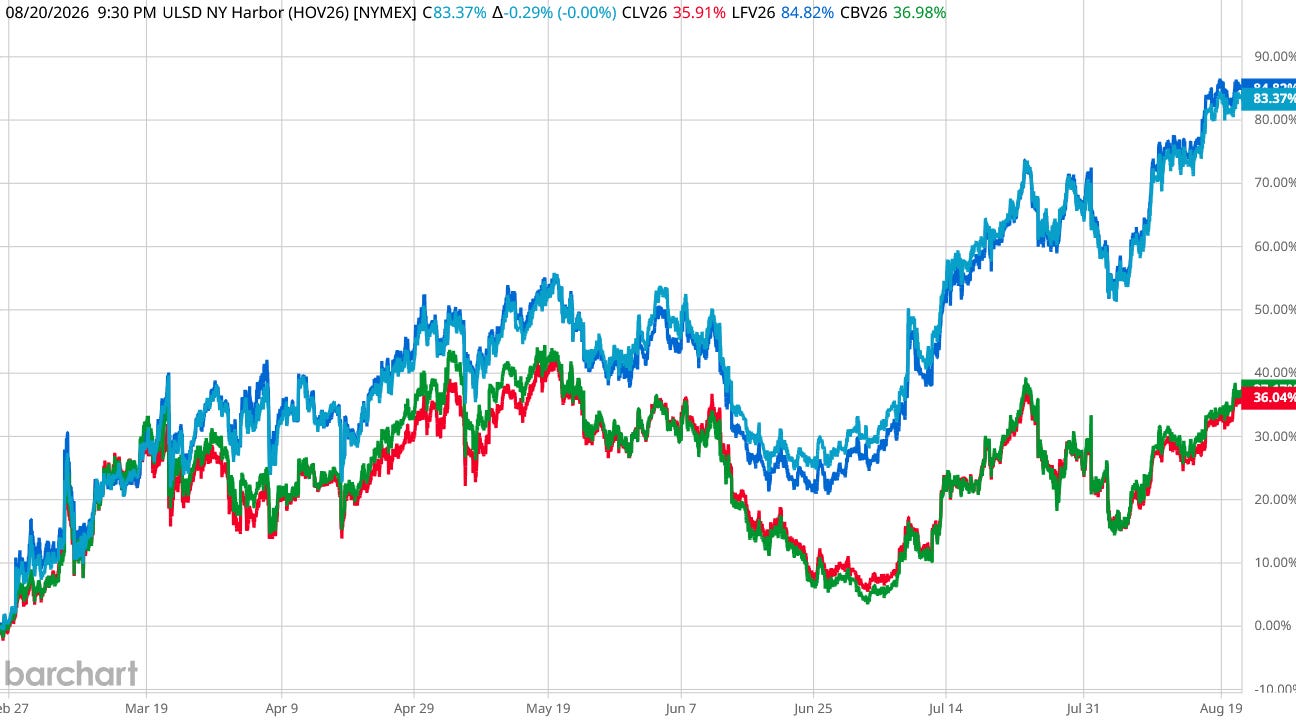
While crude oil prices have risen “only” approximately 36%, diesel prices for both Europe and the United States have risen over 83%.
Even bunker fuel prices are well above pre-war levels and starting to rise once more.
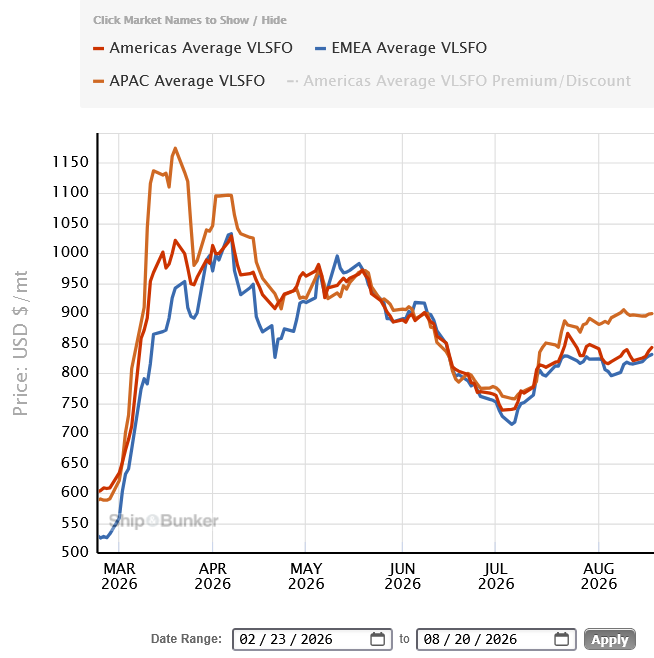
As winter draws near, Europe is facing energy price inflation on multiple fronts, and at levels that promise to smother an already faltering European economy.
Already Europe’s industrial production is virtually stagnant, with little growth either year on year or month on month.
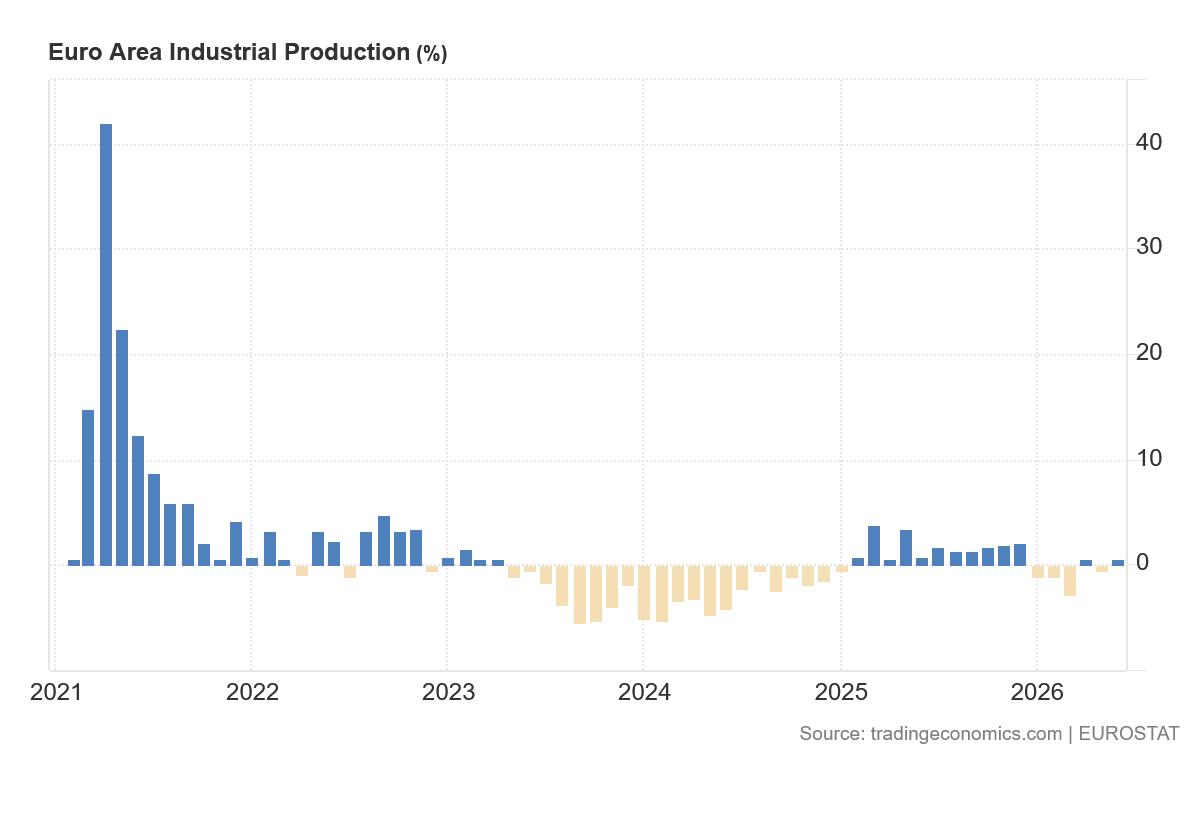
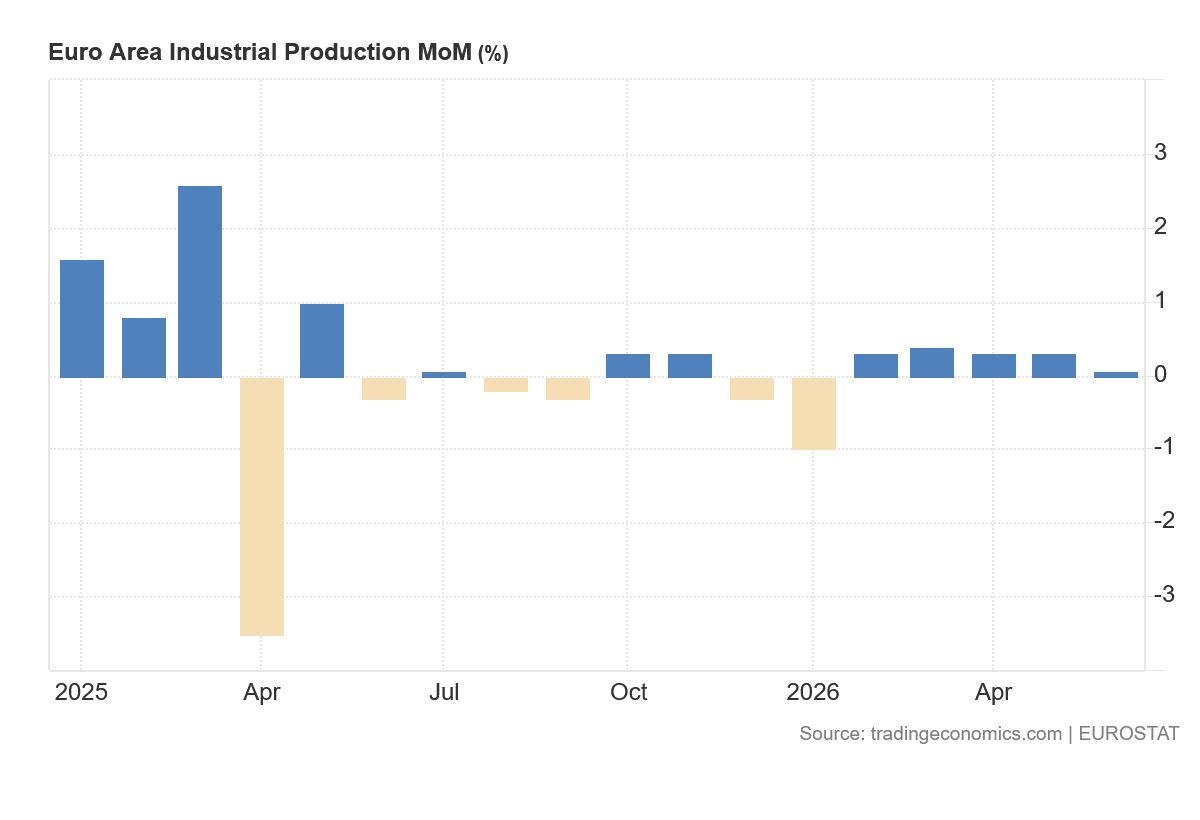
Surprisingly, Europe’s elevated energy and fuel costs have yet to translate into major producer price inflation. Much as is the case with China, producer prices cooled somewhat in June, to 4.6%.
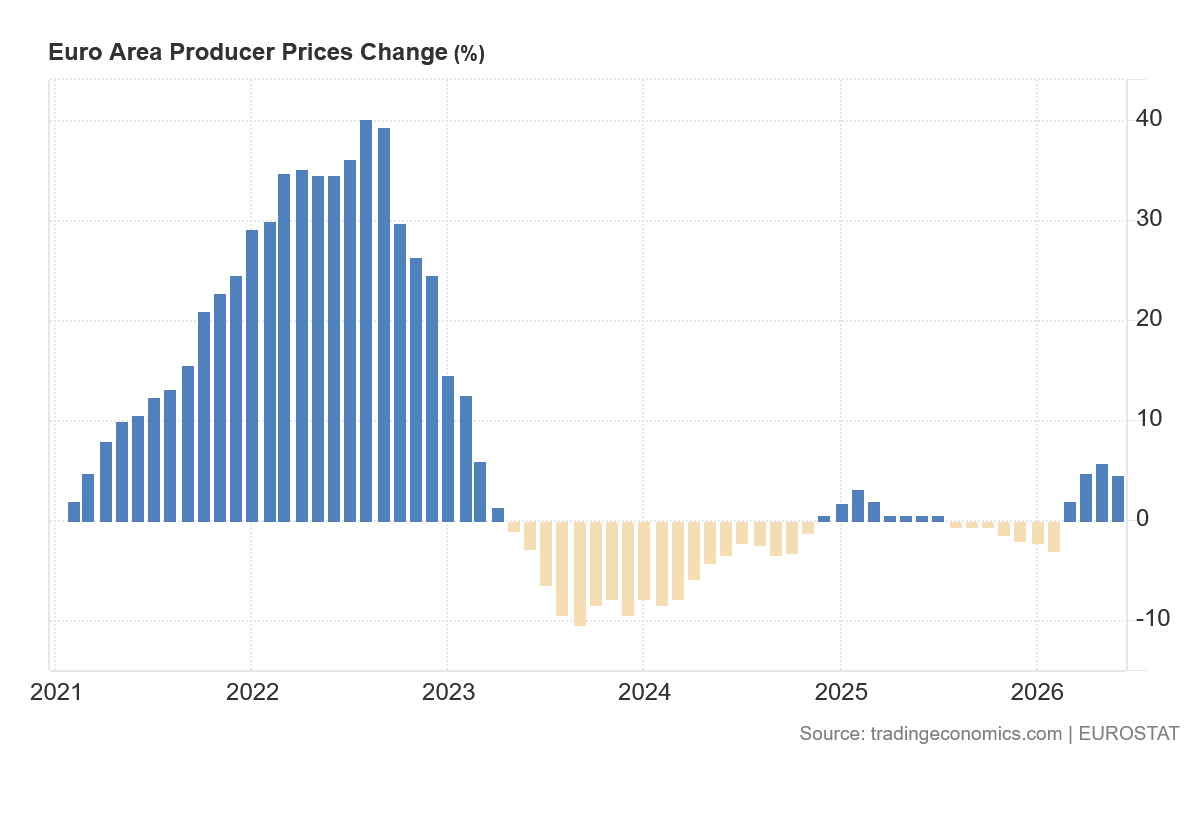
This is lack of producer price inflation is counterintuitive, as energy prices have second-order effects on virtually all other prices, with diesel prices in particular impacting shipping and logistics costs on nearly every good imaginable.
Even consumer price inflation only rose a little in March and April before stabilizing just under 3% year on year.
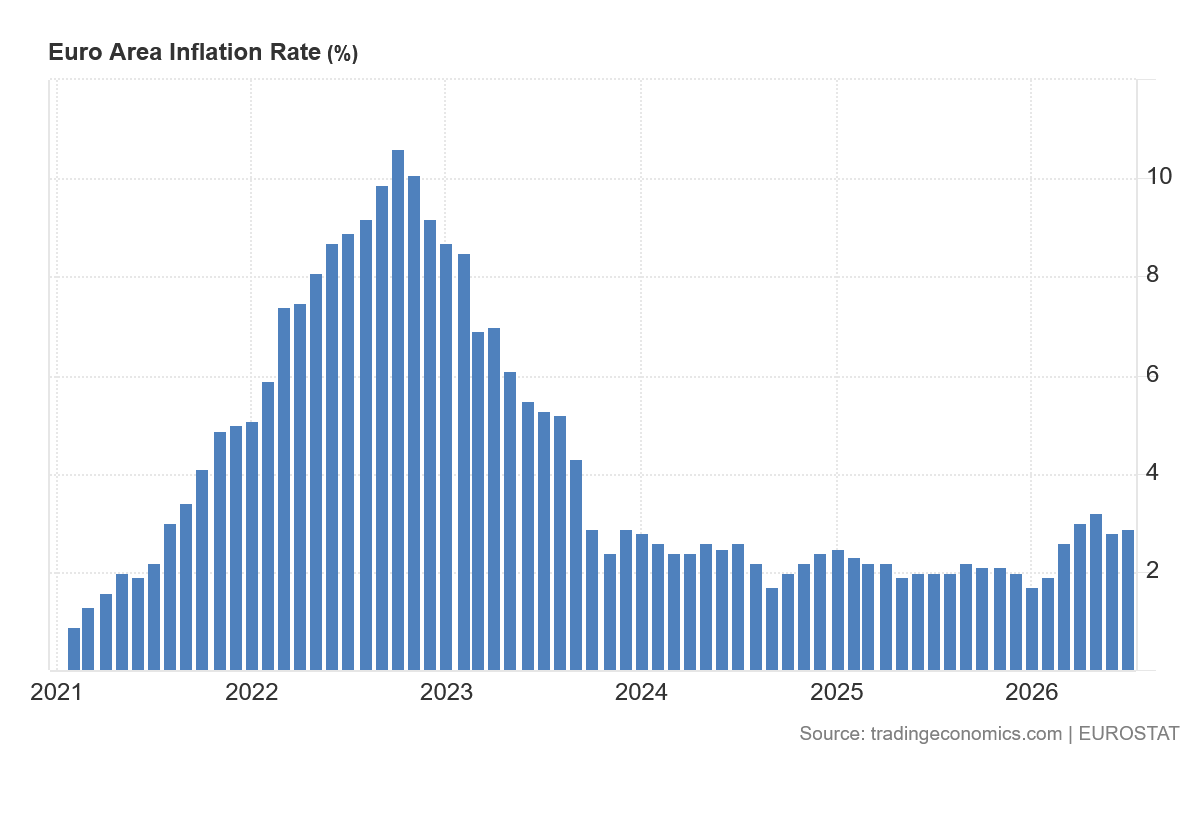
If the energy price shocks Europe has experienced since February of this year have not produced significant inflation within either producer prices or consumer prices, Europe is facing the possibility that, absent energy, the overall economy is stagnating and perhaps already contracting. Much like China, the economic reversals are emerging now, on the strength of existing oil supply disruptions and the price increases to date for oil, natural gas, and refined products.
Like China, the disruptions are impacting a European economy already weakened after years of attritional economic warfare with Russia.
Stealth Shipping Corridor Has Had Little Impact
If the narrative suggested by official data on maritime traffic through the Strait of Hormuz were being sustained, the conclusion that Europe and China were indeed facing “oilpocalypse now” would almost self-evident.
That narrative is not being sustained, which adds a disturbing wrinkle to the economic woes facing both China and Europe.
Reporting as emerged that the US Navy has been organizing stealth convoys through the Strait of Hormuz, large enough to move half of pre-war tanker volumes through the Strait.
A convoy of up to 20 tankers protected by fighter jets, helicopters and ships has been ferrying up to 10 million barrels of oil out of the Gulf each night since May in a secretive US naval operation.
The US military has been leading the ships into and out of the Strait of Hormuz, but rather than taking them through the route which passes Bandar Abbas in southern Iran, the vessels instead hug the northern coast of Oman.
This tanker traffic is not being recorded in any official monitoring of the Strait, such as the IMF’s Portwatch operation. Portwatch has continuously reported little or no tanker traffic in the Strait, other than during the brief life of the Memorandum of Understanding.
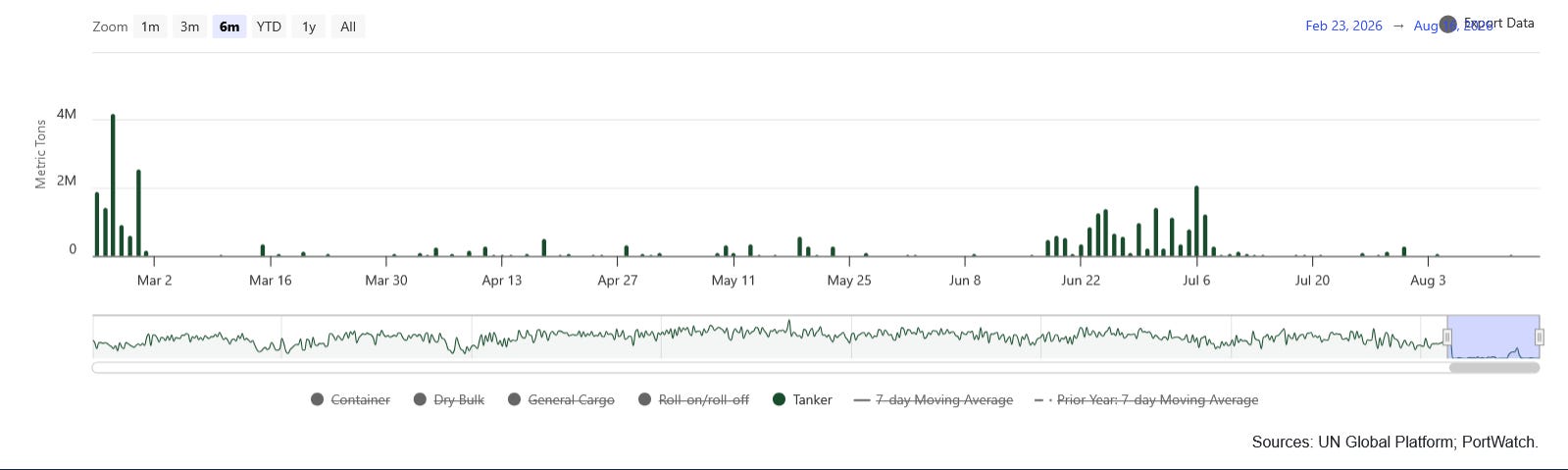
Most traffic monitoring sites rely on ship transponder signals to track what vessels are actually transiting the Strait. Ships in the US Navy’s stealth convoys have been turning their transponders off, meaning that their passage does not become part of the regularly reported metrics.
The stealth convoys mean that more Persian Gulf oil is reaching global markets than previously assessed—and that has undoubtedly played a major role in buffering global oil prices, perhaps even more so than strategic reserve releases by the US, China, and others.
The stealth convoys consequently mean that the economies of both China and Europe are struggling because of factors which pre-date Operation Epic Fury. Removing Persian Gulf oil supply from global markets did not cause these problems, and replacing that oil supply in global markets will not alleviate them.
Instead of an oil-induced stagflation as had been initially feared, China and Europe are facing systemic deflation instead. That inflation has not surged in either economy is testament to a lack of inflationary pressures on both economies, and that translates into a lack of growth within both economies. That lack of growth is likely to be the near term trend regardless of the outcome of events in the Middle East.
Instead of an oilpocalypse, China and Europe are sinking into systemic deflation—something much, much worse.
Excellent data and analysis, as usual! You show us what’s really developing, as opposed to media and government narratives. Thank you, Peter!
From their actions, it looks as though the CCP is fully aware that China’s economy is in deep trouble. I’m wondering about the so-called leaders in Europe. Peter, can you tell by their comments how much they are in denial about Europe’s tanking economy? They’ve been clueless about a lot of things - such as the damage from mass immigration - so do you think they are equally clueless about the developing economic problems?
The question is, if Europe and China are in a slump, when will this start having an impact on rest of the world and specially the US